9 Gorgeous Front Garden Flower Bed Ideas To Impress Every Guest
I used to think front beds had to be tidy to look good.
Then I let them breathe and the house felt friendlier.
I learned what actually holds up to kids, dogs, and lazy weekends.
These are ideas I’ve tested and kept.
9 Gorgeous Front Garden Flower Bed Ideas To Impress Every Guest
These 9 ideas are simple to copy and realistic for everyday gardens.
I’ll show what worked and what I had to redo.
Expect practical tips and exact items to shop for.
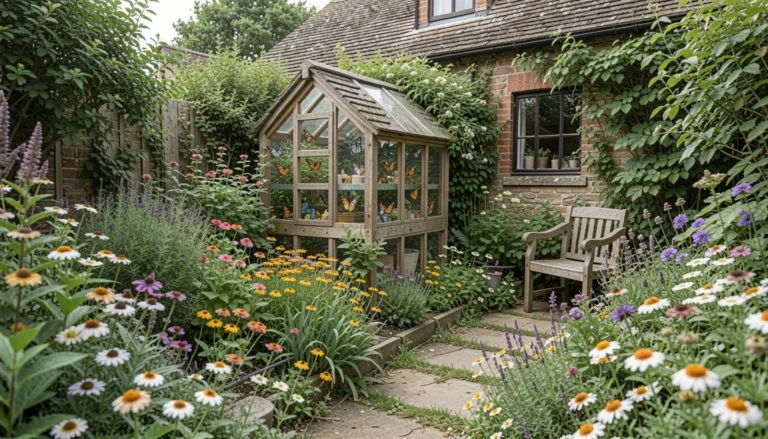
1. Layered Cottage Border with Long-Season Color
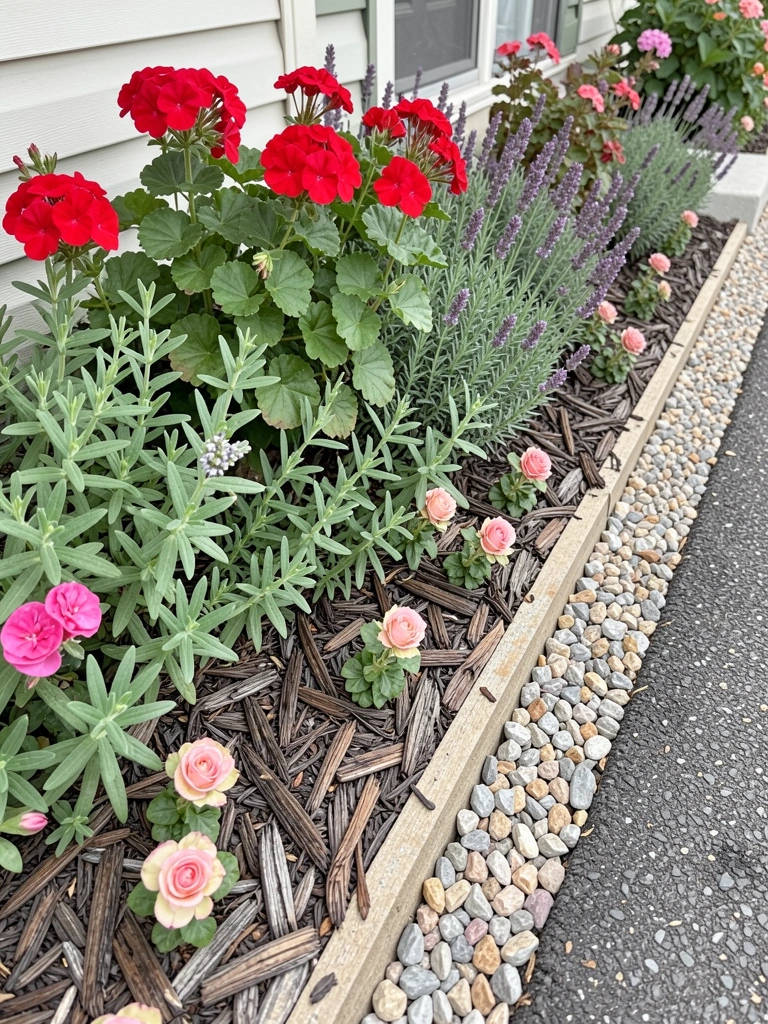
I planted a narrow strip like this and it filled out faster than I expected.
Low thyme and catmint at the front softened the path.
Taller salvias and perennial geraniums give height without hiding the house.
I once shoved tall foxgloves in the front and had to move them—don’t repeat that.
What you’ll need for this look
- Nepeta (catmint, low variety)
- Perennial geraniums (hot pink, mid-height)
- Lavender (compact English type)
- Narrow gravel edging, 2–3 inch
- Organic mulch, dark brown
2. Low-Maintenance Native Meadow Strip
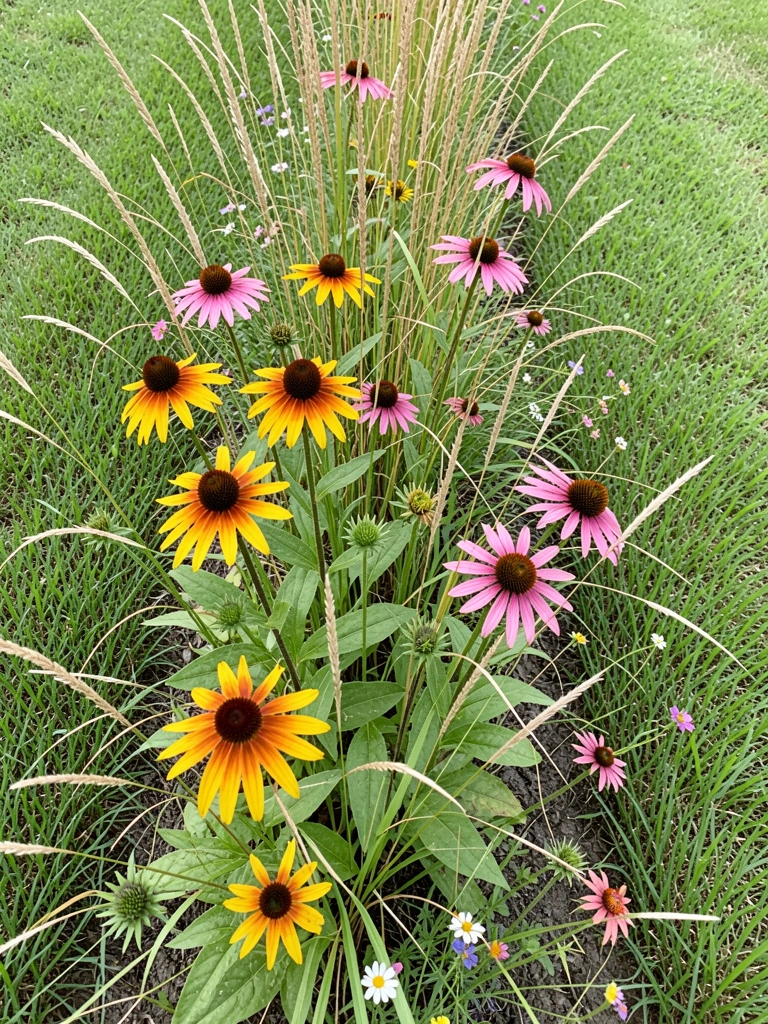
I swapped a fussy bed for natives and stopped spending hours pruning.
Grasses give movement in summer and structure in winter.
Coneflowers and black-eyed Susans keep pollinators coming and look cheery.
My first batch was too dense—thin after the first season to avoid crowding.
What you’ll need for this look
- Native grass plugs (blue fescue or little bluestem)
- Rudbeckia (black-eyed Susan)
- Echinacea (cone flowers)
- Wildflower plug mixes for borders
- Quality compost for initial planting
3. Formal Boxwood Frames with Seasonal Bulbs
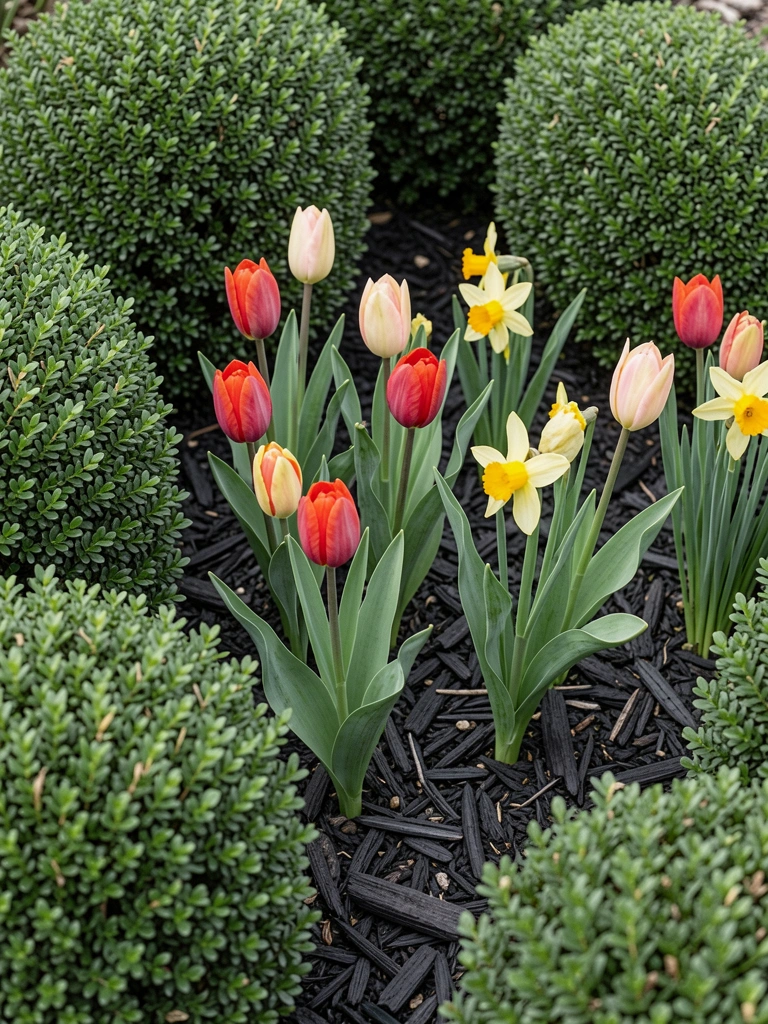
I wanted a neat entrance without fuss every week.
Small boxwoods clipped into low frames give instant structure.
I plant tulips and daffs inside the frames for bursts of spring color.
A mistake I made was planting bulbs too shallow—dig deeper for better blooms.
What you’ll need for this look
- Boxwood (dwarf, 18–24 inch)
- Tulip bulbs (mid-sized, mixed colors)
- Daffodil bulbs (early bloomers)
- Hand bulb planter, 6–8 inch
- Dark bark mulch
4. Raised Mixed-Use Bed: Flowers Plus Herbs
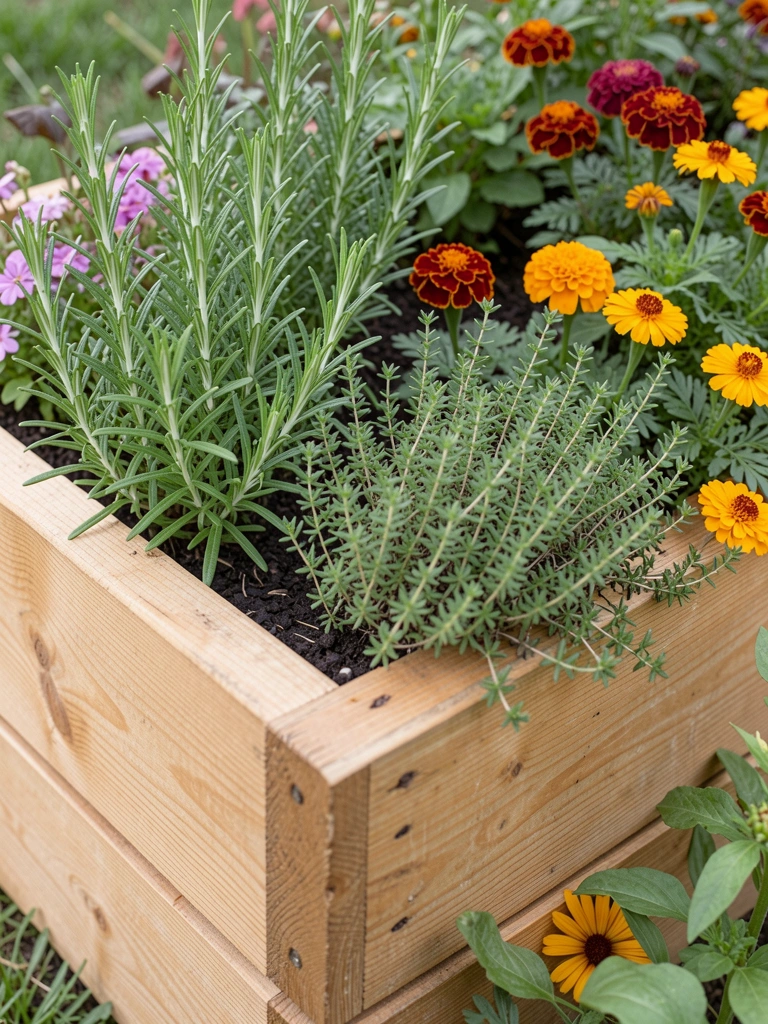
I built a low cedar bed by the porch and it changed how I use the space.
Lavender and rosemary at the back smell great when I walk by.
Calendulas and marigolds keep the edge bright and deter pests.
I found that planting herbs closer together helped them shade soil and stay moist.
What you’ll need for this look
- Cedar raised bed kit (24 inch high)
- Lavender (English variety)
- Rosemary (compact)
- Calendula and marigold seedlings
- All-purpose potting mix, 50–60 liter bags
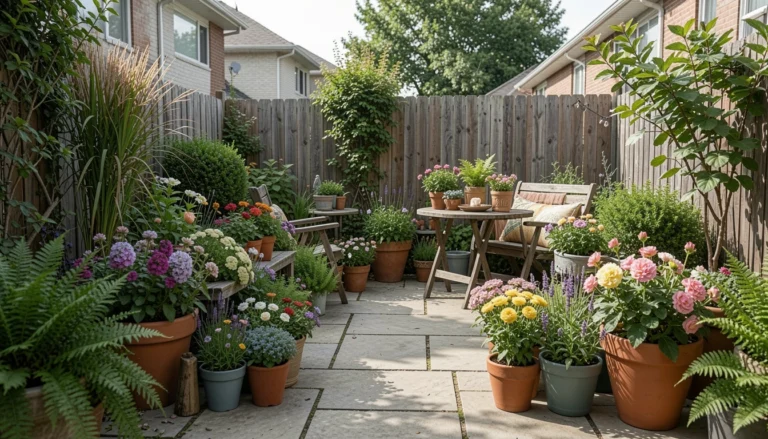
5. Recycled Container Cluster Along the Walk
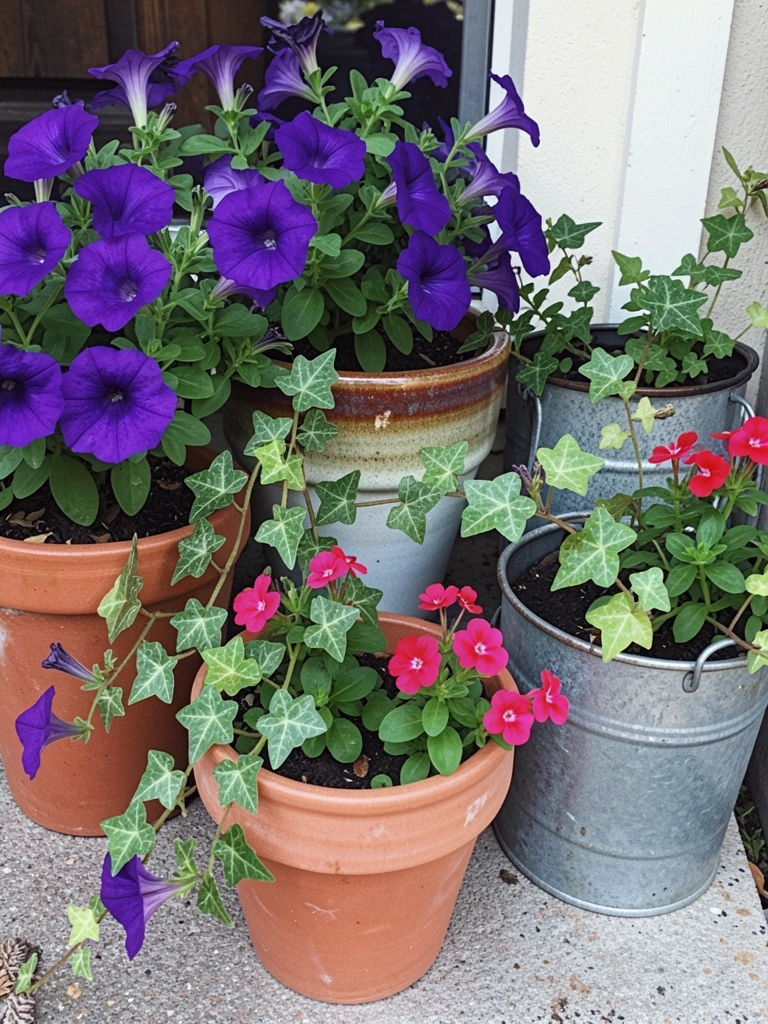
I started with two pots and ended with a full cluster that reads like a garden.
Mixing terracotta and old enamel pans gives a casual, collected look.
Trailing petunias and small geraniums hide imperfect pots.
I once used a giant pot that dwarfed the doorway—scale matters. Keep items modest.
What you’ll need for this look
- Terracotta and glazed ceramic pots (6–12 inch)
- Trailing petunias (mixed colors)
- Ivy or sweet potato vine for spillover
- Potting soil with moisture-retention
- Small saucers for water catch
6. Pathway-Flanked Pollinator Strip
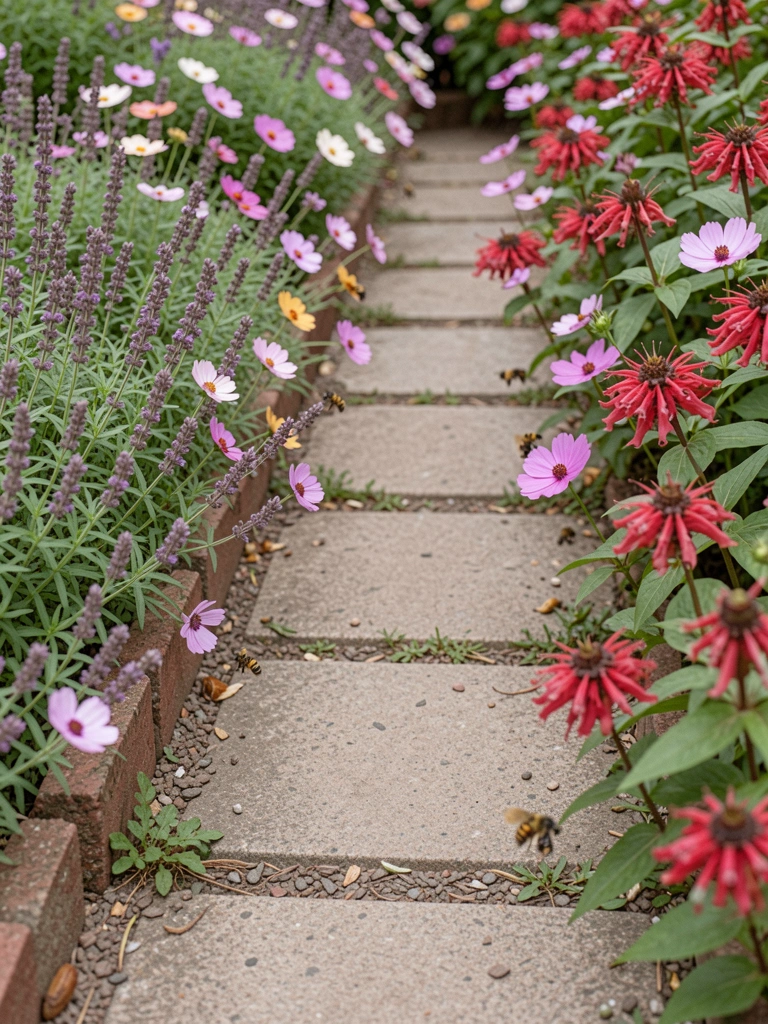
I widened the path and planted a pollinator strip on either side.
Salvias and bee balm provide summer nectar and a nice scent.
Cosmos fills gaps and keeps the strip airy, not heavy.
I learned to stagger bloom times so there’s always something flowering for insects.
What you’ll need for this look
- Salvia (salvia nemorosa)
- Bee balm (Monarda)
- Cosmos (tall mixed)
- Narrow stepping stones, 12–16 inch
- Low metal edging, dark finish
7. Mini Rock Garden for Sunny, Shallow Soil
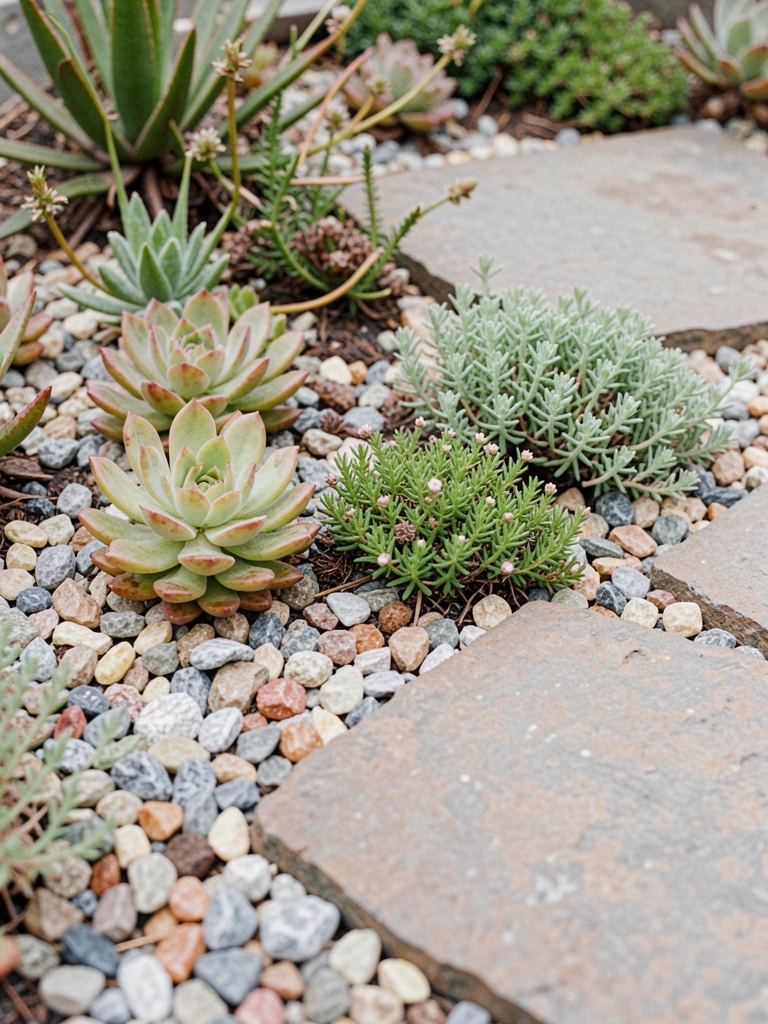
I carved out a sunny patch with poor soil and it became surprisingly charming.
Succulents and alpine saxifrages love the drainage and bright light.
Gravel keeps the bed tidy and reduces weeds.
My initial mistake was overplanting—rocks need space. Give them breathing room.
What you’ll need for this look
- Assorted small succulents (sedum, sempervivum)
- Alpine perennials (saxifraga)
- Coarse gravel, 1–2 inch
- Flat stepping stones, natural stone
- Small hand rake for gravel
8. Symmetrical Bed with a Small Focal Tree
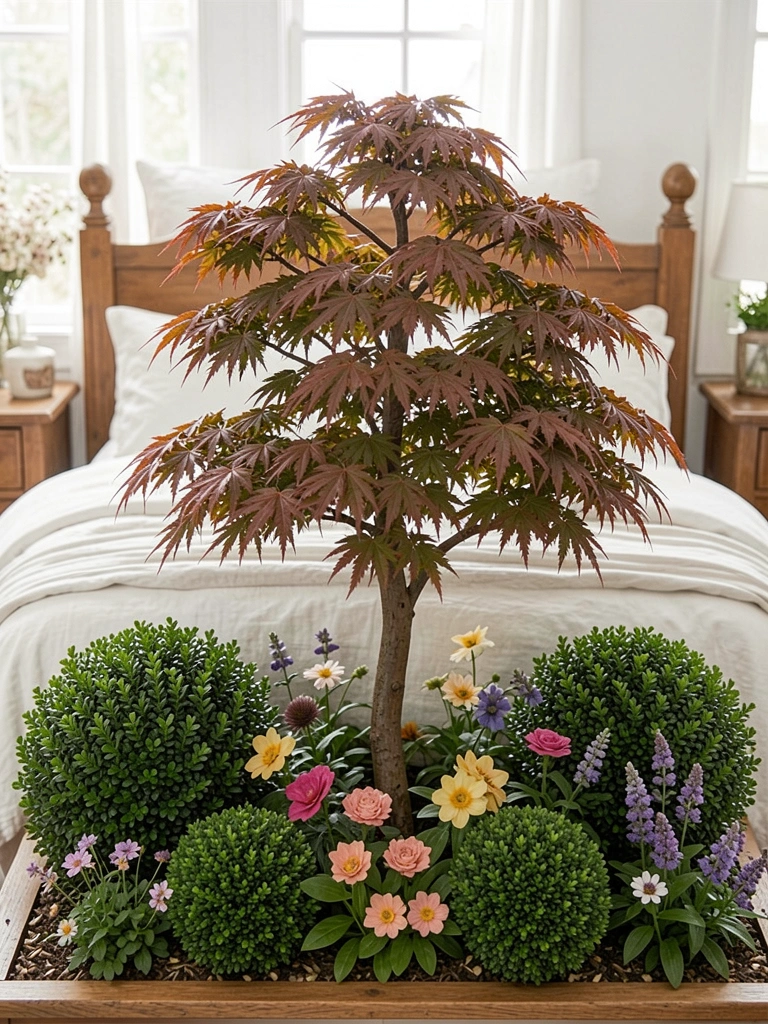
I planted a dwarf Japanese maple as a tiny front focal point and it anchors the whole entry.
I flanked it with matching low shrubs for symmetry.
Seasonal underplanting—spring bulbs, summer annuals—keeps it interesting.
Plant selection matters: choose a small tree that won’t grow into the house.
What you’ll need for this look
- Dwarf Japanese maple (3–6 foot)
- Low boxwood pairs (dwarf)
- Spring bulbs for underplanting
- Small hand pruners
- Mulch ring, 3–4 inch depth
9. Night-Ready Border with Subtle Lighting
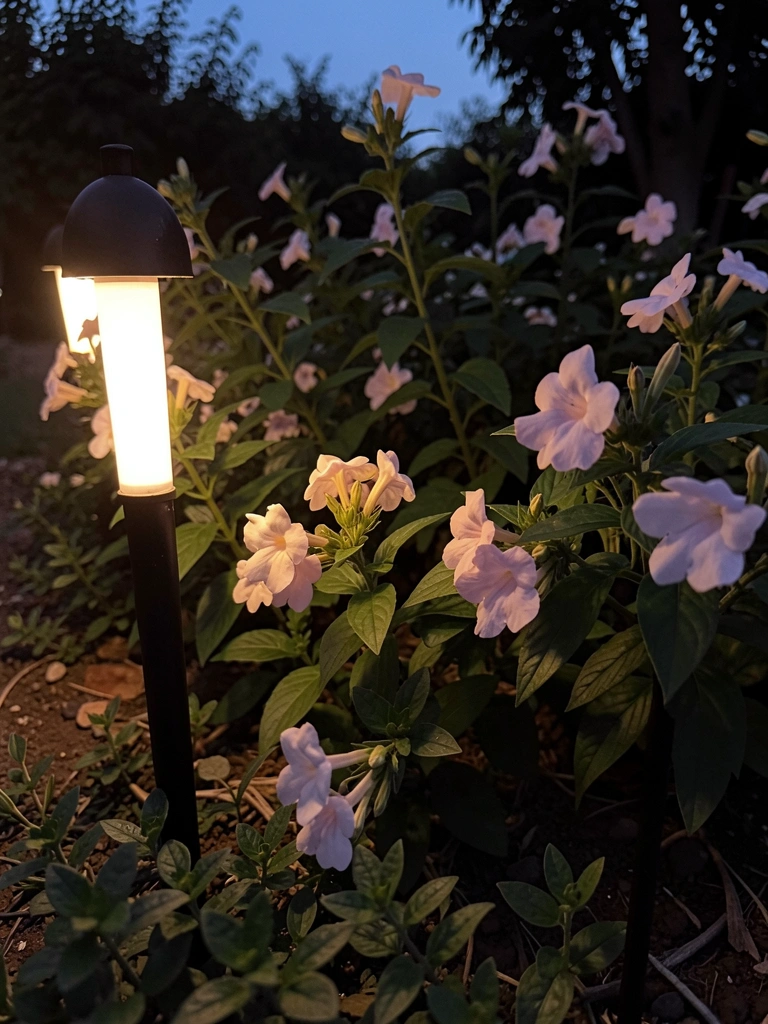
I added low warm stake lights and suddenly the front felt used at night.
Nicotiana and evening-scented stock give soft perfume after dusk.
Lighting shows textures and keeps the path safe.
First night I left lights too bright; dimmer, warm tones look better and feel calmer.
What you’ll need for this look
- Warm white solar stake lights, low profile
- Nicotiana (white night-scented)
- Evening stock or phlox for fragrance
- Low-voltage dimmer or solar lights with adjustable output
Final Thoughts
You don’t need to try every idea at once.
Pick one that fits your time and soil.
Small changes add a lot of charm.
I’ve kept what actually worked through trial and error.
You can do this one bed at a time.