16 Creative Butterfly Garden Table Centerpiece Ideas
I used to plant for looks and then watch nothing arrive. I learned butterflies want food and a place to rest.
These centerpieces are small invitations. They’re built from things I already had and plants that actually worked.
16 Creative Butterfly Garden Table Centerpiece Ideas
These 16 ideas are practical and plant-focused.
They’re things I’ve made and adjusted in real yards.
You’ll get clear, doable setups for different tables and styles.
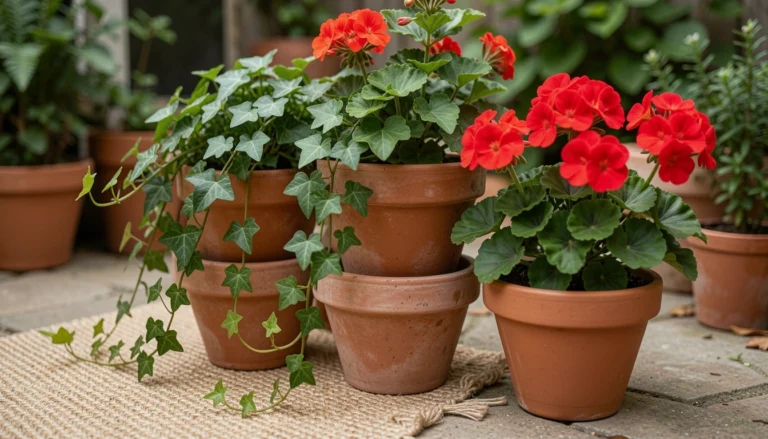
1. Layered Terracotta Stack with Lavender and Zinnias
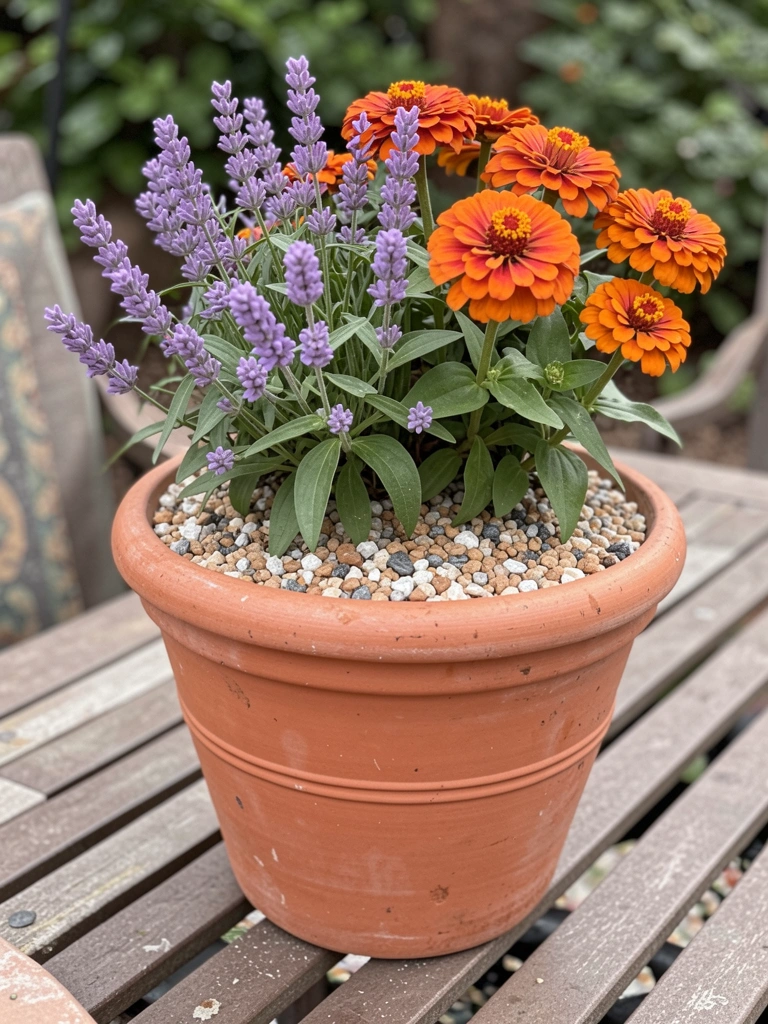
I stacked three terracotta pots to give height without a formal planter. Butterflies find the zinnias first; the lavender is the magnet. I misjudged drainage once and drowned a lavender batch, so I drill extra holes now.
Visually it feels warm and simple. The stack keeps things compact on narrow tables. I keep a small saucer of water at the base for butterflies to sip.
What You’ll Need for This Look
- Terracotta pots (6", 8", 10")
- Lavender (English or Munstead)
- Zinnia mix (compact)
- Gravel or sand for drainage
2. Vintage Teapot Filled with Butterfly Weed and Marigolds
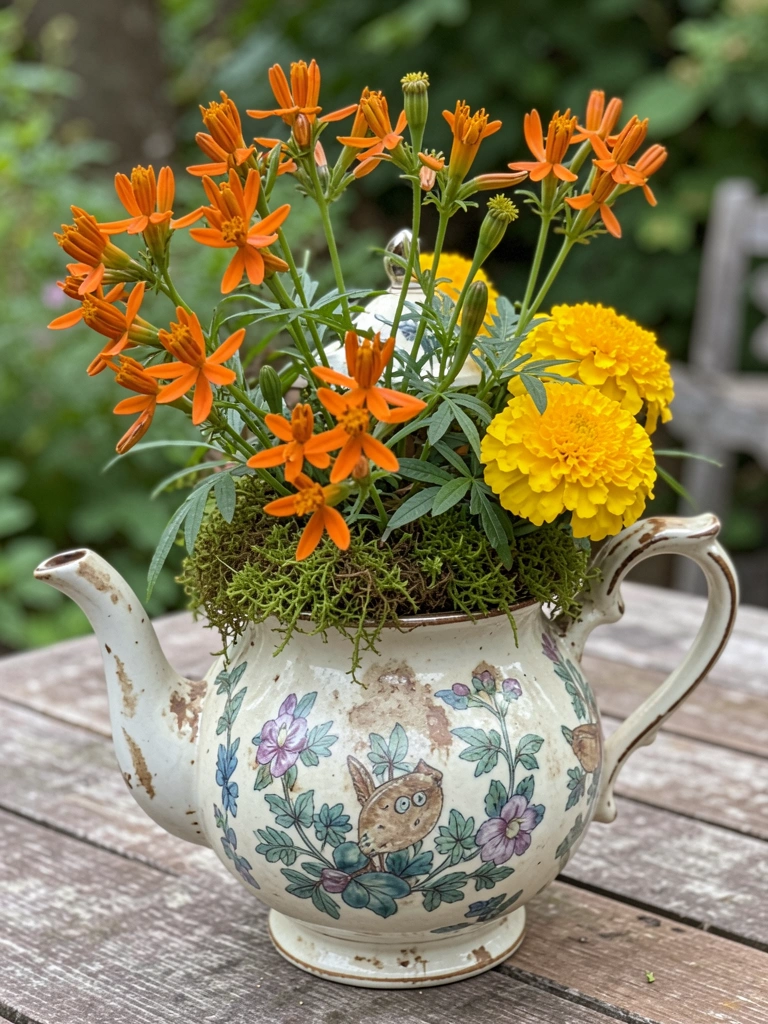
I started using an old teapot because I hated empty surfaces. The narrow spout gives the arrangement a focused, compact shape. I learned the hard way that thin-glazed teapots can crack in frost, so I bring them inside in colder months.
The color combo draws both butterflies and hummingbirds. People always ask where I found it. I use a small inner pot to keep soil contained and replace soil yearly.
What You’ll Need for This Look
- Vintage teapot or small ceramic pitcher
- Butterfly weed (Asclepias tuberosa)
- French marigolds
- Small nursery pot (to nest inside)
3. Low Tray Meadow: Mixed Annuals on a Serving Tray
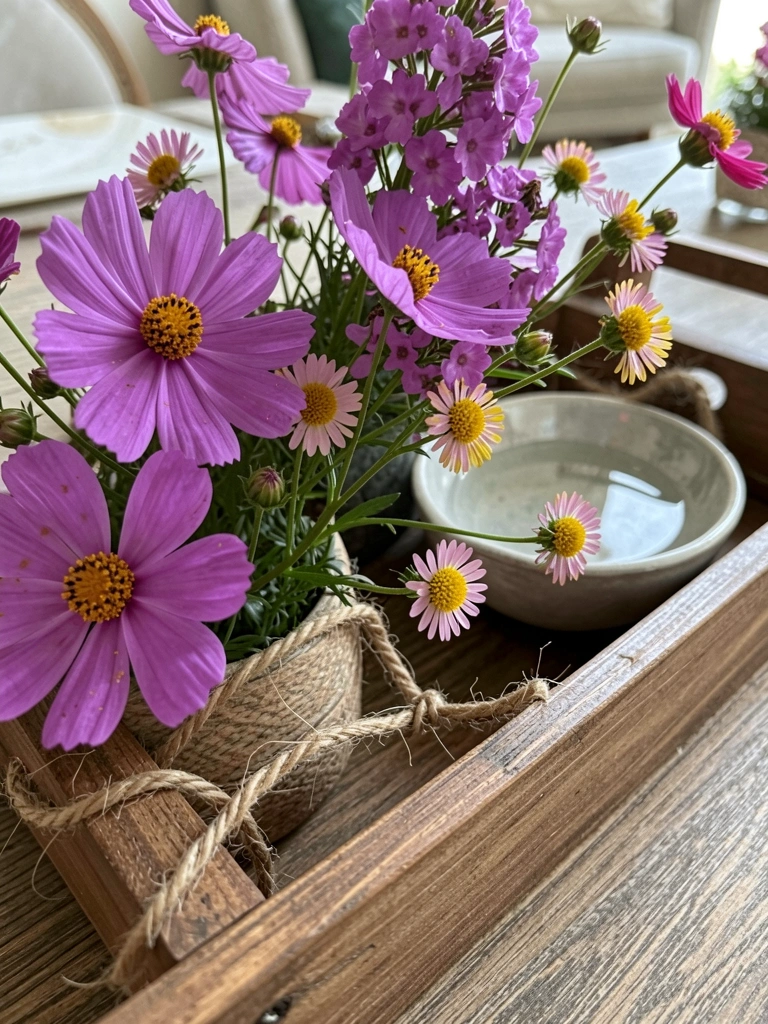
I made a tray meadow when my table needed low drama. Cosmos, verbena, and small asters make a loose, living carpet. I once overloaded a tray and it became top-heavy in wind. Now I anchor with flat stones.
This keeps sightlines clear at dinner. It’s easy to swap plants mid-season. I water gently so the tray doesn’t overflow onto the table.
What You’ll Need for This Look
- Wooden serving tray (18–24")
- Cosmos, verbena, small asters
- Shallow water dish or saucer
- Flat river stones
4. Mini Milkweed Patch in a Rustic Planter
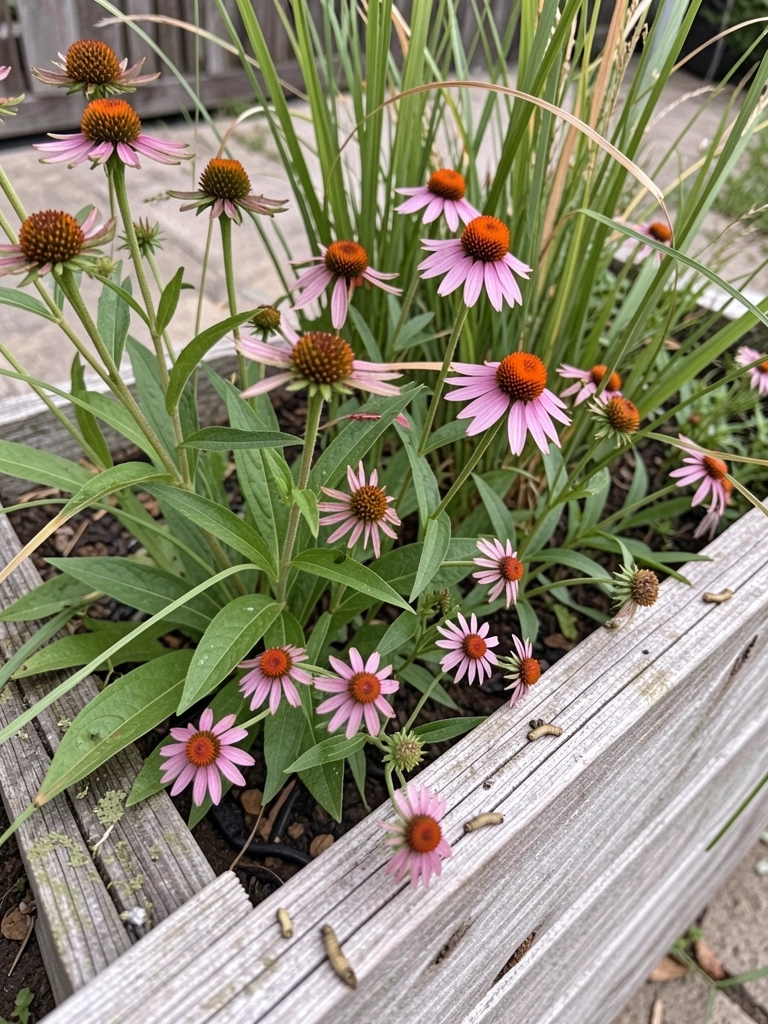
I dedicated a small planter to milkweed because I wanted monarchs close to the table. The pods and flowers are compact and bold. I once planted a non-native milkweed and it flopped; sticking to local varieties helped.
Seeing caterpillars on the table edge became a regular joy. The planter looks natural and slightly wild. I trim the spent heads lightly to keep masses of seed from spreading too fast.
What You’ll Need for This Look
- Rustic wooden planter (12–18")
- Native milkweed variety
- Small coneflower (Echinacea)
- Pruning shears
5. Mason Jar Cluster with Nectar Stems
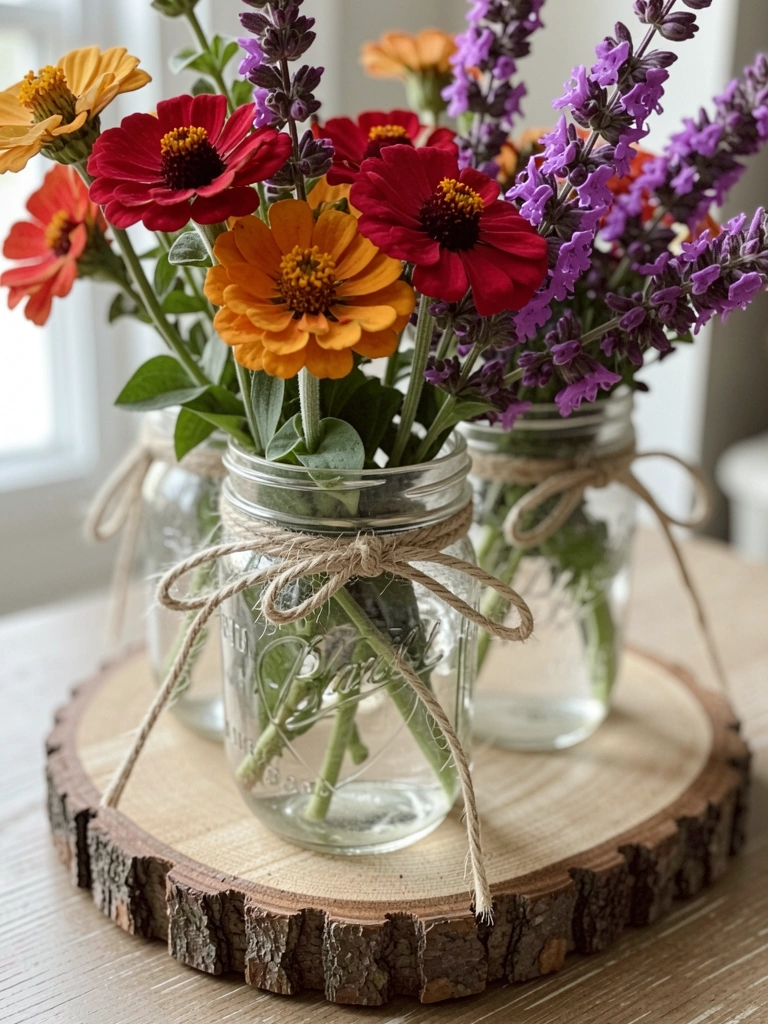
I use mason jars when I want something moveable and fresh. I cut long zinnias and salvias from the garden and arrange them like a casual bouquet. One season I forgot to change the water and the flowers went slimy; a quick rinse fixes everything.
This is light and cheap, and it keeps flowers available for butterflies to land on. I group jars at different heights for interest. It’s great for potlucks.
What You’ll Need for This Look
- Mason jars (assorted sizes)
- Fresh-cut zinnias, salvias, verbena
- Twine and a wooden tray
6. Shallow Water Dish with Pebble Landing Pads
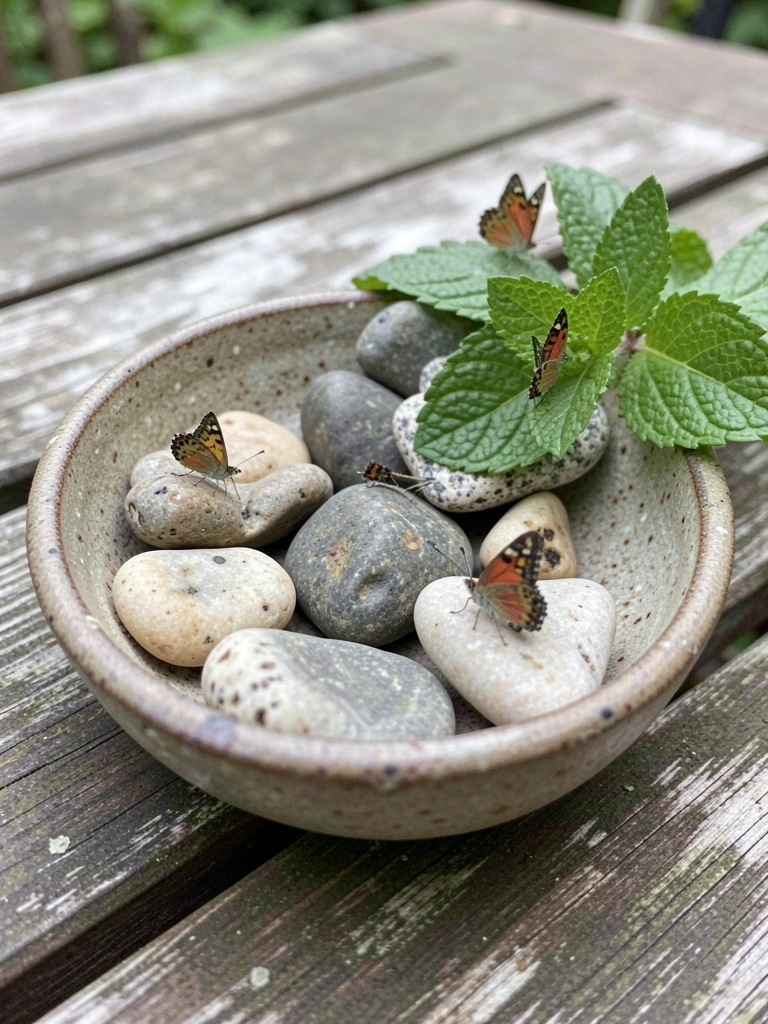
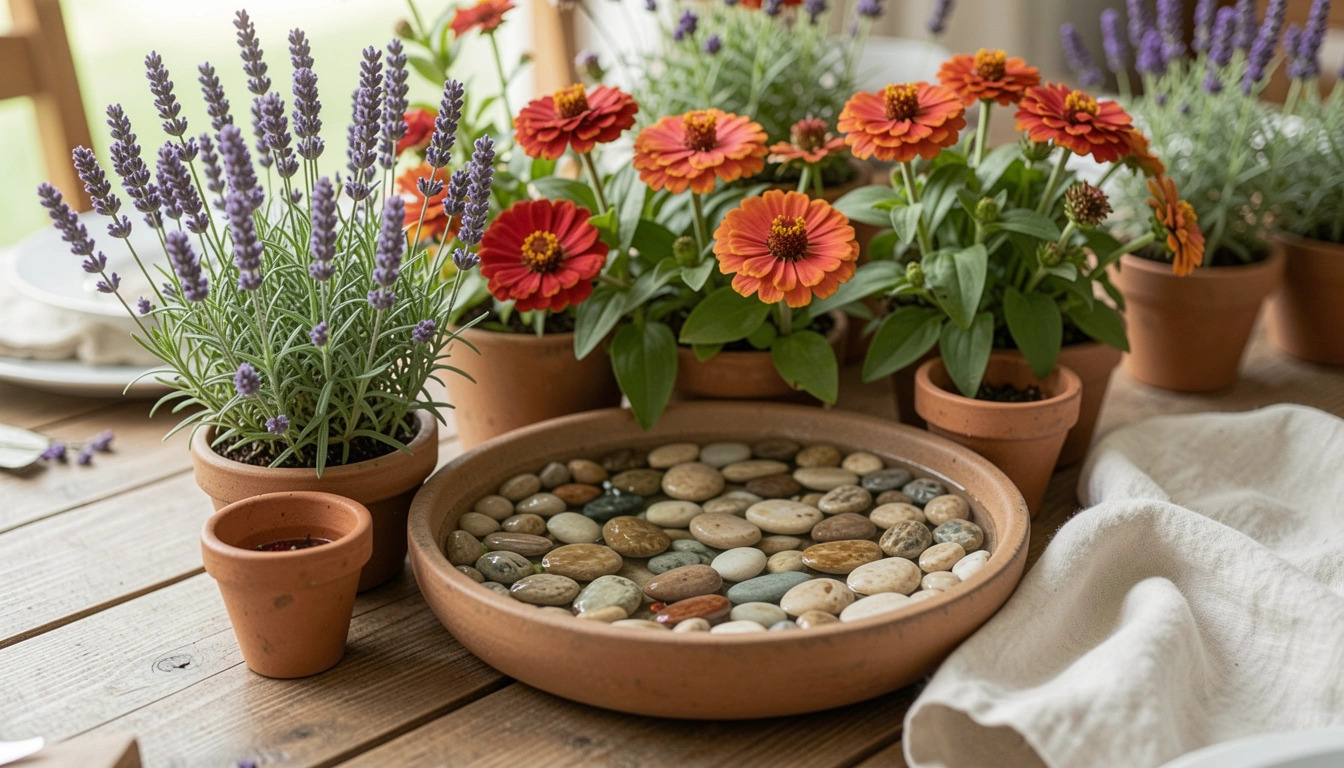
I noticed butterflies kept landing on my table for water. I added a shallow dish with pebbles so they could drink safely. I once used deep bowls and watched them struggle; flat dishes are kinder.
The dish becomes a practical focal point. I tuck small sprigs of mint or thyme nearby for scent. It draws quiet, close-up moments while people sit.
What You’ll Need for This Look
- Shallow ceramic dish (6–10")
- Smooth river pebbles
- Fresh herbs (mint or thyme)
- Small water mister
7. Recycled Window Box with Sage and Lantana
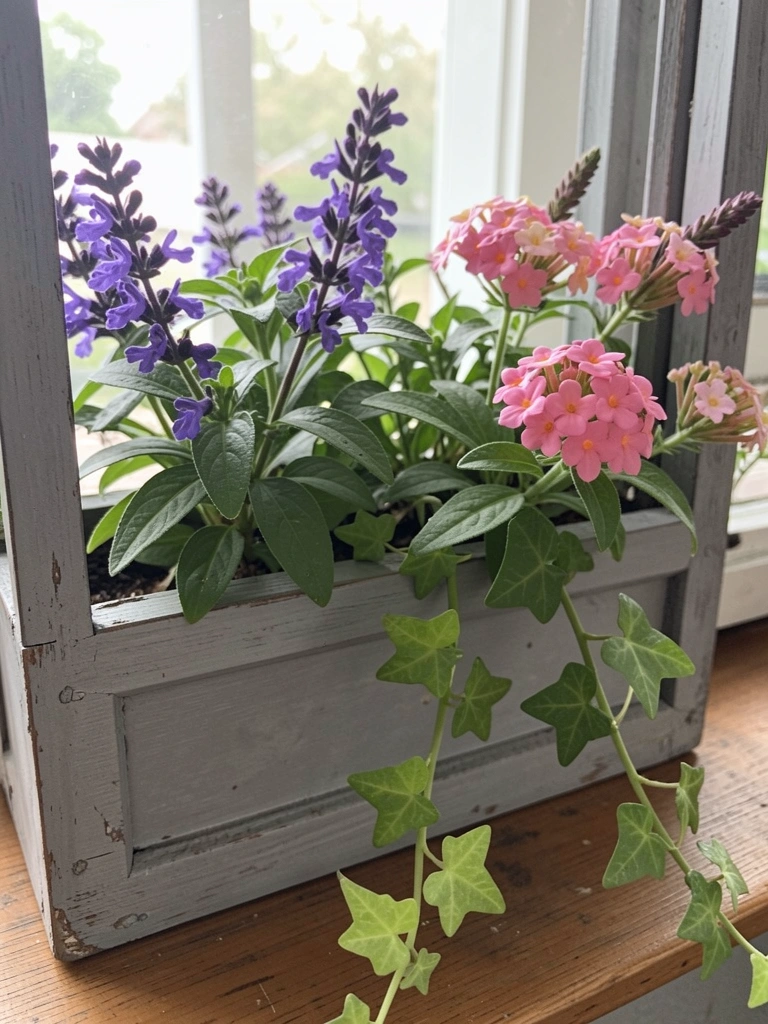
I converted an old window box into a centerpiece and filled it with sage and lantana. The scent of sage keeps the air alive, and lantana blooms through heat. At first I planted too many trailing vines and the box looked messy; pruning fixed that.
The long shape works on rectangular tables. It’s low enough to chat across. I like that it looks collected, not arranged.
What You’ll Need for This Look
- Vintage window box (36" or smaller)
- Culinary sage and lantana
- Small trailing ivy
- Hand pruners
8. Small Trough with Coneflowers and Bee Balm
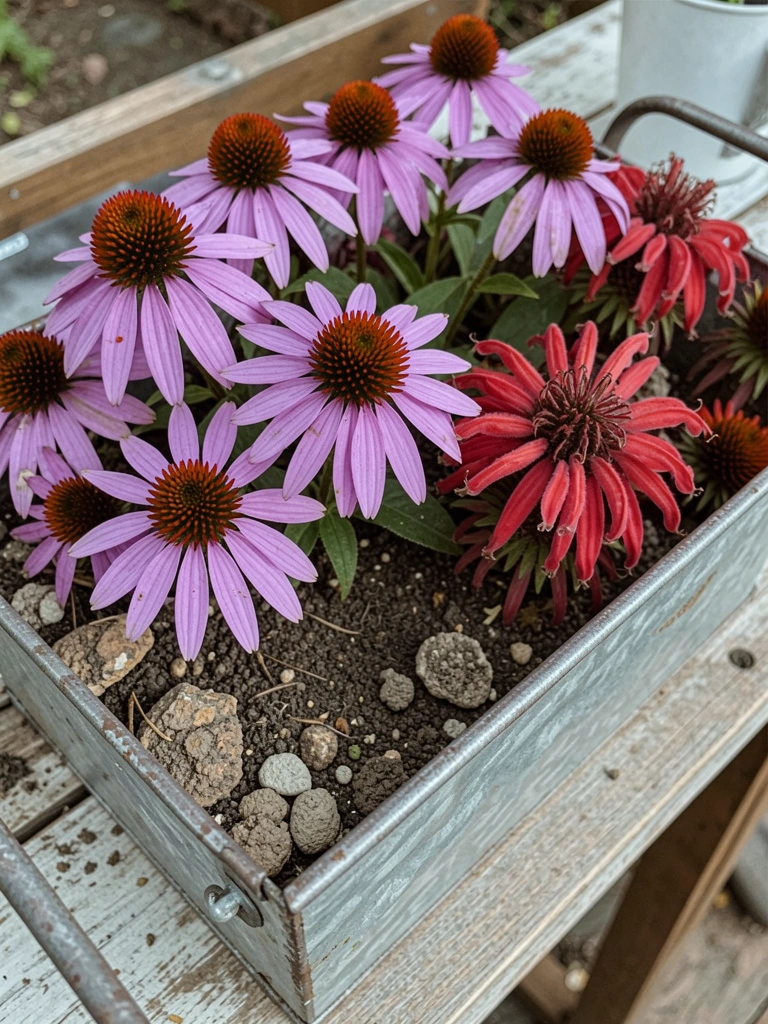
I used a metal trough for a bold, linear look. Coneflowers and bee balm sit tall and invite butterflies in. I once placed it on a thin table and the trough warped; sturdier furniture is better.
The trough gives a meadow-like feel without taking much space. It’s hardy and lasts seasons. I deadhead occasionally to keep blooms coming.
What You’ll Need for This Look
- Galvanized metal trough (12–24")
- Purple coneflower (Echinacea)
- Bee balm (Monarda)
- Coarse potting mix
9. Mini Terrarium Plate with Native Seedlings
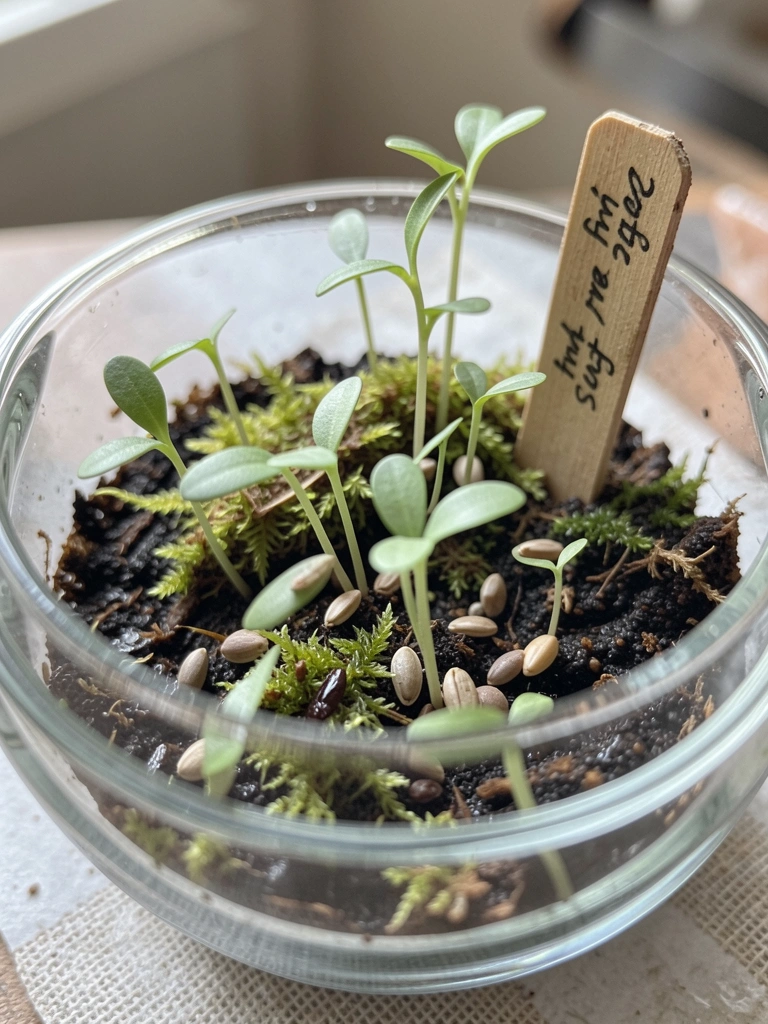
I made a low terrarium plate for tiny native seedlings. It keeps soil moist and gives a quiet, green focus. I did overplant once and roots got crowded; spacing is surprisingly important even in small vessels.
This is subtle and works for small balcony tables. I move it into shade on hot days. It’s a gentle nod to habitat without being showy.
What You’ll Need for This Look
- Shallow glass bowl (8–12")
- Native seedling plugs
- Sheet moss
- Small plant label stakes
10. Woven Basket with Salvias and Verbena
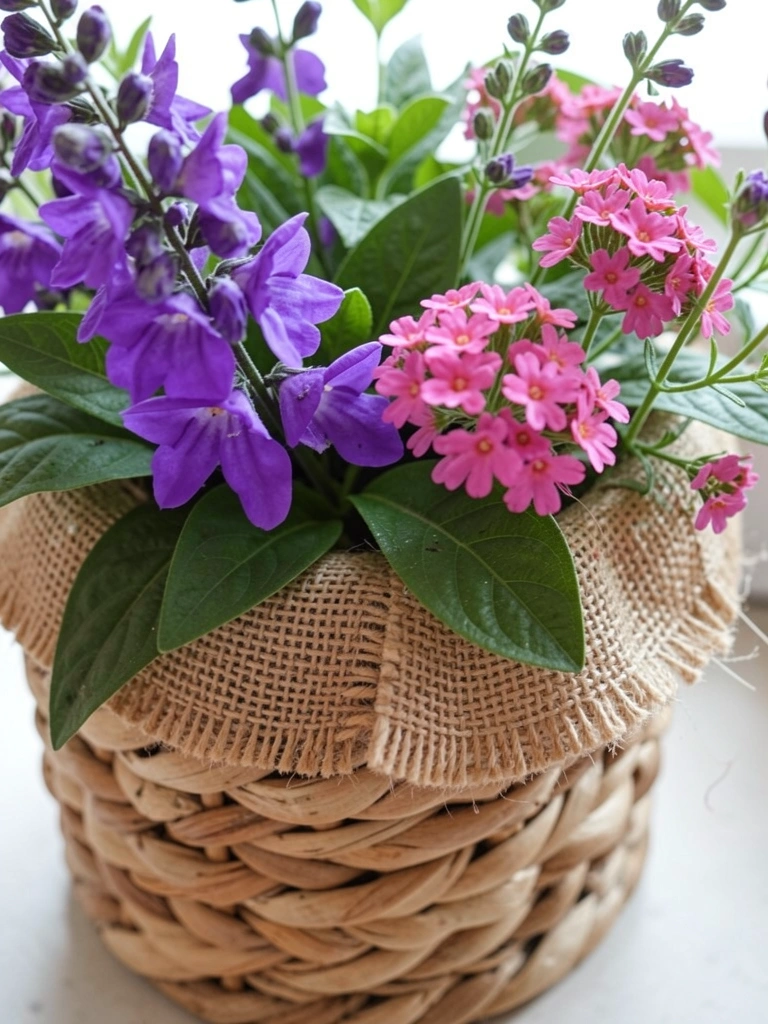
I like the soft look of a woven basket on an oak table. Salvias and verbena fit the shape and keep blooms high enough for butterflies. I learned baskets rot if left on damp wood, so I add a saucer beneath.
The basket feels homey and casual. It’s light to carry inside if weather turns. I sometimes tuck a small solar light into the foliage for evenings.
What You’ll Need for This Look
- Woven basket with liner (12–16")
- Salvia varieties (purple/blue)
- Verbena (pink or purple)
- Small saucer or tray
11. Potted Herb Cluster with Lavender and Thyme
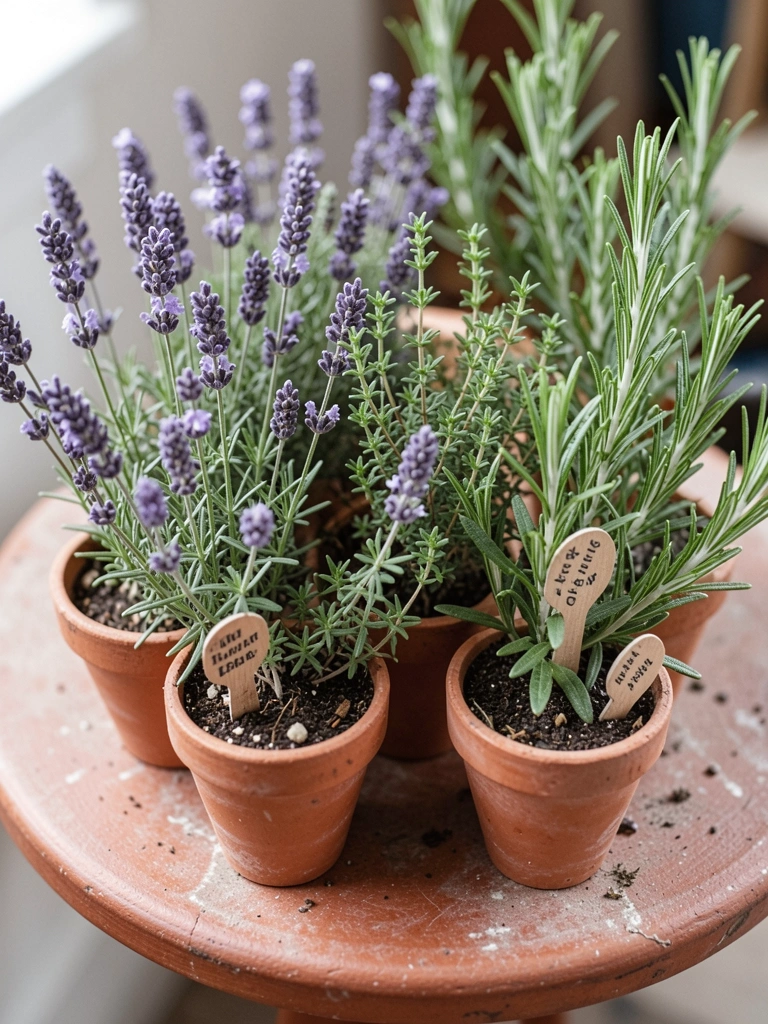
I keep herbs at the table for smell and butterfly visits. Lavender and thyme are low and aromatic, and butterflies love the lavender blooms. I once kept rosemary with them and it crowded the tray; now I give each pot breathing room.
It’s a practical centerpiece you can harvest from. Guests admire the scent. I rotate pots seasonally for fresh blooms.
What You’ll Need for This Look
- Small terracotta pots (4–6")
- Lavender, thyme, rosemary
- Plant labels
- Round tray or table mat
12. Hollow Log Planter with Native Wildflowers
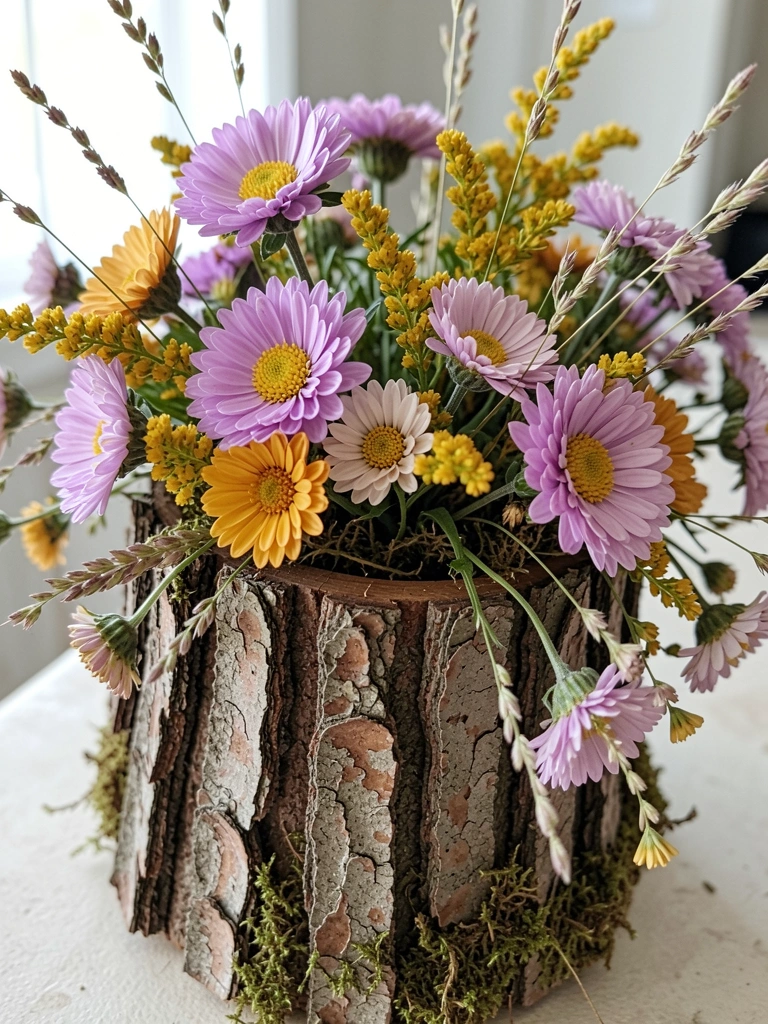
I hollowed a fallen log and filled it with asters and goldenrod. It looks like a slice of the meadow on the table. My first log soaked water and mildewed; I now line with gravel and a plastic inner tray.
This brings a woodland touch that butterflies still visit. It ages gracefully and invites close inspection during dinner. I let a few seedheads remain for winter interest.
What You’ll Need for This Look
- Hollow log or log planter (12–18")
- Asters, goldenrod, native grasses
- Gravel for drainage
- Plastic liner tray
13. Mini Trellis with Climbing Lonicera and Petunias
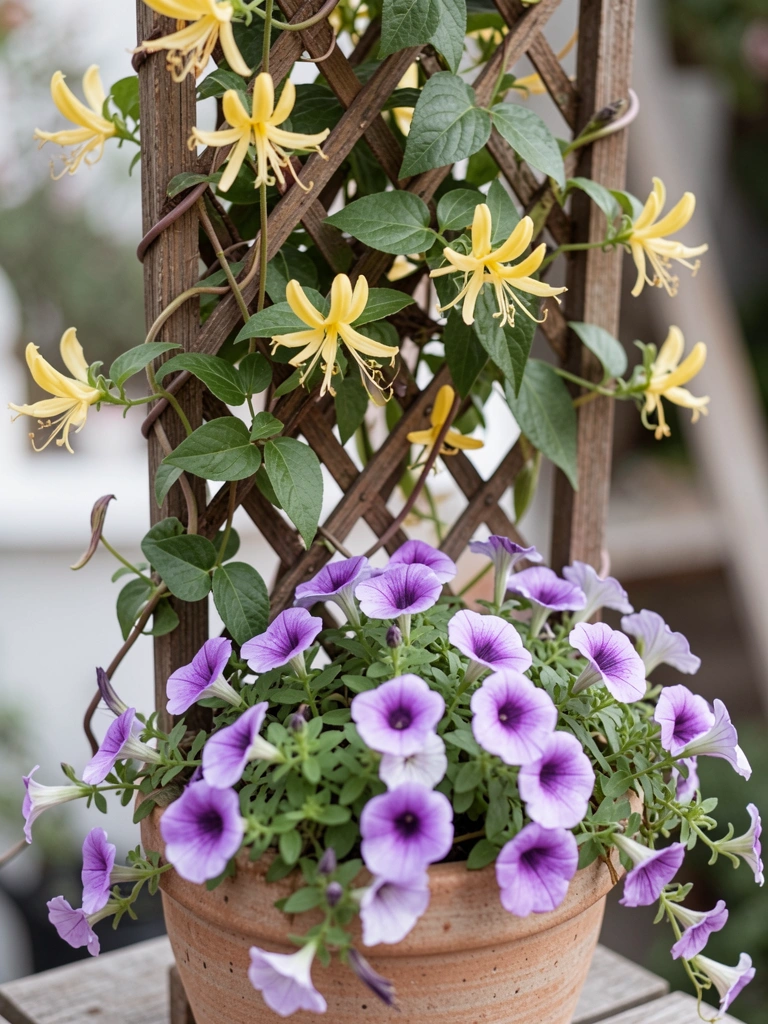
I added a tiny trellis to give vertical interest. Lonicera (honeysuckle) and petunias climb and spill nicely. I once used too tall a trellis and it blocked sightlines; now I keep it low.
The height gives butterflies a place to hover. It’s charming on a small round table. I tie new shoots loosely as they grow.
What You’ll Need for This Look
- Small tabletop trellis (12–18")
- Climbing Lonicera (honeysuckle)
- Trailing petunias
- Medium ceramic pot
14. Painted Metal Bowl with Succulent Accents and Nectar Flowers
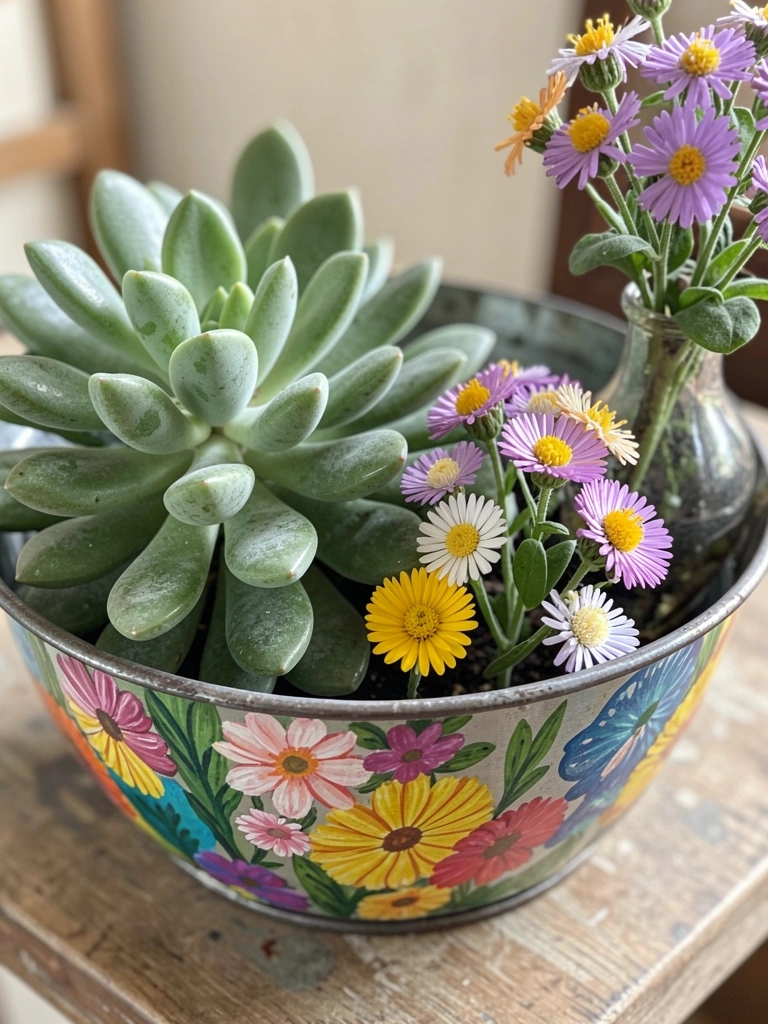
I mixed succulents and a few nectar flowers in a painted metal bowl for contrast. The succulents add texture and the asters supply the nectar. I overwatered succulents once next to thirsty annuals; separate soil layers help.
This is an artsy, low-maintenance look. The metal reflects light and draws butterflies in. I replace the annuals mid-season for steady blooms.
What You’ll Need for This Look
- Painted metal bowl (12–16")
- Small succulents (varied)
- Asters or small annual nectar flowers
- Coarse potting mix and sand
15. Candlelit Cloche with Night-Blooming Phlox and Solar Light
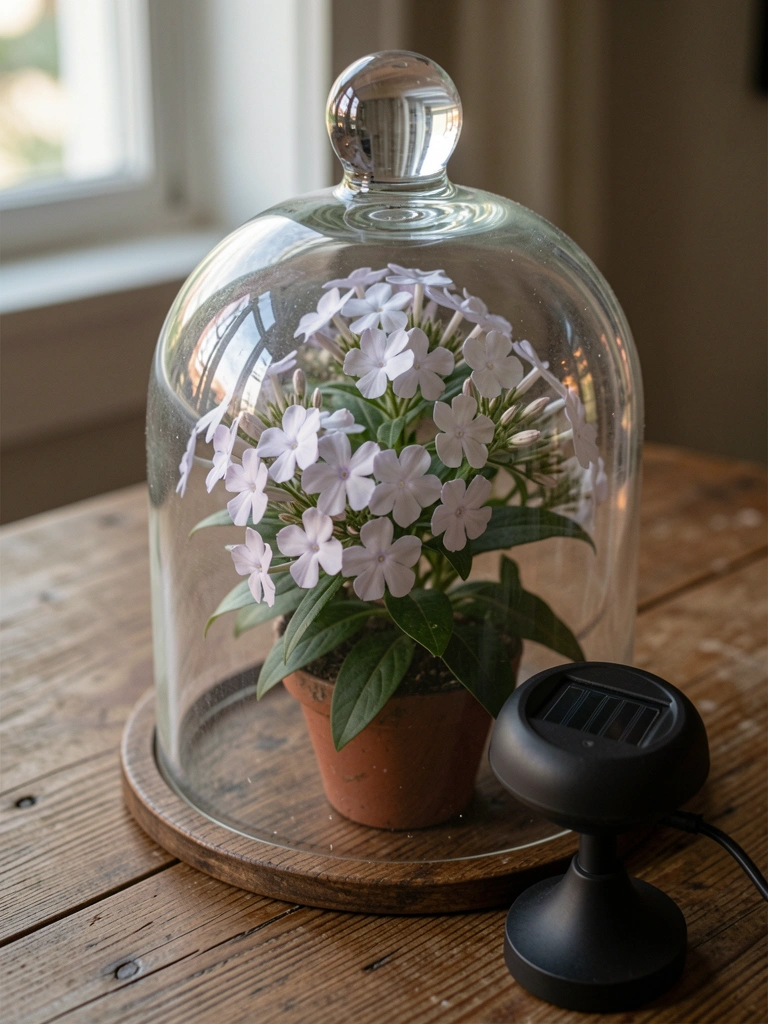
I use a cloche for evening charm. Night-blooming phlox under glass holds scent and warmth; butterflies come late in my yard. I made the mistake of sealing it tightly once; now I vent it slightly each night.
A tiny solar light under the cloche makes the blooms readable at dusk. It’s cozy and brings evening winged visitors closer. I lift it for dinner to let air circulate.
What You’ll Need for This Look
- Glass cloche (8–12")
- Night-blooming phlox
- Small solar light (warm white)
- Pebble base or small saucer
16. Painted Clay Charger with Potted Coneflower Singles
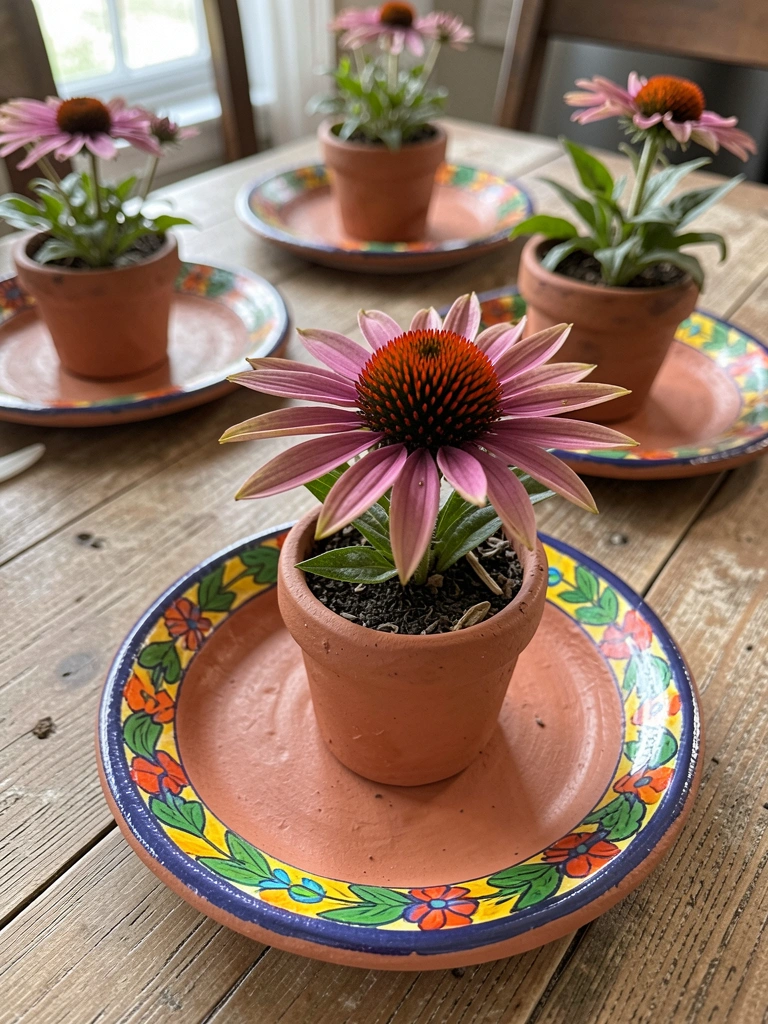
I placed single potted coneflowers on painted clay chargers for color pops. Each plant acts like a mini sculpture. At first I used flimsy chargers and they tipped; choosing sturdy clay made the display reliable.
This approach is modular and easy to rearrange. Guests can take a pot home at the end of summer. I keep the pots small and tidy so they don’t crowd the table.
What You’ll Need for This Look
- Clay chargers (8–10")
- Small potted coneflowers (Echinacea)
- Acrylic-safe paints (optional)
- Small saucers for stability
Final Thoughts
You don’t need to do all of these.
Pick one that fits your table, your time, and your style.
Start small. Watch which flowers bring the most wings. You’ll learn fast and enjoy the company.