How to Build a Rock Garden: A Step-by-Step Beginner’s Guide
I used to stare at that bare strip by the fence and feel stuck.
Rock gardens looked tidy, but I worried they'd feel forced. I wanted something natural and easy to live with.
After some tries I learned to see balance instead of perfection. This guide shows a simple way to make a rock garden that sits right in the yard.
How to Build a Rock Garden: A Step-by-Step Beginner's Guide
You’ll learn how to shape a small, balanced rock garden, pick plants that soften stones, and finish it so it feels intentional and lived-in.
What You’ll Need
- Mixed fieldstones (small, medium, varied shapes)
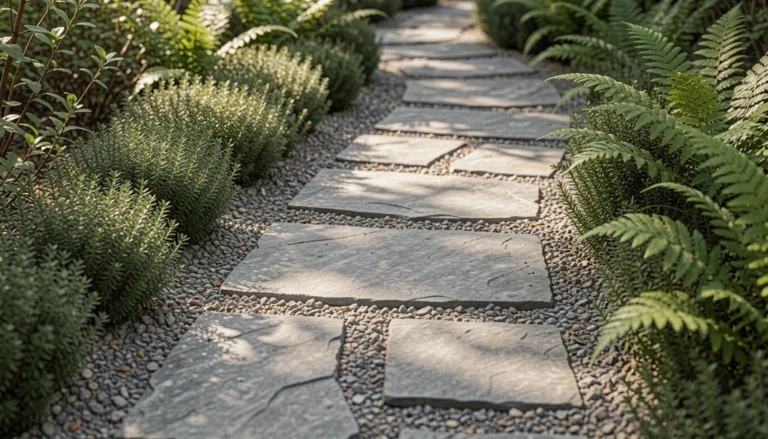
- One or two flat flagstones (6–12 in, weathered look)
- Coarse gravel (natural gray, for surface texture)
- Low succulents or alpine sedums (varied greens and reds)
- Small ornamental grass clumps (blue or fine-textured)
- Creeping thyme or low evergreen groundcover
- Shallow-rooted perennials (saxifraga, aubrieta)
- A single focal rock or weathered driftwood piece
Step 1: Choose the spot and shape

I look for a place that already feels like it could belong to a rock garden.
A sunny, slightly drained patch usually works. I draw a loose shape with my foot or a stick. The curve matters more than neatness. It gives the bed movement and avoids a forced, symmetrical look.
People miss how much the shape sets the mood. A common mistake is making a perfect circle. That feels staged. I aim for a relaxed curve that fits the yard.
Step 2: Lay the big stones—the garden skeleton
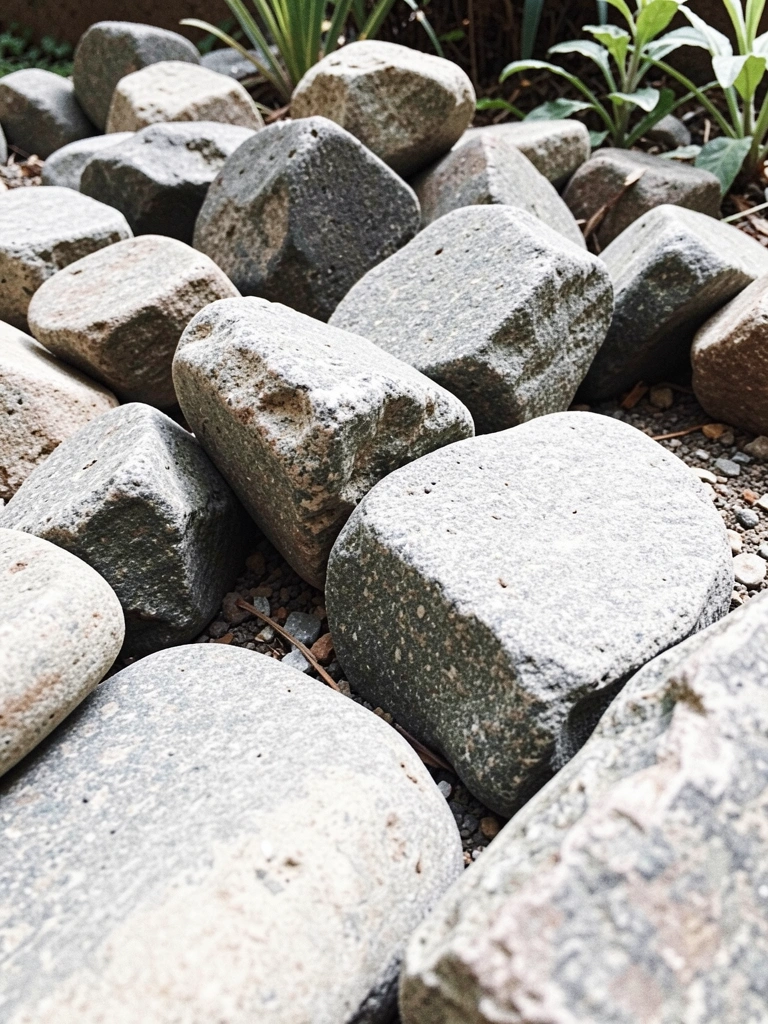
I place the largest stones first. I let them lean and overlap a bit. This creates the bones of the garden and a sense of flow. I step back often to check angles and sightlines.
Visually, the area changes from empty to structured. The bigger rocks anchor the view and tell you where the eye should travel.
One insight is to keep different heights and angles. The mistake I see is lining rocks up too evenly. That flattens the composition and looks artificial.
Step 3: Add medium stones and gravel for texture

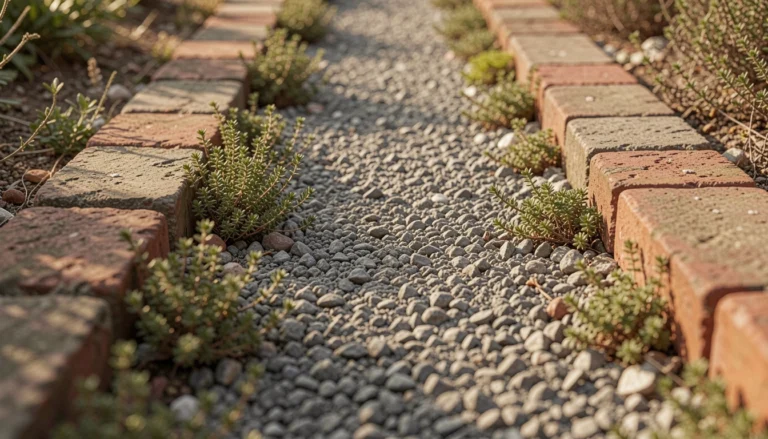
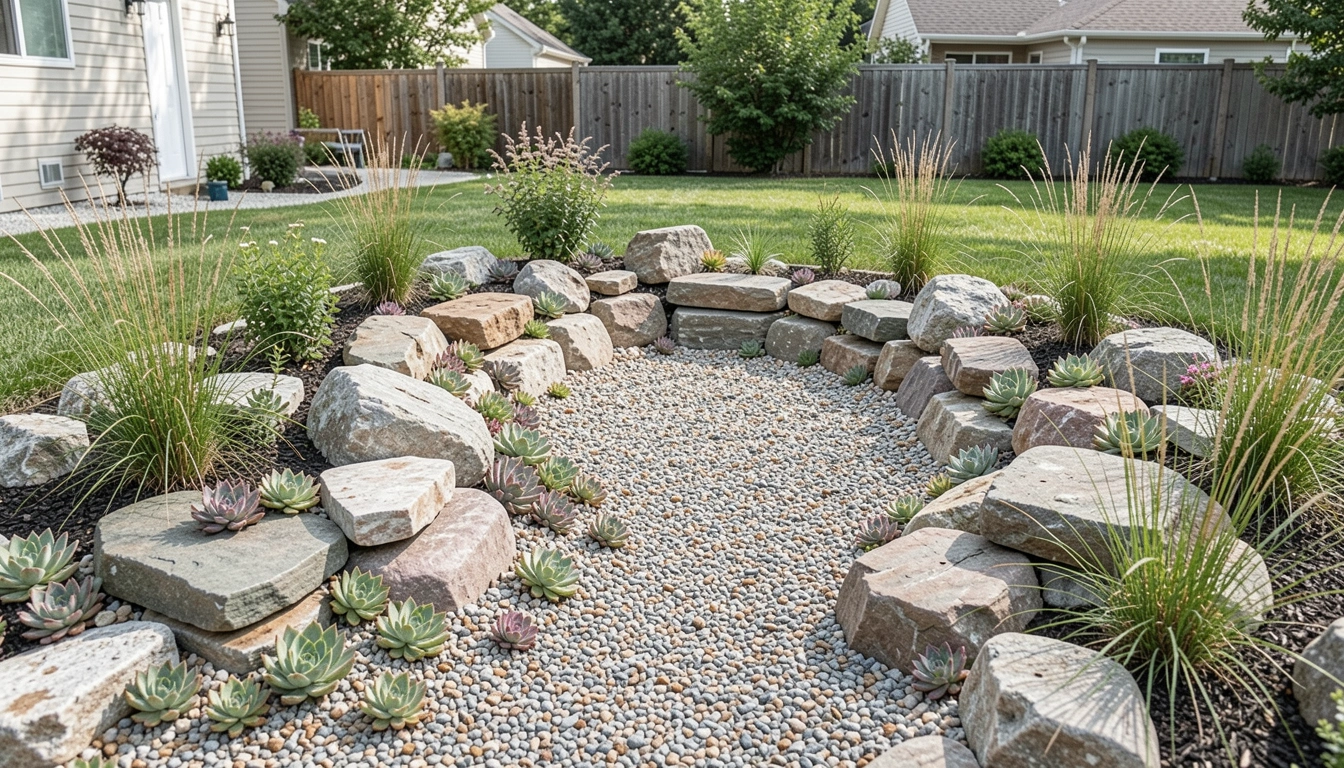
I tuck medium stones into gaps and let gravel settle around them. This connects the big stones and creates pockets for planting. The gravel gives a finished texture that feels natural.
The bed starts to read as a landscape—little terraces and ledges appear where plants can live.
People often forget to leave small pockets. Those pockets are where charm starts. A mistake is overfilling with gravel so the rocks lose their contrast and sculptural quality.
Step 4: Plant into pockets—soften and balance
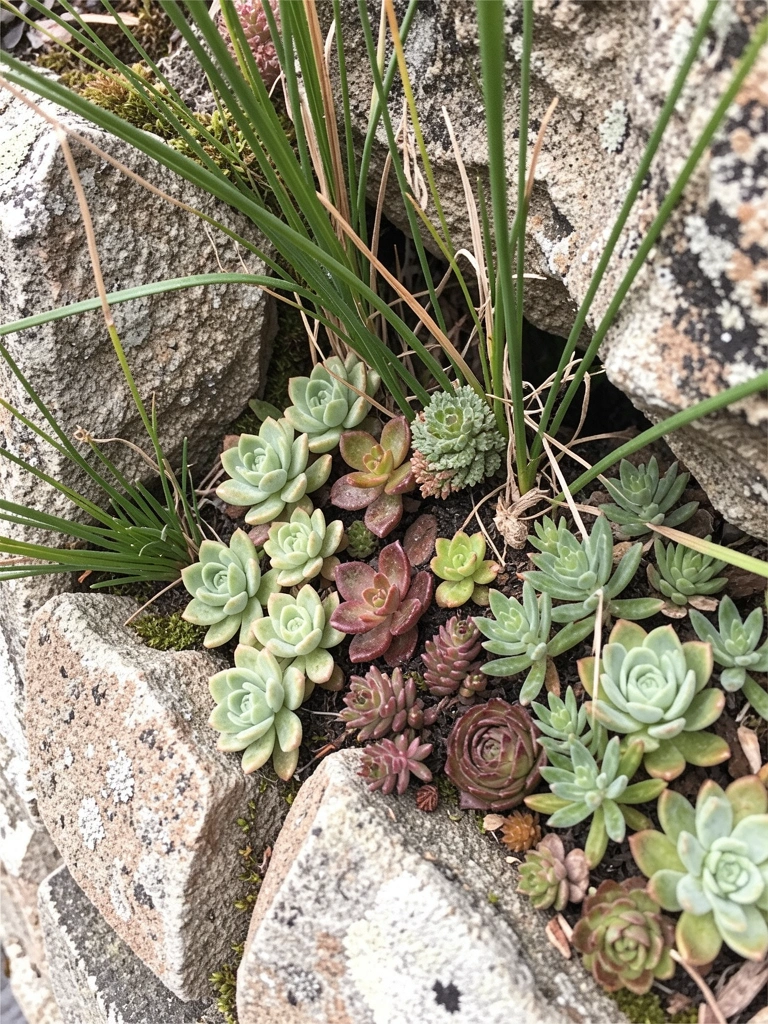
I plant low, shallow-rooted species into the pockets and at rock bases. I mix textures—tiny rosettes, fine grasses, and creeping thyme—to soften edges. I let plants peek out rather than cover stones.
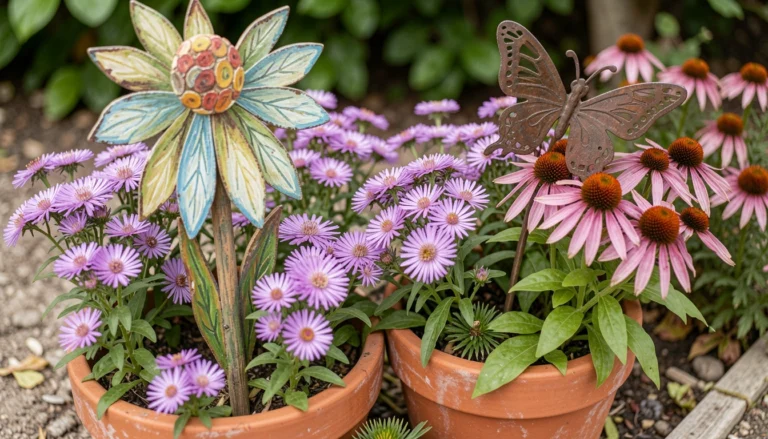
Visually, the garden warms. The hard lines of stone get softened by foliage. Small color pops come from leaf tones and tiny flowers.
One insight: think of plants as punctuation, not blankets. The common mistake is planting tall or dense species that hide the stones. Keep the stones visible.
Step 5: Finish and live with it—small edits over time
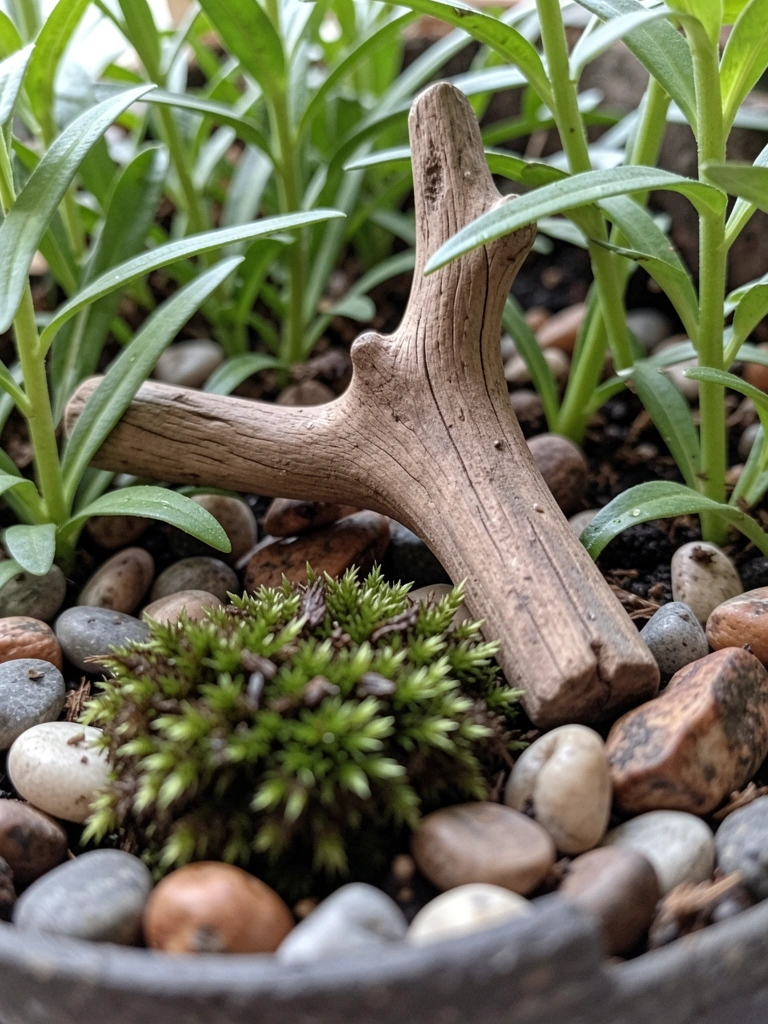
I step back and make small edits over weeks. I pull a plant here, shift a stone there. The garden settles into itself. I add a patch of gravel or a tiny mossy spot for age.
The scene becomes lived-in, not staged. Little changes keep it feeling natural.
People often expect it to be done after one day. The mistake is leaving it static. A rock garden earns its character through gentle edits.
Plant Choices and Pairings
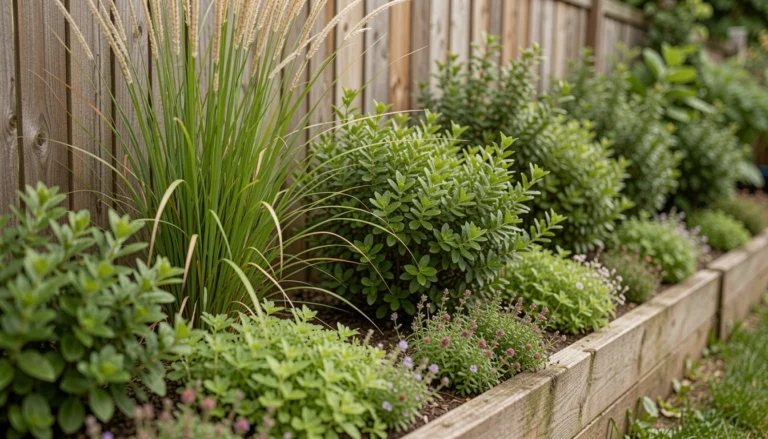
I favor plants that show form and texture at a small scale. Sedums, saxifraga, thyme, and small grasses give contrast without overwhelming stones.
Pair a tight, low rosette with a wispy grass nearby. That contrast reads as calm and balanced. Keep colors muted—greens, silvers, and soft pinks—to let stones remain central.
- Mix evergreen groundcover with seasonal bloomers.
- Repeat a plant variety in 3s for rhythm.
- Avoid tall, aggressive perennials.
Balancing Scale and Texture
Scale is how big the plants feel against the stones. I match small stones with small plants and reserve larger rocks for bolder plant groups. This keeps the composition coherent.
Texture comes from leaves, stone surface, and gravel. I look for contrasts: smooth succulents beside rough fieldstone, fine grass near chunky gravel. Those contrasts create interest without fuss.
Seasonal Care and Small Fixes
I check the rock garden each season and make tiny adjustments. Pull a stray volunteer, trim a grass clump, or thin a dense patch of thyme. Those small moves keep the balance.
Let things age a bit. A little moss or a smudge of lichen on a rock adds life. But remove what feels messy, not what feels lived-in.
Final Thoughts
Start small. A little bed that sits well will teach you more than a big, rushed layout.
Work in stages and edit as you go. I find the garden improves with gentle changes.
You don’t need perfection. Aim for balance, texture, and a place that feels right to you.