9 Front Yard Rock Garden Ideas for Stunning Curb Appeal
I learned early that rocks calm chaotic front yards.
I moved the lawn edge, brought in stones, and things fell into place slowly.
These are designs I actually built, fixed, and still tend. Clear, simple, and doable even with mistakes.
9 Front Yard Rock Garden Ideas for Stunning Curb Appeal
These 9 front yard rock garden ideas are tested in real yards.
They’re practical, small-budget, and easy to maintain.
I include plant mixes, materials, and honest tips for each look.
1. Narrow Rock Ribbon Along the Driveway
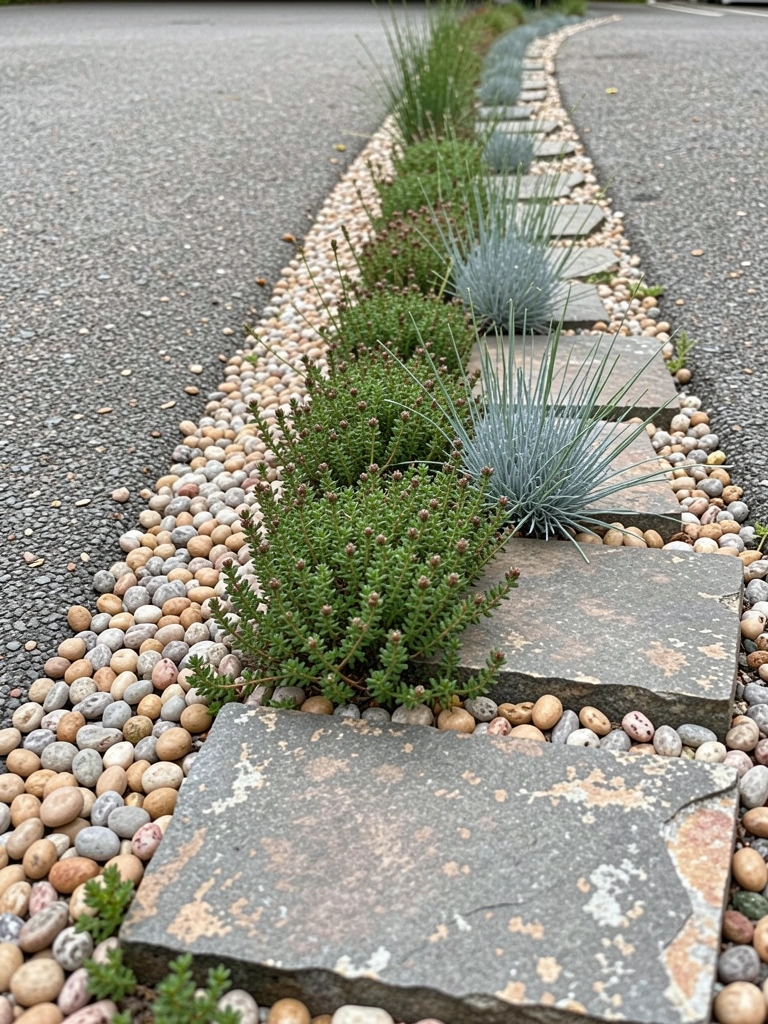
I carved a slim rock ribbon between asphalt and lawn.
It tightened the edge and created instant texture.
I used pea gravel, creeping thyme, and small stepping stones; the thyme smells nice in heat.
The ribbon is low maintenance and hides tire splash. My initial mistake was too many large stones — I had to regrade for drainage.
What You’ll Need for This Look
- Pea gravel (¼ inch), light gray
- Creeping thyme plugs (groundcover)
- Blue fescue (clumps)
- Flat stepping stones, irregular shape
2. Dry Stream Bed That Handles Runoff

I built a dry stream to move water away from a soggy corner.
It looks natural and saved my parsley bed from drowning.
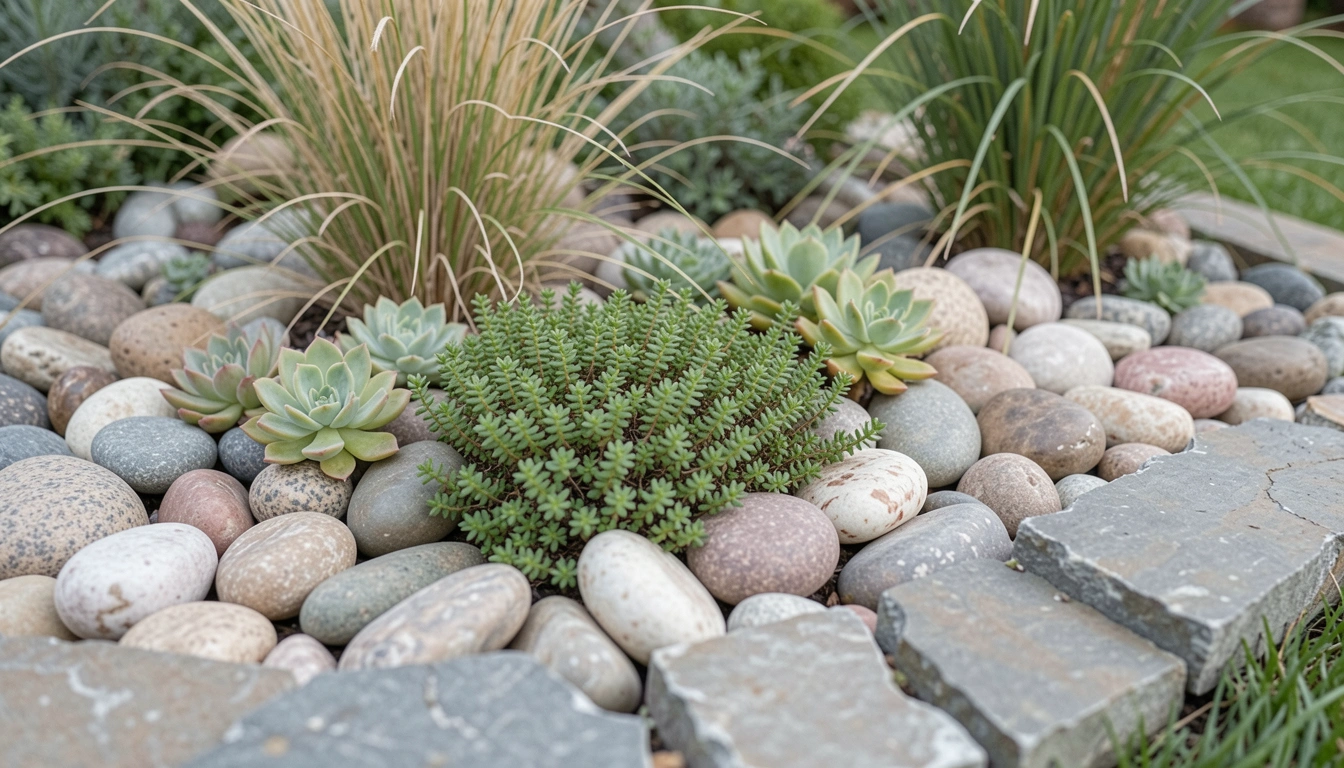
I lined the channel with river rock and anchored larger boulders; pockets of sedum soften the edges. I initially planted shrubs too close and lost a couple in the first storm — spacing matters more than I expected.
What You’ll Need for This Look
- River rock (1–3 inch mix)
- Large boulders (1–2 ft)
- Sedum mats and mixed sedum plugs
- Landscaping fabric (permeable)
3. Succulent-Sculpted Rock Mound
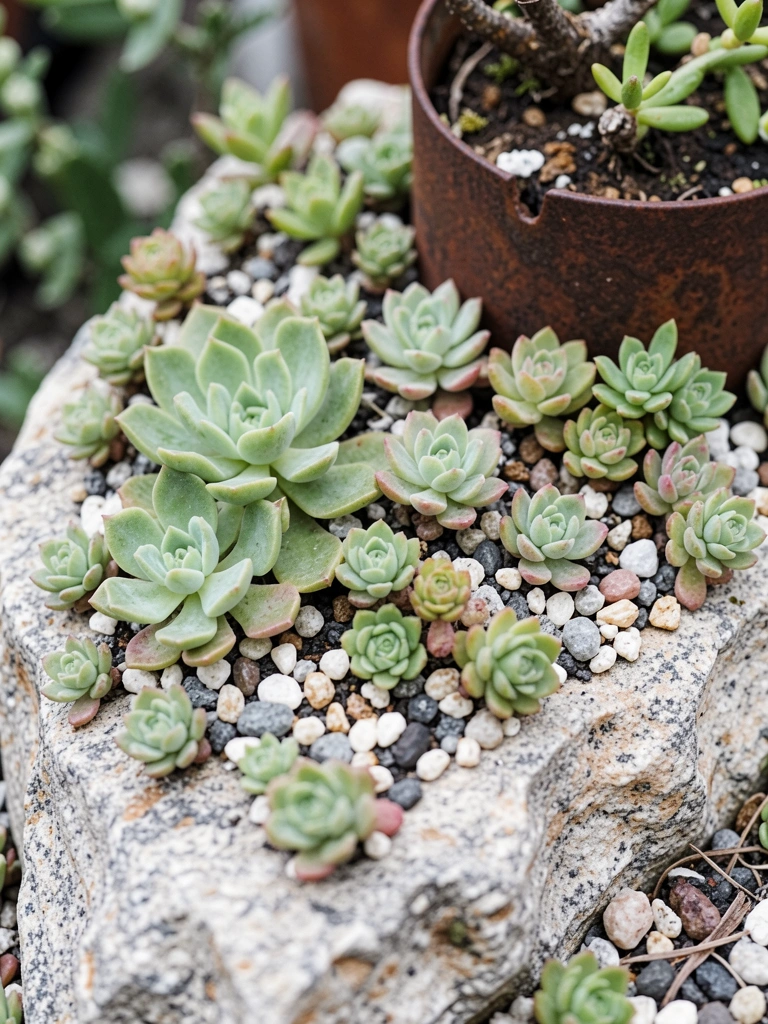
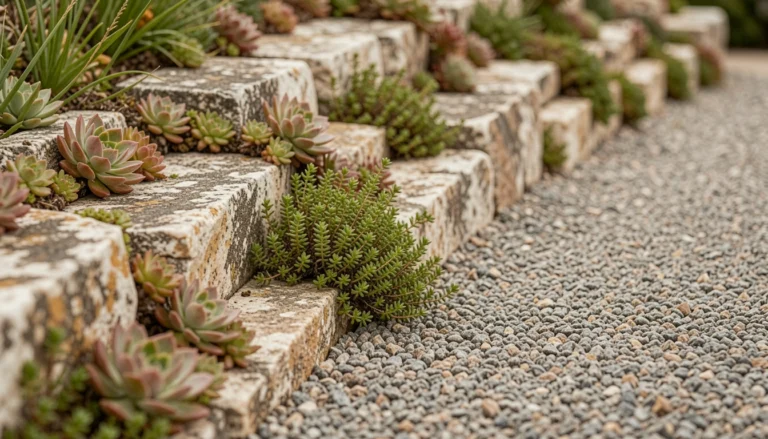
I stacked flat rocks into a low mound and planted succulents into crevices.
It reads like a living sculpture and survives dry summers.
Hens-and-chicks, sedums, and a handful of sempervivum filled gaps. I learned the hard way that potting mix inside pockets needs grit — I lost a few rosettes to rot before switching soil.
What You’ll Need for This Look
- Flat flagstone (small pieces)
- Succulent mix (sedum, sempervivum)
- Gritty cactus potting mix
- Small rusty metal planter or accent rock
4. Stone Steps with Alpine Plant Pockets
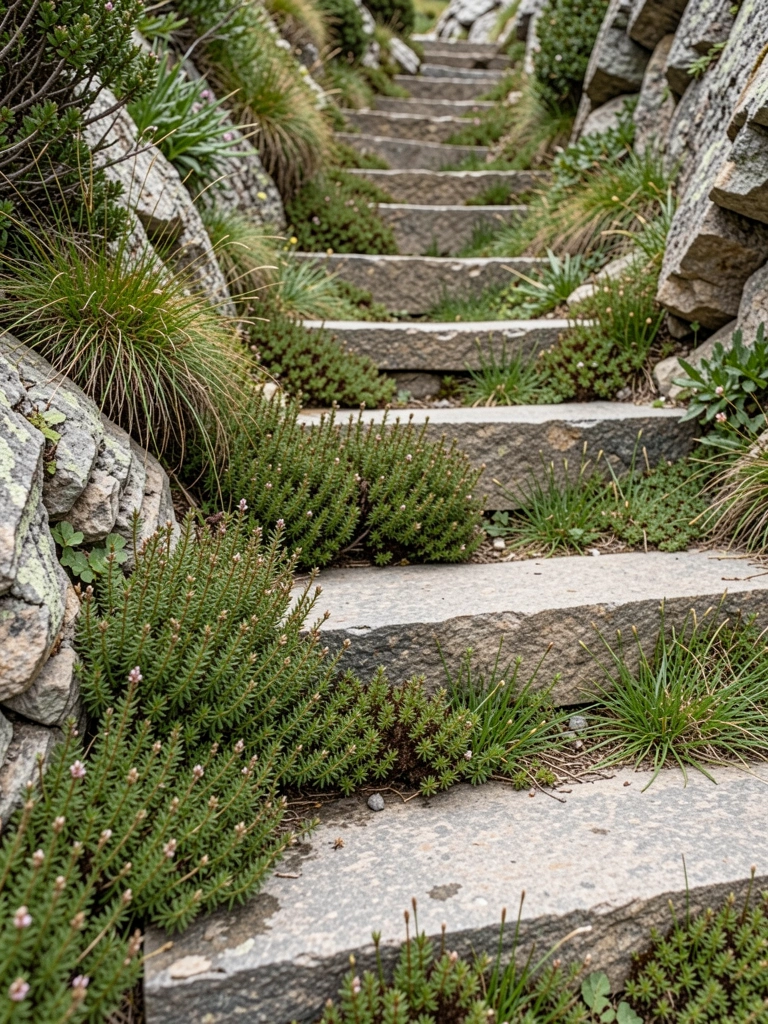
I cut simple steps into a slope and planted alpine pockets at each riser.
The steps make the front yard approachable and soft.
Thyme and dwarf saxifraga spill over the edges and smell great. I overestimated the step height at first and had to reset two stones — scale matters for comfort and footing.
What You’ll Need for This Look
- Natural stone treads (6–8 inch deep)
- Creeping thyme, dwarf saxifraga, alpine sedums
- Sand/gravel mix for setting stones
- Small tamper or compacting tool
5. Boulders Framed by Native Grasses

I dropped a single boulder as a focal point and planted around it with native grasses.
The scale anchors the yard without feeling formal.
Grasses like little bluestem move and soften the rock’s edge. I had to reposition the boulder once; site lines from the porch changed how it read in the yard.
What You’ll Need for This Look
- Single large boulder (2–3 ft)
- Native ornamental grasses (clump-forming)
- Gravel base (crushed stone)
- Low wildflower plugs for pollinators
6. Pollinator Pockets Between Stones

I started adding pocket plantings for bees between paving stones.
They turned a sterile gravel bed into a place humming with life.
Lavender, echinacea, and yarrow held up to sun and foot traffic. I learned that seed-only mixes washed away in heavy rain — plugs or small plants worked much better for instant establishment.
What You’ll Need for This Look
- Lavender, echinacea, yarrow plugs
- Flat stepping stones or flagstone with gaps
- Gravel mulch (for contrast)
- Small trowel and watering can
7. Recycled Concrete Patio with Rock Edging and Containers
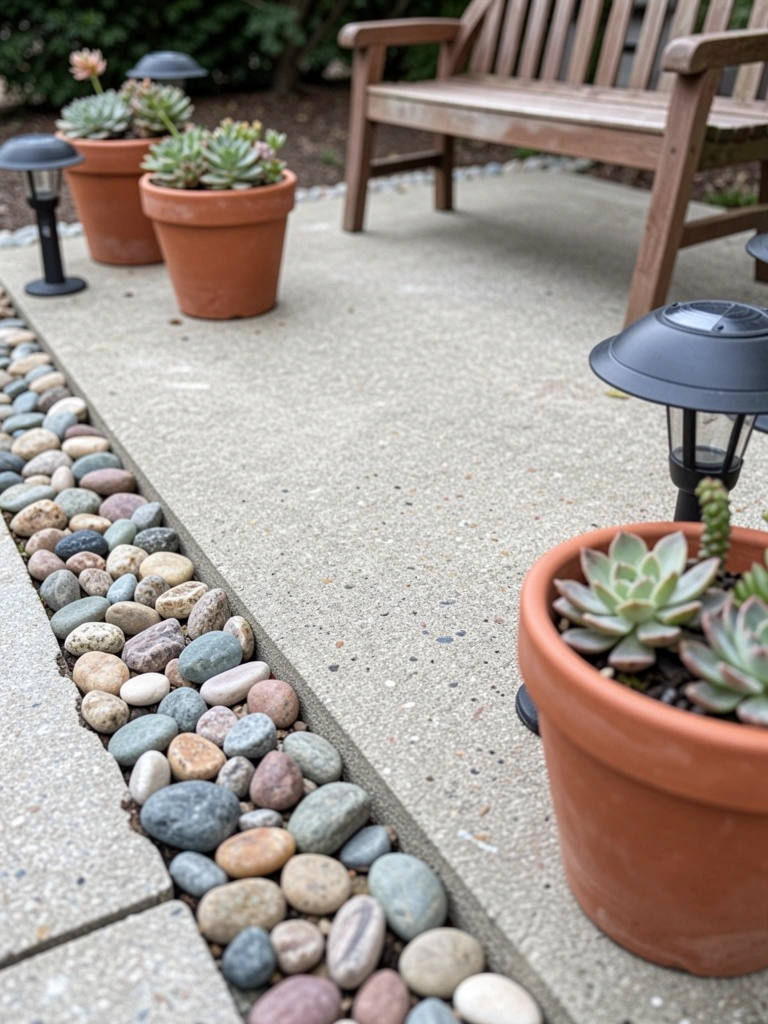
I used broken concrete slabs to make a patchwork patio and edged it with river rock.
Container plantings kept color up near the doorway.
Terracotta pots with trailing succulents and a small bench made the space useful. Early on I underestimated drainage for larger pots; drilling holes and adding gravel solved the soggy roots.
What You’ll Need for This Look
- Recycled concrete slabs (irregular)
- River rock edging (2–3 inch)
- Terracotta planters (10–14 inch)
- Solar pathway lights, warm white
8. Low Stone Wall with Layered Drought-Tolerant Planting
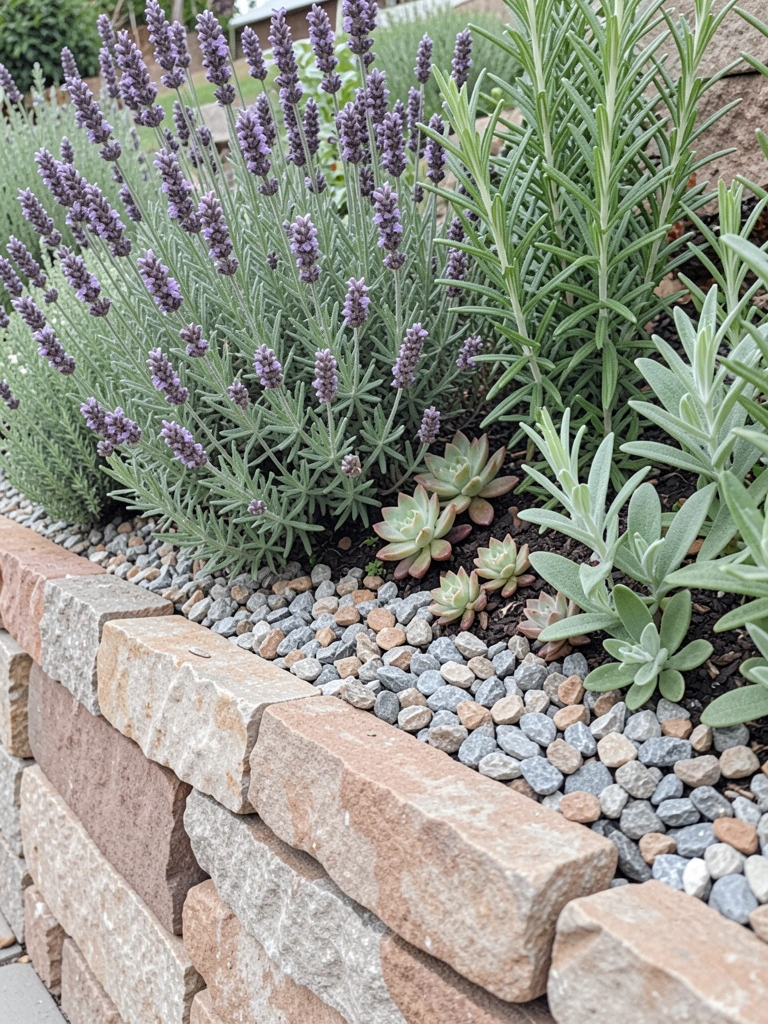
I built a short dry-stack wall and layered drought-tolerant plants on the slope above.
It read like a tidy framework for messy plants.
Rosemary and low sage created scent and structure. I overplanted the first year and had to thin out clumps — less is often better for air and root space.
What You’ll Need for This Look
- Dry-stack stones (local fieldstone)
- Lavender, rosemary, low sage, small succulents
- Coarse gravel mulch
- Hand pruners
9. Moon Garden with Pale Stones and Silver Foliage

I used pale gravel and silvery foliage to make a calming evening garden.
From the porch, the bed glows under soft solar lights.
Artemisia, lamb’s ear, and white gaura read bright against the stones. I once chose overly shiny gravel that made glare; switching to matte crushed limestone gave the gentle look I wanted.
What You’ll Need for This Look
- White crushed limestone (fine)
- Artemisia, lamb’s ear, white gaura plugs
- Low-profile solar lights (warm white)
- Small bench or seating accent
Final Thoughts
I didn’t do all of these at once. I tried small experiments and kept the ones that held up.
A rock garden can be simple, durable, and quietly personal.
Pick one idea, gather the few items listed, and I’ll bet it will age well in the yard.