10 Fun & Educational Corner Garden Ideas for Kids in 2026.
Kids love dirt. I have seen it with my own eyes. Give them a small patch of soil and they turn into scientists, chefs, and storytellers all at once. That’s why I truly believe a corner garden can change how children see nature. It becomes their tiny world.
You don’t need a huge yard. I started with one empty corner and a few pots. That small space turned into laughter, muddy shoes, and endless questions. If you want learning to feel like play, these ideas will help you build something magical and meaningful for 2026.
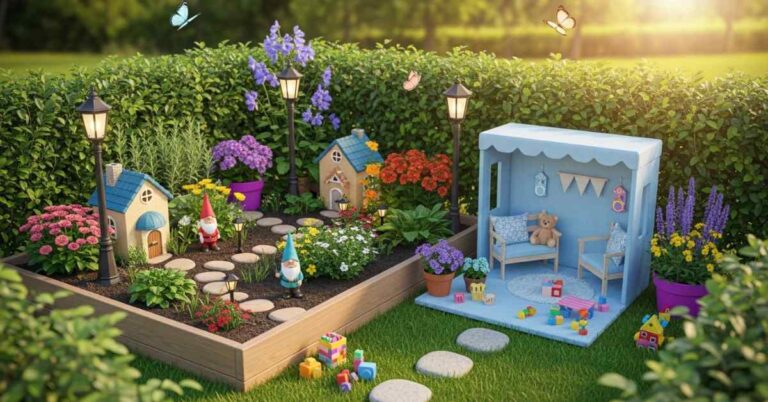
1. Raised Bed Fairy Garden
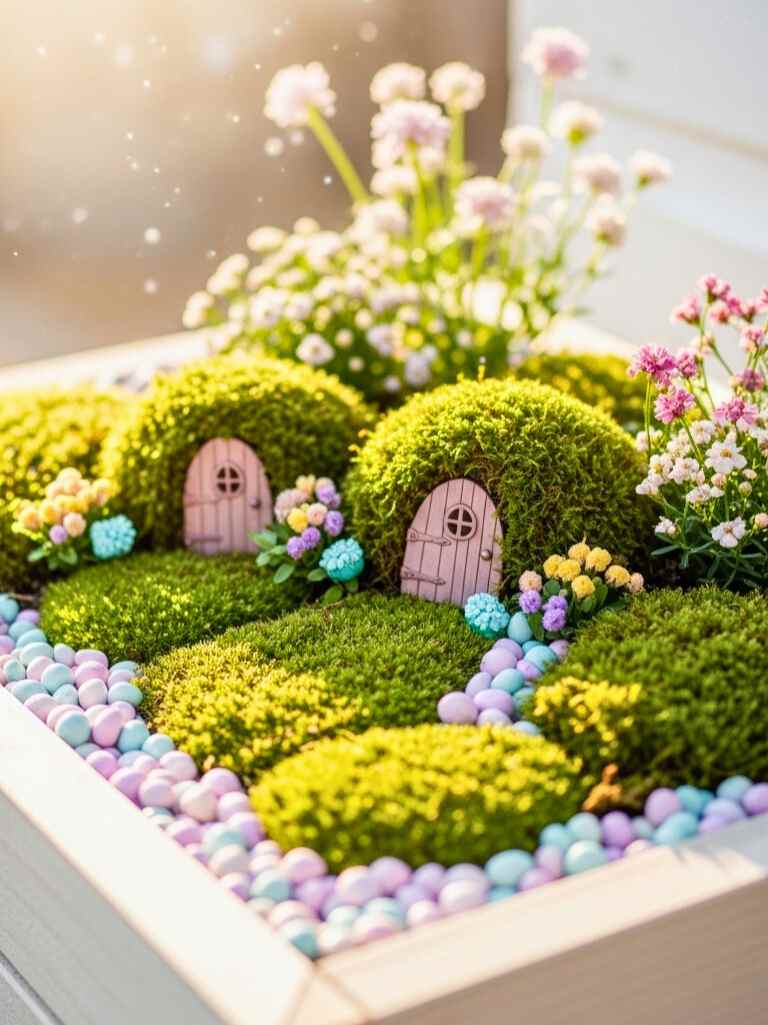
I love starting with a Raised bed fairy garden because it keeps things neat and exciting at the same time. A wooden raised bed makes planting easier for small hands. Kids can grow tiny flowers like alyssum, moss, and mini ferns. Then we add little fairy doors, pebbles, and colorful stones.
This setup teaches spacing, soil depth, and plant care. Children learn why sunlight matters. They see how water changes everything. I also use this space to talk about insects and pollination. It feels like play, but it’s real science.
It also looks picture-perfect, so you can easily style it for Pinterest images. A tidy raised bed against a fence or wall works beautifully for garden corner landscaping ideas.
2. Vegetable Patch With Name Tags
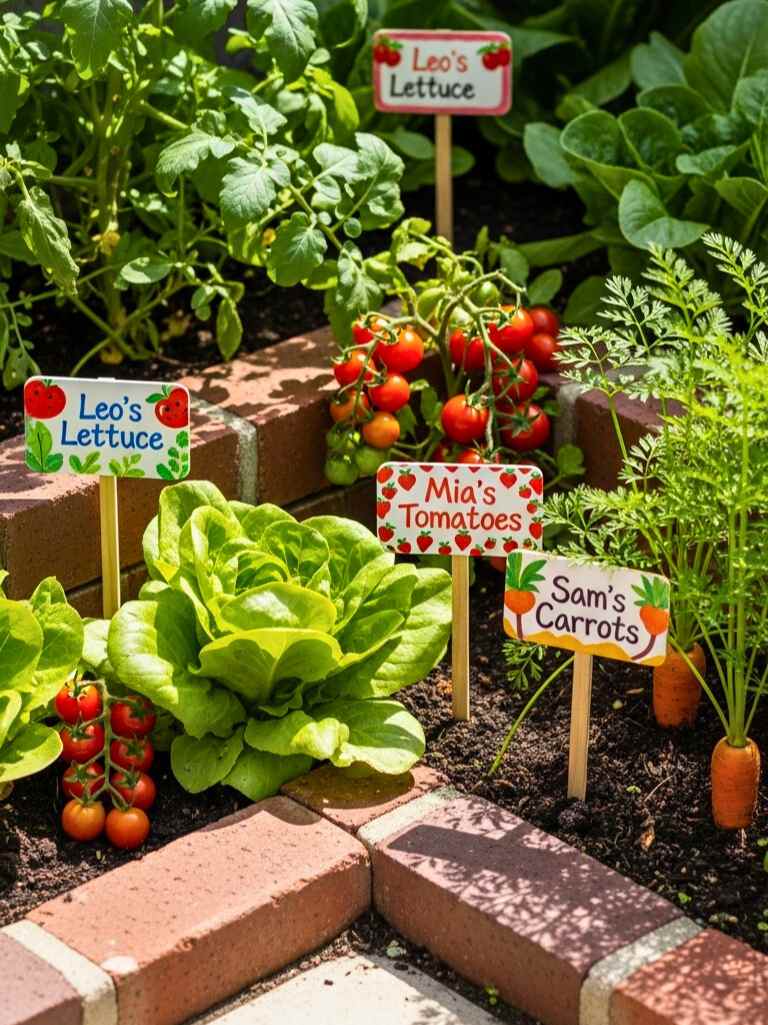
I find that kids feel proud when something grows with their name on it. So I create a mini vegetable patch in the corner. Lettuce, cherry tomatoes, spinach, and carrots grow well in small areas.
I let them paint wooden sticks with their names. Then we place those sticks near each plant. This simple step builds ownership. They water “their” plant more carefully. They check it daily.
This garden teaches patience. It shows how food comes from soil, not supermarkets. I use simple measuring cups to teach watering amounts. It becomes a math lesson without any drama.
For structure, I frame the patch with bricks or wooden boards. Clean edges make the corner look planned and organized.
3. Butterfly & Pollinator Corner
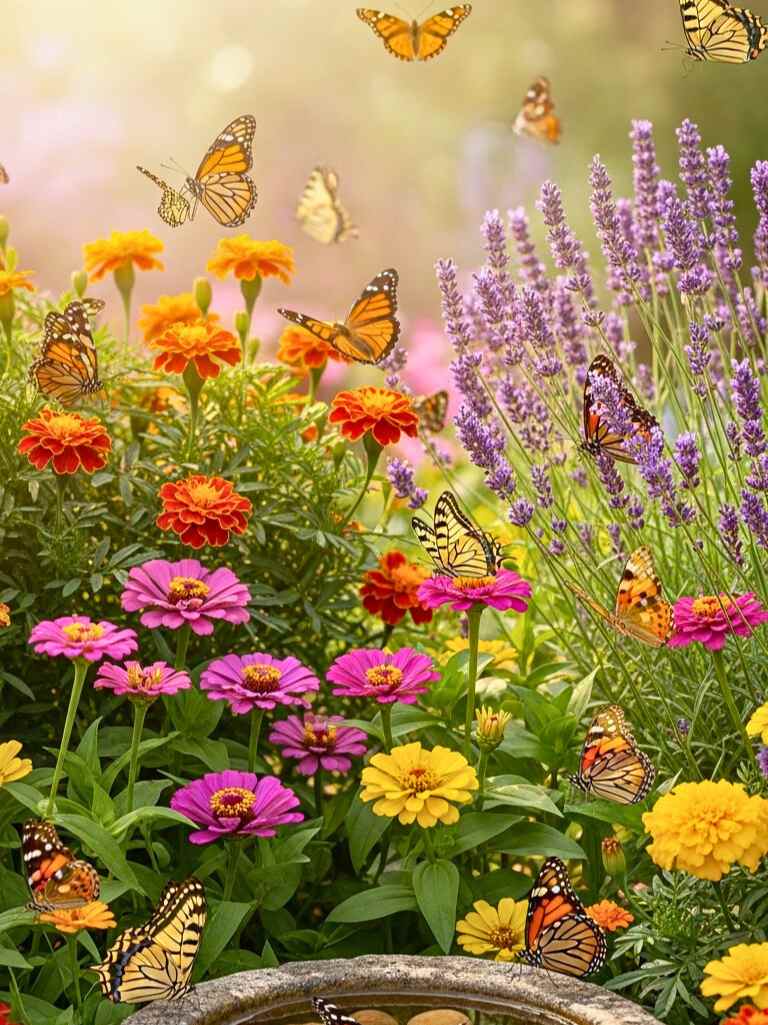
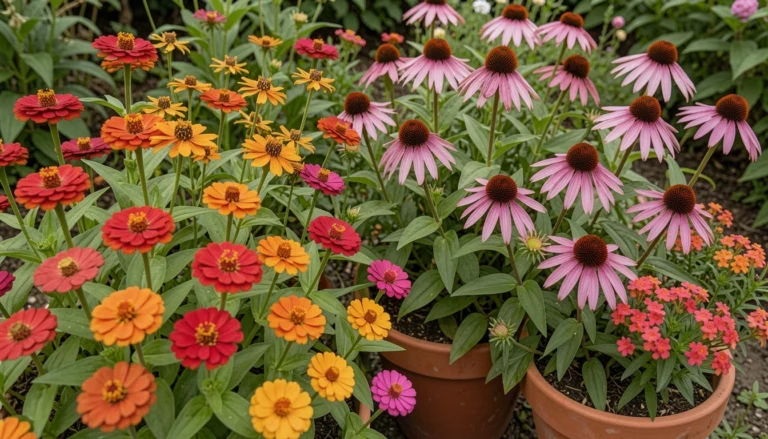
I once planted marigolds and zinnias in a corner and forgot about them for a week. When I came back, butterflies were dancing around. I stood there smiling like a child. That moment changed how I planned kids’ gardens.
I now build a pollinator-friendly corner with nectar-rich flowers. Lavender, coneflowers, and sunflowers attract bees and butterflies. I explain how pollination helps plants produce seeds. Kids actually listen because butterflies are involved.
I add a shallow water dish with small stones so insects can land safely. Safety and observation matter. I tell children to watch, not touch.
This corner becomes a live biology lesson. It also adds color and movement. Photos of butterflies always perform well online. Nature does the marketing for you.
4. Gnome Pathway Decor Adventure
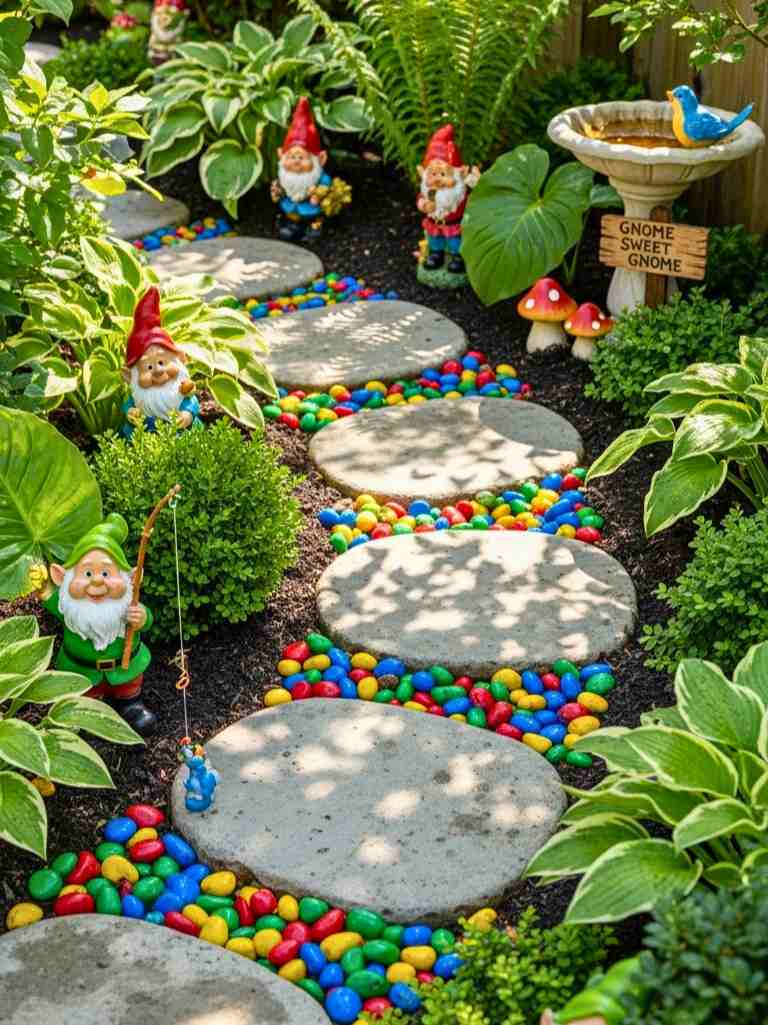
I adore using Gnome pathway decor to create a playful learning trail. I place stepping stones that curve through the corner garden. Between them, I add small gnome statues and bright pebbles.
Each stop along the path can represent something educational. One stop explains compost. Another shows root growth. I sometimes hide small fact cards under stones. Kids lift them and read simple garden tips.
Walking the path becomes a mini adventure. It builds curiosity. It keeps children moving instead of rushing away.
The curved layout also adds charm to small spaces. It makes the garden feel bigger than it is. A smart pathway turns an ordinary corner into an exciting storybook scene.
5. Mini Weather Station Garden
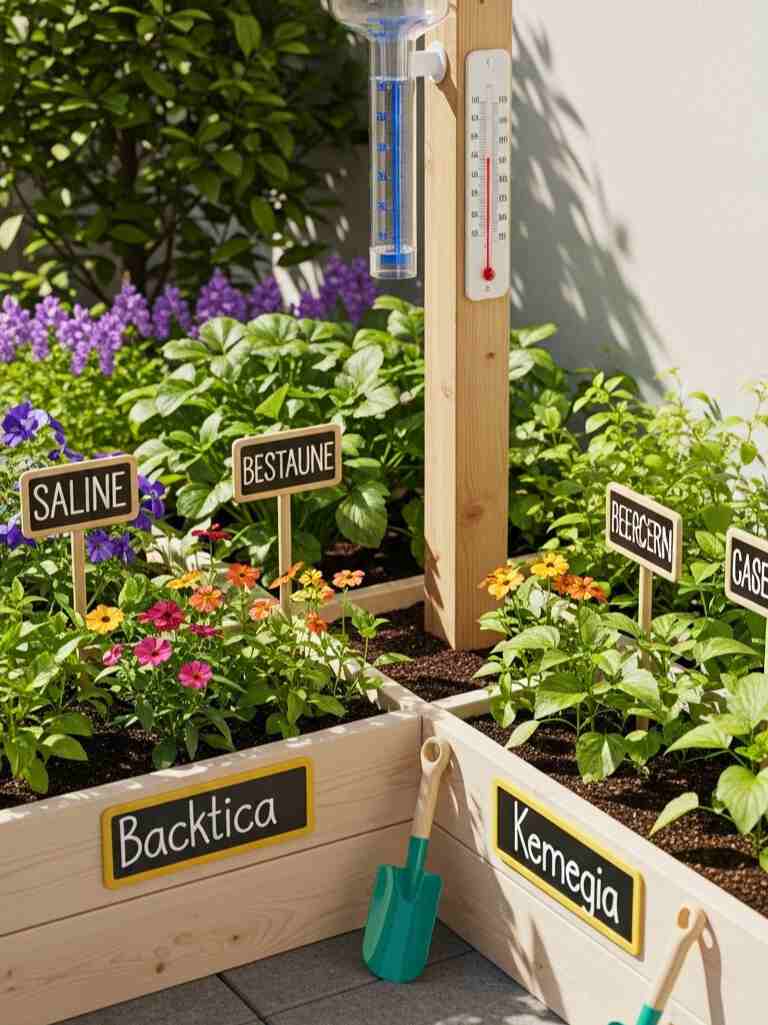
I set up a tiny weather station in one garden corner. It sounds fancy, but it’s simple. I hang a rain gauge and place a thermometer on a wooden post.
Kids check temperature every morning. They record rainfall after storms. I show them how weather affects plant growth. If leaves droop on hot days, we talk about evaporation.
This corner mixes gardening with science. Children begin predicting changes. They notice patterns.
To make it visually appealing, I add bright labels and painted boards. It looks cheerful and organized. For Pinterest content, charts and cute markers add character to your photos. Practical learning never looked so fun.
6. Miniature Houses & Lampposts Village
I remember building a tiny village with my niece using old clay pots and scraps of wood. We painted them like cottages. She insisted one house needed pink windows. I agreed. That corner became her favorite place.
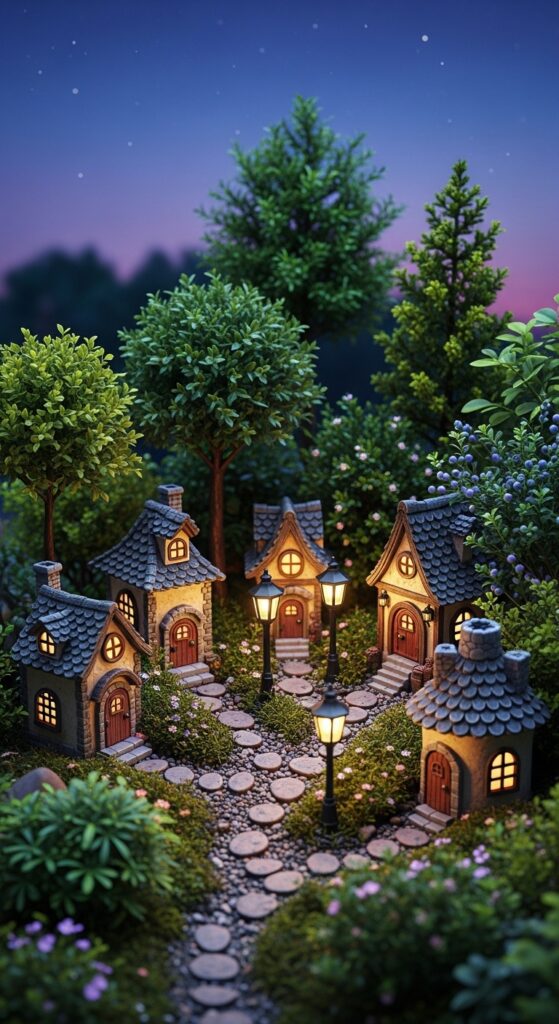
Now I always add Miniature houses & lampposts to create a storytelling zone. Kids invent characters. They build backstories. They place plants around each “home.”
This activity sparks creativity and design thinking. Children decide plant placement. They learn balance and spacing.
Adding soft solar mini lampposts makes it glow at night. That glow feels magical. It transforms a simple garden corner into a tiny world full of imagination and gentle learning.
7. Sensory Herb Corner
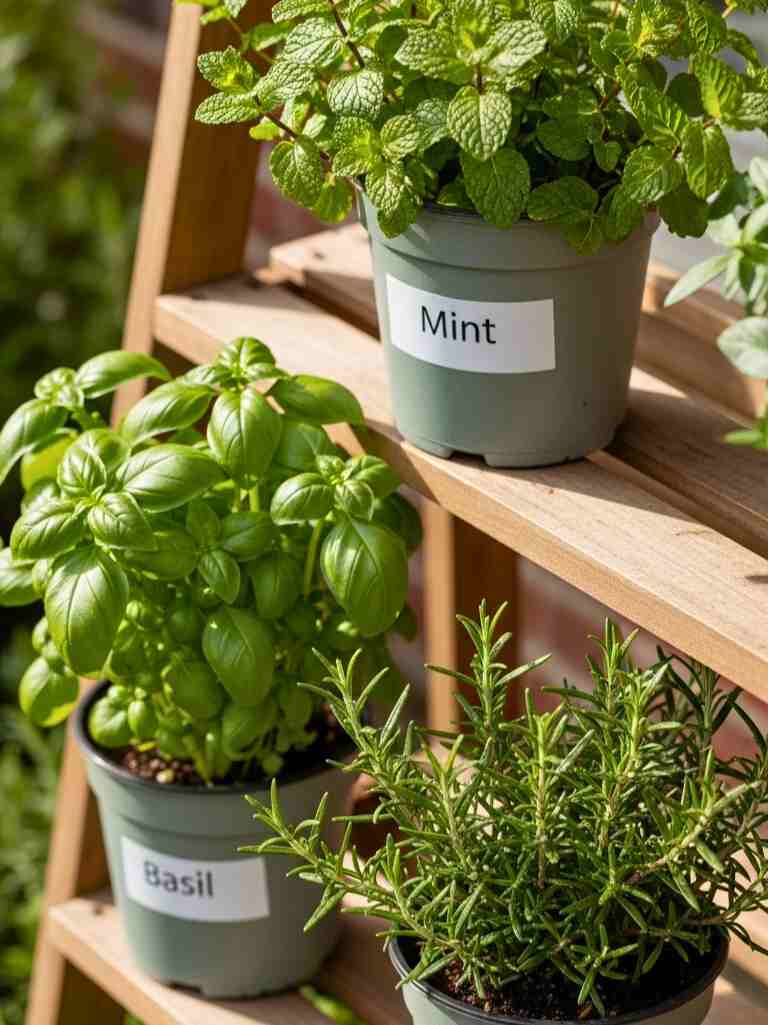
I enjoy building a sensory herb corner with mint, basil, rosemary, and thyme. Kids love touching and smelling leaves. I ask them to close their eyes and guess the scent. It becomes a fun game.
Herbs grow well in small spaces and raised beds. I explain how each herb is used in cooking. Sometimes we pick a few leaves and add them to lemonade or salad.
This corner builds sensory awareness. It also connects gardening to daily meals. Children see purpose beyond decoration.
Neatly labeled pots and simple wooden shelves create a compact layout. It looks clean and educational at the same time.
8. Compact Furniture Mini Oasis
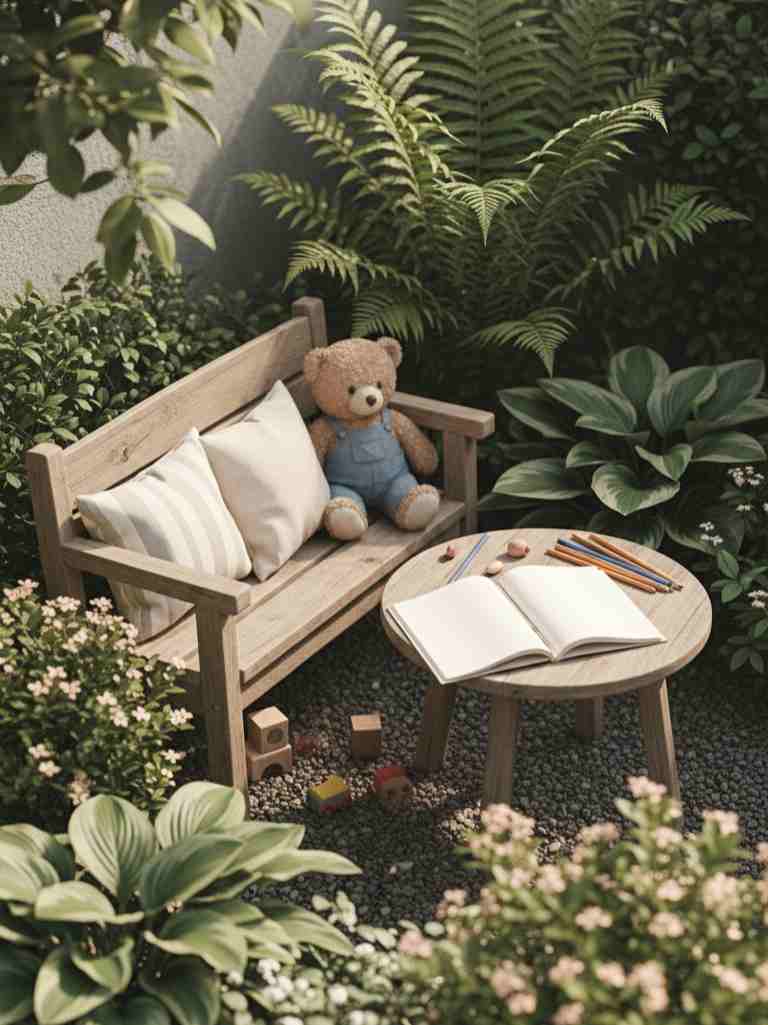
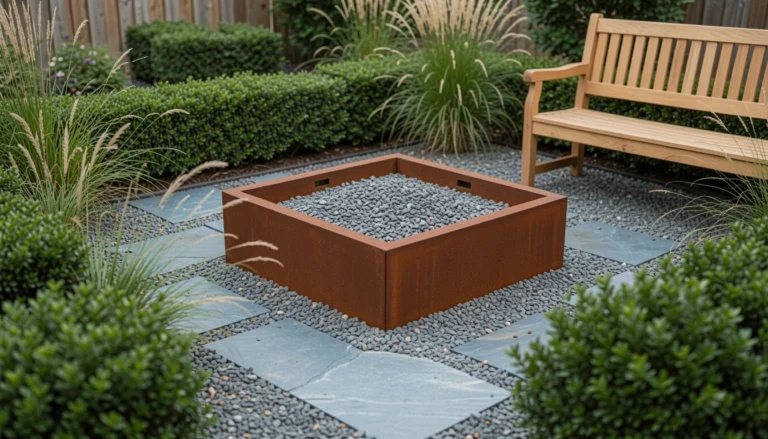
I like adding a Compact furniture mini oasis setup in one corner. A small bench or child-sized chair gives kids a place to sit and observe.
Learning slows down when children can pause. I place a tiny table with notebooks and colored pencils. They draw plants. They write growth updates.
This corner supports reflection. It feels calm. It also helps children respect the space. Sitting quietly becomes part of garden care.
Visually, small furniture pieces framed by plants create a cozy vibe. It shows how functional and decorative garden corner landscaping ideas can work together.
9. Recycling Craft Planter Wall
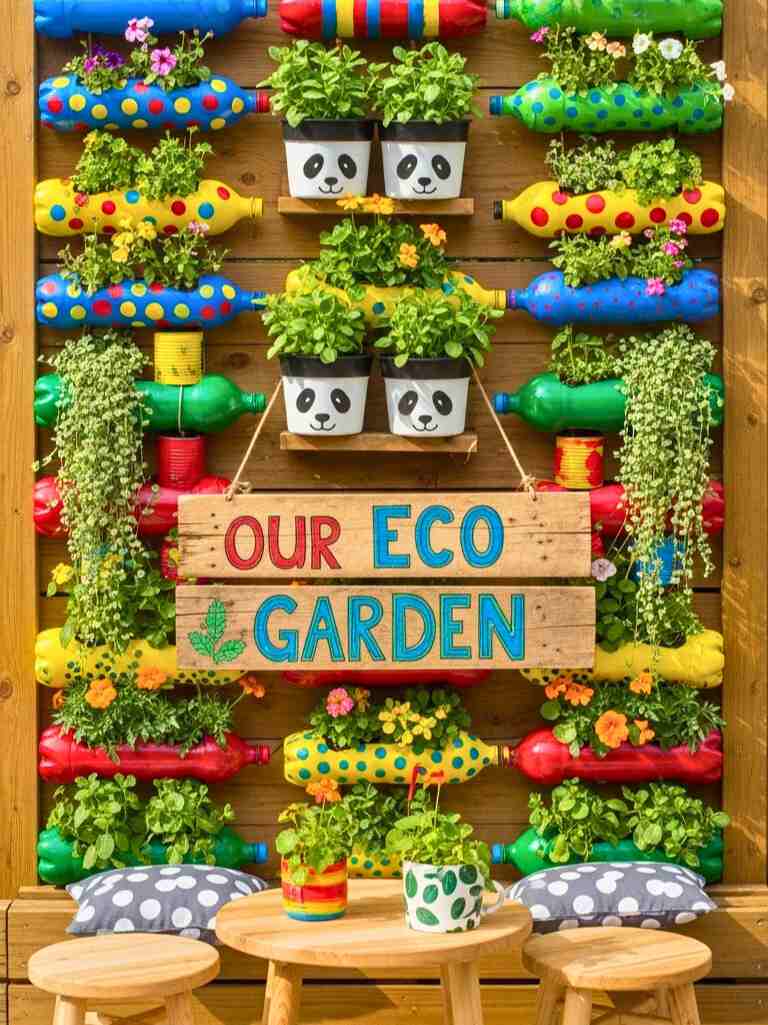
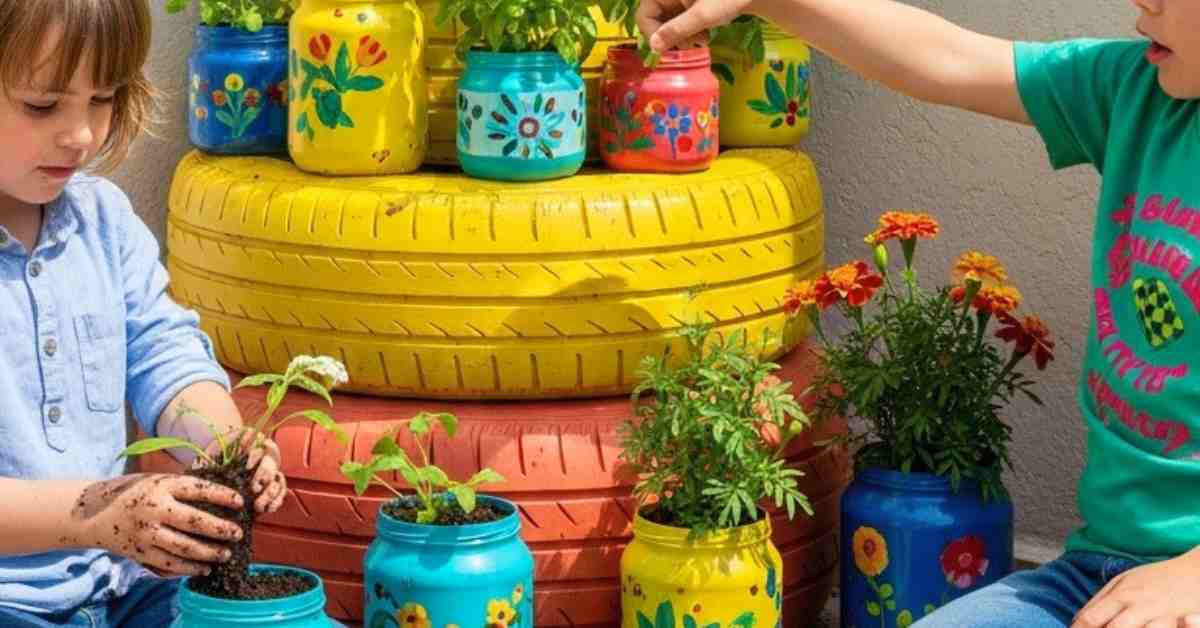
I gather old bottles, cans, and wooden crates. Then I help kids turn them into planters. We paint them in bright colors. We punch drainage holes safely.
This corner teaches sustainability. Children understand reuse and waste reduction. They feel proud using something they created.
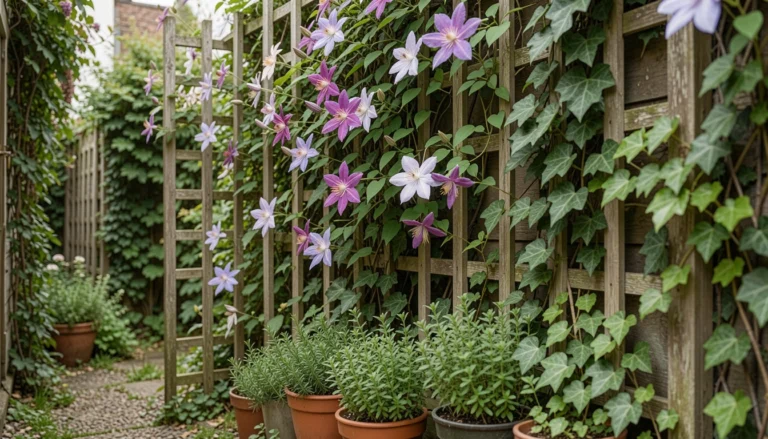
I mount some planters on a small wooden frame against the wall. Vertical designs save space. Perfect for tight corners.
It also adds height variation. That layered look makes photos stand out. Educational and eco-friendly. A great combination.
10. Color-Themed Flower Patch
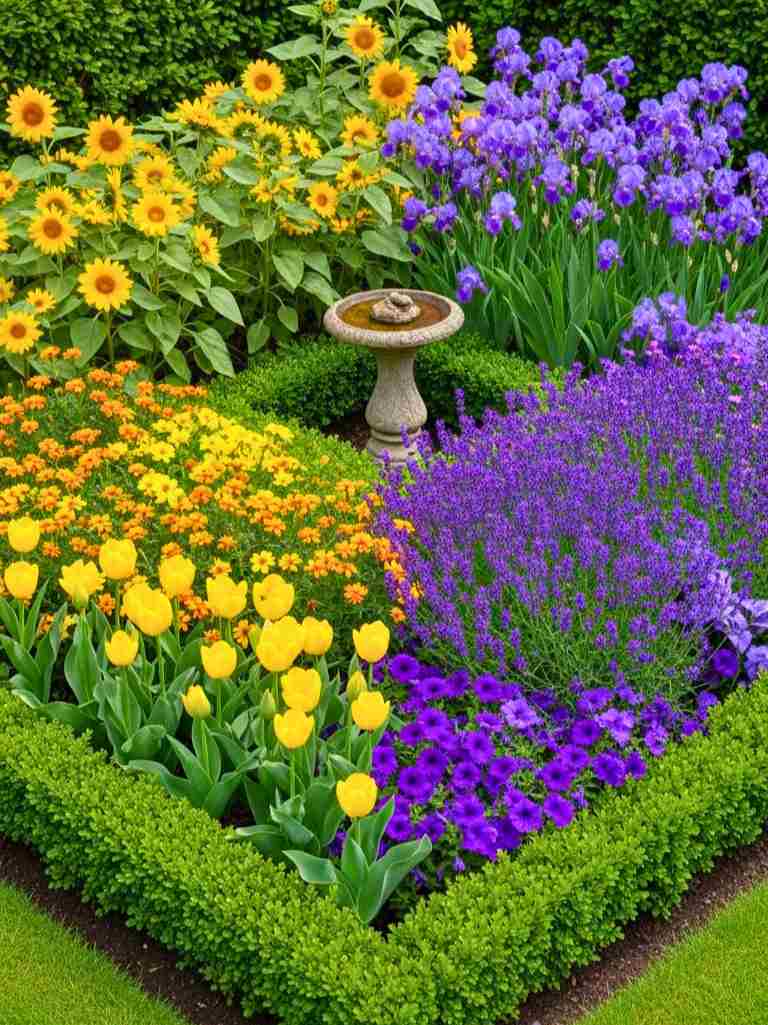
I enjoy planting flowers by color in one neat corner. One section for yellow blooms. Another for purple.
Kids quickly grasp color grouping and plant diversity. We talk about how colors attract different pollinators.
This layout looks organized and bold. It photographs beautifully. I use simple border lines to separate shades clearly.
Children also learn basic design principles. Balance and harmony become easy concepts when they see them in real plants.
11. Seasonal Rotation Corner
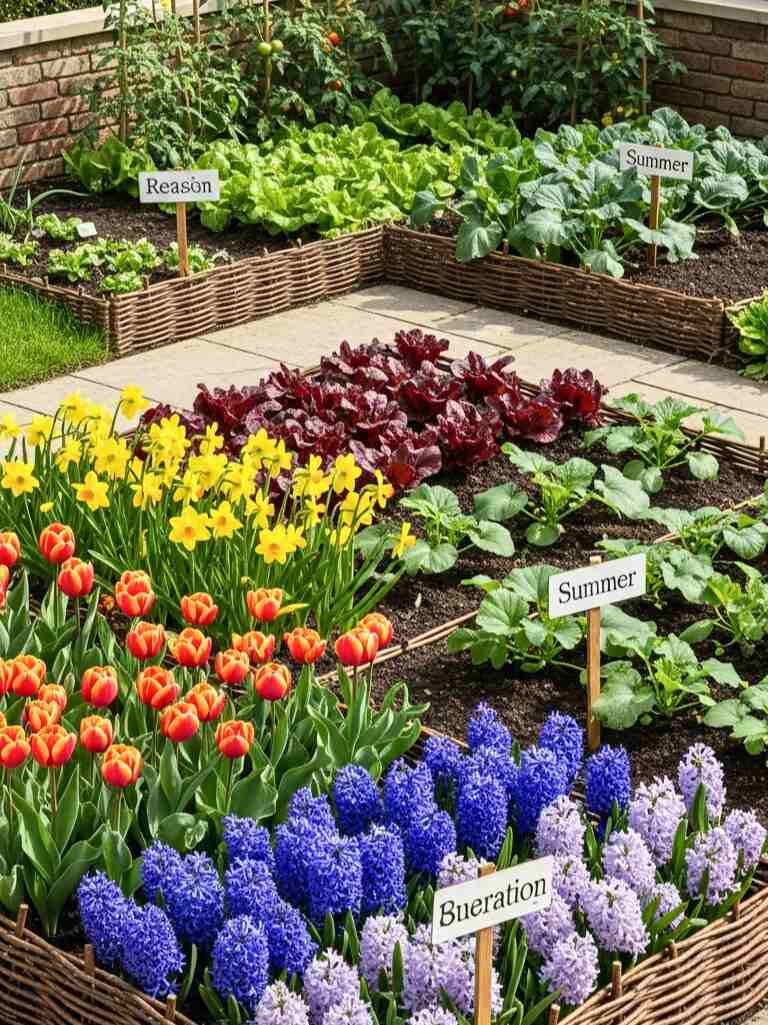
I dedicate one corner to seasonal planting. Spring flowers, summer veggies, fall greens. Kids help remove old plants and prepare soil again.
I teach crop rotation in basic terms. Changing plants keeps soil healthy.
This corner shows that gardens evolve. Nothing stays the same forever. That lesson goes beyond plants.
By keeping this section structured and well-framed, it becomes a showcase area for your blog images. It reflects growth, change, and hands-on learning in one small space.
Conclusion
A corner garden may look small, but it holds big lessons. I have seen children grow alongside their plants. They ask questions. They get muddy. They laugh more.
You don’t need a massive yard or fancy tools. You just need intention and a little creativity. Start with one corner. Let kids lead. That small patch might become their favorite classroom. And honestly, yours too.