13 Japanese Rock Garden Ideas for a Peaceful and Elegant Landscape
I finally stopped overcomplicating my little yard.
I pulled out a lawn, spread gravel, and learned what actually sits right in my hands and eyes.
These ideas are what I used, what failed, and what still calms me at dusk.
13 Japanese Rock Garden Ideas for a Peaceful and Elegant Landscape
These 13 ideas are practical and tested in real, messy gardens.
They show ways to use stones, gravel, plants, and seating.
Expect clear, useful details for each look — all 13 explained here.
1. Raked Gravel Zen Patch with Stepping Stones
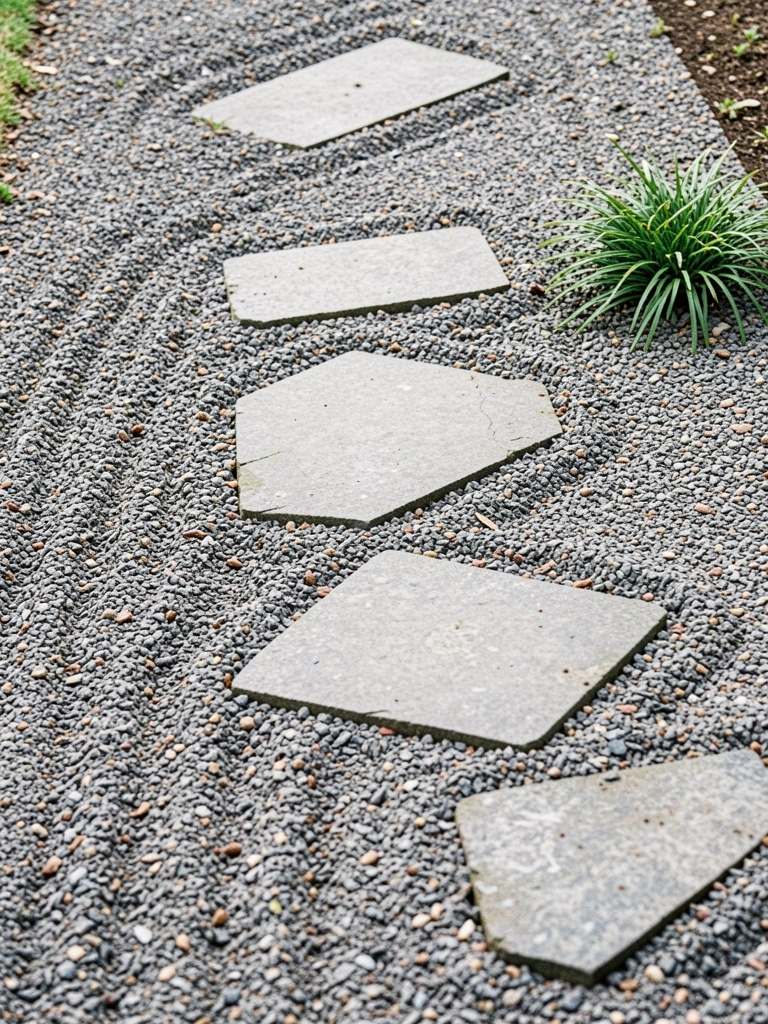
I carved a small rectangle of gravel in the back corner and started raking lines.
It calmed my mornings more than I expected. The stepping stones give a place to stand, not just walk.
I once placed the stones too close and tripped — spacing matters. Spread them so you can pause.
A simple rake every few weeks keeps the pattern fresh and honest.
What You’ll Need for This Look
- Pea gravel (1/4 inch), pale grey
- Flat stepping stones, 12–18 inch
- Bamboo or metal sand rake
- Dwarf mondo grass plugs
2. Moss Mats Threaded Between Pavers

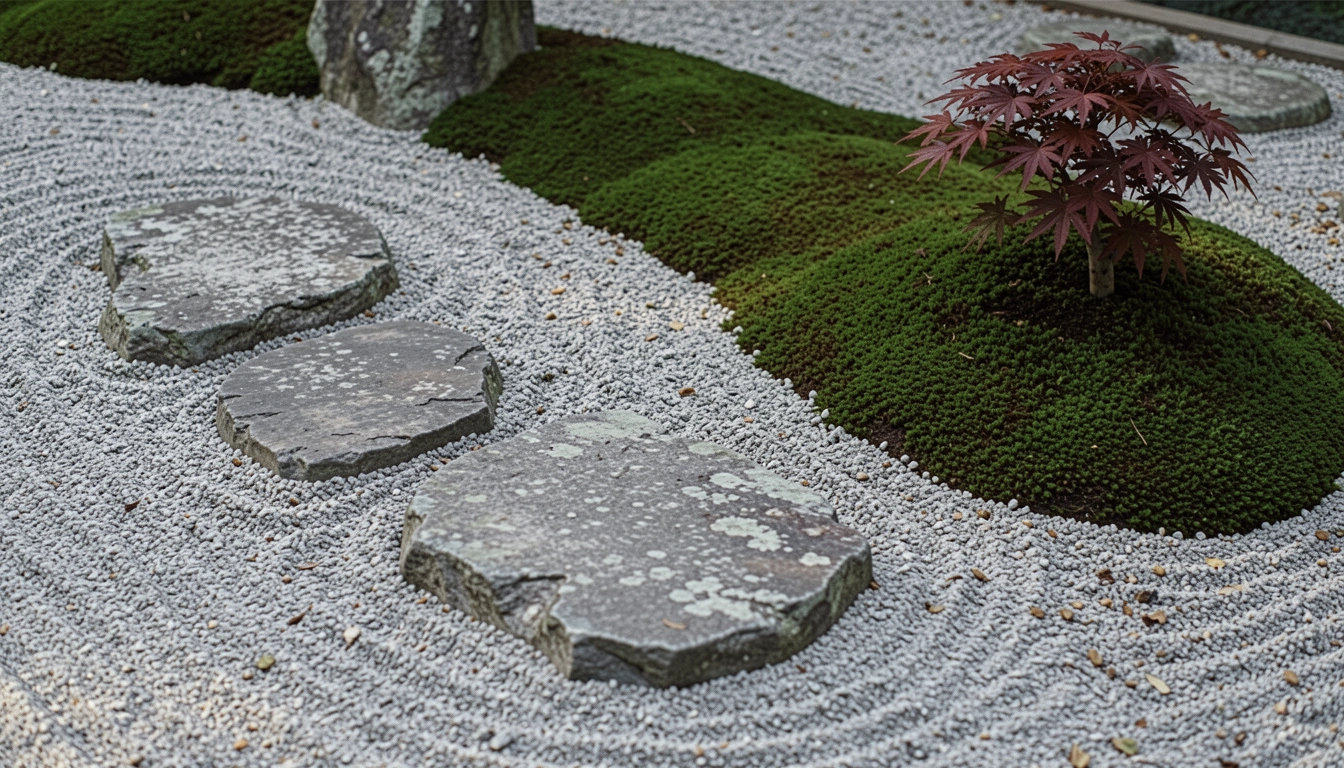
I planted moss between my flagstones in the shadiest patch. It was slow, but now it softens the hard lines.
At first I tried transplanting from a friend’s lawn and most died — I learned to pick the right species for my soil.
The moss chills the area visually and holds moisture. It’s not instant; patience is part of the reward.
Keep foot traffic low and water lightly until established.
What You’ll Need for This Look
- Sheet moss (shade-tolerant mix)
- Irregular slate pavers, 16–24 inch
- Coarse sand for filling edges
- Lightweight watering can
3. Bamboo Water Feature and Stone Basin

I added a tiny bamboo spout into a granite basin near the patio. The sound is small but steady.
At first the basin overflowed — I hadn’t leveled it. Fixing that made the sound clean and slow.
It’s a focal point that doesn’t scream for attention. Plants like hakone grass soften the edges.
Aim for a slow drip and easy access to the pump for winter care.
What You’ll Need for This Look
- Bamboo spout (shishi-odoshi style)
- Granite or concrete basin, 12–18 inch
- Small submersible pump
- Hakone grass or ferns
4. Layered Container Rock Garden on a Small Deck

I made a container rock garden when my soil was terrible. Layers of gravel and succulents gave instant texture.
My first attempt had too many plants and looked cluttered — I learned to leave breathing room between specimens.
A mix of low succulents and a small sculptural stone reads like a miniature landscape from my kitchen window.
Choose containers with good drainage and keep pots shallow for that alpine feel.
What You’ll Need for This Look
- Shallow ceramic or terracotta troughs
- Alpine sedums, saxifrages, sempervivum
- Coarse gritty potting mix
- Decorative stones, 6–12 inch
5. Karesansui Gravel Garden with Accent Evergreens
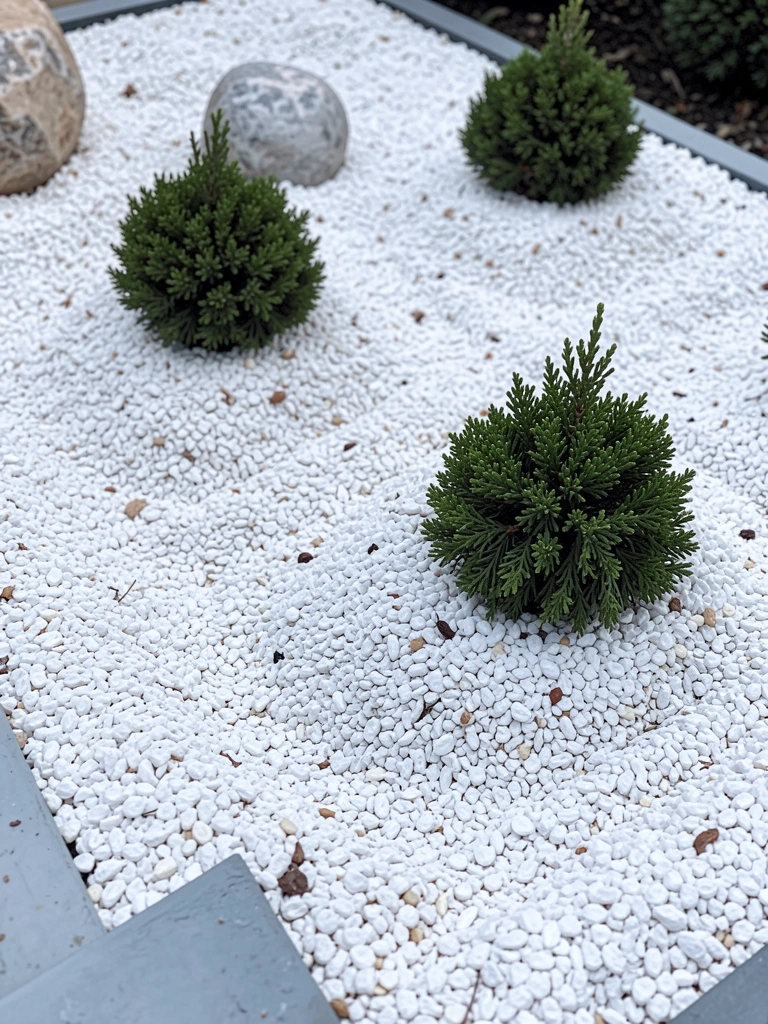
I opened a small karesansui area and planted three dwarf evergreens as anchors. The contrast with white gravel is quiet.
Early on I planted a fast-growing juniper and regretted it — pruning for scale is constant work.
Now I use slow growers: dwarf pines and compact yews. The look is sculptural and calm from indoors.
Prune sparingly and keep gravel clean to maintain that pulled-together look.
What You’ll Need for This Look
- White crushed gravel or decomposed granite
- Dwarf pine (Pinus mugo 'Mops') or compact yew
- One medium boulder, weathered
- Hand pruners
6. Stone Lantern with Low Conifers
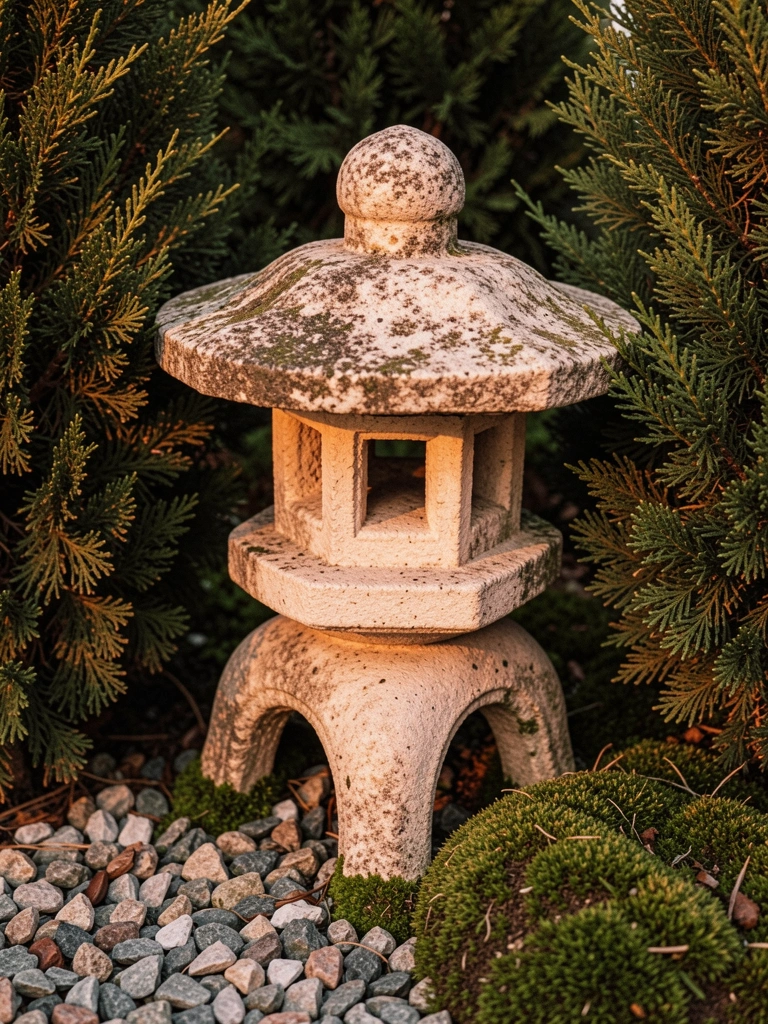
I set a stone lantern against a bank of low conifers to anchor a dark corner. It reads as old even though it’s new.
I once chose a lantern too tall for the space; it overwhelmed the planting. Scale is everything.
Now the lantern sits low, half-hidden by small cedars. At dusk, a soft uplight gives it presence without shouting.
Use a warm LED spike light for subtlety and check scale before you buy.
What You’ll Need for This Look
- Stone lantern (12–24 inch height)
- Low conifers (dwarf cedar or juniper)
- Warm white LED uplight, outdoor-rated
- Moss or low groundcover
7. Dry Stream Bed That Solves a Guttering Problem

A heavy rain showed me where water wanted to go, so I made a dry stream bed to guide runoff. It looks natural and works.
My first bed used uniform stones and it looked fake — mixing sizes made it read real.
Plants like sedge and astilbe at the edges hide the hard line and slow runoff. I sleep easier when storms come.
Slope it so water flows, and compact the base to avoid future washouts.
What You’ll Need for This Look
- River stones (small to medium mix)
- Larger anchor boulders, various sizes
- Sedge (Carex) and astilbe
- Landscape fabric and coarse sand
8. Vertical Rock Wall with Trailing Groundcovers
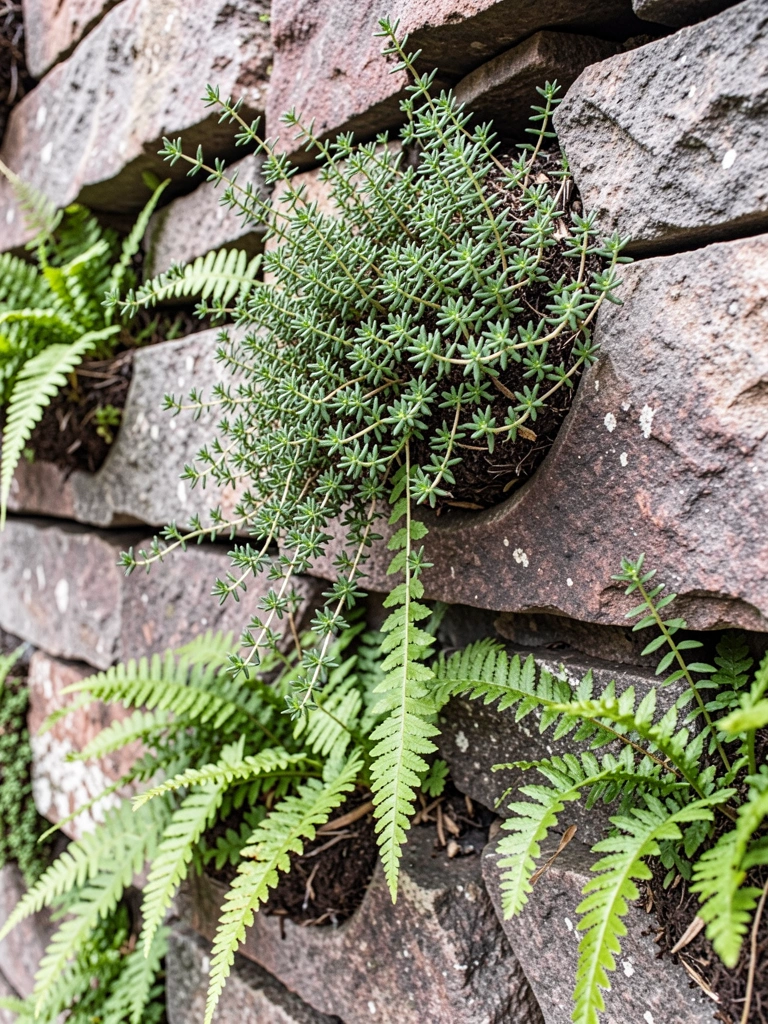
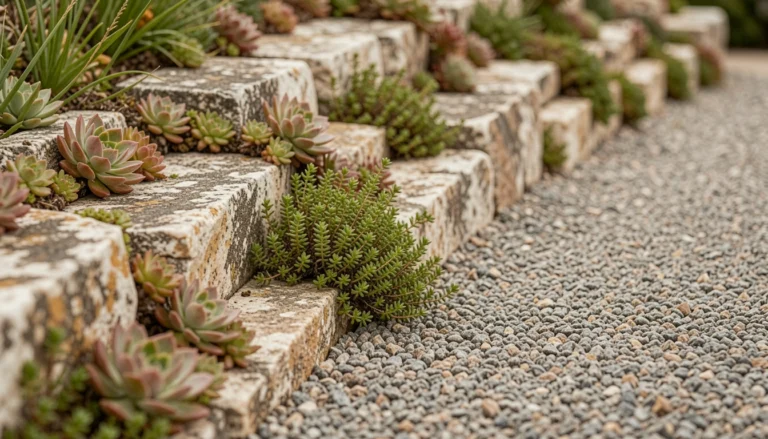
I built a low dry-stacked rock wall and tucked plants into pockets. The vertical surface adds depth to a small yard.
At first I used ordinary soil and the pockets collapsed. Now I use gritty mix and it holds.
Trailing sedums and thyme soften the stone and add scent when walked past. It’s low work once settled.
Make pockets deep enough and choose tough, drought-tolerant groundcovers.
What You’ll Need for This Look
- Dry-stacked fieldstone (6–12 inch)
- Gritty pocket soil mix
- Trailing sedum, thyme, small ferns
- Hand trowel and gloves
9. Pebble Mosaic Path with Driftwood Accent

I laid a pebble mosaic path to lead visitors to the garden gate. The pattern invites slow steps.
I once used pebbles that were too smooth and they shifted underfoot — angular pebbles lock better.
A piece of driftwood placed like a bridge made the path feel intentional and collected. It’s tactile and honest.
Keep edges contained with a narrow border to stop spreading.
What You’ll Need for This Look
- Mixed pebbles (varied sizes, angular preferred)
- Driftwood or weathered branch, medium
- Edging strips (metal or stone)
- Sand and cement for setting
10. Single Sculptural Boulder as a Garden Anchor

I dragged in one big boulder and everything settled around it. It gives the garden a quiet center.
I made the mistake of choosing one that was too tall; it felt like a wall. The right size reads like an old friend.
Now I place it low and off-center, with a small grass or maple nearby for contrast. The sightline from the house matters most.
Choose a stone with interesting face and a stable base.
What You’ll Need for This Look
- Single weathered boulder (size relative to space)
- Pale gravel base
- Small ornamental grass or dwarf maple
- Leveling tools
11. Tea-House Inspired Seating Nook with Tatami Bench
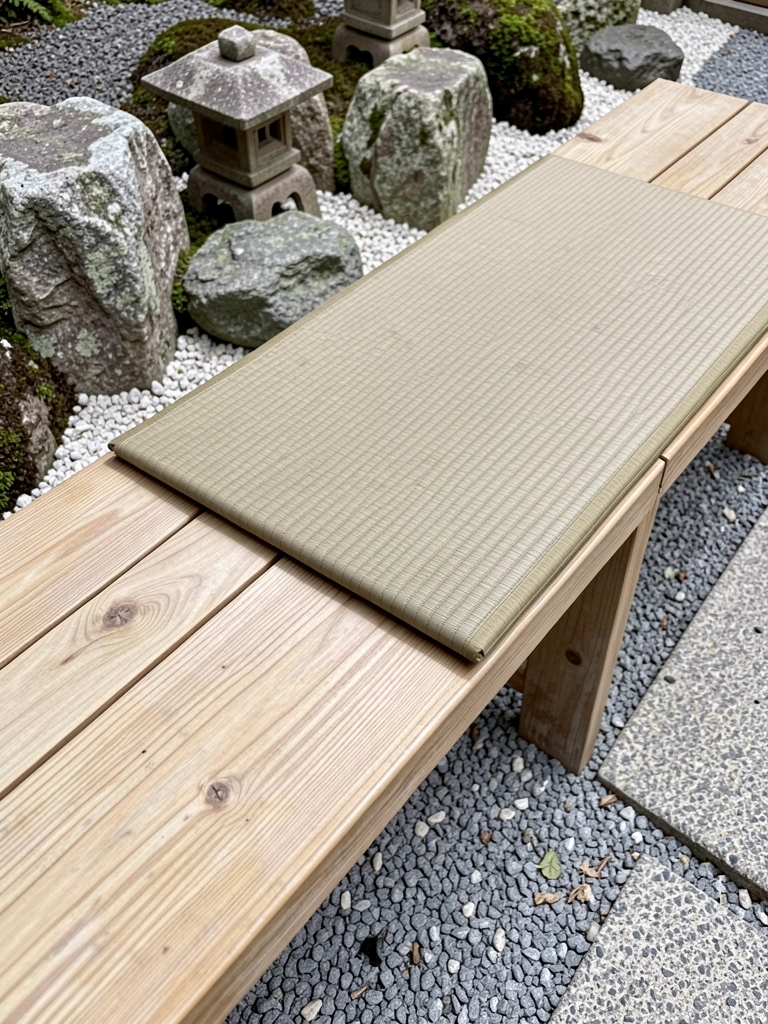
I built a narrow seating nook with a low bench and neutral cushion. It’s where I read and water.
My first bench was too stubbornly modern and didn’t sit right with the stones. Swapping to a simple timber bench fixed it.
The nook doesn’t need many accessories — a small lantern and a gravel mat is enough. It’s a place to stay quiet.
Keep seating low and weatherproof for easy use.
What You’ll Need for This Look
- Low wooden bench, untreated cedar or teak
- Tatami-style outdoor cushion, neutral tone
- Small stone or metal lantern
- Gravel mat or stepping stones
12. Low-Maintenance Moss and Sedge Border
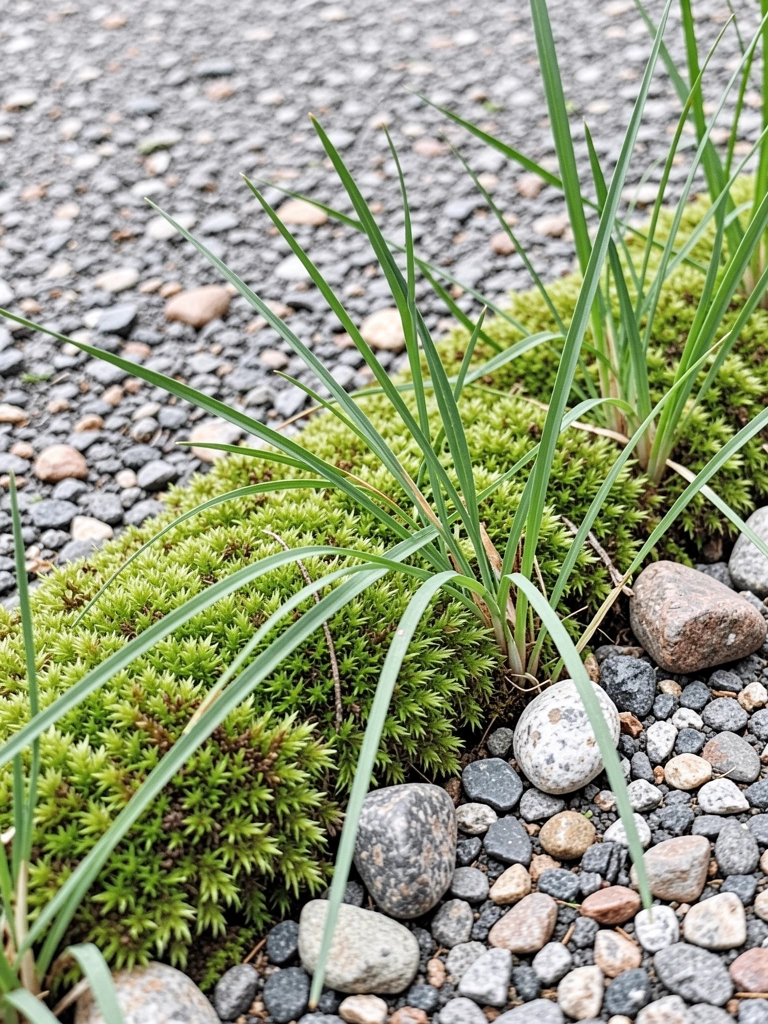
I swapped a high-maintenance bed for a border of moss and sedge. It reads soft and requires little fuss.
I tried a fancier mix once and spent a season weeding — simplicity saved me time.
Moss keeps the edge cool, sedge gives tone and movement. Together they mask the hard line between gravel and planting.
Plant in partial shade and let them settle; rare trimming keeps the line tidy.
What You’ll Need for This Look
- Shade-tolerant sheet moss
- Sedge varieties (Carex oshimensis)
- Small decorative stones
- Hand pruners
13. Seasonal Contrast Planting: Maples, Evergreens, and Grasses
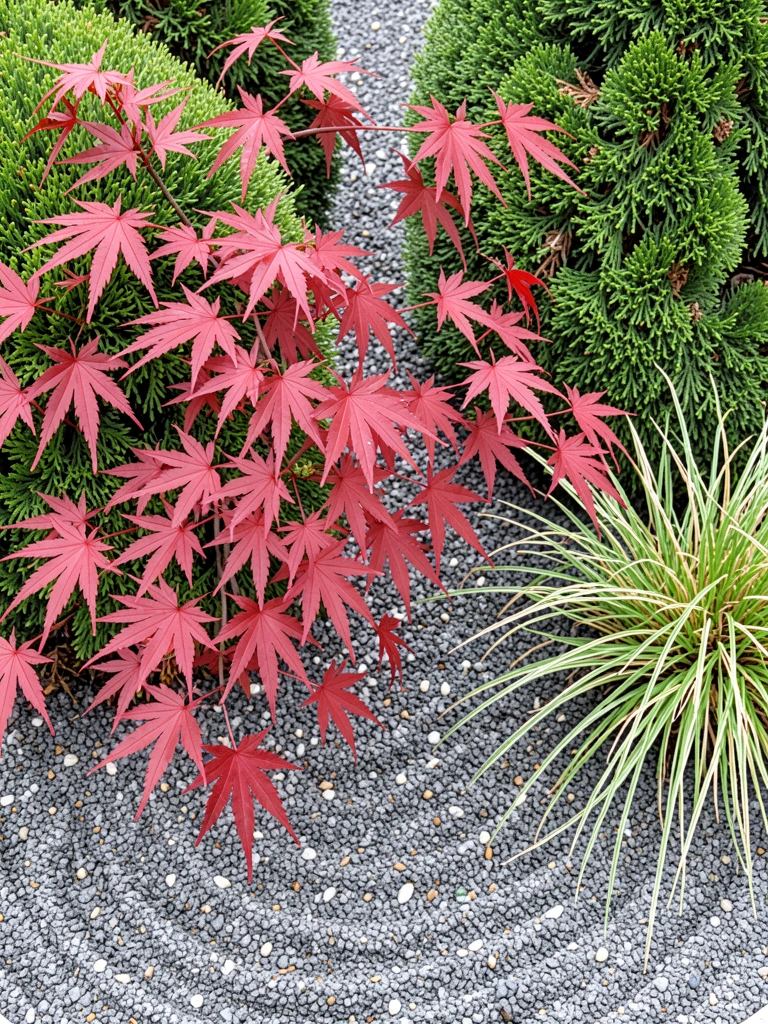
I layer seasonal plants so the garden reads different through the year. Maple color in fall, evergreens in winter, grasses in summer.
At first I planted only maples and lacked winter interest. Adding low evergreens fixed that.
The trick is scale and rhythm: small maples, low conifers, and narrow grasses play well together.
This keeps the rock garden peaceful but alive through seasons.
What You’ll Need for This Look
- Japanese maple (dwarf varieties)
- Low evergreen (dwarf yew or cedar)
- Ornamental grasses (Hakone or carex)
- Mulch and slow-release fertilizer
Final Thoughts
You don’t need all 13 ideas.
Pick one corner, try one change, and live with it for a season.
Gardening is about small honest choices — I still make mistakes, and that’s where good looks come from.