15 Creative DIY Flower Pot Ideas You Can Make This Weekend
I finally stopped overthinking pots. I’d buy a perfect planter, then it sat under a tarp.
Once I started making small, weekend projects, the yard felt like mine. These ideas are the stuff I actually do—messy, useful, and cheap when they need to be.
Try one this weekend. They’re simple to start and easy to fix.
15 Creative DIY Flower Pot Ideas You Can Make This Weekend
These 15 ideas are hands-on and realistic. Each one is something I’ve built or fixed in a real garden.
You’ll find quick wins and a few honest mistakes I made.
All are designed so you can pick one and get planting today.
1. Layered Container Planting That Makes a Patio Feel Full
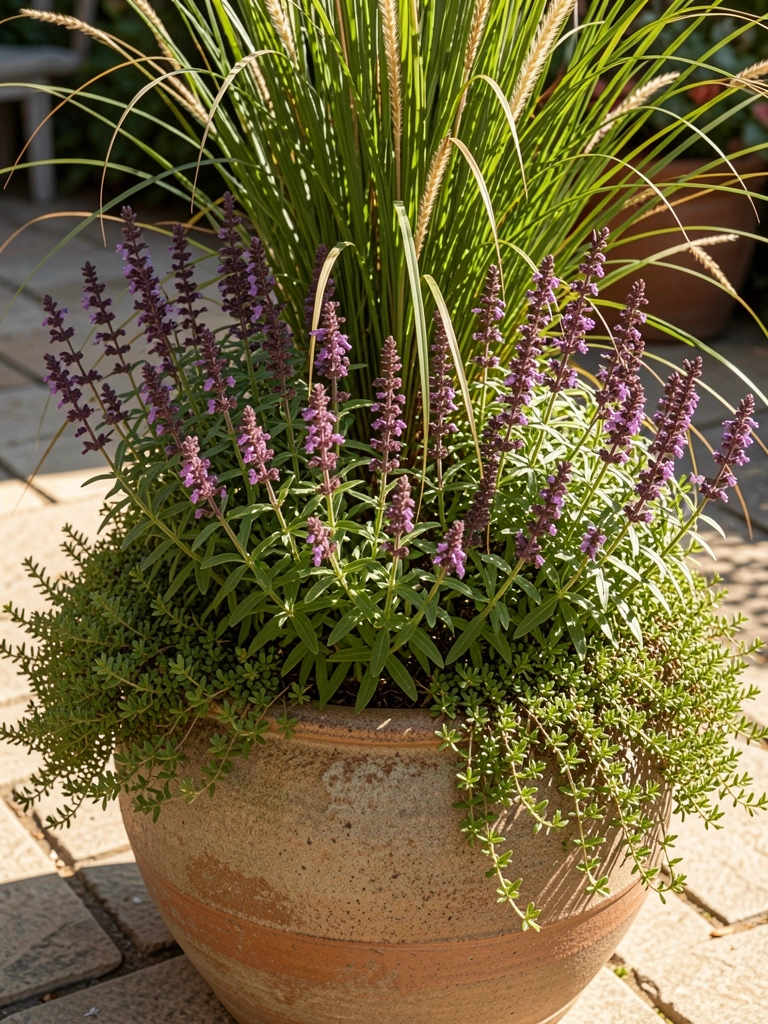
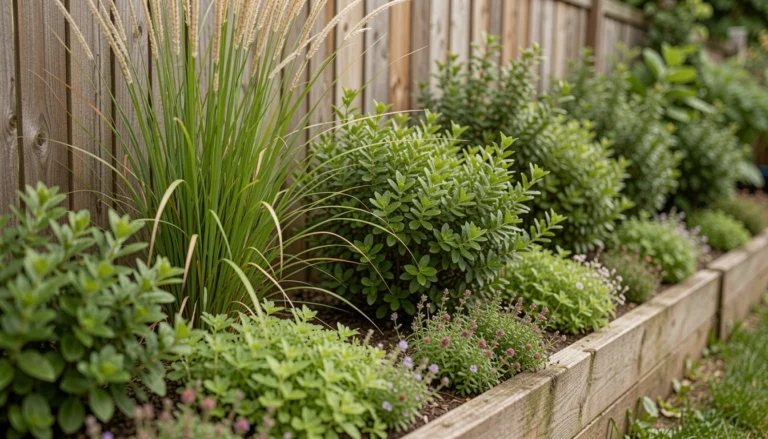
I planted layered containers when my tiny patio felt empty. I used a tall spine plant, mid-level bloomers, and a trailing groundcover. The first season I crowded everything and the thyme never showed up.
Once I thinned the middle layer, the structure read clearly and the thyme could spread. It now gives me scent when I pass.
Watch spacing more than color. Leave breathing room for the plants to fill their roles.
What You’ll Need for This Look
- 14–18 inch ceramic planter
- Tall ornamental grass or spike (variegated if available)
- Mid-height bloomers (salvia, geranium)
- Creeping thyme or lobelia, trailing
2. Painted Terracotta with Simple Stencils
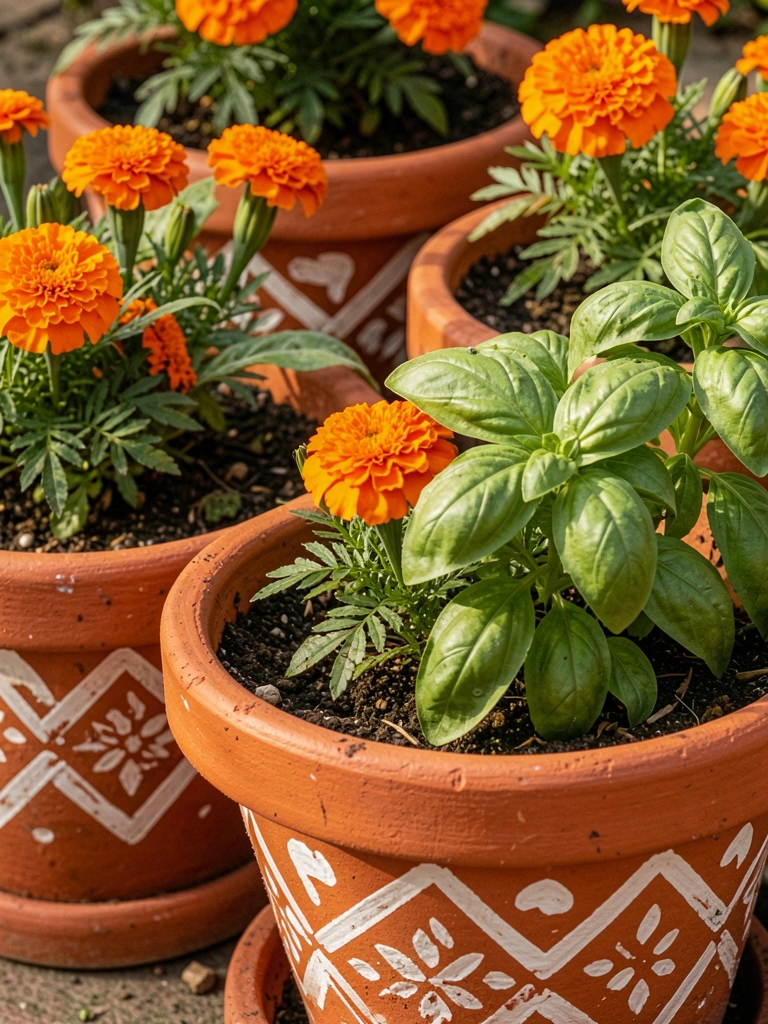
I painted old terracotta pots one rainy afternoon. I used chalk paint and a tiny sponge for stenciling. The trick I learned was sealing the paint—otherwise frost and watering started peeling.
They brighten a gray step and I swap plants seasonally. I sometimes go heavy with pattern; it’s easy to overdo—so now I paint one bold pot and keep the others simpler.
Seal the paint with a matte outdoor sealant and avoid painting the pot’s inner rim where it meets soil.
What You’ll Need for This Look
- Terracotta pot set (6–12 inch)
- Chalk paint, outdoor matte sealant
- Simple geometric stencils, sponge brush
- Annuals or herbs (marigold, basil)
3. Herb Spiral in Stacked Pots for Small Kitchens
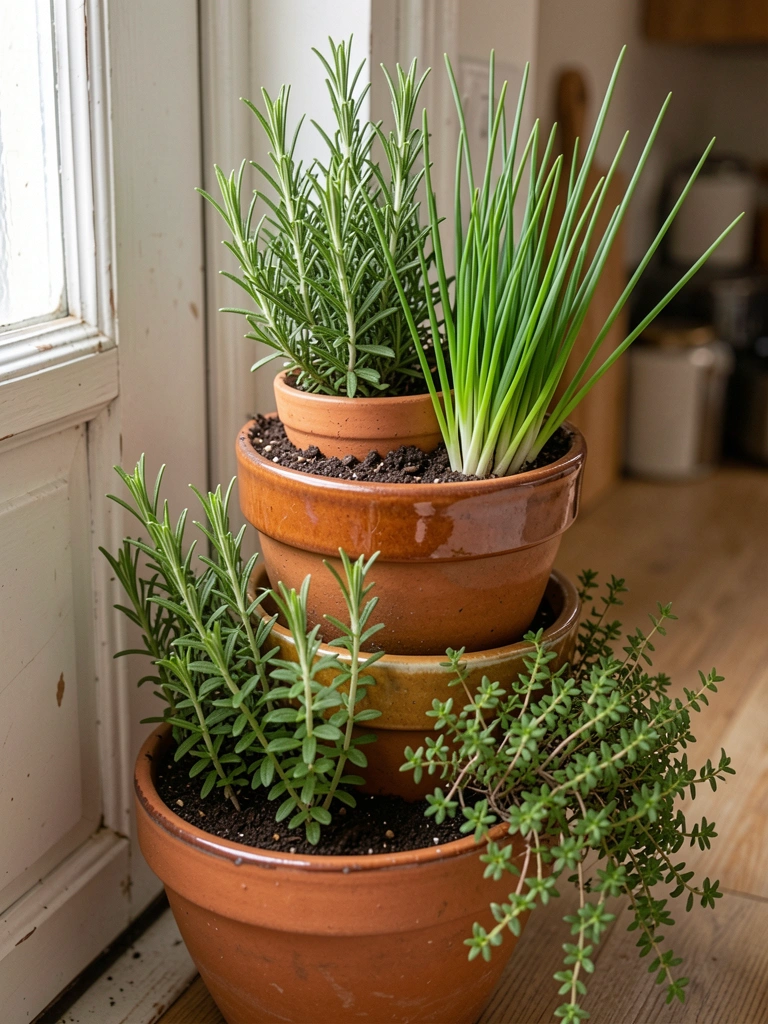
I built a little herb spiral from stacked pots after tripping over jars on the windowsill. I drilled bigger pots for drainage and staggered them so each plant had its own depth. The first attempt leaked at the base because I used a plastic tray under the bottom pot—lesson learned.
Now I use a saucer that drains and check the top pot after rain. It’s compact, and reaching for rosemary is easy while I cook.
Place stronger sun herbs up top and moisture lovers lower.
What You’ll Need for This Look
- Stacked pots (8–12 inch base, 6–8 inch top)
- Drill for drainage holes
- Saucer with drainage
- Mixed herbs: rosemary, thyme, chives, parsley
4. Succulent Wreath Pot for a Porch
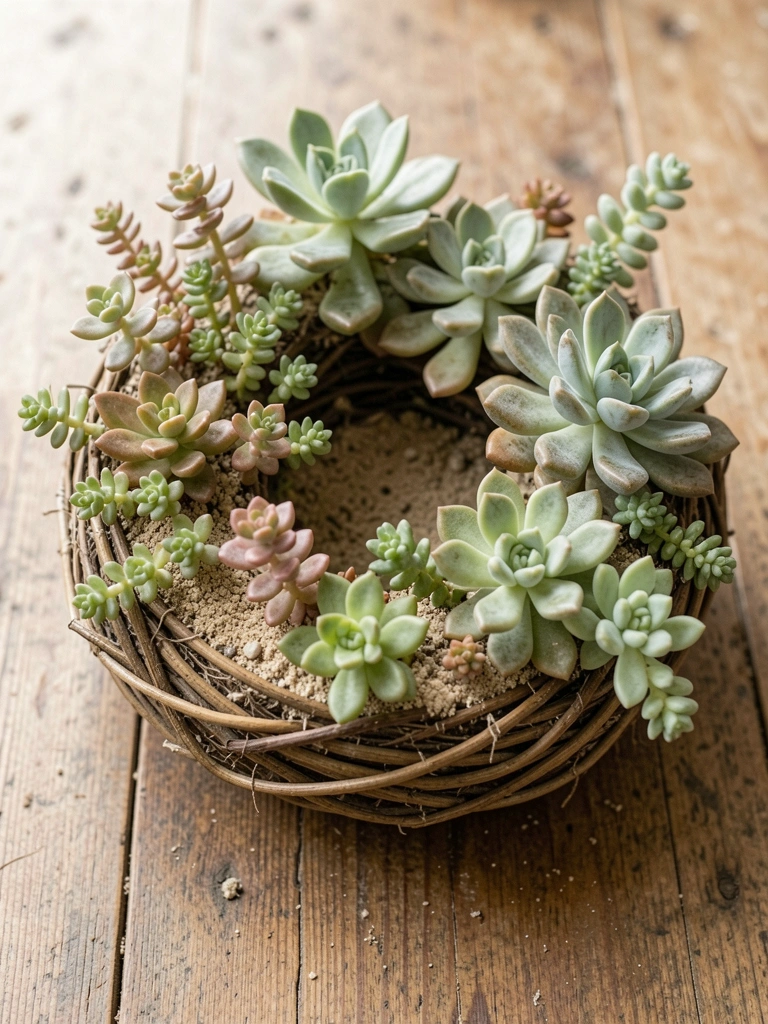
I made a succulent wreath in an old shallow bowl and hung it by the door. The first winter I forgot it needed bright light and lost a couple of echeverias. After moving it to a brighter spot, it bounced back and filled gaps quickly.
This look is forgiving if you use hardy succulents and shallow soil. Water sparingly and tilt it to let excess run off.
It feels like a living welcome sign and takes little attention once established.
What You’ll Need for This Look
- Shallow wide bowl or wire wreath frame with liner
- Succulent mix (sedum, echeveria, crassula)
- Cactus/succulent potting mix
- Small drill or sharp tool for airflow holes (if ceramic)
5. Vintage Bucket Planters with Drainage Upgrade
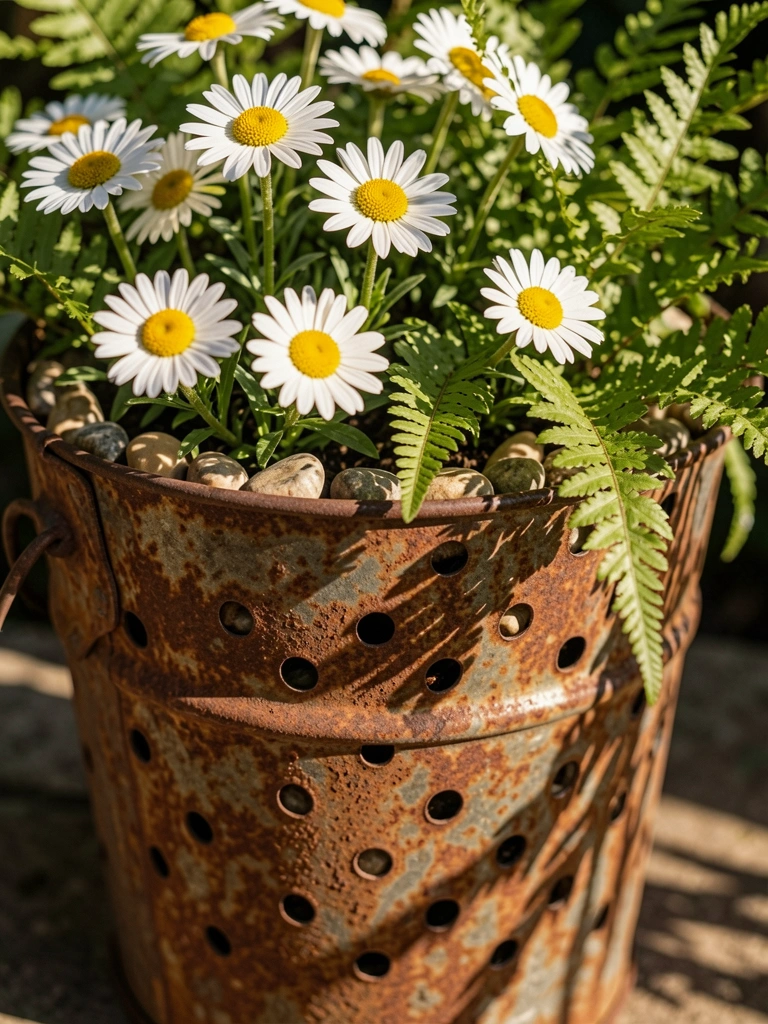
I rescued a dented galvanised bucket and drilled drainage holes in the base. At first I put the bucket straight on the patio and water pooled—roots got unhappy. Adding gravel and elevating the bucket slightly fixed that.
The aged metal warms the colors of annuals and the patina shows seasons. I now line the inside lightly with coconut coir to slow soil loss.
Use heavier plants like geraniums or ferns; the bucket’s weight keeps them steady in wind.
What You’ll Need for This Look
- Vintage metal bucket (10–14 inch)
- Drill and masonry bit, coarse gravel
- Coconut coir liner (optional)
- Bulky plants (geranium, fern)
6. Self-Watering Jug Planter from Recycled Bottles
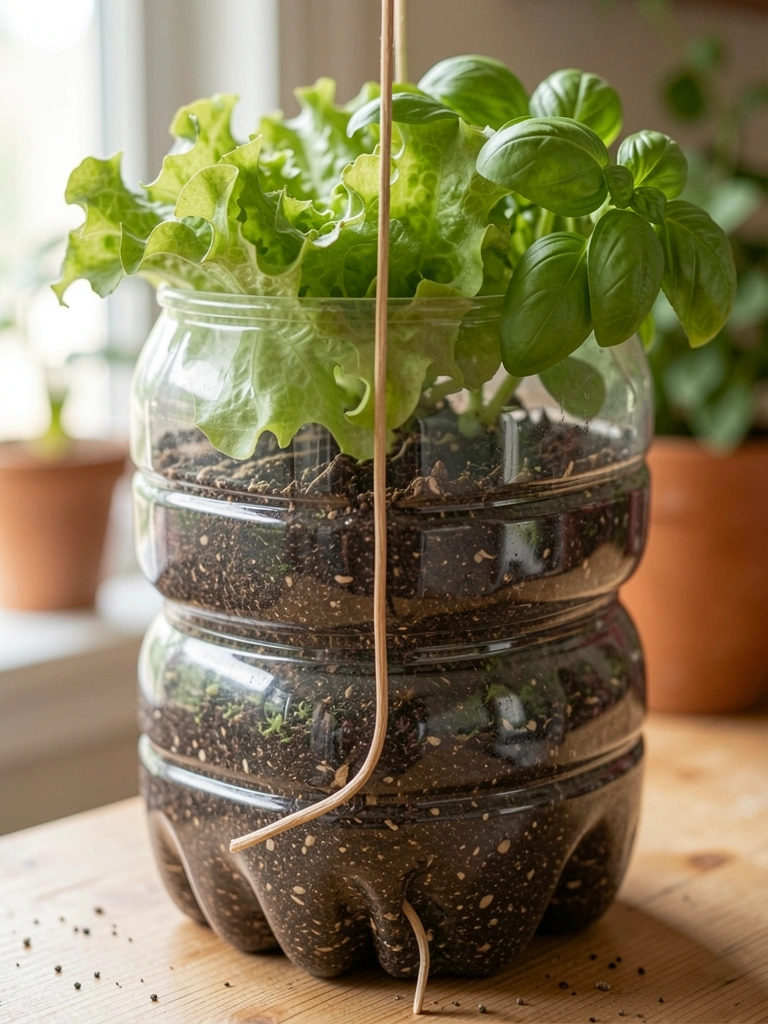
I made a self-watering planter from two plastic jugs for quick salad greens. I cut the top off one, threaded a cotton wick, and used the bottom as a reservoir. Early on I set it in full sun and the water warmed too fast, speeding evaporation.
Now I place these in partial sun and keep the reservoir shaded. It steadies moisture for tender seedlings and saves me watering when I’m out of town.
Pick a wide-mouthed jug and a sturdy wick for best results.
What You’ll Need for This Look
- Two large plastic jugs (2–3 liters)
- Cotton wick or strip of fabric
- Potting mix for edibles, lettuce/basil seedlings
- Utility knife and tape
7. Hanging Macramé Pot Trio for Shade Corners
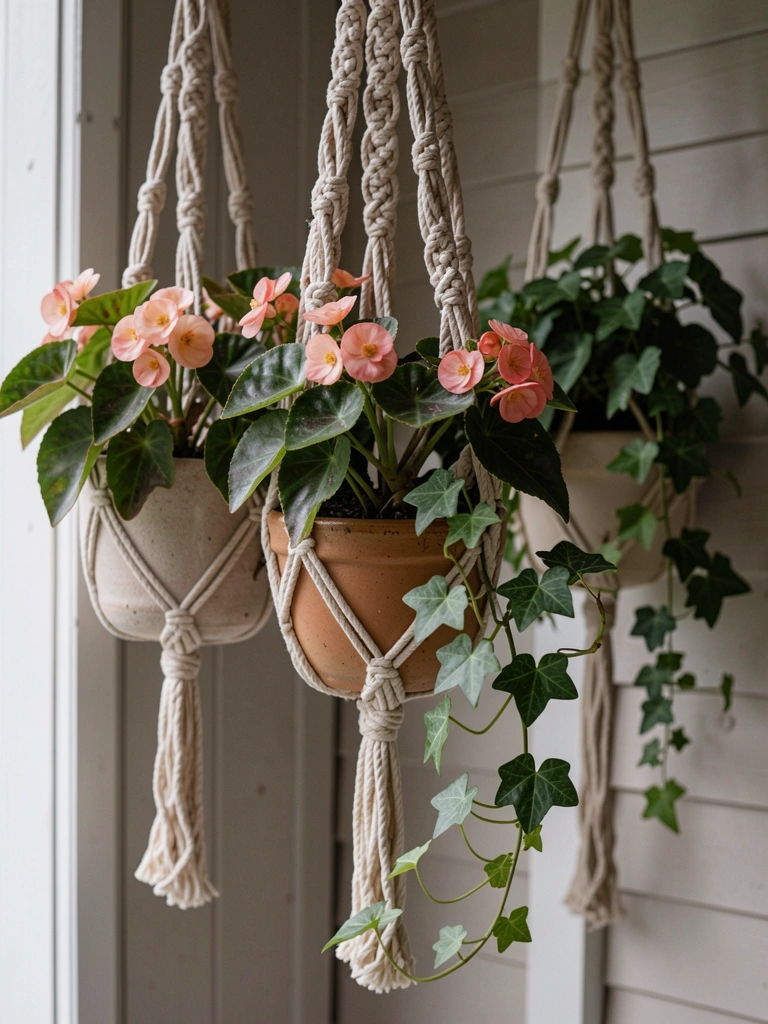
I tied macramé hangers for a shady corner using thrifted pots. My first knots slipped because I used smooth cord; switching to cotton rope kept everything secure. The trio adds height and keeps floor space clear.
Begonias and heart-leaf philodendron thrive there. If windy, I add quick-release hooks so I can bring them in.
Hanging pots make a corner feel layered without heavy work.
What You’ll Need for This Look
- Cotton macramé cord, three lengths
- 6–8 inch ceramic pots with saucers
- Shade-loving plants (begonia, philodendron)
- Ceiling hooks with anchors
8. Concrete DIY Geometric Planters
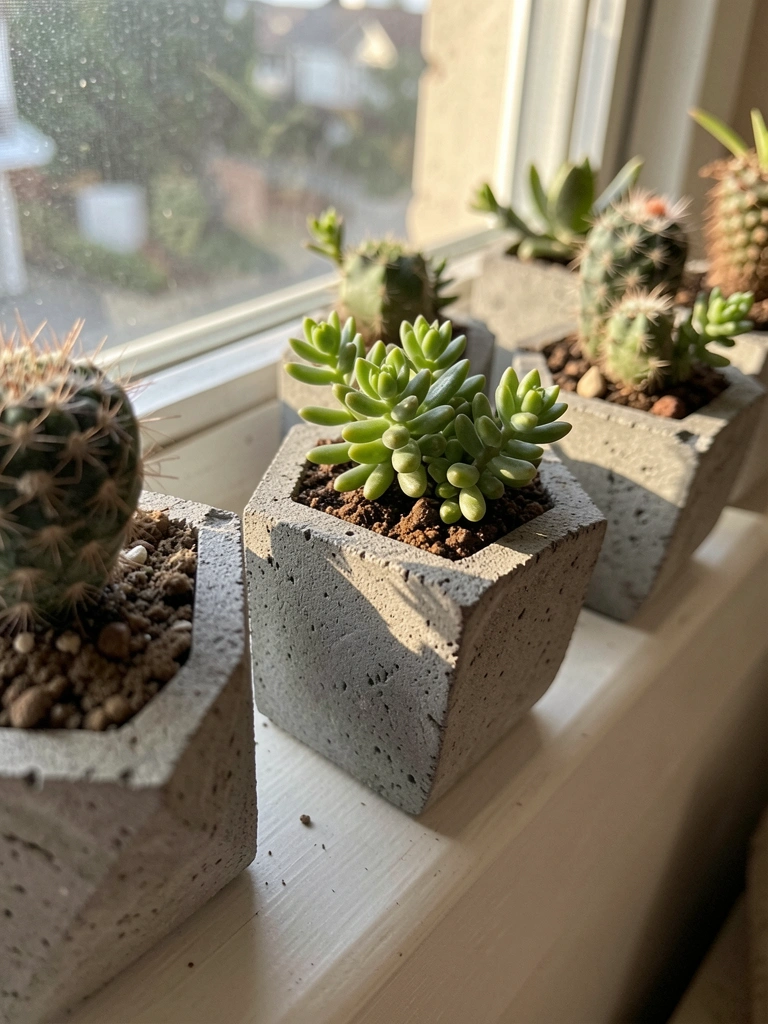
I mixed concrete in a wheelbarrow and cast small geometric molds on a windy afternoon. I didn’t use a release agent once and spent a frustrating hour chiseling pots free. Now I line molds with plastic for clean edges.
These planters are heavy, so I use them for cacti and succulents on a sunny shelf. The cool gray makes plant colors pop.
Wear gloves and make molds with household items—like plastic storage containers.
What You’ll Need for This Look
- Quick-set concrete mix, small geometric molds
- Release agent or plastic liners
- Succulents or cacti, gritty cactus mix
- Disposable gloves, mixing bucket
9. Window Box Insert for Instant Curb Appeal
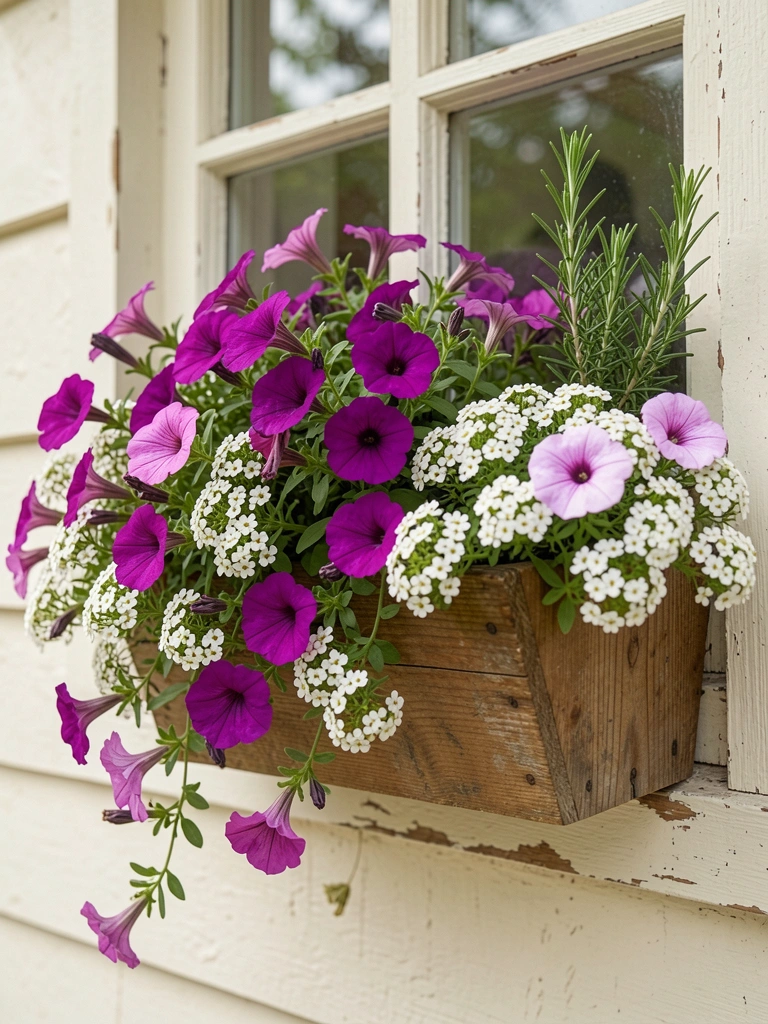
I added a window box to a plain front window and suddenly the house looked friendlier. I learned the hard way to use inserts—my first box rotted from trapped water. Switching to a plastic liner solved it.
I mix trailing and upright plants for movement. In summer, petunia and alyssum spill prettily; in winter I swap for evergreen sprigs.
Secure the box to studs and pick a liner sized for drainage.
What You’ll Need for This Look
- Wooden window box with plastic liner (24–36 inch)
- Trailing petunias, alyssum, rosemary
- Potting soil, slow-release fertilizer
- Mounting brackets and screws
10. Mini Meadow in a Wide Shallow Bowl
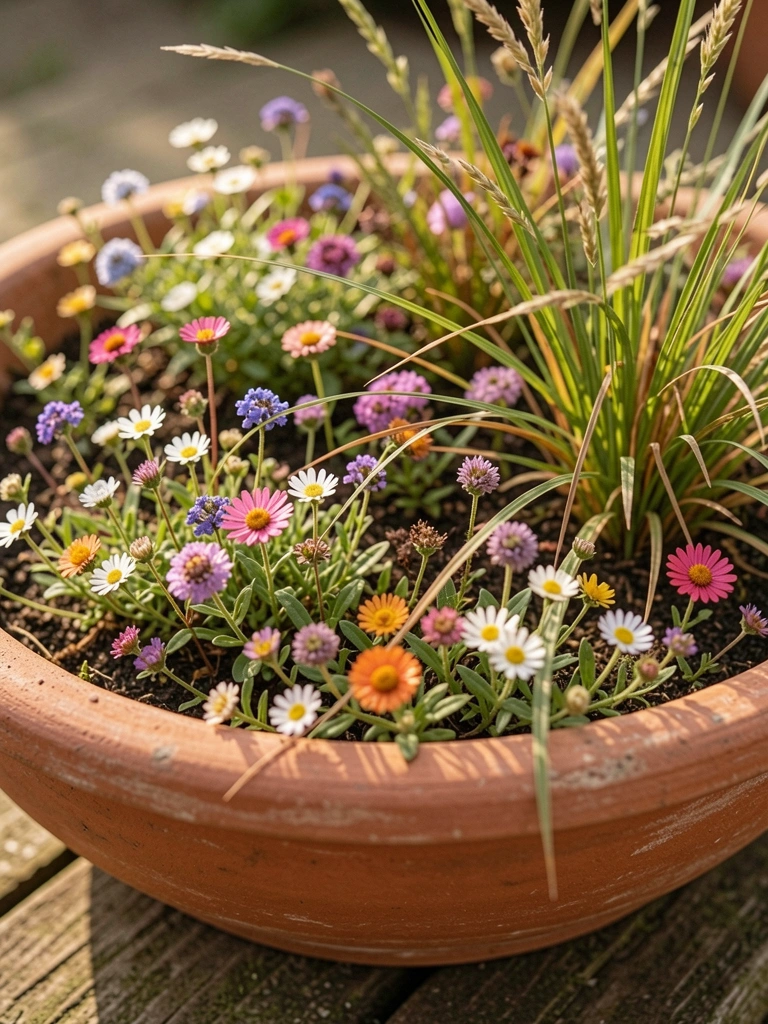
I made a tiny meadow in a shallow bowl to test native wildflowers. The first year I sowed seed too densely and seedlings fought. After thinning, the mini meadow had more air and looked natural.
This is low fuss once established—occasional deadheading keeps it tidy. I love how it brings bees and a natural edge to my patio table.
Use native seed mixes and a good shallow soil blend.
What You’ll Need for This Look
- Wide shallow bowl or saucer (12–18 inch)
- Native wildflower seed mix
- Shallow, free-draining potting soil
- Small hand rake or thinning tweezers
11. Tea Cup Succulent Collection on the Shelf
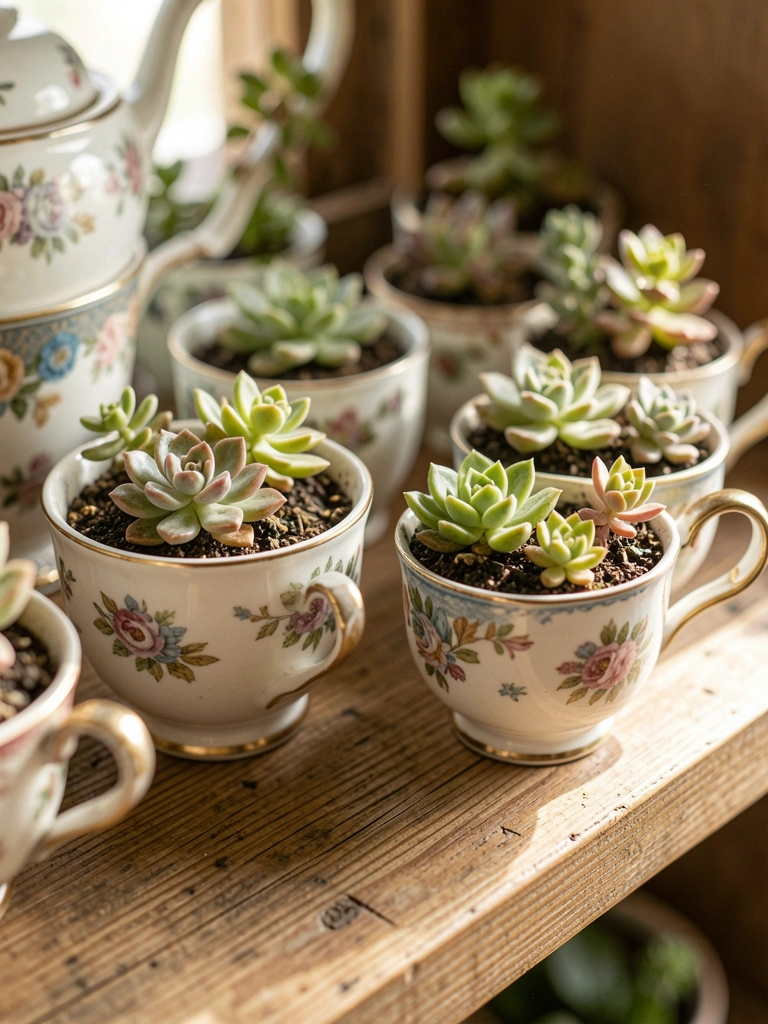
I planted succulents in old teacups rescued from thrift shops. They sit on a shelf by the sink and make me smile when I wash dishes. I didn’t line the cups at first and soil leaked—so I now use small pebble layers and a bit of mesh.
They’re tiny, so I water by dipping a spoon. They’re forgiving plants, and the mix of patterns feels personal.
Great for gifts or to brighten a sill.
What You’ll Need for This Look
- Vintage teacups (3–6)
- Small pebbles or mesh, gritty succulent mix
- Tiny succulents (haworthia, small echeveria)
- Small spoon for watering
12. Color-Blocked Plastic Pots for a Playful Border
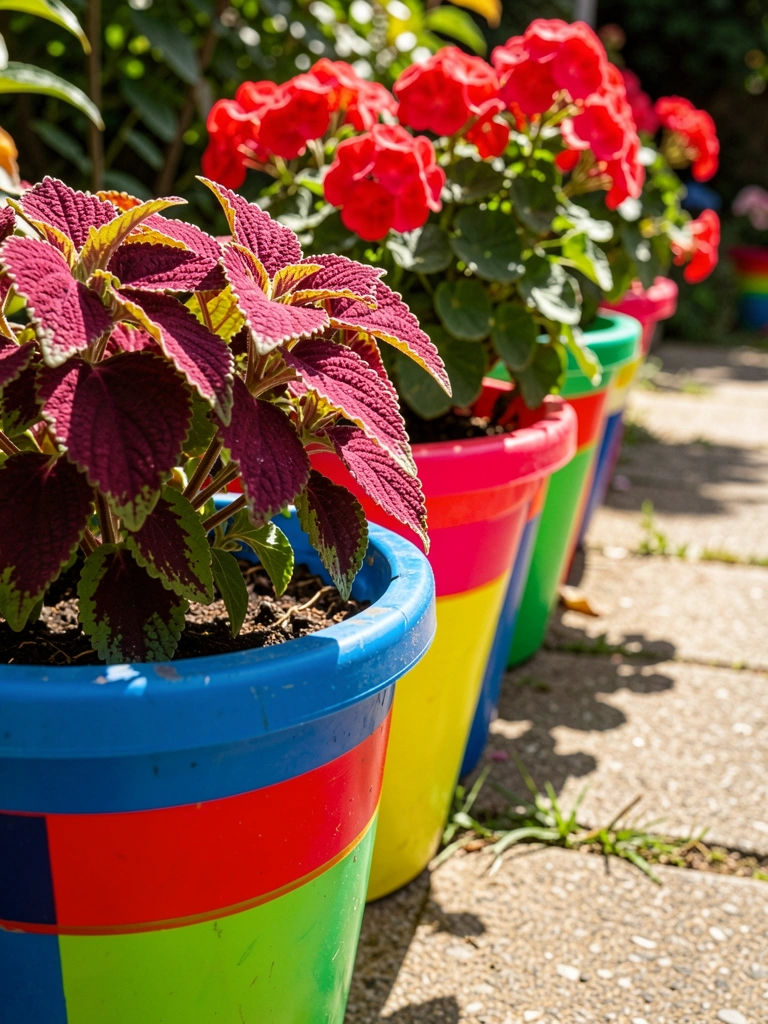
I painted cheap nursery pots in bright, blocking colors to rescue a bland border. At first I used glossy spray paint outdoors and it faded; switching to exterior matte spray held up better.
I stagger sizes and repeat two colors for cohesion. Coleus and geraniums respond well to this playful look, and the pots are light so I can rearrange paths.
It’s an inexpensive way to add personality without big planting changes.
What You’ll Need for This Look
- Plastic nursery pots (various sizes)
- Exterior matte spray paint (2 coordinating colors)
- Colorful plants (coleus, geranium)
- Painter’s tape for clean stripes
13. Upcycled Drawer Planter with Mixed Annuals
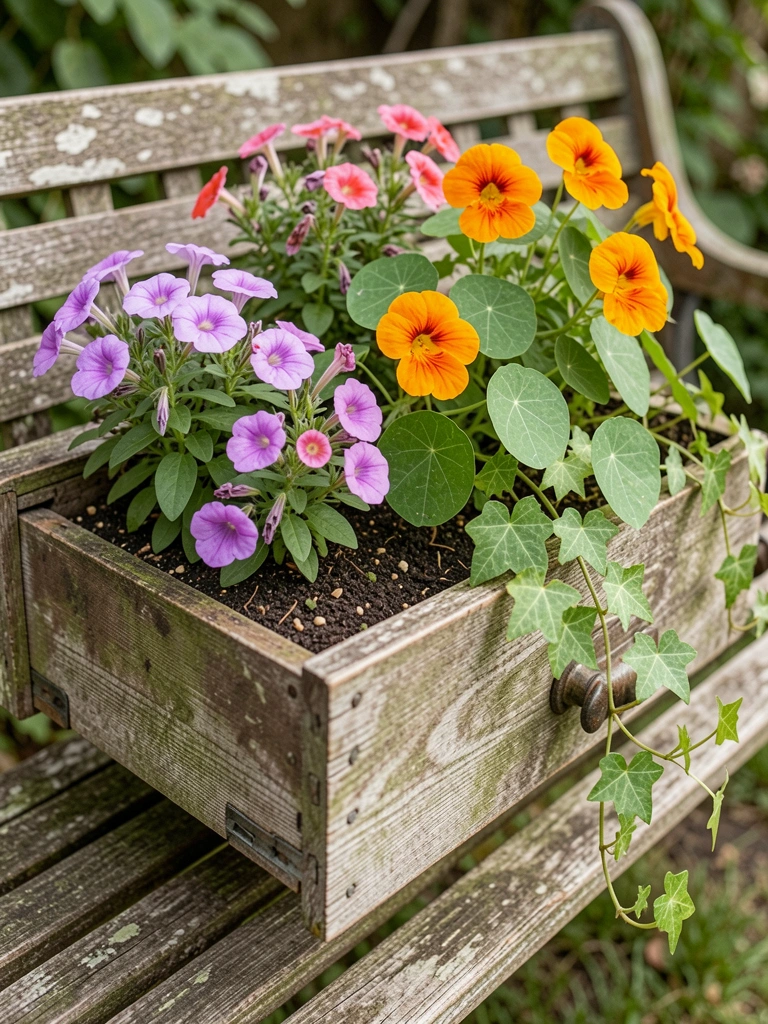
I turned an old drawer into a planter and set it on a bench. I forgot to line the base and soil leaked onto the bench at first—now I use a plastic liner and a small lip to trap mess.
Mixed annuals look casual and I replace some every season. The drawer keeps a low profile and reads like a garden vignette.
Measure the drawer depth for root needs and reinforce corners if it’ll sit wet.
What You’ll Need for This Look
- Wooden drawer (12–18 inch)
- Plastic liner, small screws for reinforcement
- Mixed annuals (calibrachoa, nasturtium, ivy)
- Potting soil and slow-release fertilizer
14. Solar-Lit Potting Corner for Evening Enjoyment
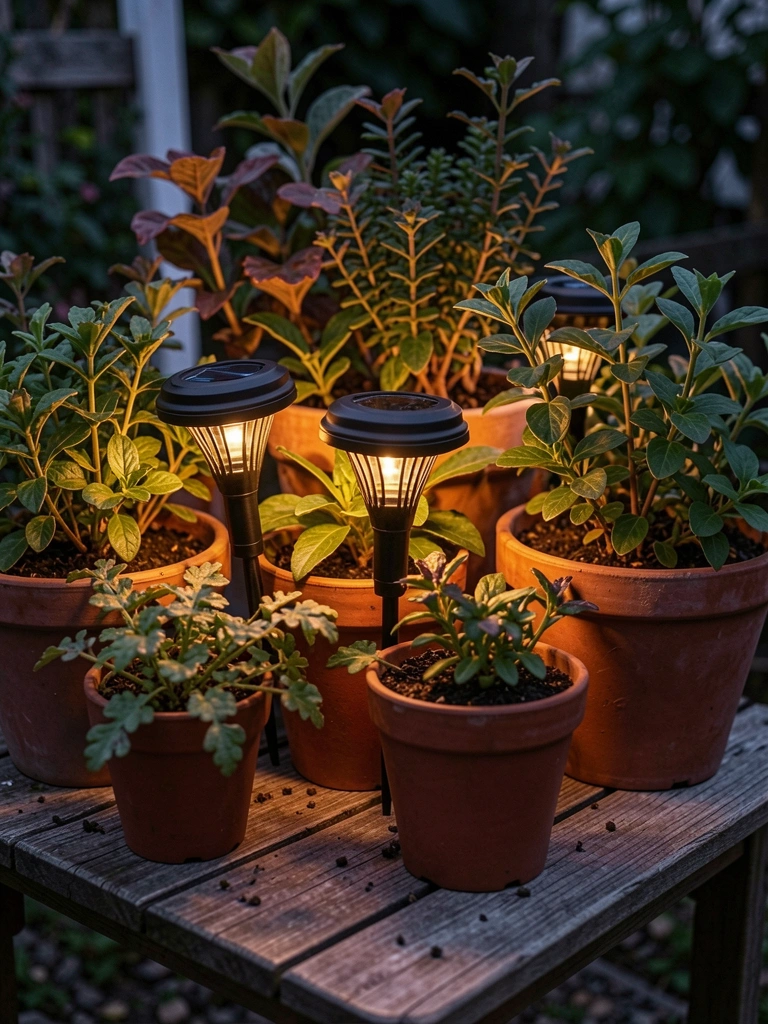
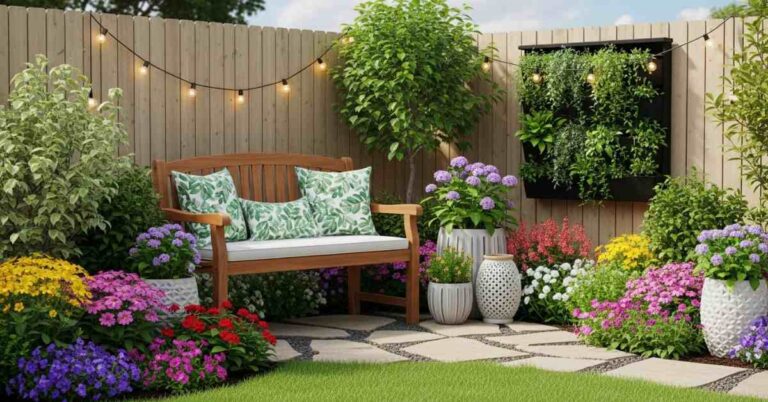
I added a string of small solar lamps around a potting corner so I can pot into dusk. At first I placed them under deep shade and they didn’t charge; I moved them where they get afternoon sun and they stay bright after sunset.
The lights let me check seedlings and enjoy the garden after dinner without fuss. I tuck lights between pots so they feel subtle.
Pick warm-white LEDs for a cozy evening feel.
What You’ll Need for This Look
- Small solar stake lights or string solar bulbs
- Clustered planters (varied heights)
- Shade-tolerant and sun-tolerant plants mixed
- Cable ties or small stakes for positioning
15. Tall Narrow Planters to Frame a Path
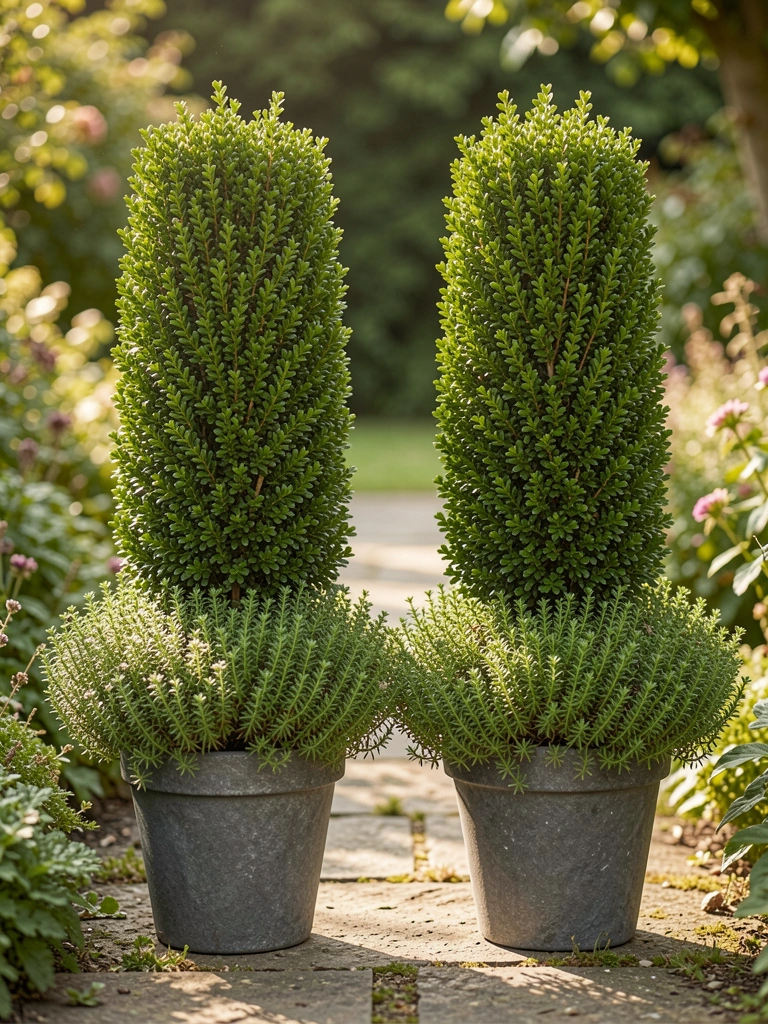
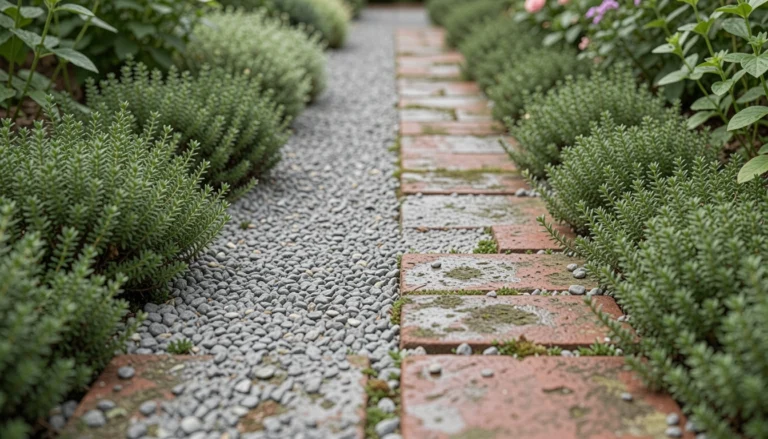
I placed two tall narrow planters to frame a garden path and give a sense of entry. My first pair was too light and tipped in wind, so I weighted the pots with gravel at the base.
Columnar plants like dwarf boxwood or Italian cypress give vertical interest, and thyme at the base softens the edge. They make the path feel intentional without needing a long hedge.
Secure narrow pots and pick sturdy plants to avoid toppling.
What You’ll Need for This Look
- Tall narrow planters (18–24 inch height)
- Gravel for weighting, sturdy potting soil
- Columnar plants (dwarf boxwood, juvenile cypress)
- Low groundcover (thyme, sedum)
Final Thoughts
Start small. Pick one pot project and do it this weekend.
You don’t need perfect tools—just a willingness to try, and the fix-it lessons come fast.
Once you have one container that feels like yours, the rest follows.