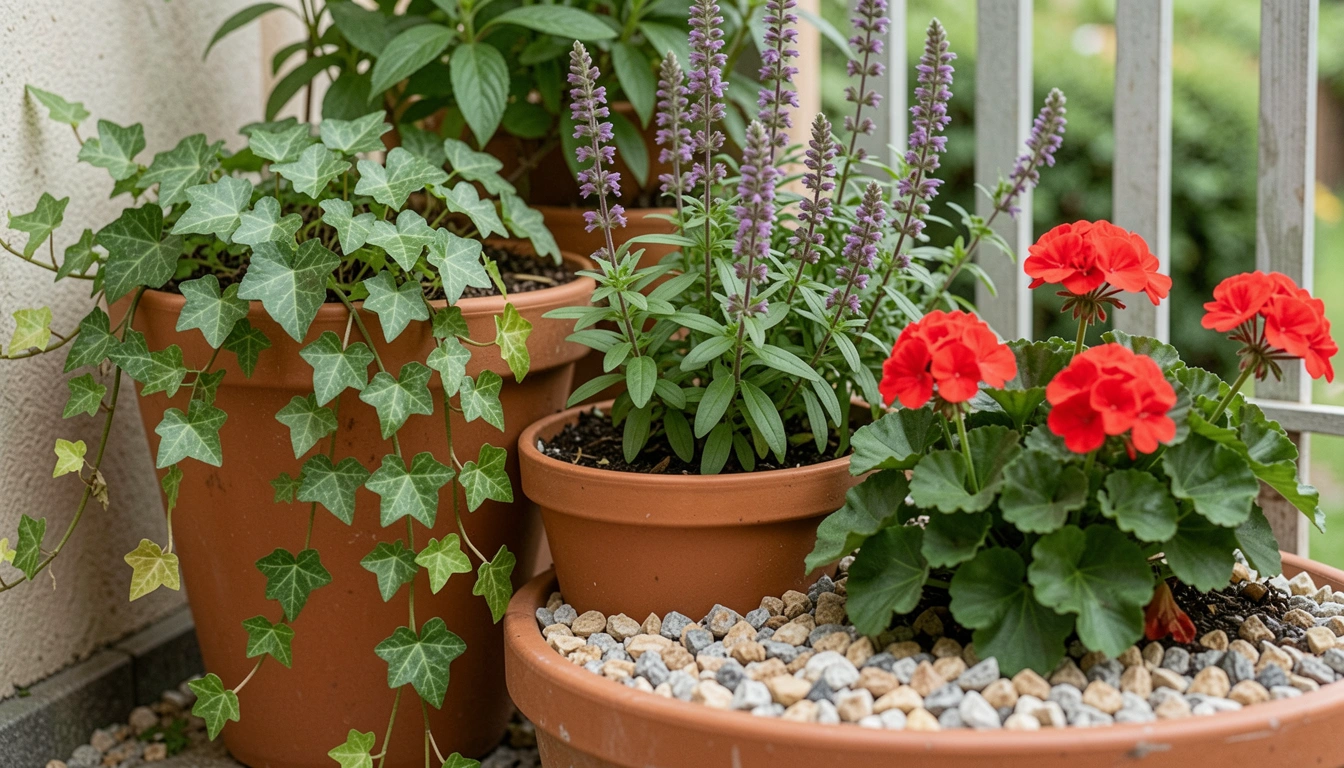
14 Smart Small Space Container Garden Ideas
I kept a tiny concrete slab and turned it into a garden. It didn’t happen overnight.
I learned which plants survive forgetful summers. I learned to pare back ideas I loved but couldn’t keep.
These are things I actually planted, failed with, fixed, and now use again.
14 Smart Small Space Container Garden Ideas
These 14 ideas are hands-on and realistic.
They’re things I use or have fixed in my own small spaces.
Expect clear, buyable items and practical notes.
All ideas are here — 14 ways to garden in tight spots.
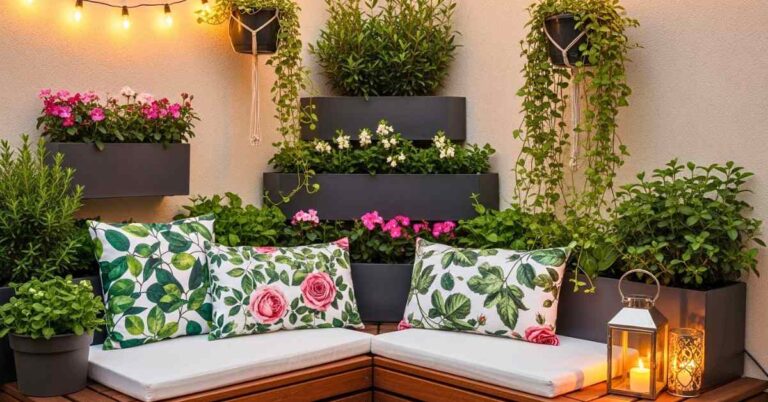
1. Layered Container Planting That Makes a Patio Feel Full
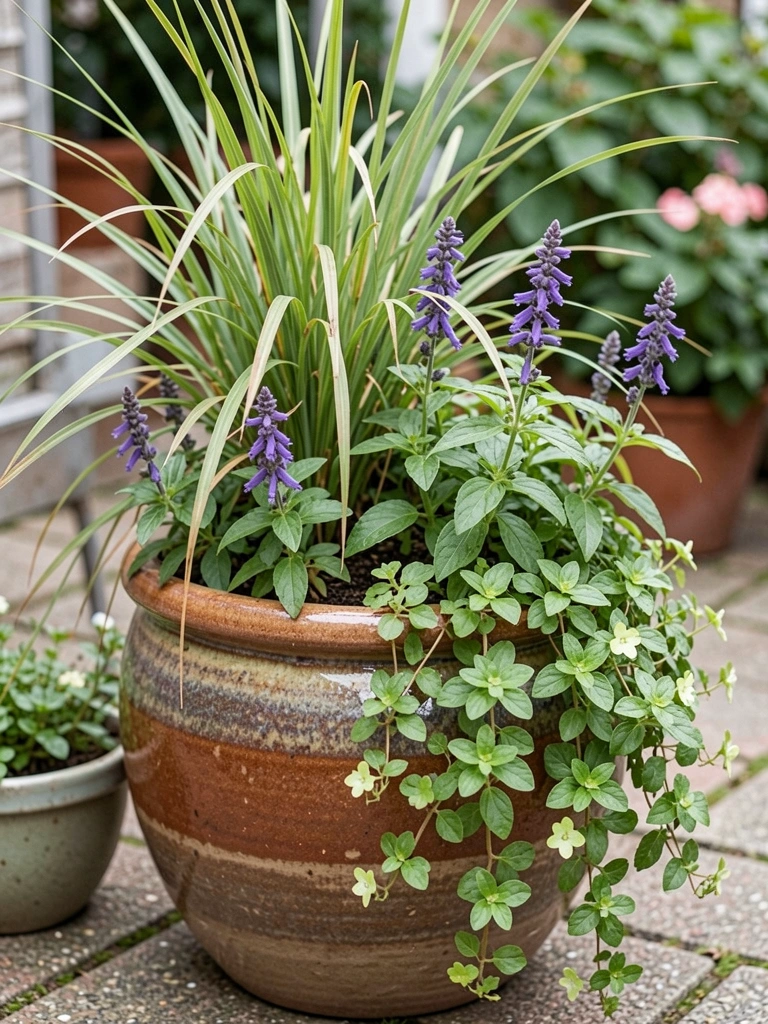
I started with one big pot and an empty corner. Layering was the fix. Tall accents in the back, mid-height color in the middle, and a trailing spiller softens edges. It makes a tiny patio read like a small room.
At first I overplanted and things choked each other. I now leave breathing space and prune monthly.
Watch water needs — tall plants drink more. Group pots with similar needs.
What You’ll Need for This Look
- Glazed large planter (18–20 inch)
- Three plant sizes: grasses, mid-height perennials, trailing annuals
- All-purpose potting mix
- Hand pruners
2. Vertical Herb Wall for Sunny Balconies
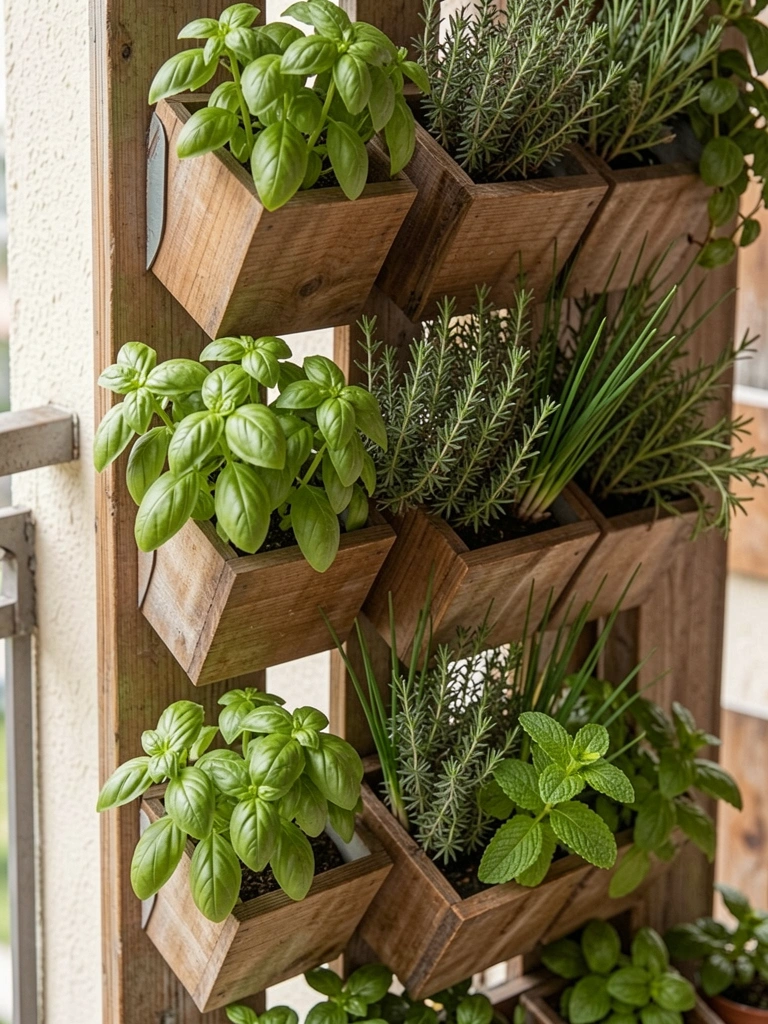
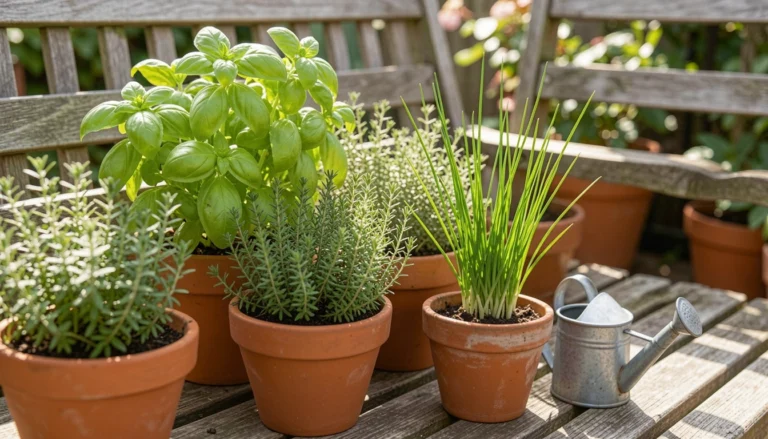
I mounted pockets on a cheap pallet and never looked back. Fresh snips for dinner became routine. Herbs thrive upright and save floor space.
My mistake: I used mint in one pocket and it invaded everything. Now I keep mint in its own pot and rotate others seasonally.
Install a drip or water thoroughly — the top dries faster than the bottom. Harvest often; the wall stays tidy.
What You’ll Need for This Look
- Wall planter pockets or vertical pallet
- 6–8 small herb plants (basil, thyme, oregano, chives)
- Lightweight potting mix
- Small drip irrigation or watering can
3. Dwarf Fruit Tree in a Half-Barrel
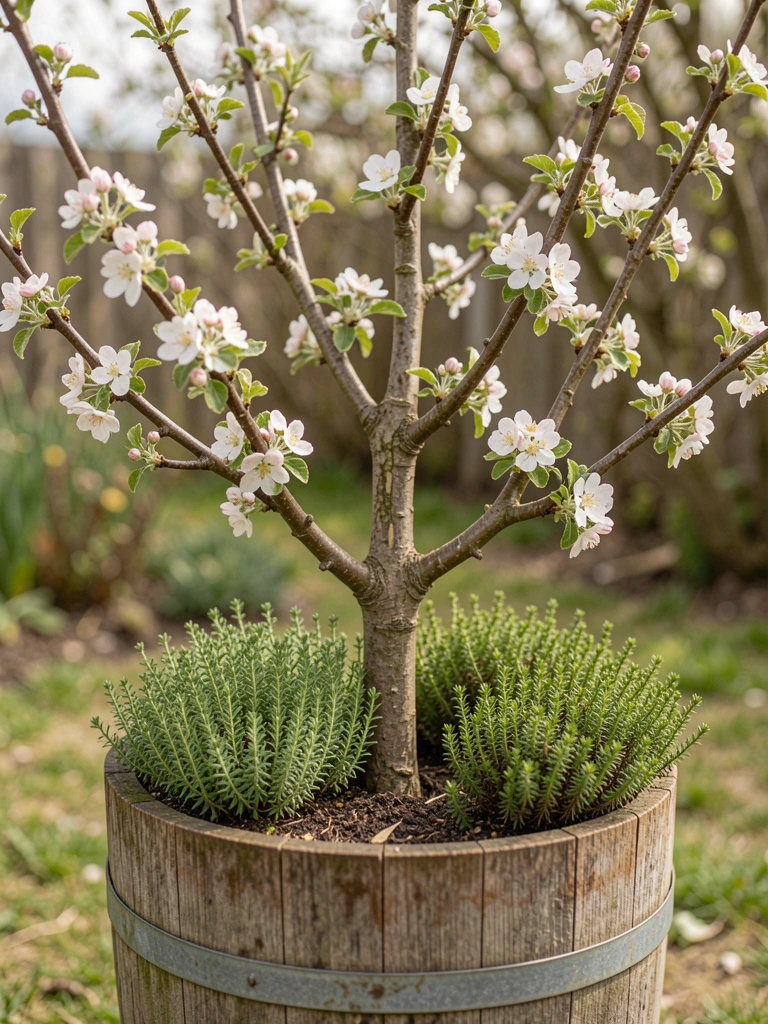
I squeezed a dwarf apple into a half-barrel on my stoop. It feels like a small orchard in a box. Spring blossoms draw bees and late fruit tastes like homegrown.
I learned the hard way: poor drainage meant root rot one winter. I added gravel and raised the barrel slightly and it recovered.
Prune yearly and pick a cold-hardy dwarf variety. Rotate companion plants to keep soil lively.
What You’ll Need for This Look
- Half-barrel planter (24–30 inch)
- Dwarf fruit tree (columnar or espalier apple/pear)
- Well-draining potting soil with compost
- Pruning saw and graft-friendly ties
4. Self-Watering Window Boxes for Busy Weeks Away
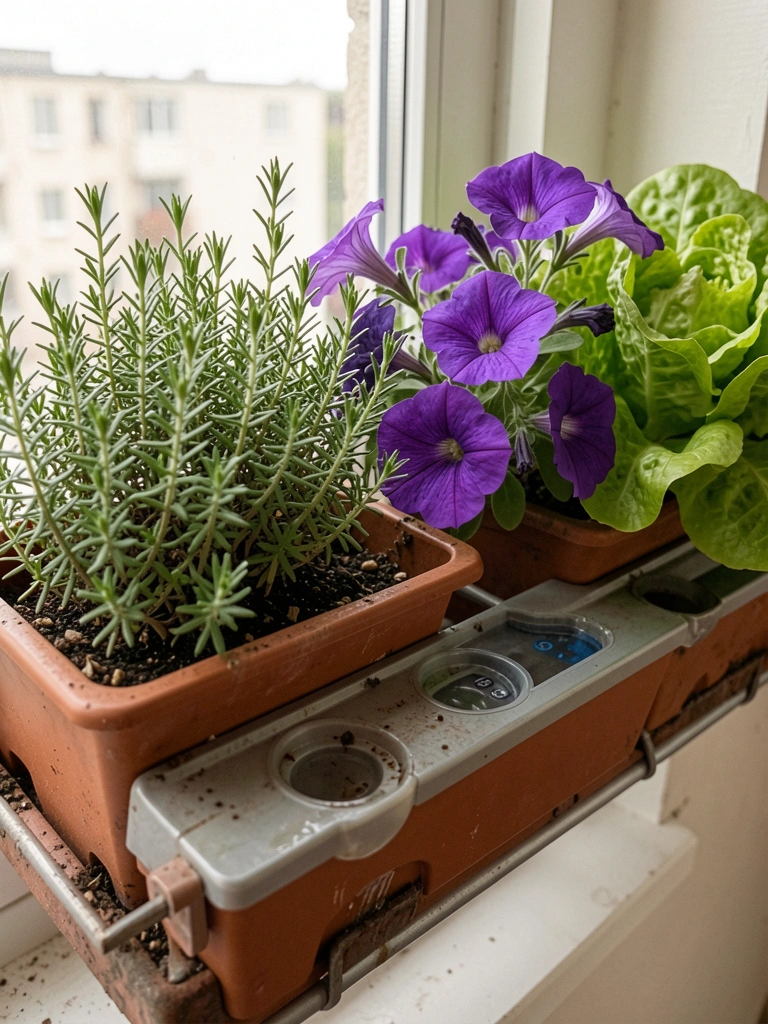
When I travel, window boxes used to brown out fast. Self-watering boxes fixed that. They hold a reserve so roots sip slowly. My lettuce lasted a long weekend without stress.
I once thought bigger reservoir always better. Too much water kept roots soggy. Aim for a medium reservoir and check after a week.
Use lightweight compost mix and plants with similar moisture needs. Top up reservoir before going away.
What You’ll Need for This Look
- Self-watering window boxes (12–24 inch)
- Moisture-retentive potting mix
- Herbs and salad greens (lettuce, cilantro, chard)
- Water-level indicator or funnel
5. Sunny Succulent Trough That Needs Almost No Water
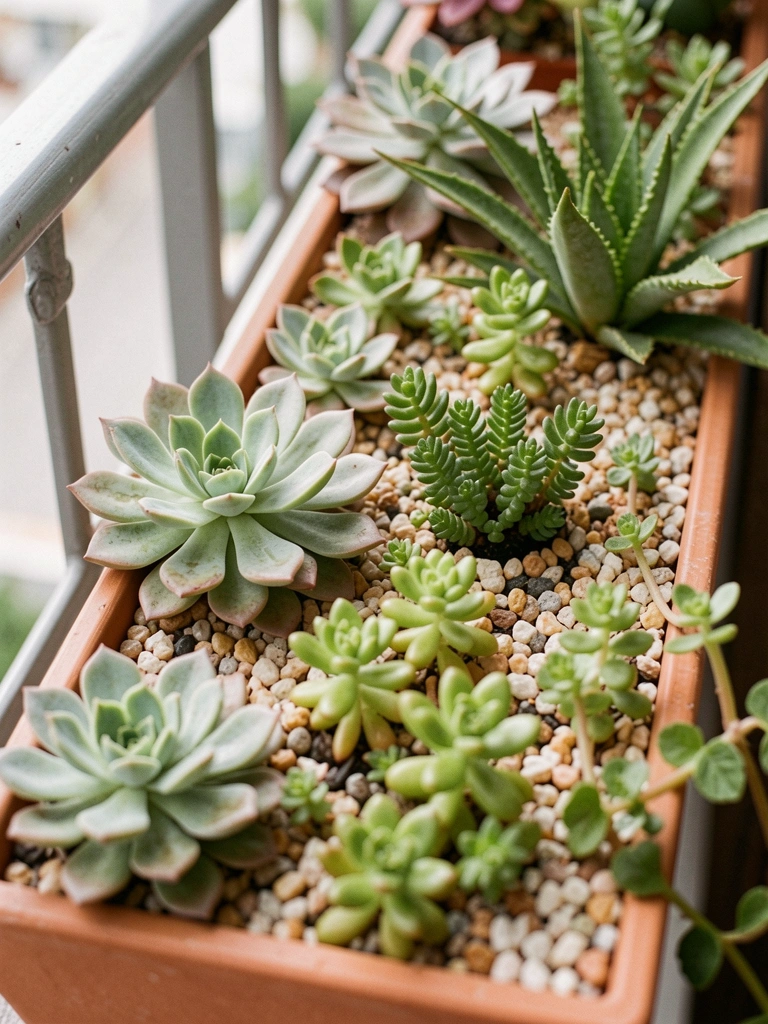
I made a shallow trough for a narrow ledge and filled it with hardy succulents. The arrangement looks clean and modern. It stays neat even in heat.
My early mistake was using heavy soil; succulents need gritty mix. I repotted with a cactus blend and they snapped back.
Place it in full sun and don’t overwater. Rotate plants for even sun exposure.
What You’ll Need for This Look
- Shallow trough planter (24–36 inch, low)
- Succulent mix (gritty/cactus soil)
- Assorted succulents (echeveria, sedum, crassula)
- Gravel top-dress and a small trowel
6. A Cozy Tea Corner with Matched Pots and a Small Stool
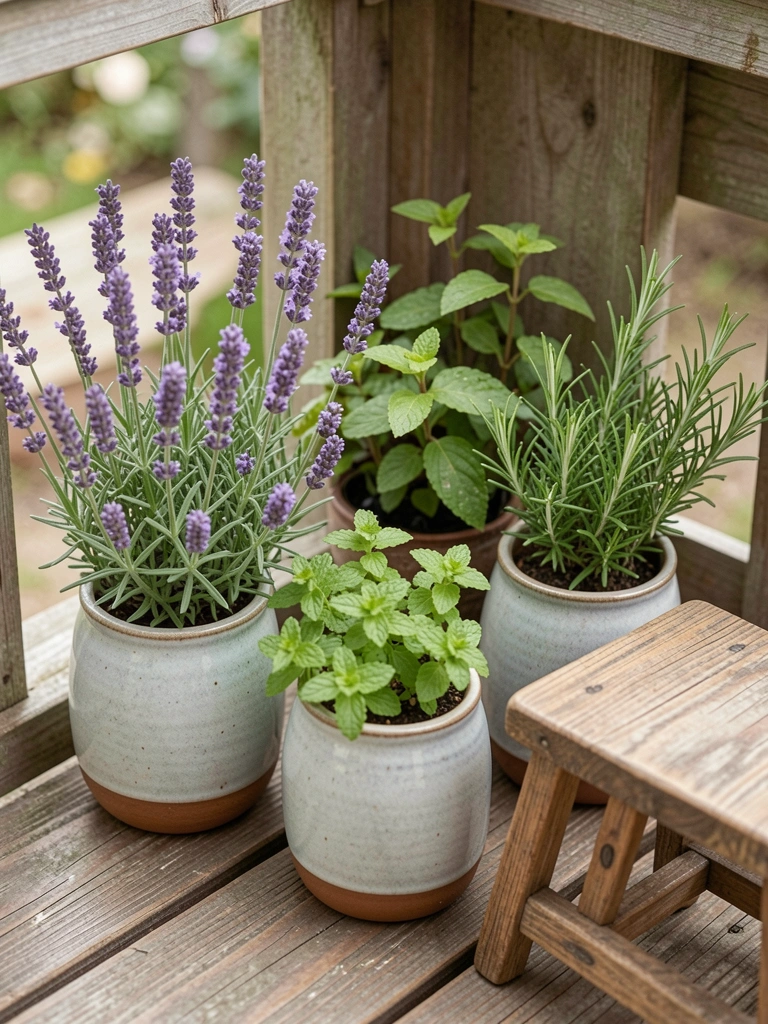
I carved a tiny tea nook between storage and a railing. A trio of matching pots gave the area cohesion. Lavender scent and lemon balm make a quiet corner for morning tea.
I once bought mismatched pots and the space felt cluttered. Matching finishes tightened the look and made cleaning easier.
Choose plants with similar sunlight needs and keep seating simple.
What You’ll Need for This Look
- Three matching glazed pots (10–12 inch)
- Aromatic plants (lavender, lemon balm, rosemary)
- Small outdoor stool or folding table
- Pebble mulch and saucers
7. North-Facing Shade Pots with Ferns and Heuchera
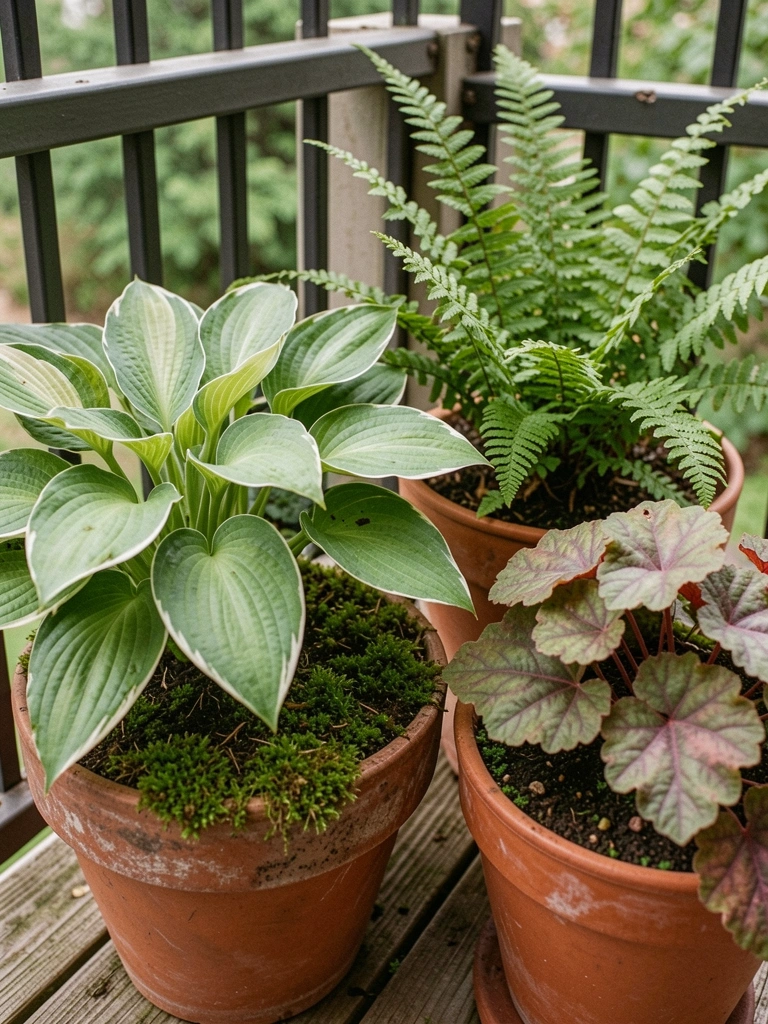
My north balcony felt impossible until I embraced shade plants. Ferns, hostas, and heuchera created deep, green layers that feel restful all summer.
I used the wrong fern once — sun-tolerant type that burned in morning light. I switched species to true shade lovers and the patch revived.
Keep soil evenly moist and watch slugs when nights are wet.
What You’ll Need for This Look
- Deep shade pots (12–18 inch)
- Shade plants (ferns, hosta, heuchera)
- Moisture-retentive potting mix
- Copper slug traps or organic slug pellets
8. Trough Vegetable Row for Compact Edibles
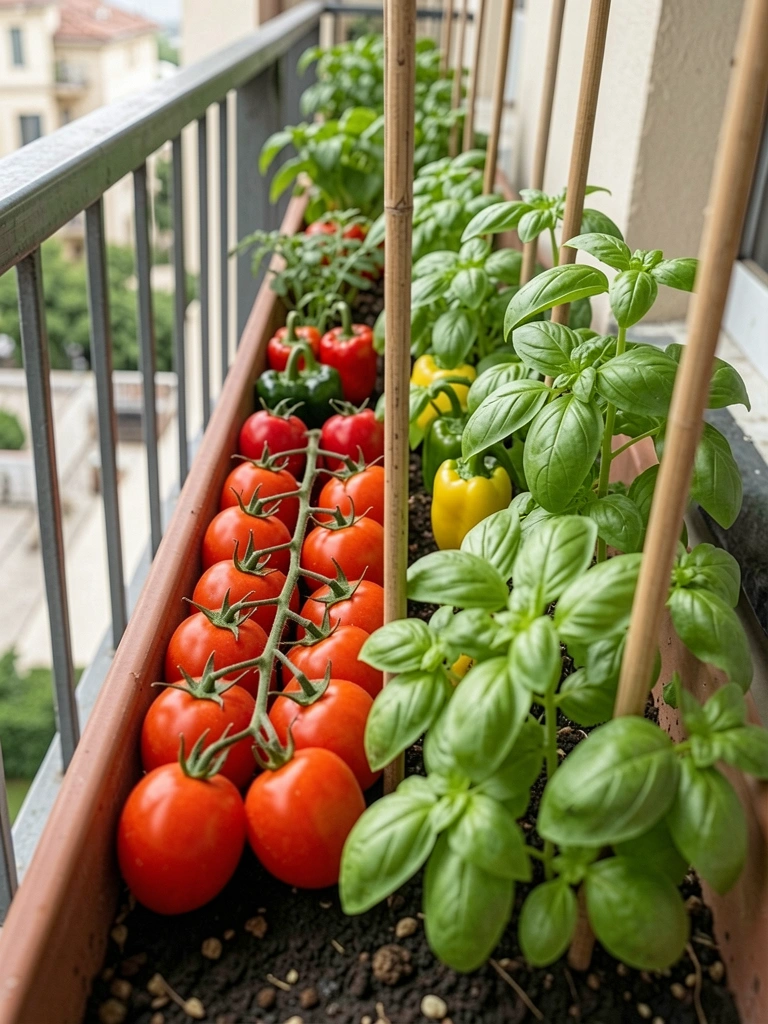
I planted a trough with a compact row of veggies and it fed two of us all summer. Dwarf tomatoes, bush beans, and herbs fit neatly and gave surprising yields.
At first I planted too many tomatoes and yields suffered. Staggering varieties and leaving spacing fixed that.
Use stakes or small cages and feed regularly. Harvesting keeps plants productive.
What You’ll Need for This Look
- Long trough planter (24–48 inch)
- Compact vegetable varieties (dwarf tomato, peppers, bush beans)
- Vegetable potting mix and slow-release fertilizer
- Small stakes or tomato cages
9. Hanging Trio for Airy, Space-Saving Green
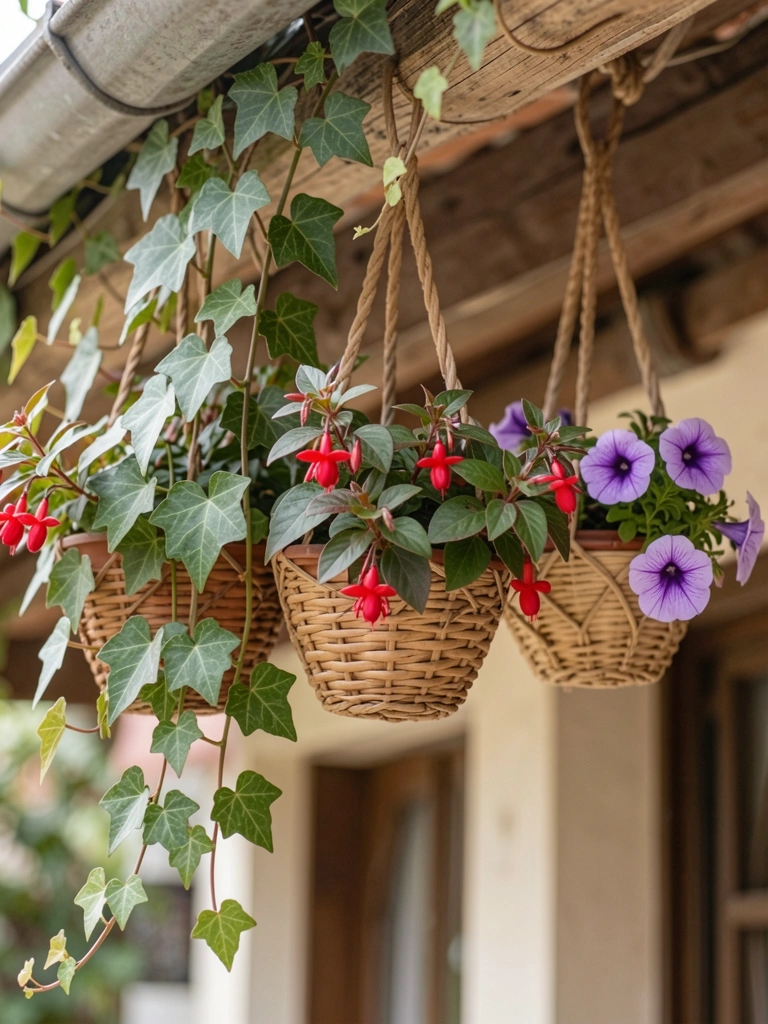
I hung three pots along the balcony rail and suddenly the vertical space felt used. Trailing plants soften hard lines and free up floor area for chairs.
I once used heavy ceramic hangers and almost ripped the brackets out. Now I use lightweight pots and secure hooks designed for outdoors.
Watering needs vary — hang closer to a faucet or use hanging liners with reservoirs.
What You’ll Need for This Look
- Lightweight hanging pots (8–12 inch)
- Trailing plants (ivy, fuchsia, trailing petunia)
- Hanging hooks rated for outdoor use
- Coco liners or self-watering hanging baskets
10. Pollinator-Attracting Mini Meadow in a Pot
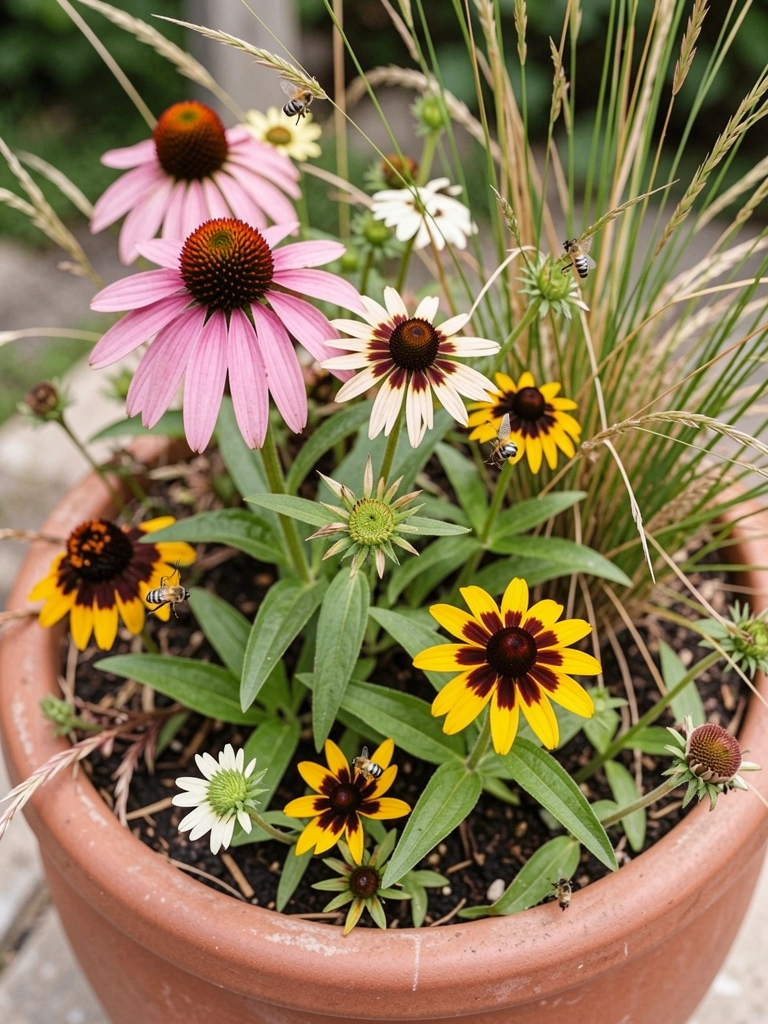
I planted a pot with natives and watched bees arrive within a week. A dense mix of bloom times keeps color and pollinators coming through the season.
My mistake was starting with nursery cultivars that weren’t attractive to bees. I switched to native seed mixes and the change was immediate.
Avoid pesticides. Add a shallow water dish and a mix of heights for landing spots.
What You’ll Need for This Look
- Large round planter (16–20 inch)
- Native wildflower plug plants or seed mix
- Pollinator-friendly soil mix
- Small shallow water dish
11. Portable Planter on Casters to Chase Sun
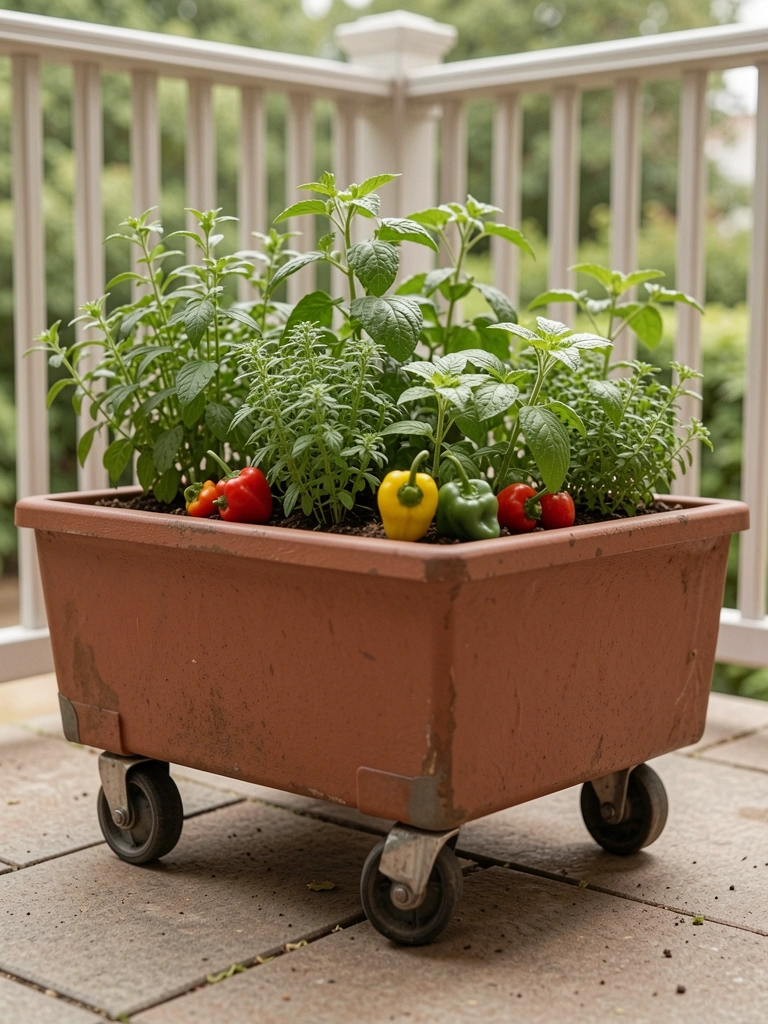
My balcony gets morning sun only on one side. I put a heavy planter on casters so I can roll it into sun for ripening or shade during heat waves. It’s simple and smart.
I once used cheap plastic casters that failed mid-season. I upgraded to heavy-duty outdoor casters and haven’t looked back.
Balance the planter and use lockable casters for safety.
What You’ll Need for This Look
- Rectangular planter (24–30 inch) with casters
- Compact edibles or sun-loving herbs
- Outdoor-rated heavy-duty casters (lockable)
- Well-draining potting soil
12. Privacy Screen with Climbing Containers
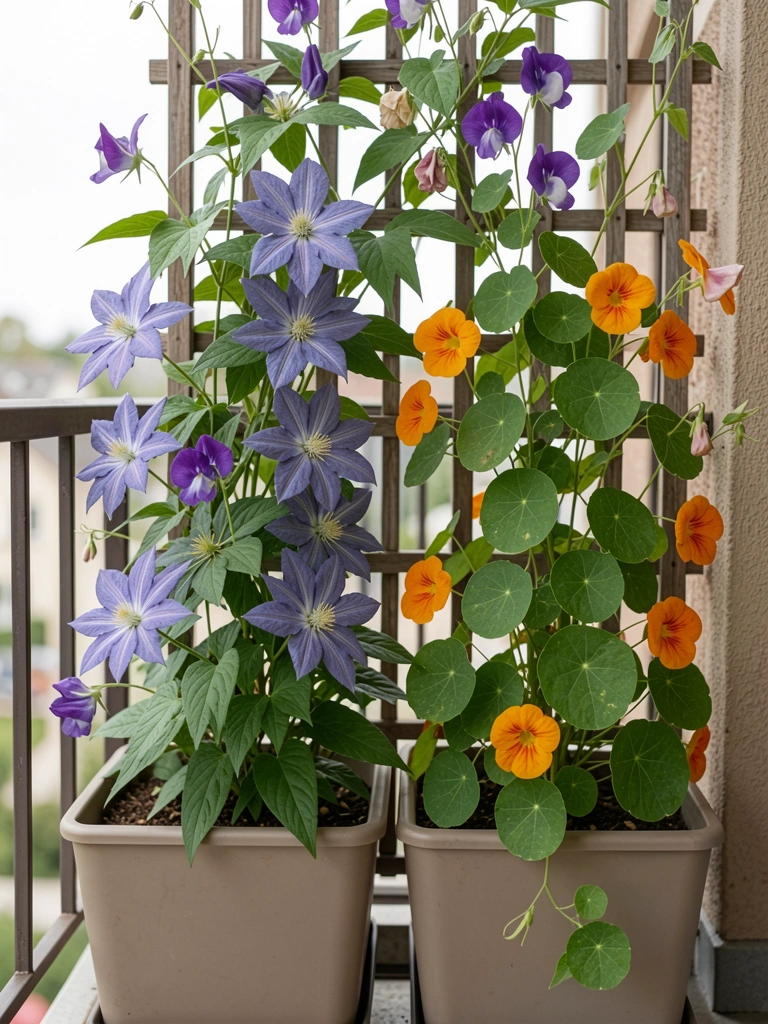
I wanted privacy without a fence. Two tall planters and a trellis did the job. Climbers grew quickly and made a soft screen that also smells nice.
My early clematis failed from poor soil and crowding. I repotted and gave each plant its own pot and they flourished.
Secure the trellis and choose fast, non-invasive climbers for quick cover.
What You’ll Need for This Look
- Tall planters (18–24 inch) for trellis bases
- Narrow trellis panels
- Climbers (clematis, sweet pea, nasturtium)
- Rich potting soil and ties for training
13. Seasonal Bulb Rotation in Pots for Year-Round Color
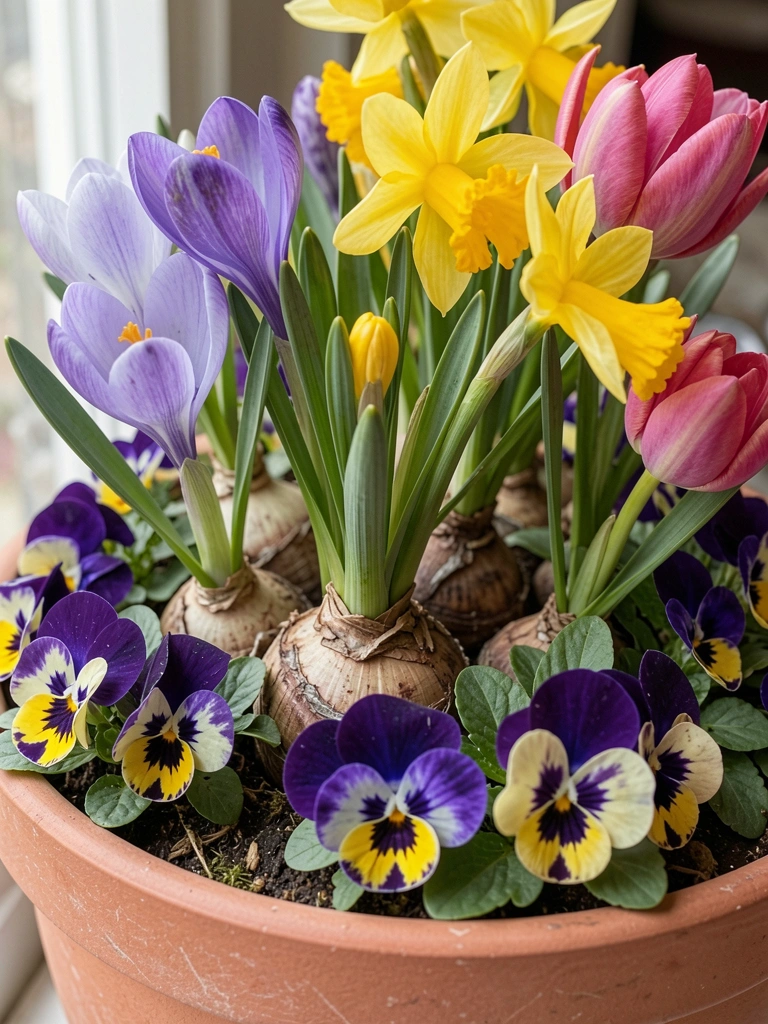
I layer bulbs in deep pots to get spring color before summer annuals take over. Bulbs lift the mood after winter and then I tuck in annuals once the bulbs fade.
I used shallow pots once and the bulbs pushed up oddly. Deep pots with good spacing fixed the look and improved bloom.
Time your planting; label pots so you don’t forget what’s under the soil.
What You’ll Need for This Look
- Deep pots (12–16 inch)
- Mixed bulbs (crocus, daffodil, tulip)
- Spring annuals for edge planting (pansies, violas)
- Bulb planting tools and labels
14. Small Container Water Feature for Calm Sound
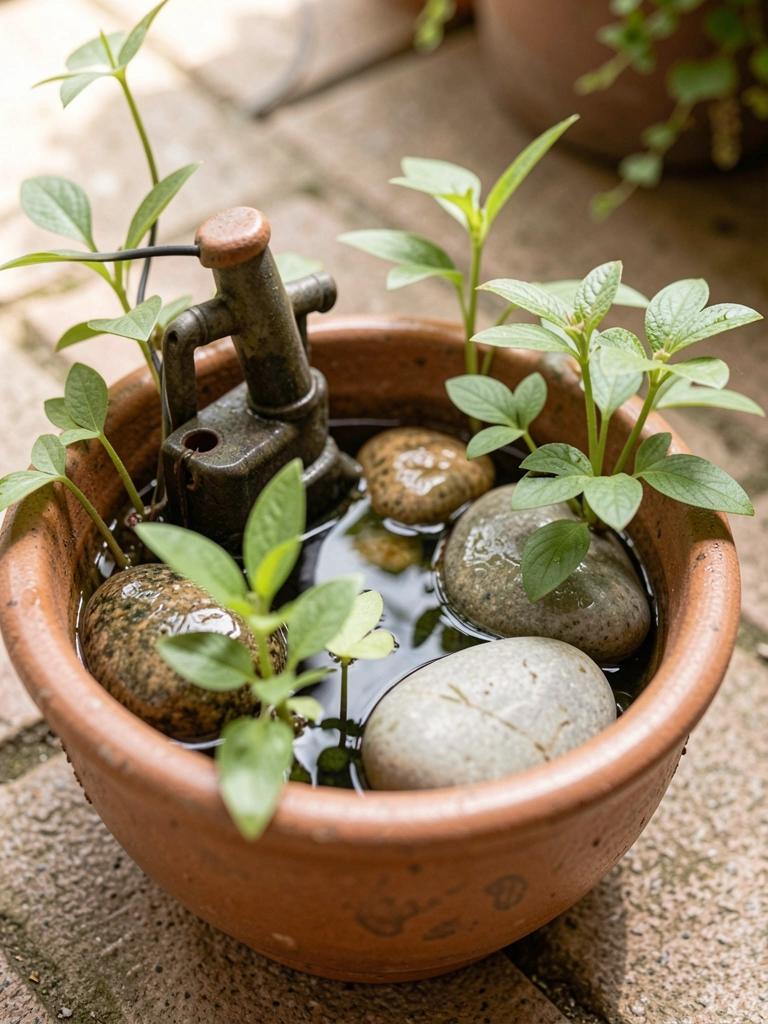
I added a small container fountain to mask street noise. A quiet pump and a few smooth stones give a calm, consistent sound. It makes the corner feel private.
My first pump was too strong and splashed everywhere. I swapped for an adjustable, low-flow pump and the sound became gentle.
Check algae and top up water regularly. Floating plants help keep it balanced.
What You’ll Need for This Look
- Ceramic water container (12–18 inch)
- Small adjustable fountain pump
- Floating plants (duckweed, water lettuce) or stones
- Pond-safe cleaning brush
Final Thoughts
You don’t need to do all of these. Pick one that fits your light and your routine.
Start small. Learn from the bits that flop — I’ve had plenty.
Gardening in small spaces is about choices you can live with.