9 Simple Herbs Terrace Garden Ideas For Beginners
I used to cram single pots everywhere and it looked like clutter, not a garden.
Then I started seeing the terrace as one room. I moved things, kept what worked, pulled out what didn’t.
These ideas are simple, practical, and born from those mistakes. You can pick a couple and build from there.
9 Simple Herbs Terrace Garden Ideas For Beginners
These 9 ideas are hands-on and easy to start on any small terrace.
I tested each one in real, imperfect spaces.
You’ll get clear choices and what to buy for each setup.
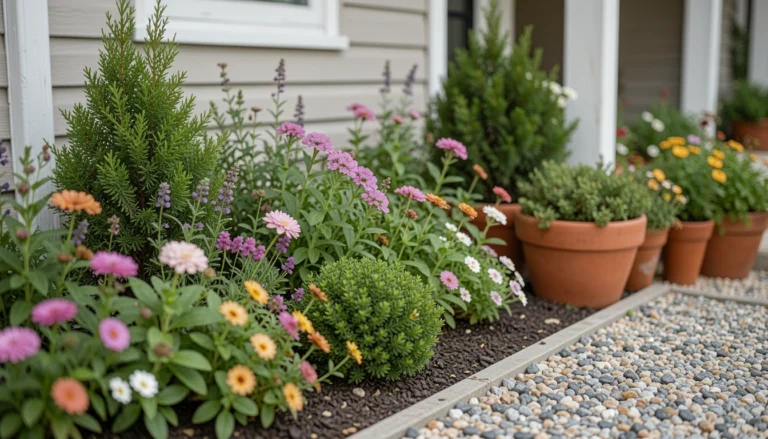
1. Layered Container Planting That Makes a Patio Feel Full

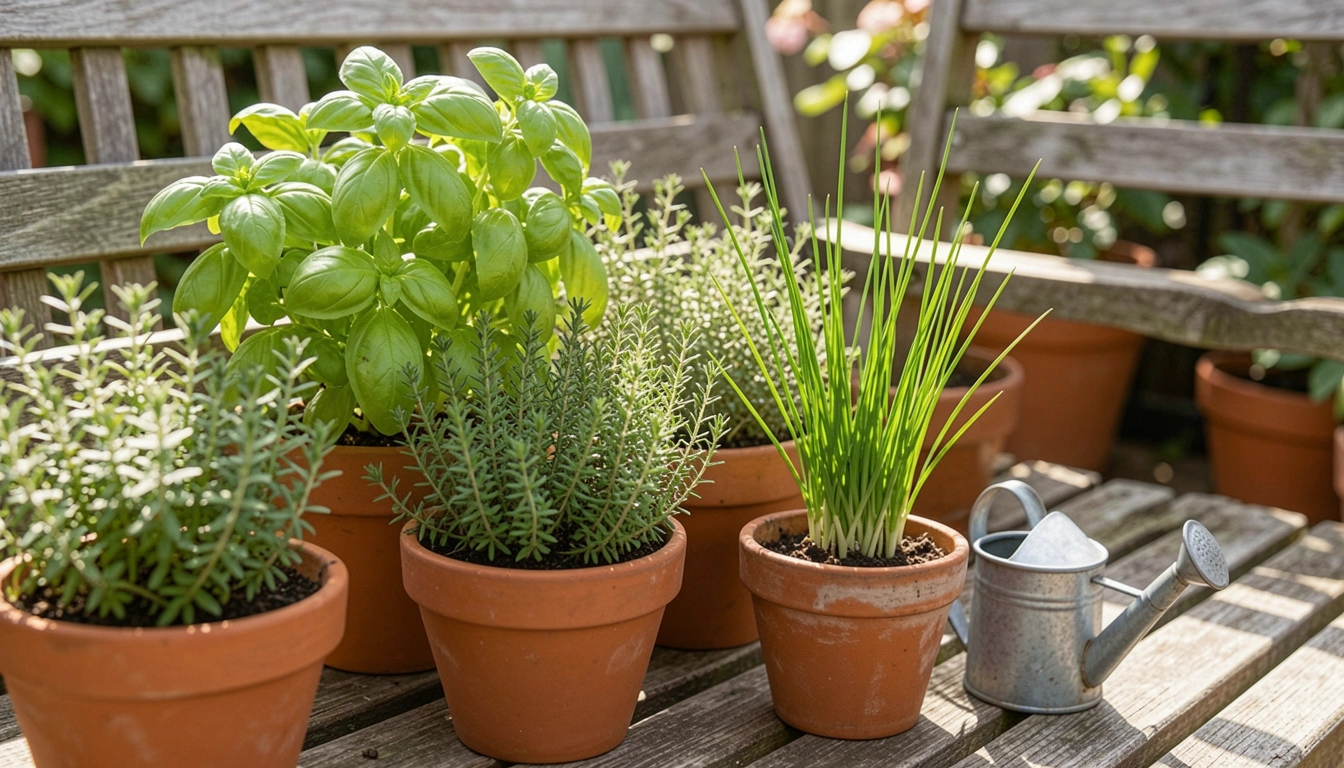
I planted a group of three pots once and it suddenly read as one garden. Layering heights—tall rosemary, mid basil, low thyme—gave depth without extra work. I learned the hard way that matching drainage matters; a pretty pot without holes drowned oregano. Visually it feels full, like the terrace breathes. Place taller herbs to the back or center and let spillers soften edges. A quick trim keeps it neat.
What You’ll Need for This Look
- Terracotta planter trio (6, 10, 14 inch)
- Well-draining potting mix for herbs
- Gravel for bottom drainage
- Small hand pruners, stainless steel
2. Self-Watering Planters for Busy Days

I’m not great at remembering to water. Self-watering planters saved my seedlings more than once. They hold moisture for days and reduce root rot when used with airy soil. Early on I used heavy garden soil and the wicks clogged—switching to a lighter mix fixed that. These planters are especially forgiving in hot summers or short trips away. I still check tops weekly; nothing replaces a quick look.
What You’ll Need for This Look
- Self-watering planter (20–24 inch)
- Potting mix with perlite
- Wick or capillary mat insert
- Moisture meter (optional)
3. Vertical Pocket Herb Wall for a Green Screen

I once tried a pallet wall that flopped—poor soil, poor pockets. When I upgraded to proper pocket planters and a sturdy frame, it became a living privacy screen. The vertical layout freed floor space and turned the terrace wall green. Watch for shading patterns; some pockets get hotter. I swapped basil for oregano on the sunnier pockets and it did better. It’s nice to clip fresh herbs straight from eye level.
What You’ll Need for This Look
- Felt pocket planter panel (8–12 pockets)
- Mounting hardware for terrace walls
- Lightweight herb potting mix
- Irrigation drip line or watering can with long spout
4. Herb Tower: Stackable Planter to Save Space
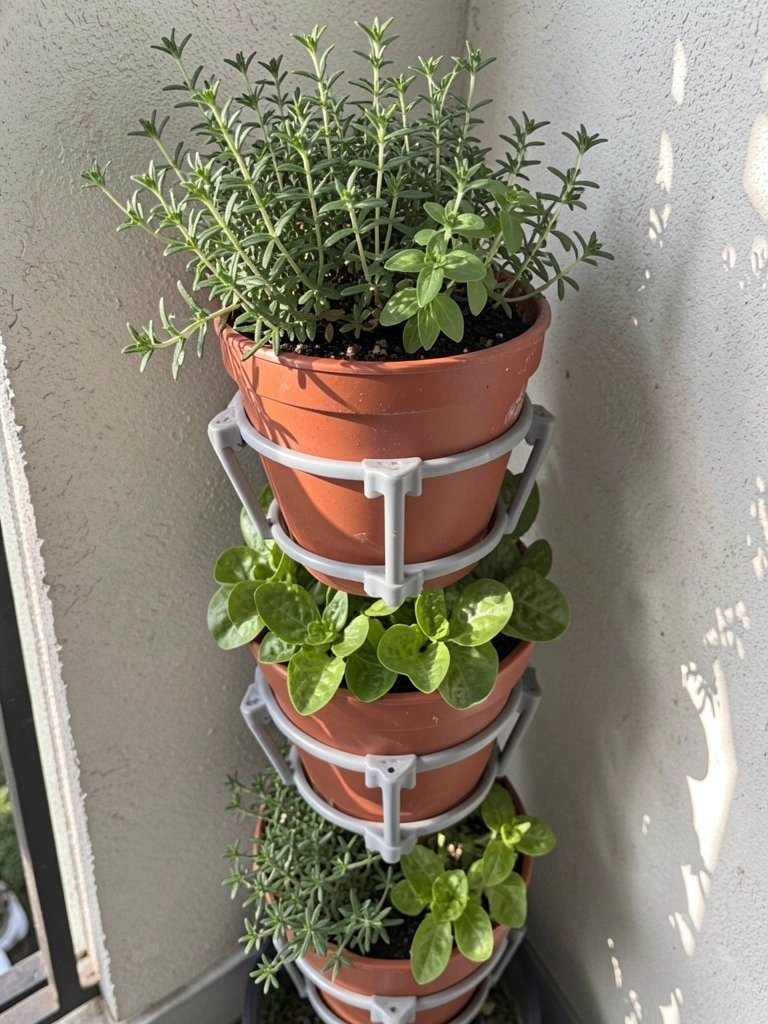
I bought a budget tower that leaned after a windstorm. Upgrading to a solid stack with a central reservoir solved that. The tower keeps herbs accessible at different levels and drains well. I like planting salt-tolerant edges and delicate greens near the top. It’s compact but needs regular rotation so all herbs get light. The first year I planted too densely; thinning made everything happier.
What You’ll Need for This Look
- Stackable herb tower planter (four-tier)
- Central reservoir-compatible potting mix
- Anchoring strap for wind-prone terraces
- Small hand trowel
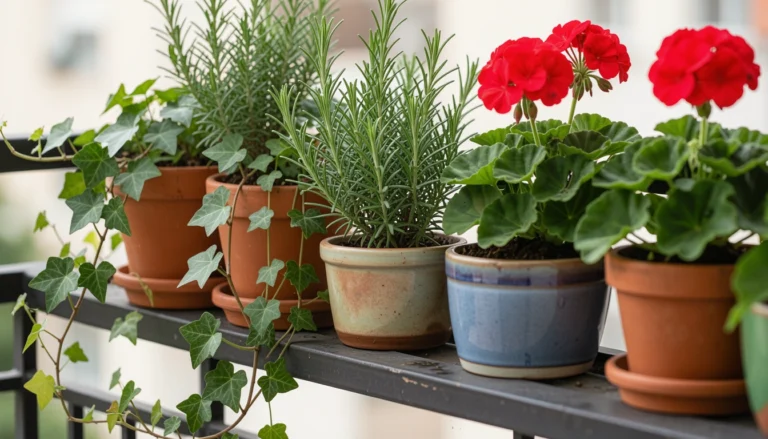
5. Sunny Rail Planters for Fresh Basil & Oregano
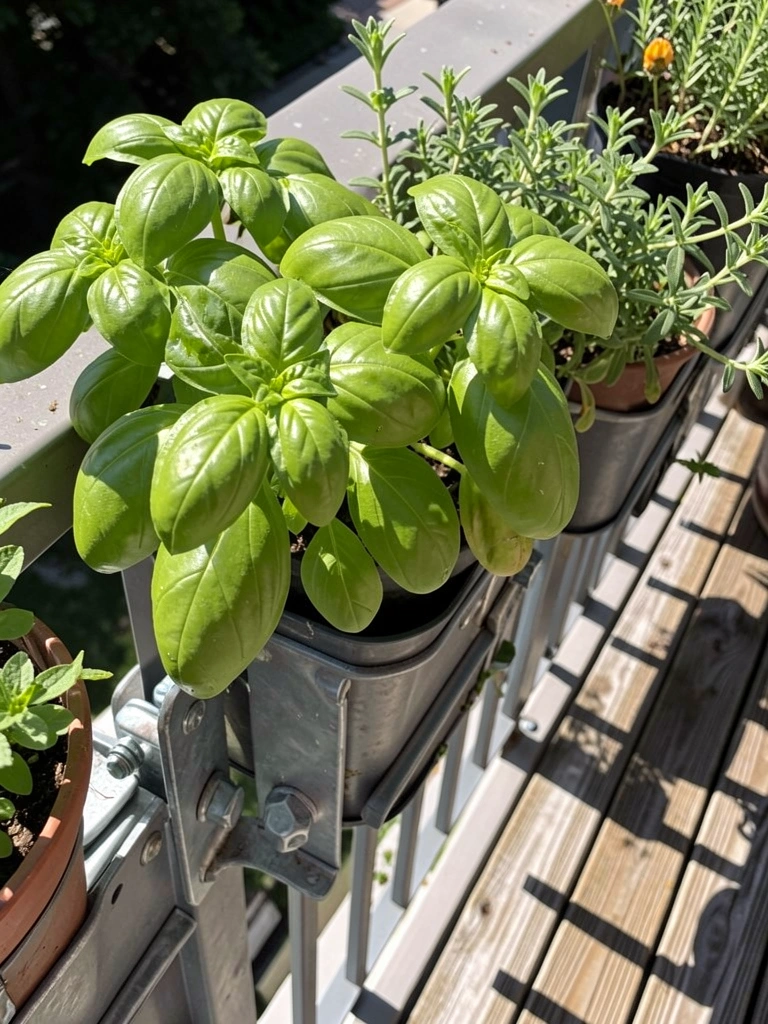
I put planters on the rail to steal sunlight. Basil loved it; mint didn’t. Rail boxes bring herbs to eye level and free up floor space. My mistake was underestimating heat on metal rails; roots heated up. I now line boxes with cork and use light-colored pots to reduce heat. Secure brackets are non-negotiable—one loose clip sent soil flying. This setup is perfect for quick snips while cooking.
What You’ll Need for This Look
- Metal rail planter box (24–36 inch)
- Heavy-duty rail brackets
- Light-colored plastic liners or cork strips
- Fast-draining herb mix
6. Hanging Herb Baskets Under Shade
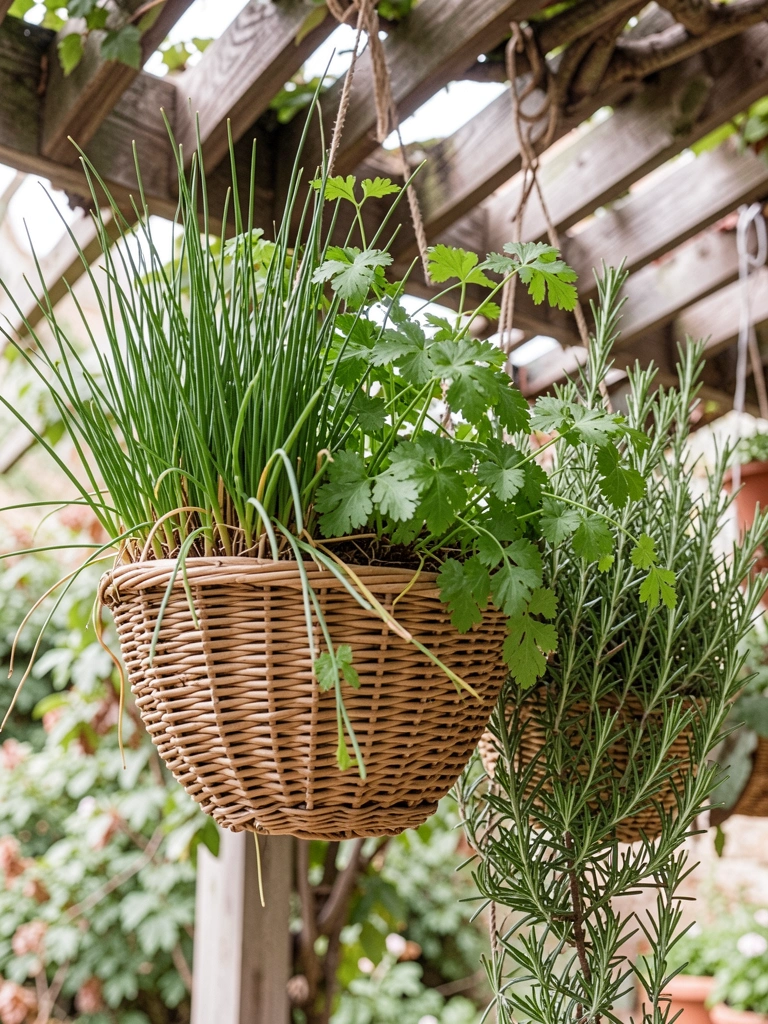
I hung baskets to use overhead space. In bright summer they were lifesavers under the pergola. Early on I used deep pots and the baskets sagged; switching to lightweight coco liners helped. Hanging herbs dry faster, so I water more often. I like the motion they add—tiny green islands above head height. They’re great near a seating spot so the scent lifts when you sit down.
What You’ll Need for This Look
- Hanging baskets with coco liners (10–12 inch)
- Heavy-duty S-hooks or ceiling mounts
- All-purpose potting mix with moisture retention
- Long-reach watering can
7. Mixed Culinary Trough for One-Stop Picking
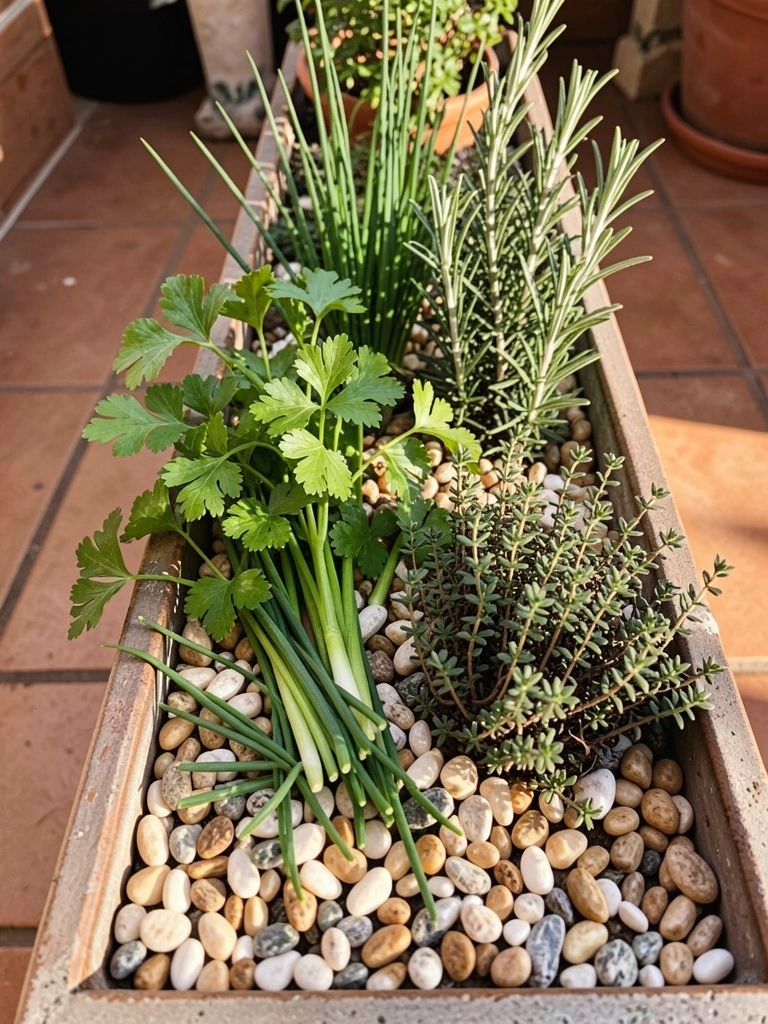
I used a long trough by the kitchen door and it became my go-to. Planting complementary flavors—parsley, chives, thyme—made meal prep effortless. My early mistake was crowding; plants needed elbow room to thrive. I learned to set herbs with similar water needs together. The trough reads tidy and intentional, and a gravel top keeps soil from splashing during rain. It’s a clean, modern look that eases daily harvesting.
What You’ll Need for This Look
- Rectangular trough planter (36–48 inch)
- Coarse gravel for top dressing
- Herb-specific potting mix
- Small garden fork for aeration
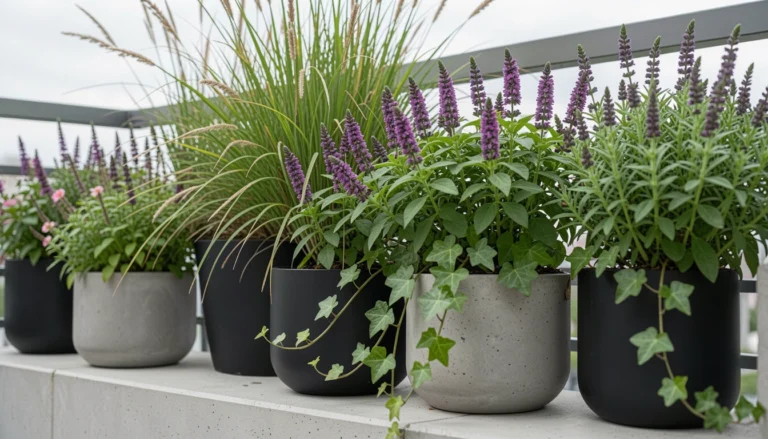
8. Aromatic Mini Herb Garden Near Seating

I planted scent-forward herbs around my bench and it changed evenings. Lemon balm and lavender make sitting outside feel intentional, not accidental. I once planted mint too close and it began to overrun the bench area—moved mint to a pot next season and the problem vanished. Keep aromatic herbs trimmed so they don’t shade smaller companions. It’s a small, cozy touch that makes the terrace feel finished.
What You’ll Need for This Look
- Small round planter or cluster (12–16 inch)
- Lavender, lemon balm, or fragrant mints
- Mulch or gravel to finish surface
- Compact pruning shears
9. DIY Potted Herb Spiral for Interest and Drainage

I wanted the charm of an herb spiral but not the masonry. My potted spiral—stacked bowls on a plate—gave the same microclimates. The top dries faster so I put sun-loving rosemary there, and moisture-thriving parsley lower. My first attempt collapsed because bowls weren’t stabilized; a central stake fixed it. It looks hand-made and gives each herb its preferred spot. It’s playful but purposeful.
What You’ll Need for This Look
- Assorted terracotta bowls/planters (varying sizes)
- Large saucer or tray for base
- Metal garden stake for stability
- Free-draining potting soil with compost
Final Thoughts
Start small. Pick two ideas that fit your light and your routine.
You don’t need perfect soil or perfect layout. I learned more from the failures than the wins.
Trust what your terrace tells you and build on that.