8 Charming Small Garden Path Ideas
I kept trying to cram paths into too-small yards. They either swallowed the garden or looked awkward.
Finally I learned how a path can feel intentional without taking over. Small paths are about rhythm and touchable materials.
These ideas are things I actually built, messed up, and fixed. You’ll get simple options you can do this weekend.
8 Charming Small Garden Path Ideas
These 8 ideas are tested in real small gardens.
Each idea shows a clear, doable path type.
Expect personal tips, small mistakes I made, and shopping notes.
These 8 ideas will help you choose what to plant and buy.
1. Narrow Stepping-Stone Route with Groundcover
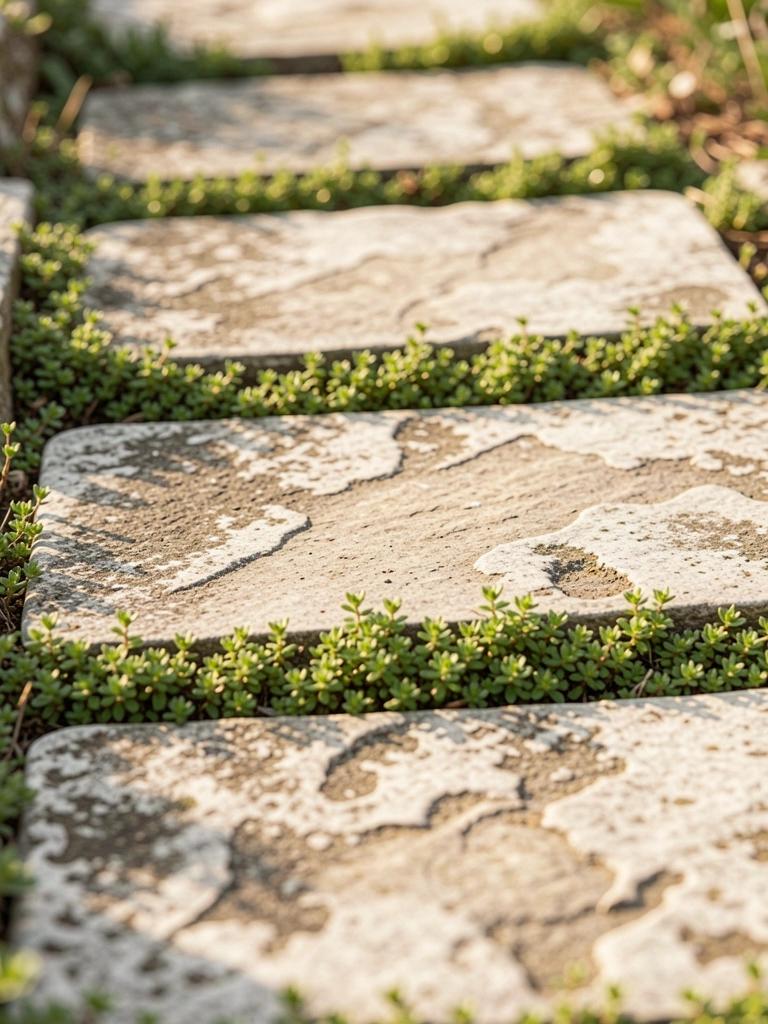
I used irregular limestone slabs to make a tiny route to the shed.
It feels direct and friendly. The stones are spaced so you can step without watching your feet too hard.
Creeping thyme between stones softened edges and smells when I brush past. I once set stones too far apart — that was sloppy. Fixing spacing made the path look intentional.
What You’ll Need for This Look
- Irregular limestone stepping stones (12–18 inch)
- Creeping thyme plugs (flat of 24)
- Coarse sand for leveling (small bag)
- Rubber mallet
2. Gravel Alley with Metal Edging and Low Boxes
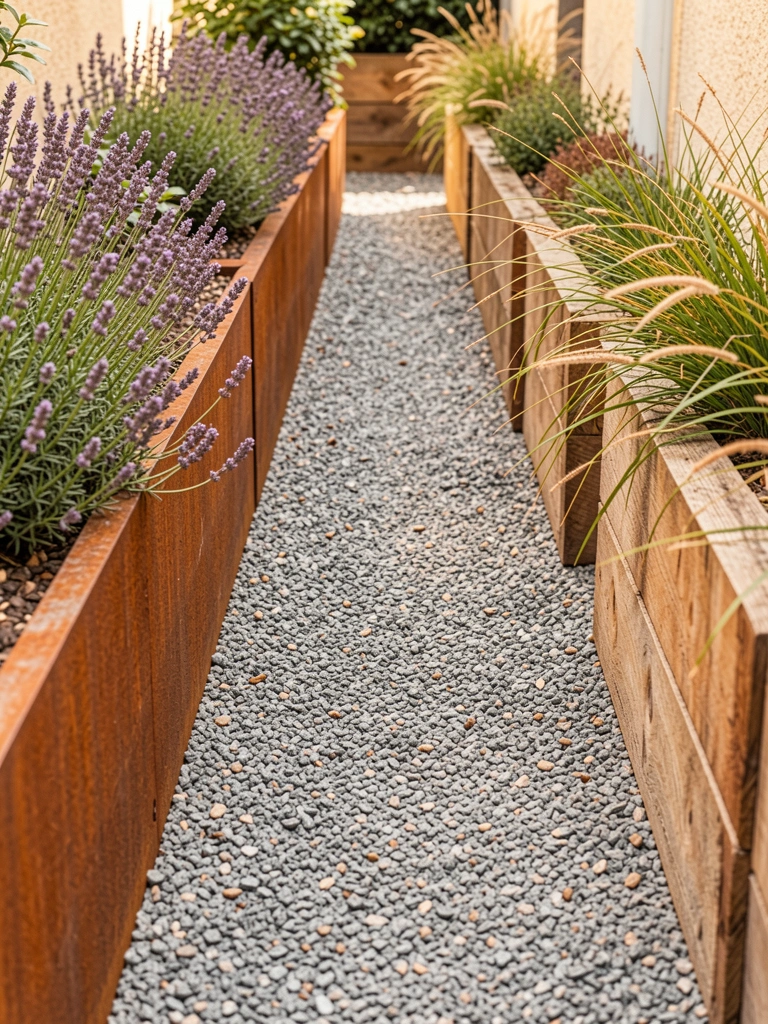
I built a narrow gravel alley between fences. It solved mud and made a clean corridor.
Corten edging keeps gravel tidy and gives a warm color against the green. I planted lavender in low cedar boxes for scent and rhythm. At first I used too-wide gravel and it felt noisy underfoot; switching to pea gravel made it softer.
This is a low-maintenance look that still feels planted.
What You’ll Need for This Look
- Pea gravel (bulk bag)
- Corten metal edging strips (4–6 inch)
- Cedar planter boxes (24 inch)
- Lavender plants (3–5)
3. Brick Herringbone Path That Makes Space Feel Longer
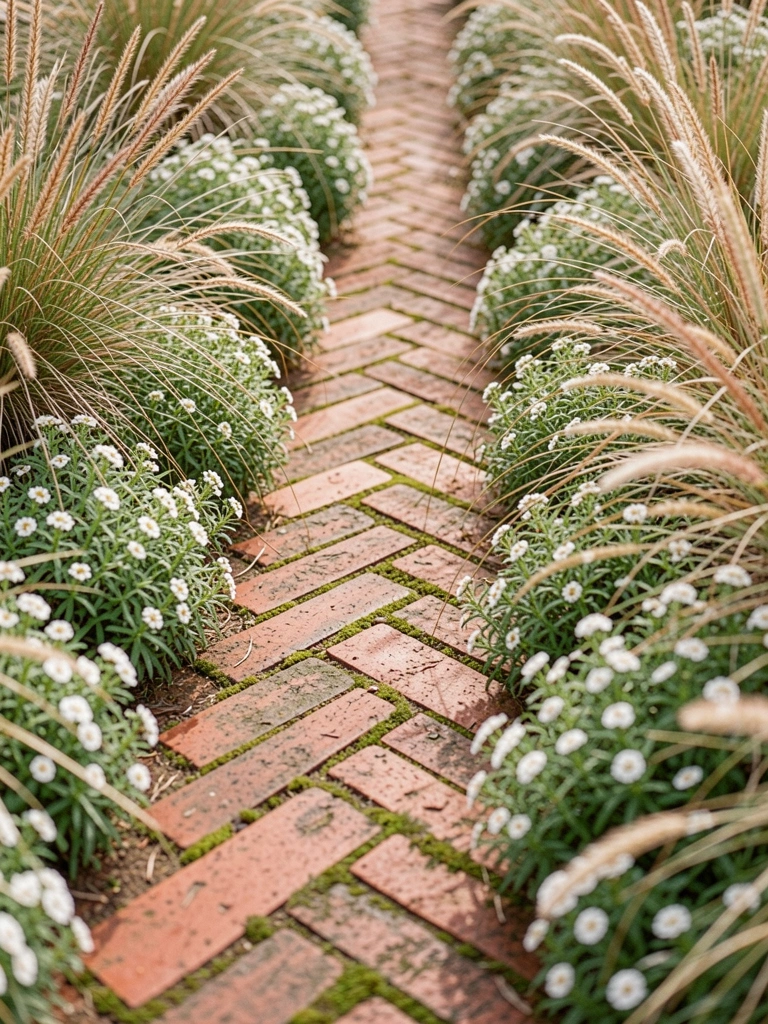
I laid bricks in a herringbone pattern to elongate a tiny courtyard.
The pattern gives the eye something to follow, so the space reads longer. I left thin joints and let moss and thyme creep in. It feels aged and calm.
I learned to tamp each brick level as I go. When one bit sits high, the whole run looks off. Keep the base firm.
What You’ll Need for This Look
- Clay bricks (standard size)
- Sand and polymeric joint mix (small bags)
- Low thyme or moss plugs
- Rubber plate compactor (rental)
4. Stepped Oak Planks for a Rustic, Narrow Slope
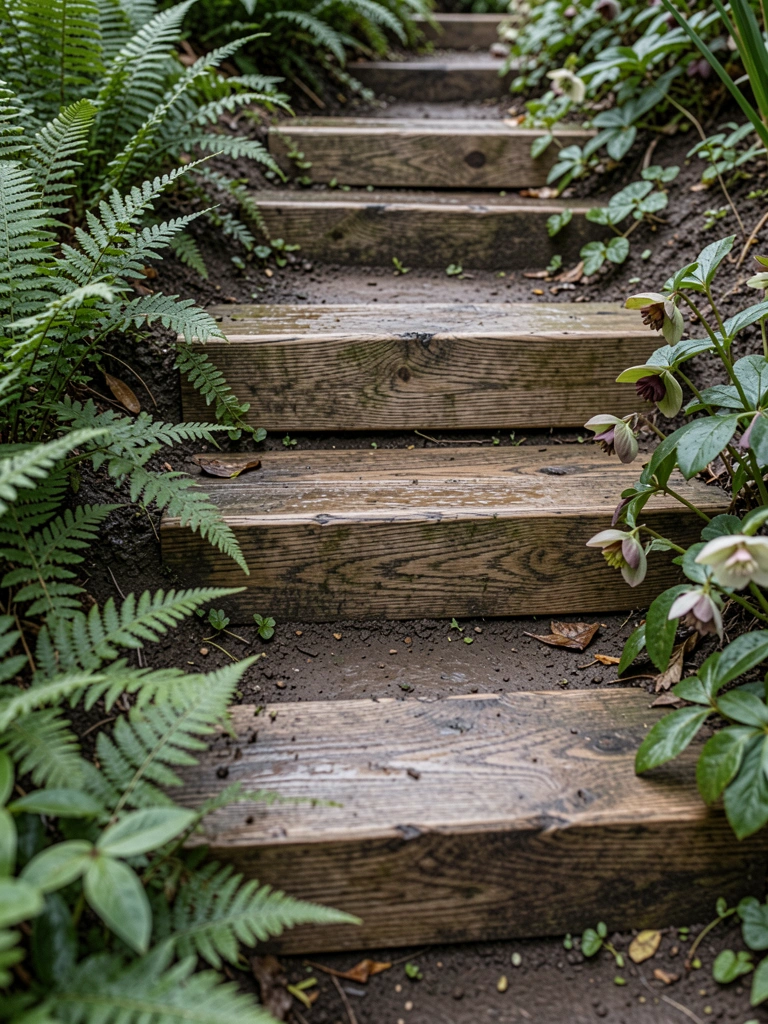
I used reclaimed oak planks on a little slope and it made the climb feel safe.
Wood warms the garden more than stone. I screwed the planks into treated posts for stability. I once picked untreated wood and it rotted where the soil sat — costly mistake. Treated or naturally durable hardwood works better.
Add ferns and shade lovers at the edges to hide fasteners and soften the lines.
What You’ll Need for This Look
- Reclaimed oak planks (3–6 inch thick)
- Treated timber posts (4×4)
- Exterior wood screws and deck screws
- Shade-loving ferns and hellebores
5. Mosaic Tile Stepping Path for a Color Pop
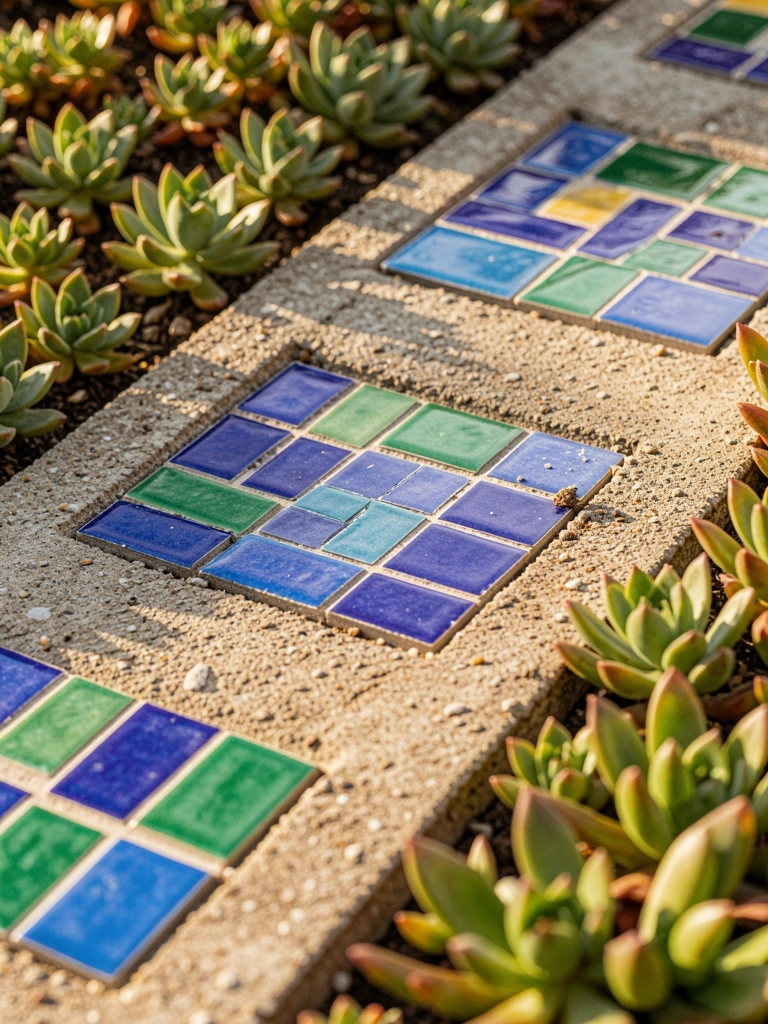
I added ceramic tiles into concrete stepping pads to get color without fuss.
The tiles give unexpected charm in a small planting bed and make each step feel like a little discovery. I mixed mismatched tiles from a salvage bin and it read cohesive, not busy.
Concrete holds everything together and is forgiving if the ground settles a bit. Clean the tiles before setting so grout looks crisp.
What You’ll Need for This Look
- Ceramic tiles (mixed salvaged or new)
- Quick-setting concrete mix (small bags)
- Tile grout and sealant
- Succulents for edge planting
6. Simple Paver Strip Path with Grass Infill
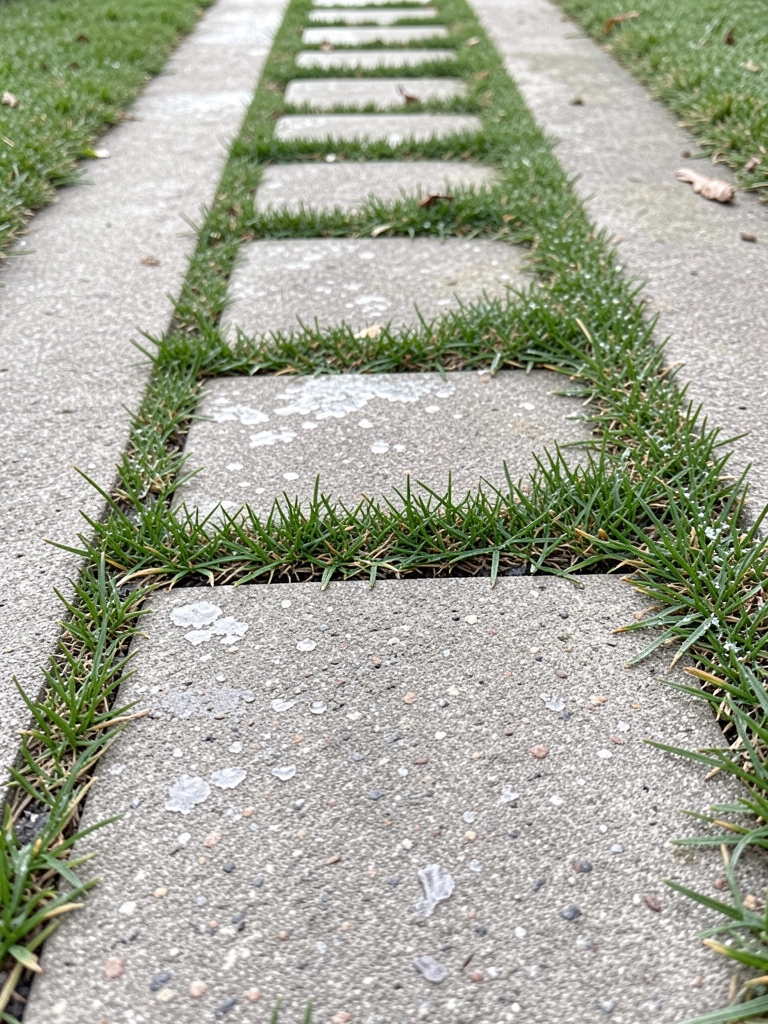
I laid rectangular paver strips with grass between to keep lawn access and a clear route.
It’s clean, modern, and keeps mowing simple. The look feels planted because grass softens the concrete. My first try used pavers too close together and grass struggled; more generous gaps let the turf breathe.
Choose pavers sized to your stride. Water the new grass well until it knits.
What You’ll Need for This Look
- Rectangular concrete pavers (12×24 inch)
- Turf plugs or sod strips for infill
- Sand for bedding
- Flat plate compactor (rental)
7. Curved Slate Path with Mixed Perennials
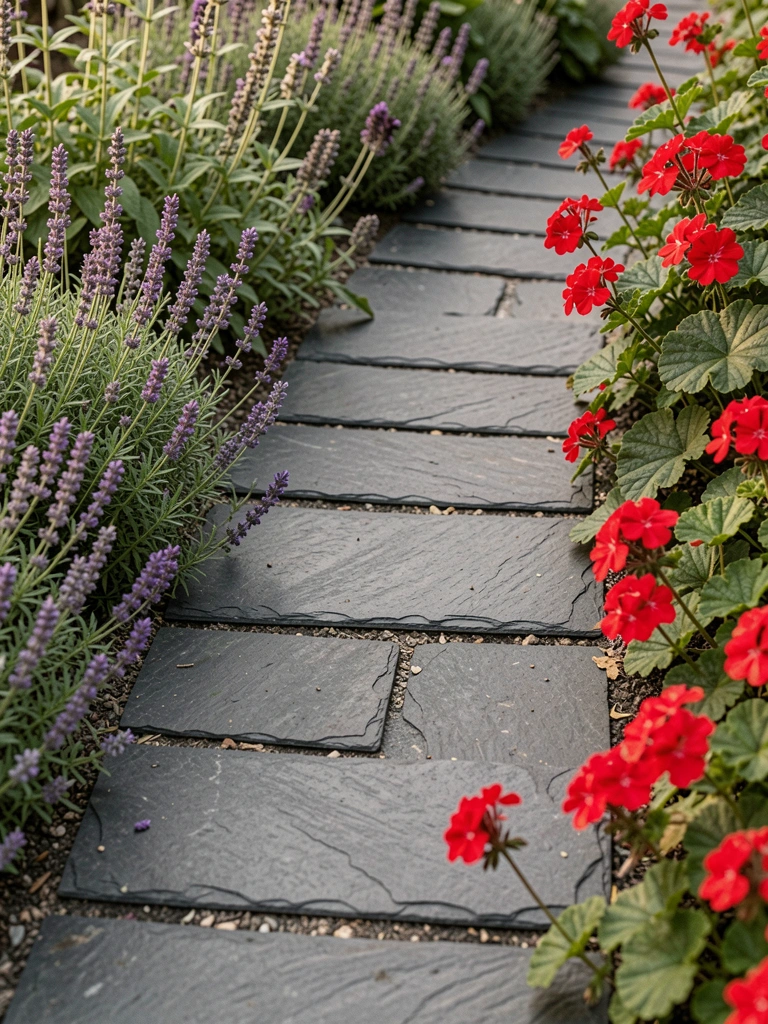
I cut a gentle curve with slate to make the garden feel larger than it is.
Slate’s dark color makes plants pop. I planted mixed perennials along the curve and they hide the edges as they grow. Early on I planted too-tall perennials that overshadowed the path; moving them fixed sightlines.
The curve encourages slow walking and lingering. Keep stepping stones level so the line stays graceful.
What You’ll Need for This Look
- Natural slate pieces (various sizes)
- Mixed perennials (salvia, geraniums, nepeta)
- Gravel or sand for base
- Landscape fabric (optional)
8. Mulch Track with Rustic Logs and Wildflowers
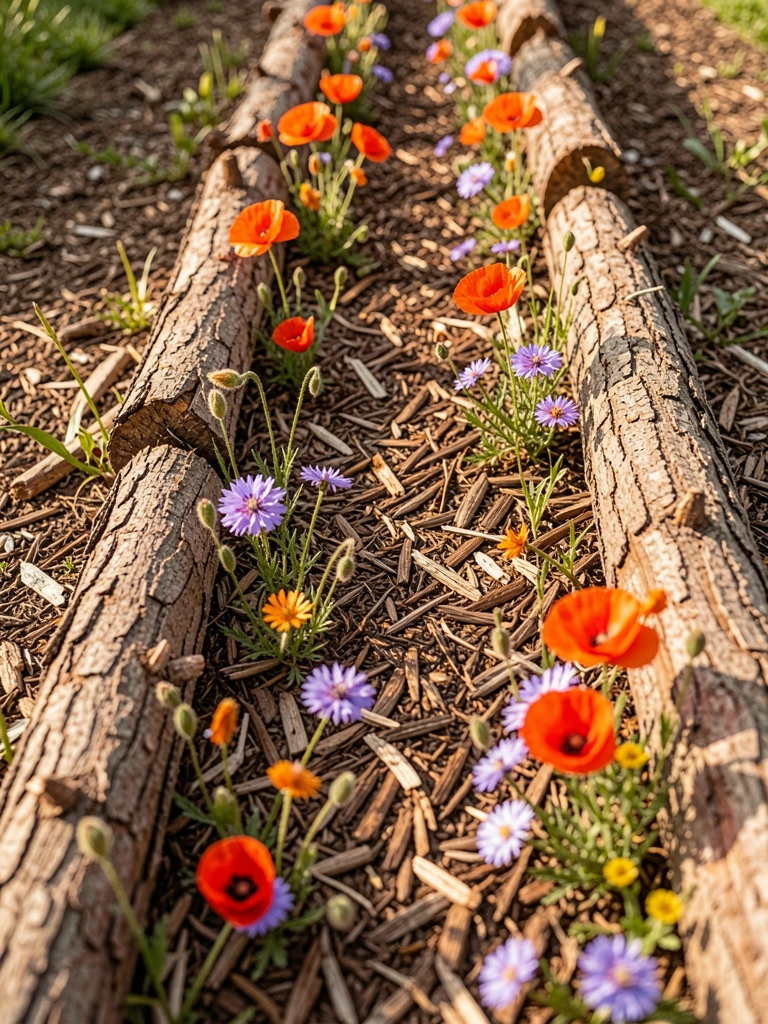
I used bark mulch as a simple track through a very small cottage plot.
Logs on the edge keep the mulch in place and make the path feel informal. Wildflowers seeded either side so the path shifts color each season. It’s cheap and quick to repair. I sometimes let mulch layer too deep; keep it a thin cover or it looks sloppy.
This is the easiest way to carve a walk without heavy tools.
What You’ll Need for This Look
- Bark mulch (small bags)
- Small rustic log edging (4–6 inch diam.)
- Wildflower seed mix for small beds
- Hand rake
Final Thoughts
You don’t need every idea. Pick one path that fits how you move through your garden.
Start small. Fix things as you learn. Paths take time to settle and feel right.
Trust how it looks in real life, not the picture in your head.