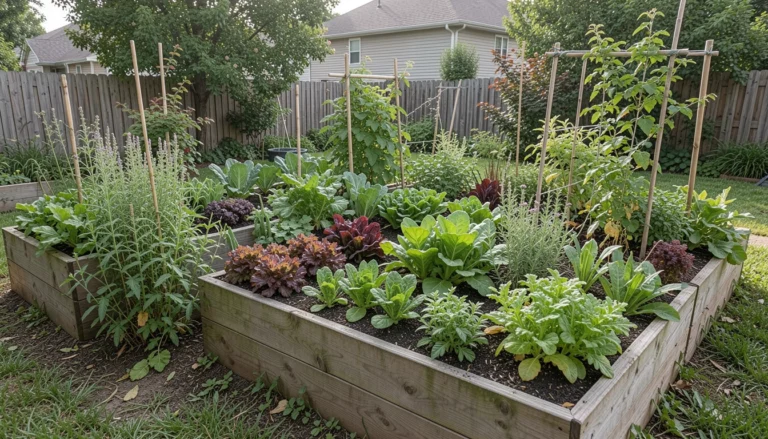
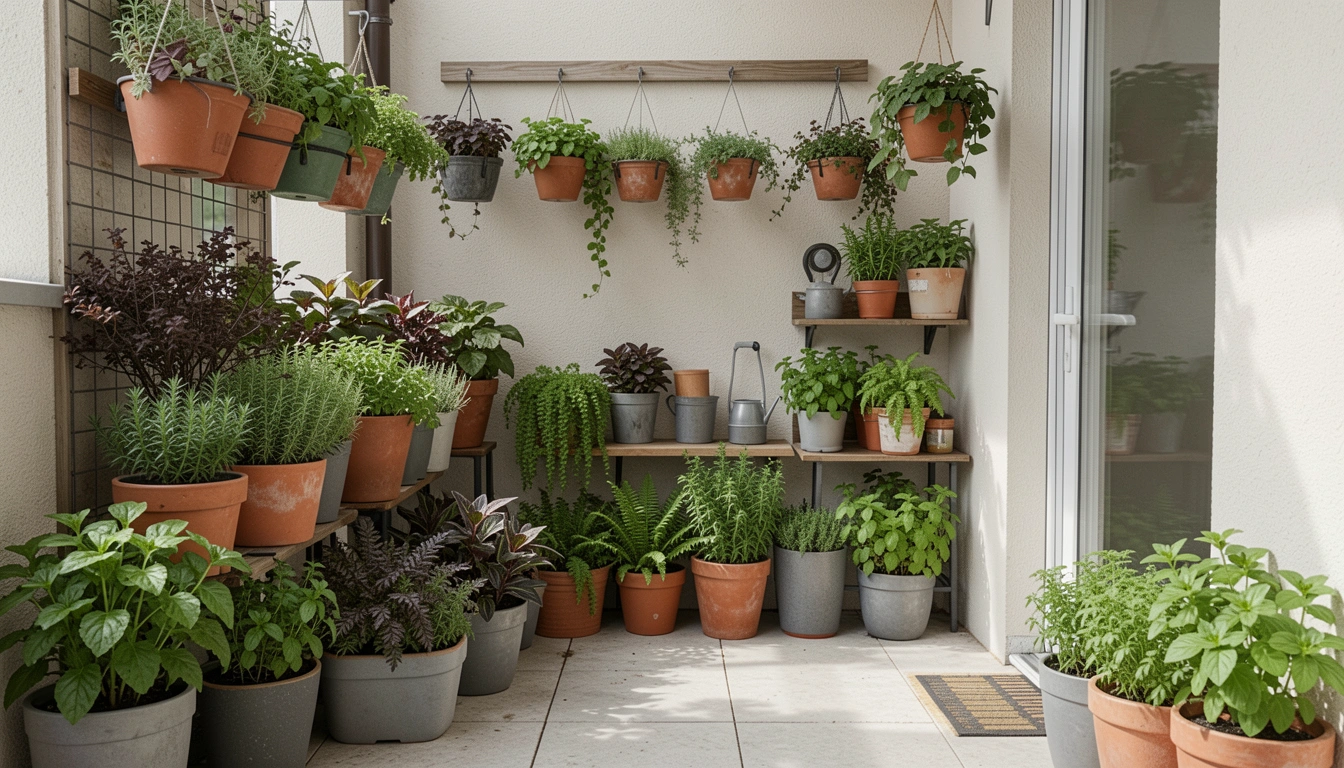
How To Start A Kitchen Garden On Your Terrace
I kept a bare corner of my terrace for years.
It felt like a missed chance.
I didn’t know where to put pots or how to make herbs look tidy.
Eventually I made a small kitchen garden that fits the space and my cooking. I want you to get the same. It’s practical and calm.
How To Start A Kitchen Garden On Your Terrace
I’ll show how to place plants so the terrace reads like a single, useful room. You’ll end up with a tidy patch for herbs and salads that feels balanced and easy to use.
What You’ll Need
- Medium terracotta pots (25–30 cm) for herbs
- Large rectangular fiberglass planter (100 cm, matte gray) as an anchor
- Pair of 5–7 L hanging baskets (woven coir) for trailing herbs
- Aromatic herb starter plants: basil, rosemary, parsley
- Compact leafy greens seedlings: lettuce, rocket, spinach
- Compact dwarf tomato or chilli (bushy variety) in 10–12 L pot
- Well-draining potting mix (loam-based, compost-rich)
- Mulch: shredded bark or coconut coir (2–3 cm)
Step 1: Claim the sightlines and anchor the space
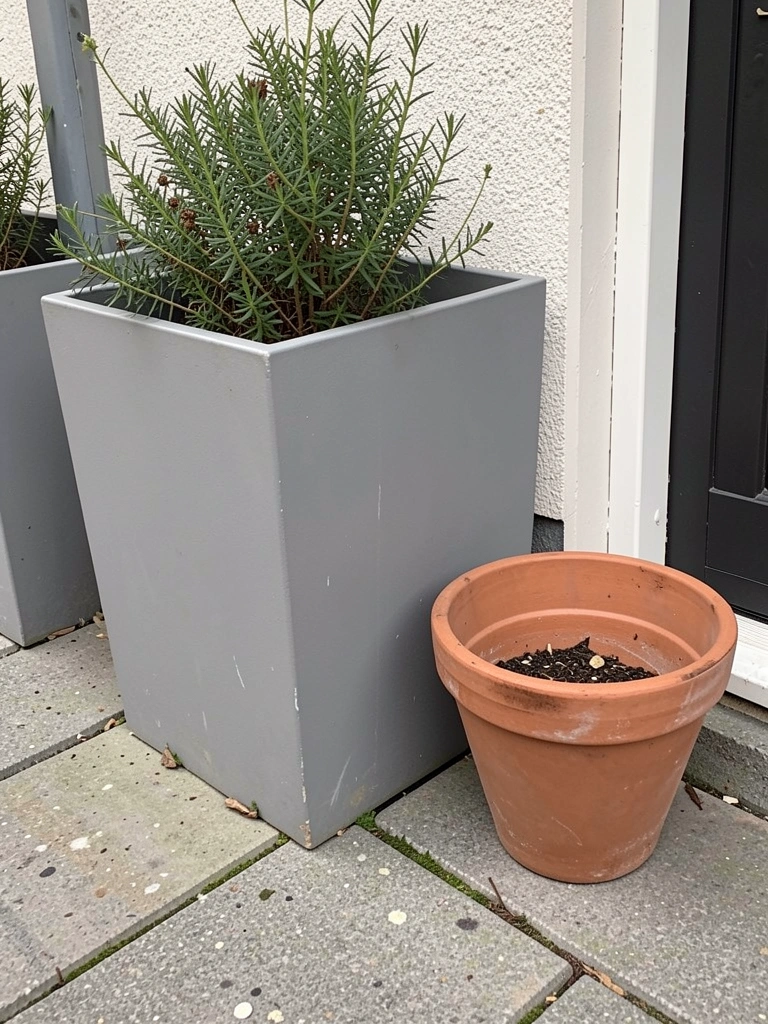
I start by standing where I walk onto the terrace. I place the biggest planter where it naturally anchors sightlines. That single move tells me where everything else should sit and makes the area feel intentional.
Visually, the terrace stops feeling random. You have a clear front and back, and the eye rests on the anchor planter instead of drifting.
People often miss how much a single large item steadies the whole layout. A small mistake is crowding the anchor with too many tiny pots; it spoils the focal anchor and looks cluttered.
Step 2: Choose containers that read like furniture
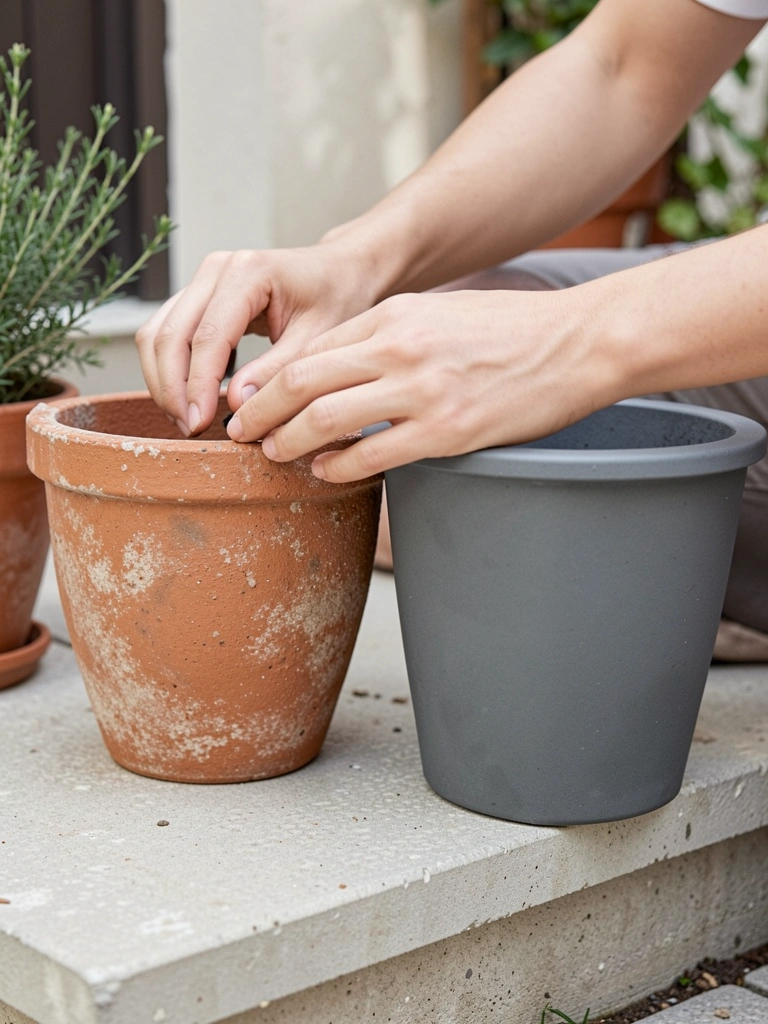
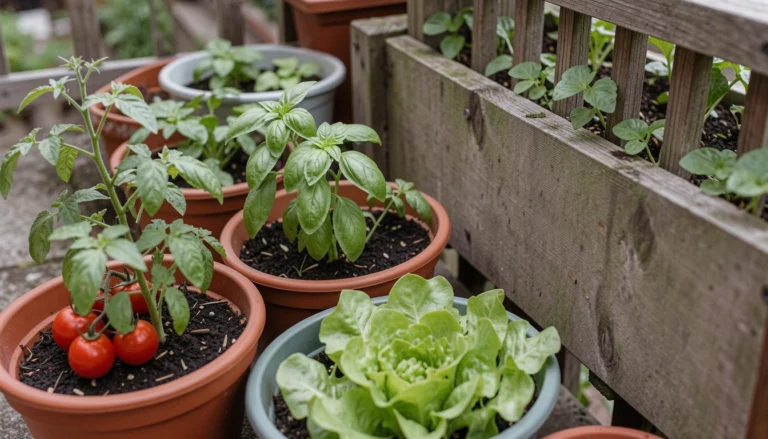
I pick two pot finishes and repeat them. Terracotta for herbs and matte gray fiberglass for structure. Repetition ties everything together and makes the terrace feel calm and clean.
The visual change is immediate: repetition creates rhythm, and the mix of warm terracotta with cool gray reads like balanced decor. It stops each pot from competing for attention.
An insight many miss is that color and size consistency matters more than matching every plant. Avoid using every pot style you own; too many finishes make the space feel scattered.
Step 3: Group plants by use, height, and rhythm
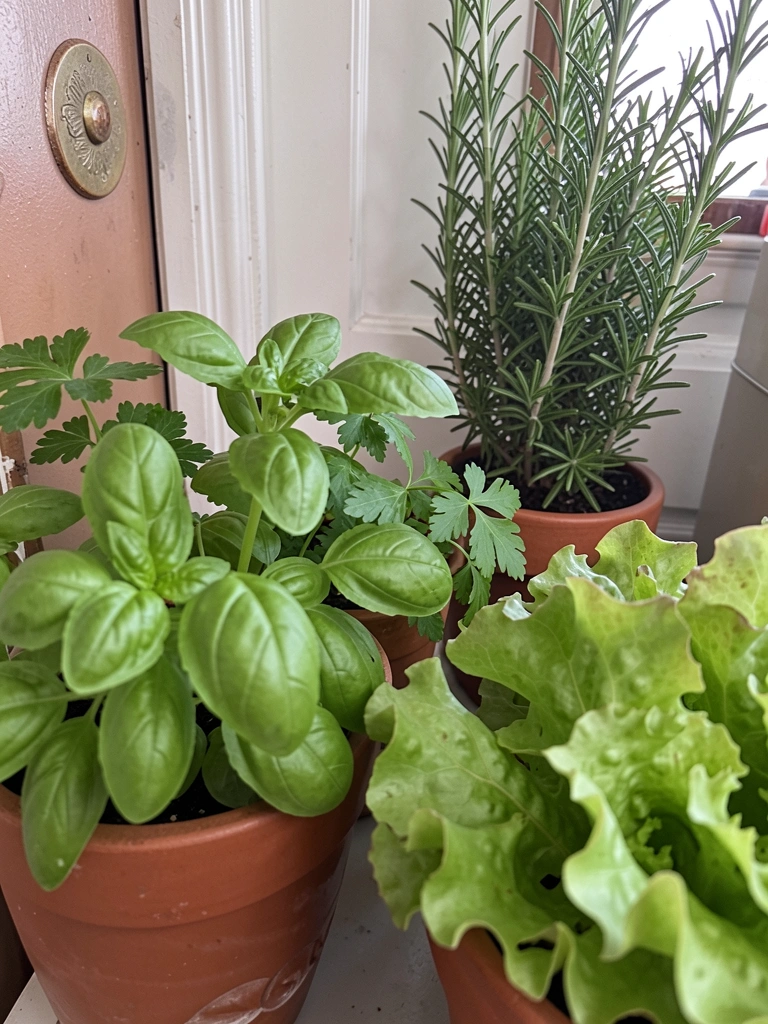
I place taller, sturdier plants at the back or against a railing. Tender salad greens go near the door where I reach them. Herbs I use most often sit at arm’s length.
This rearrangement makes the terrace read like a small kitchen garden: functional pockets and a pleasing stepped skyline. It looks fuller without feeling messy.
People often underestimate the power of repetition—three similar pots in a row anchor the eye. Don’t scatter single plants alone; a lone pot looks accidental rather than composed.
Step 4: Layer and elevate to create pockets of abundance
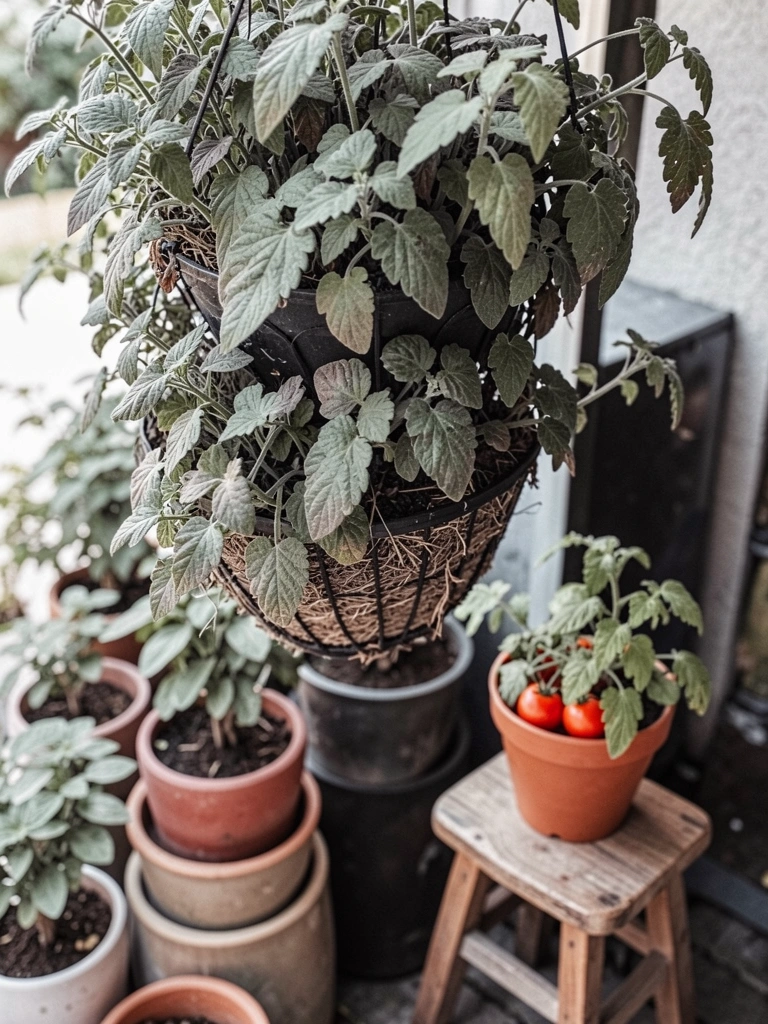
I add a hanging basket and a small stool to lift one pot. Vertical layers deepen the space and let me fit more edibles without crowding the floor.
Visually you get tiers: low salad bowls, mid-level herb pots, and a hanging level that gives movement. The terrace reads larger and busier in a tidy way.
An insight is to use the same color pots at different heights to unify layers. Avoid blocking walkways or doorways with hanging or elevated pots; it makes the space impractical.
Step 5: Edit regularly so the garden stays readable
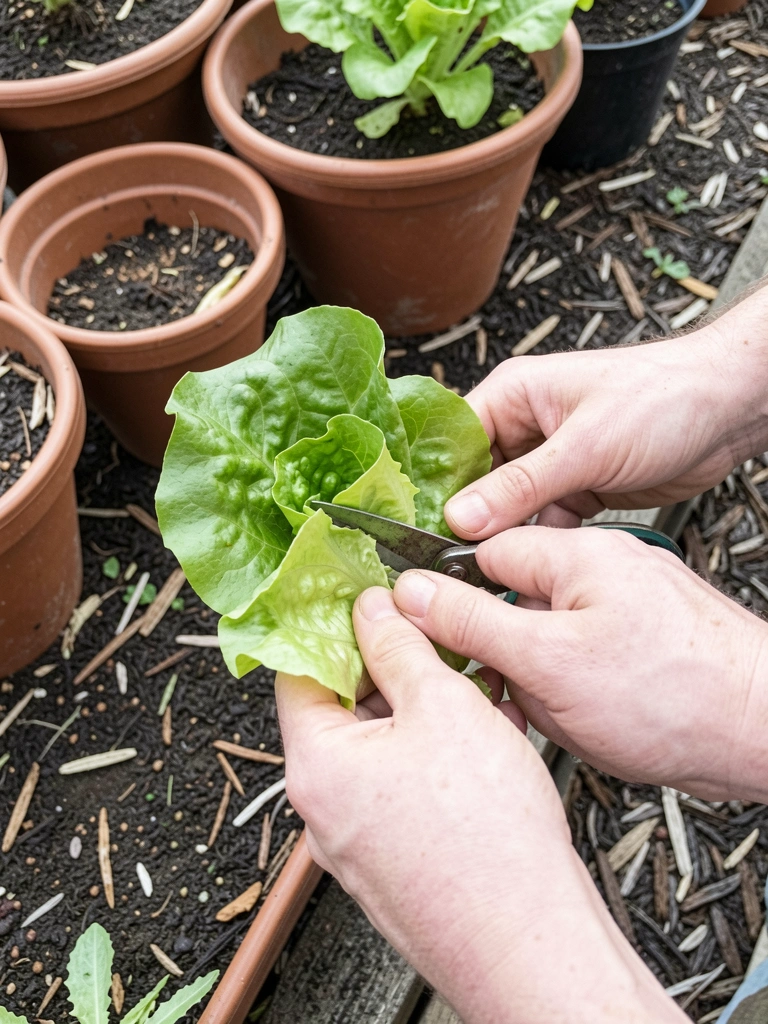
I harvest and trim weekly. A quick edit—one faded leaf, one crowded seedling pulled—keeps things readable and productive. It’s the small edits that change the feel.
Visually, the bed looks neat and generous instead of weedy or overgrown. Regular editing also highlights the plants you actually use in the kitchen.
People forget that tidy edges and clear gaps matter; a small bare patch looks worse than a trimmed plant. Don’t let things flop over paths—move or trim before they look messy.
Plant Pairings That Work
I favor pairing a tall, structural herb with softer greens. For example, rosemary at the back, basil in a mid pot, and lettuce in front. It gives contrast and function.
Quick pairing ideas:
- Rosemary + cherry tomato + basil
- Basil + lettuce + young spinach
- Parsley + dwarf chilli + spring onions
These groupings keep harvests close and visually layered.
Lighting and Microclimates
I map light across the terrace through the day. Some corners get morning sun, others only late afternoon. I place sun lovers where they get the strongest hours.
Match plants to those spots. Tomatoes and chillies want brighter, longer light. Leafy greens forgive a bit of shade. Adjust as the season shifts.
Easy Seasonal Shifts
I swap fast-growing greens every few weeks. In cooler months, I bring forward cool-season lettuces and chard. In summer, I favor drought-tolerant herbs and compact fruits.
A simple rotation keeps the terrace feeling fresh. I don’t try to grow everything at once. Small, regular changes keep it useful.
Final Thoughts
Start with one anchor planter and a handful of plants you actually cook with. Keep the palette simple and repeat pots for calm.
Edit weekly and move what’s not working. Small changes show big results. I promise the terrace will feel like a room you want to use.