How to Set Up Mini Patio Garden
I used to stand on my tiny back patio and feel stuck. A couple of pots, a bare corner, and no sense of purpose.
I wanted it to feel comfortable, not crowded. I wanted balance and a place to sit.
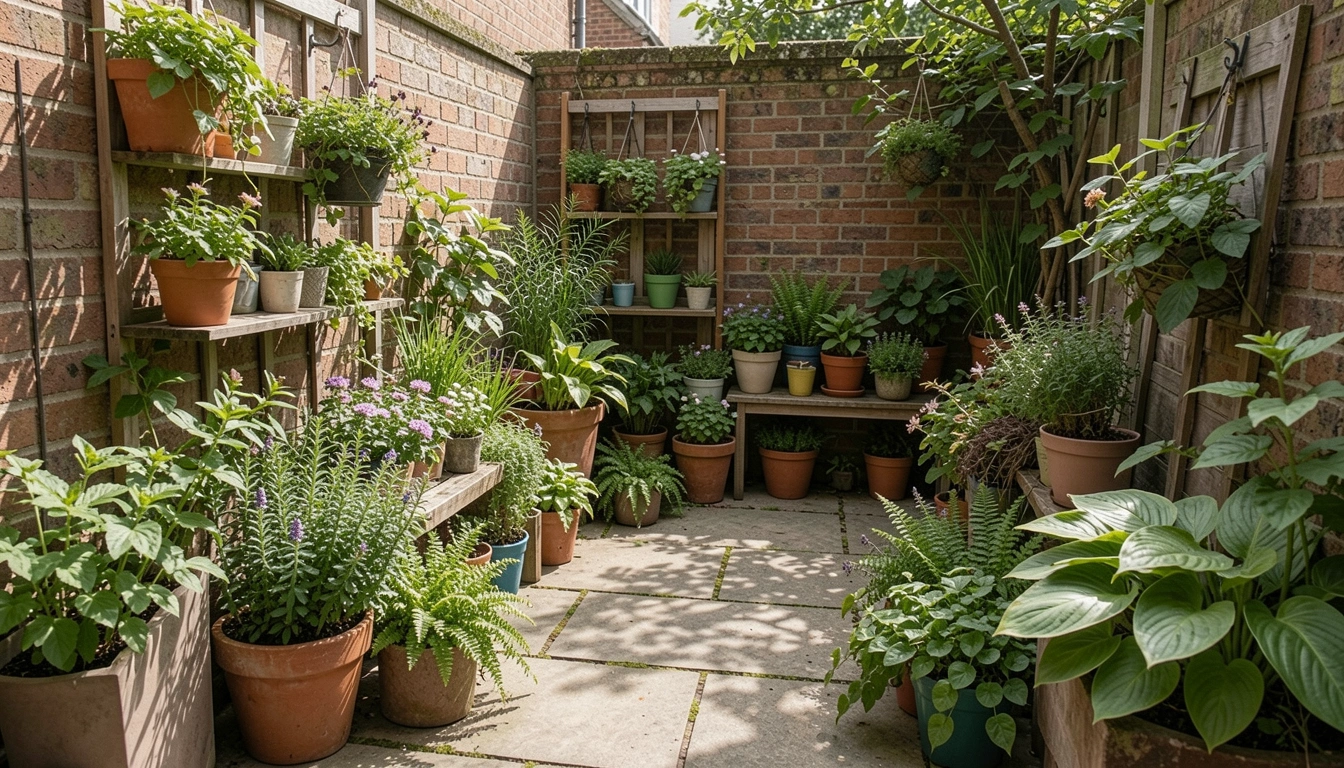
This shows how I pull a small, awkward outdoor spot into a calm, lived-in mini garden you’ll use.
How to Set Up Mini Patio Garden
This will show you how to pick a focal piece, layer pots for depth, and choose a simple palette so the patio reads as one cozy outdoor room.
What You’ll Need
- One 24–30 inch glazed focal planter (terracotta or warm ochre)
- Two 12–16 inch upright planters (matte black or dark green)
- Two 8–10 inch terracotta pots for mid-height plants
- One hanging or wall planter for trailing plants (wicker or metal)
- Small wooden bench or stool (natural wood, 18–24 inches)
- Small outdoor rug (60–80 cm, neutral color)
- Bag of coarse decorative pebbles or gravel (small bag)
- A small, mixed plant selection: one upright, two mid-size, one trailing, a culinary herb
Step 1: Place a single anchor piece to give the space purpose
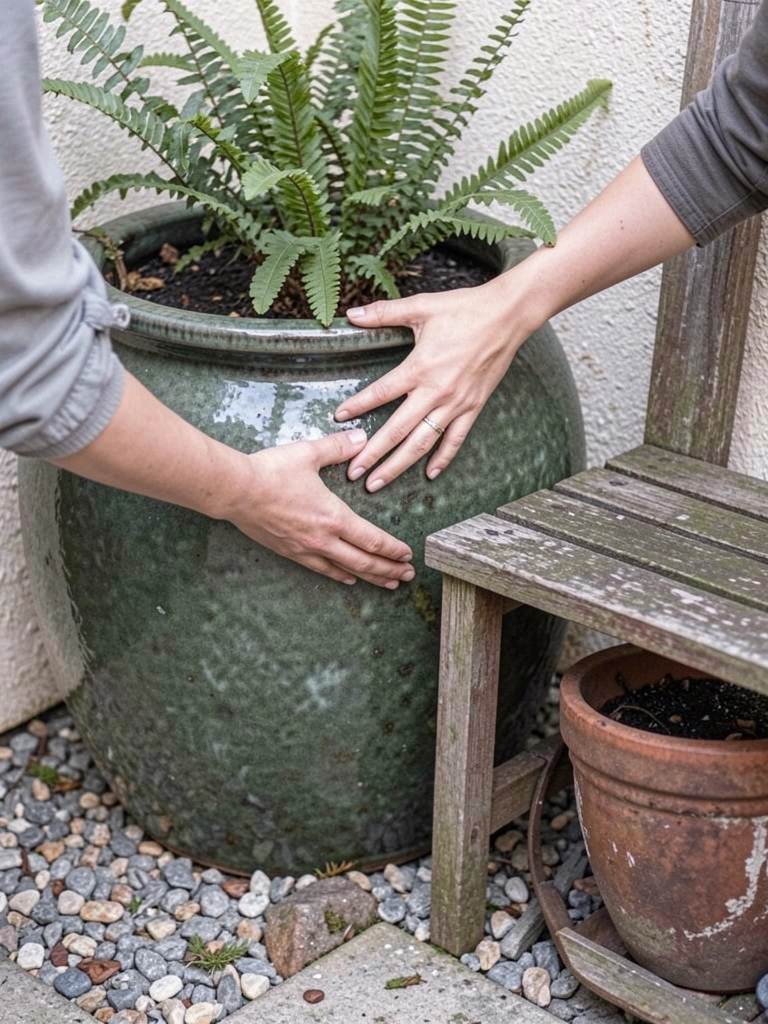
I start by choosing one strong object — a large glazed planter or a slim bench. It becomes the eye’s first stop. This gives the patio a purpose and a sense of scale.
Visually, everything shifts. Corners stop feeling empty. The anchor pulls other pots into a relationship instead of having them float alone.
Many people miss that one focal item frees up the rest of the layout. A small mistake is adding two anchors; that splits attention and makes the space feel confused.
Step 2: Layer heights for depth and movement
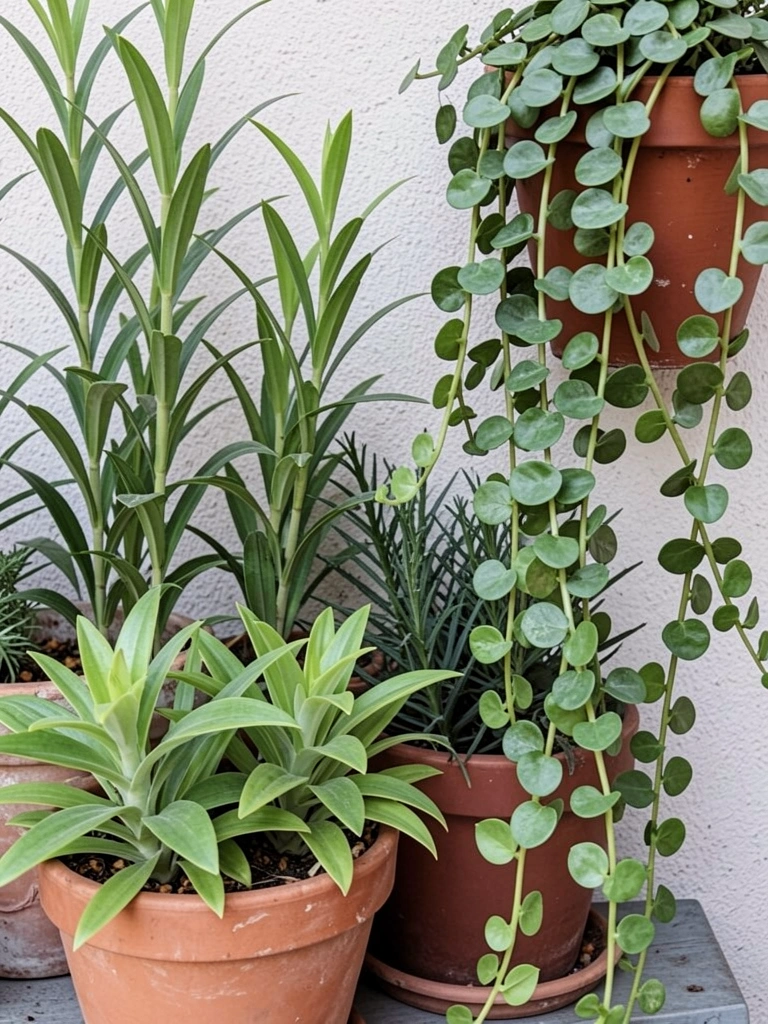
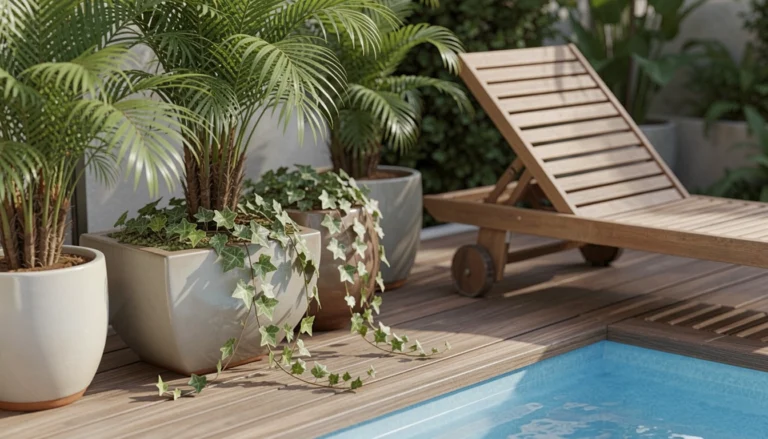
I arrange pots in three tiers: tall at the back, mid in front, trailing at the edge. This creates a gentle slope the eye naturally follows. It feels fuller without crowding the floor.
The change is immediate — the patio reads as intentionally layered rather than cluttered. Small textures and leaf shapes start to matter more than size alone.
People often underestimate the power of a trailing plant to soften edges. The common mistake is using same-height pots in a row. That flattens the view and loses intimacy.
Step 3: Repeat a small color and foliage palette
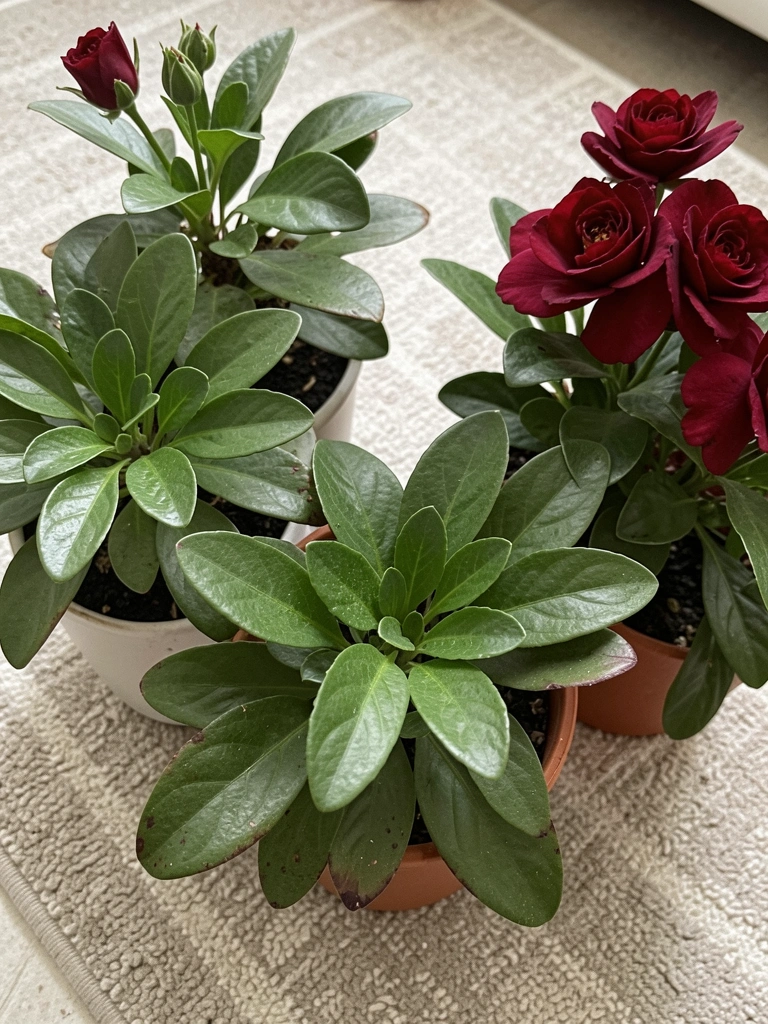
I choose two flower colors and two foliage tones and repeat them around the patio. That repetition ties separate pots together so the space reads as one composition.
Visually, it becomes calmer. Your eye moves easily between pots because color and texture echo. It feels purposeful, not random.
The insight most miss is that foliage color is as important as blooms. A common mistake is chasing too many flower colors — it fragments the scene and looks busy in a small space.
Step 4: Add a soft surface and a small seat to invite use
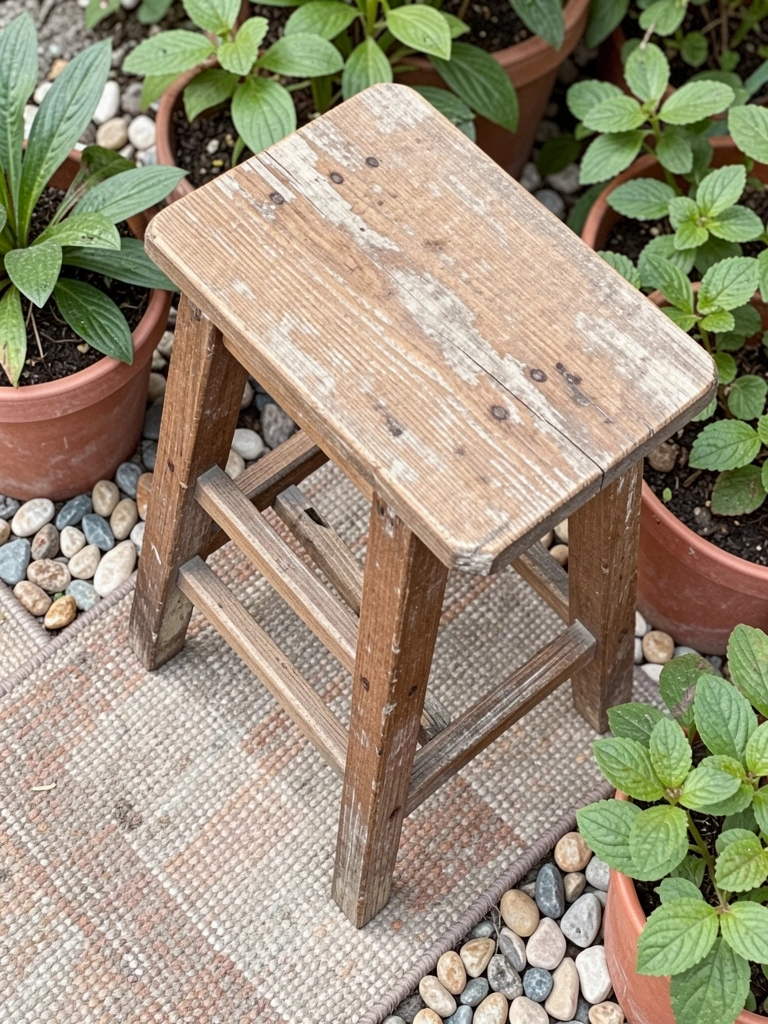
I bring in a narrow bench or stool and a small neutral rug. These elements make the patio feel like a room and tell you it’s okay to sit and stay.
The space warms up. The hard patio becomes softer, and the plants read as backdrop rather than obstacles. Even a single stool changes how you use the area.
One missed insight is that a seat doesn’t need to be centered — tucked to the side it improves flow. Don’t use an indoor rug that traps moisture; it’ll look wrong and deteriorate quickly.
Step 5: Finish with small details and an easy care rhythm
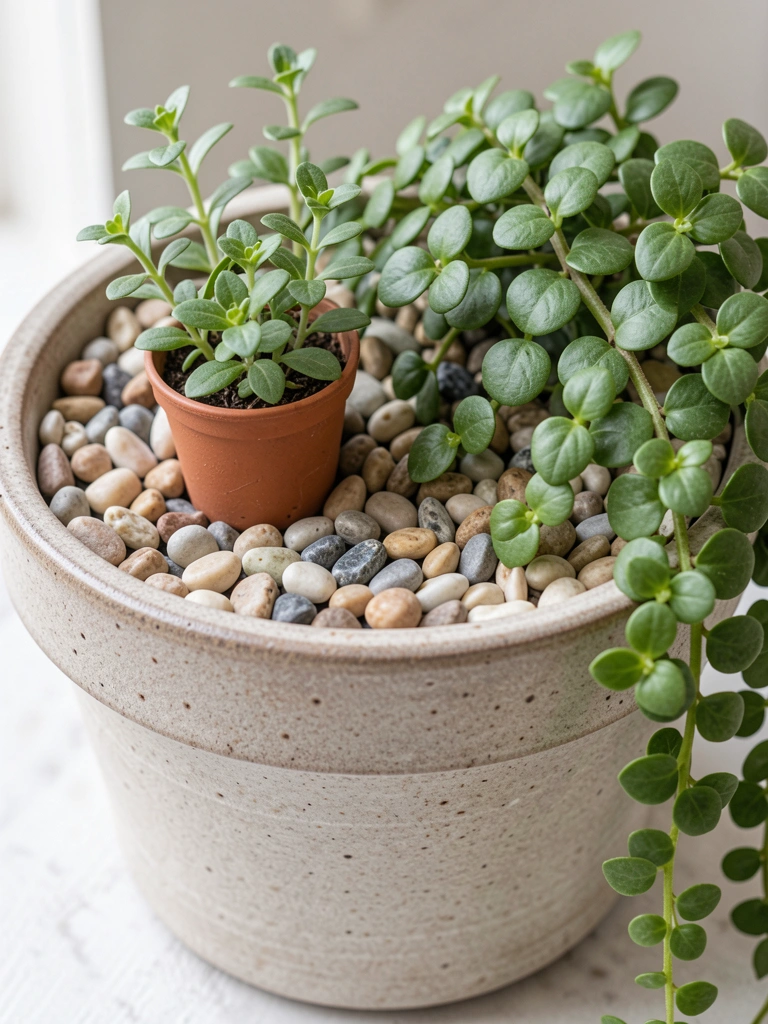
I add pebbles, group a herb pot near the seat, and leave a visible gap for movement. These small choices make the patio feel cared-for, not staged.
Visually, edges look tidy and the composition breathes. Plants have room to show form and a few details — a clipped stem, a fresh leaf — give the space life.
People often forget to plan a simple care rhythm. The common mistake is overplanting; crowded pots look messy quickly and make maintenance feel like a chore.
Plant Choices for Small Pots
I favor plants that behave predictably in containers. Upright items (dwarf salvias, small grasses) give height. Mid-size shrubs (dwarf hydrangea or small euonymus) give weight. Trailing choices (ivy, bacopa, thyme) soften edges.
Quick list:
- Upright: dwarf salvia, ornamental grass
- Mid: dwarf hydrangea, hellebore
- Trailing: creeping thyme, bacopa, small ivy
Keep leaf color and bloom color to your chosen palette.
Balance and Scale
Think about negative space as much as plants. Leave breathing room in front of the door and around the seat. Scale tips:
- One larger item, two mid pots, and one trailing piece reads well.
- Keep paths clear; don’t block access for the sake of symmetry.
Balance feels intentional when elements have room to be seen.
Seasonal Adjustments
I swap a couple of pots each season to refresh color. Late summer, I move in cooler-toned foliage; spring brings a few bulbs or a bright herb. Small changes prevent the layout from feeling tired.
A seasonal rhythm is easier than constant replanting. I tend to change one or two elements, not the whole setup.
Final Thoughts
Start with one good anchor and a clear palette. Work in layers and leave breathing room.
Keep choices small and repeat elements to make the space feel cohesive. A mini patio can be comfortable and easy to care for.
You don’t need everything at once. Add one pot, then sit and see how it feels.