
11 Full Sun Flower Bed Ideas That Thrive All Season
I planted in full sun long before I understood microclimates. I learned what burns, what thrives, and what just sulks.
These notes come from beds that lived and failed and then came back better. Simple, honest choices that actually worked for me.
You don’t need a perfect plan. You need plants that keep giving.
11 Full Sun Flower Bed Ideas That Thrive All Season
These 11 ideas are hands-on, seed-to-bloom suggestions I’ve tried in hot, sunny beds. Expect practical plant mixes, simple materials, and one clear tip per idea.
1. Dense Drifts of Coneflowers and Black-eyed Susans
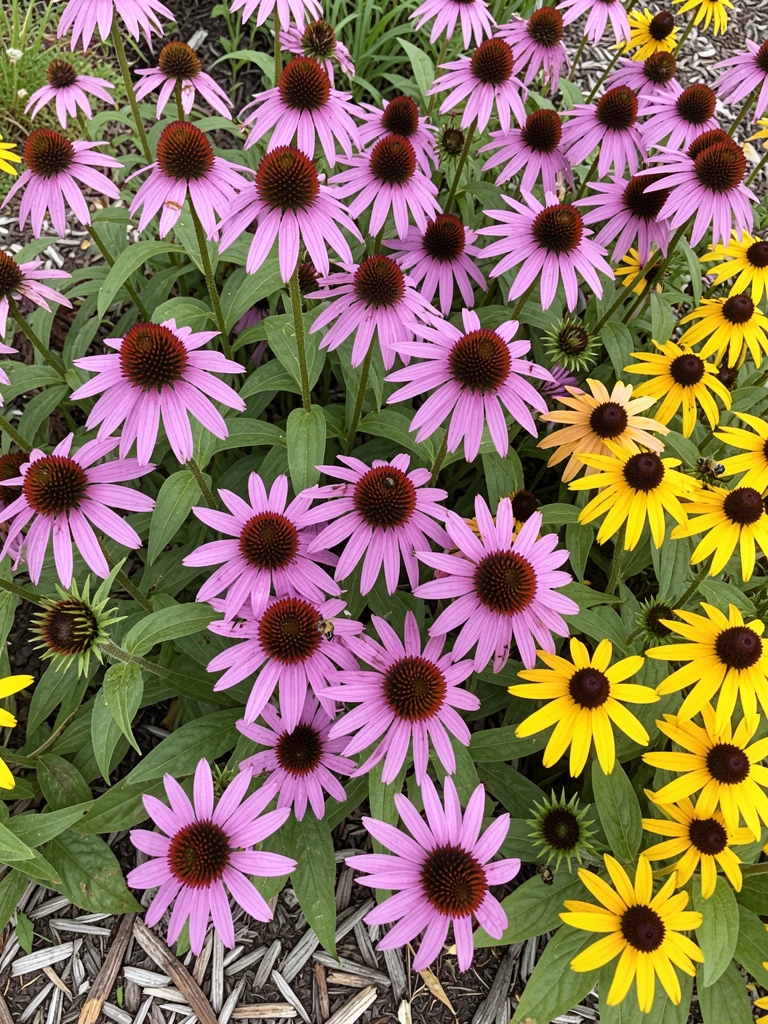
I planted big drifts because they hide bare soil and look fuller than single stems. In midsummer the colors read from down the street and the bed felt alive.
I did crowd them too tightly the first year and had to thin. After that, the clumps spread reliably and reseeded in small, welcome patches.
Watch for powdery mildew in humid summers and pull a few older stems to keep airflow. A single tidy deadhead session every few weeks keeps the show going.
What You’ll Need for This Look
- Purple coneflower (Echinacea) plugs
- Black-eyed Susan (Rudbeckia) starts
- Medium-grade bark mulch
- Hand pruners
2. Mediterranean Mix: Lavender, Salvia, and Rosemary
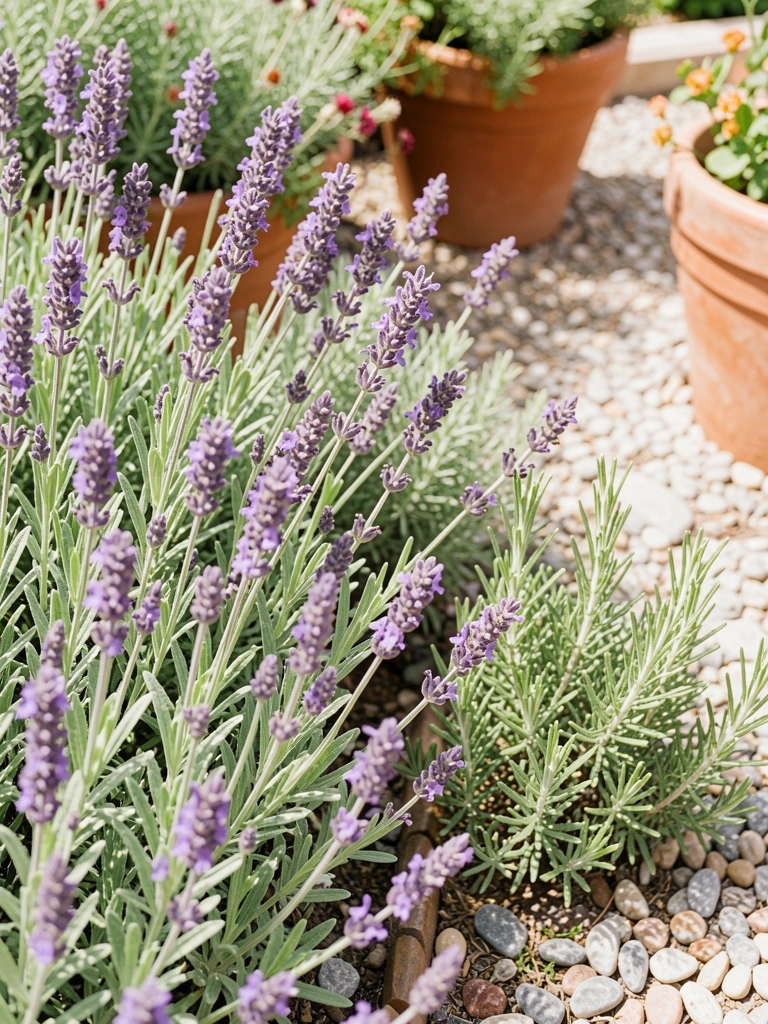
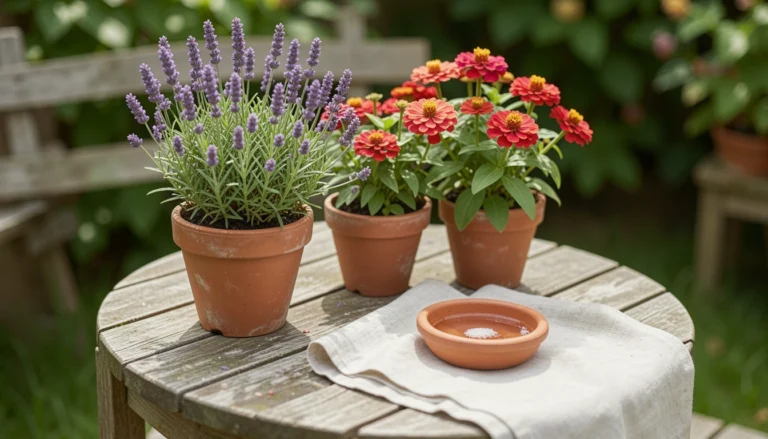
I wanted low-water color, so I mixed lavender, blue salvia, and upright rosemary. They give scent, texture, and steady bloom through heat.
My mistake: I planted lavender in heavy clay once and it sulked. After raising the bed and adding grit, it recovered and rewarded me with scent and bees.
Keep soil sharply draining and trim rosemary lightly in spring. This bed feels clean and lived-in without fuss—good for a lazy summer gardener like me.
What You’ll Need for This Look
- English or Munstead lavender (small shrubs)
- Salvia nemorosa or Salvia greggii
- Upright rosemary (Rosmarinus officinalis)
- Gravel or sharp sand for soil mix
3. Succession Annuals for Continuous Bloom
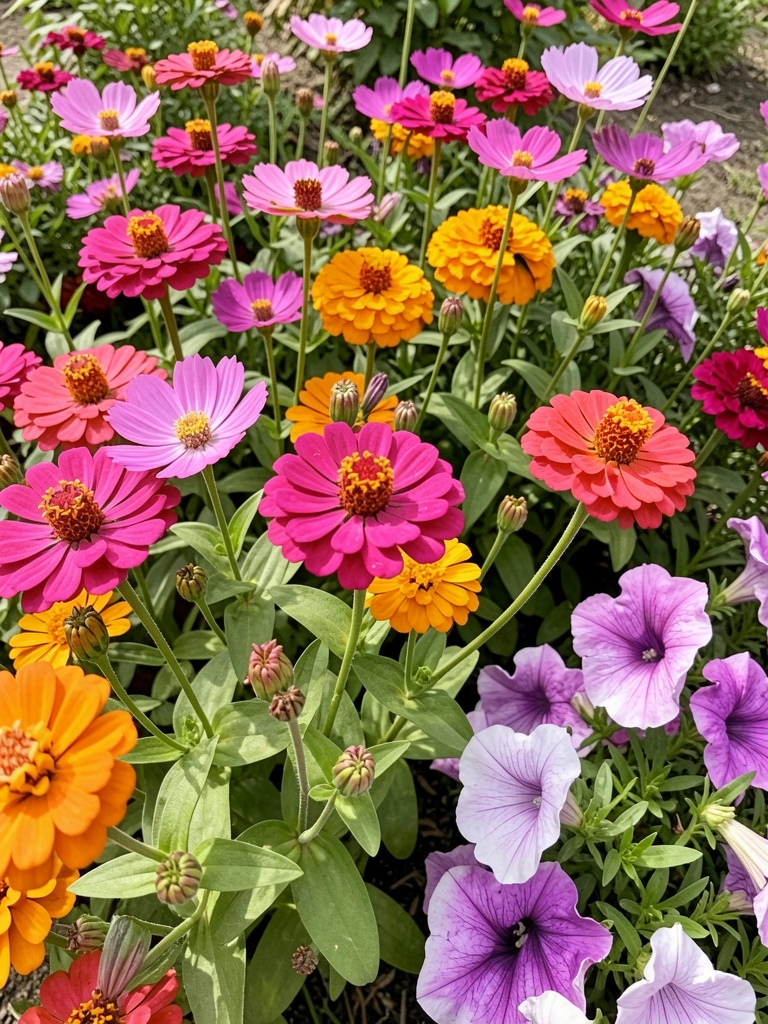
I plant annuals in waves so something is always blooming. Early calendula, then zinnias, then cosmos carry me into fall.
I sow directly and transplant small plug trays where gaps open. It’s forgiving—if one wave fails, the next fills the bed quickly.
Deadheading takes time but pays off. Keep a small bucket nearby; I do a ten-minute tidy almost every weekend during peak season.
What You’ll Need for This Look
- Zinnia and cosmos seeds or plugs
- Marigold and petunia starts
- Small hand trowel
- 1-gallon watering can
4. Tall Grasses Backing Bright Perennials
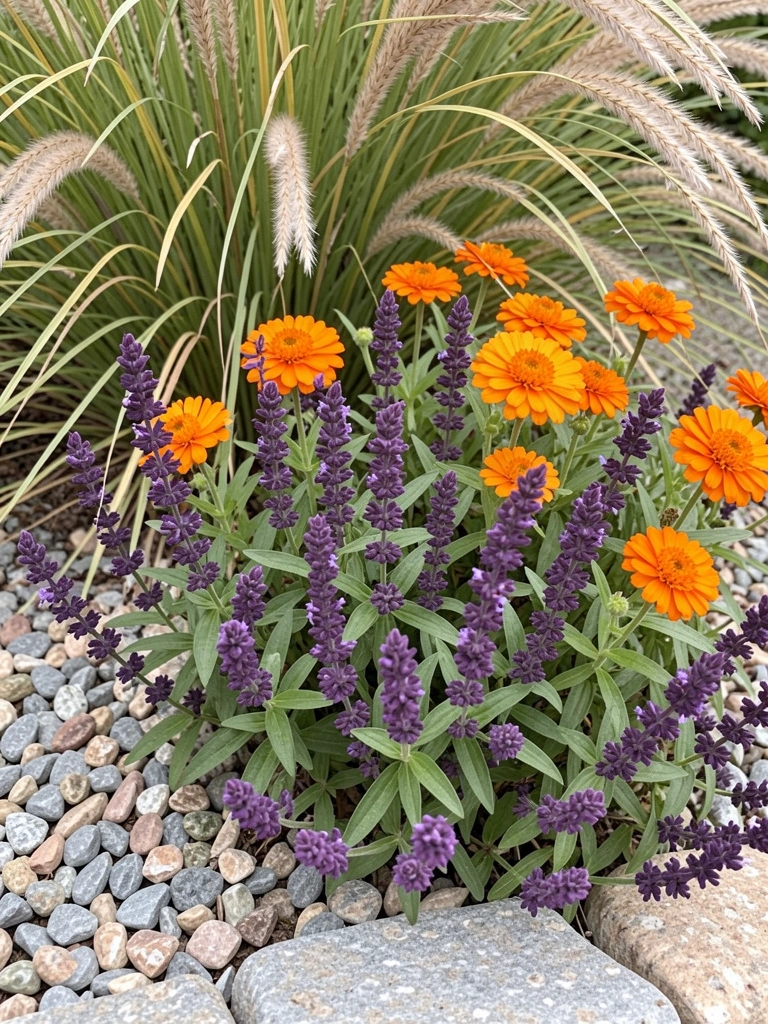
I used tall ornamental grasses as a backdrop to hide a fence and add movement. The seedheads catch evening light and calm the bed’s color.
I let miscanthus and feather reed grass stand through winter for structure; come spring I cut them back. That vertical element makes low perennials read louder.
Space grasses apart—too many will create a dark, impenetrable mass. A clean line of stones helps define the bed and keeps it from looking sloppy.
What You’ll Need for This Look
- Ornamental grass clumps (Miscanthus, Calamagrostis)
- Mid-height perennials (salvia, calendula)
- Stone or brick edging
- Garden shears for winter cutback
5. Pollinator Path: Staggered Blooming Edges

I turned a narrow strip by a walkway into a pollinator route. Bee balm, thyme, borage, and late asters give nectar from spring to frost.
I once over-fertilized and had lush leaves but fewer flowers—lesson learned. Now I feed lightly and let the herbs be a bit lean.
Plant in staggered groups so pollinators can rest between blooms. It’s small-scale but daily; I watch bees and feel like I did something right.
What You’ll Need for This Look
- Bee balm (Monarda) seedlings
- Creeping thyme or low herbs
- Borage and late-season asters
- Flat stepping stones
6. Sun-Loving Bulb and Annual Combo
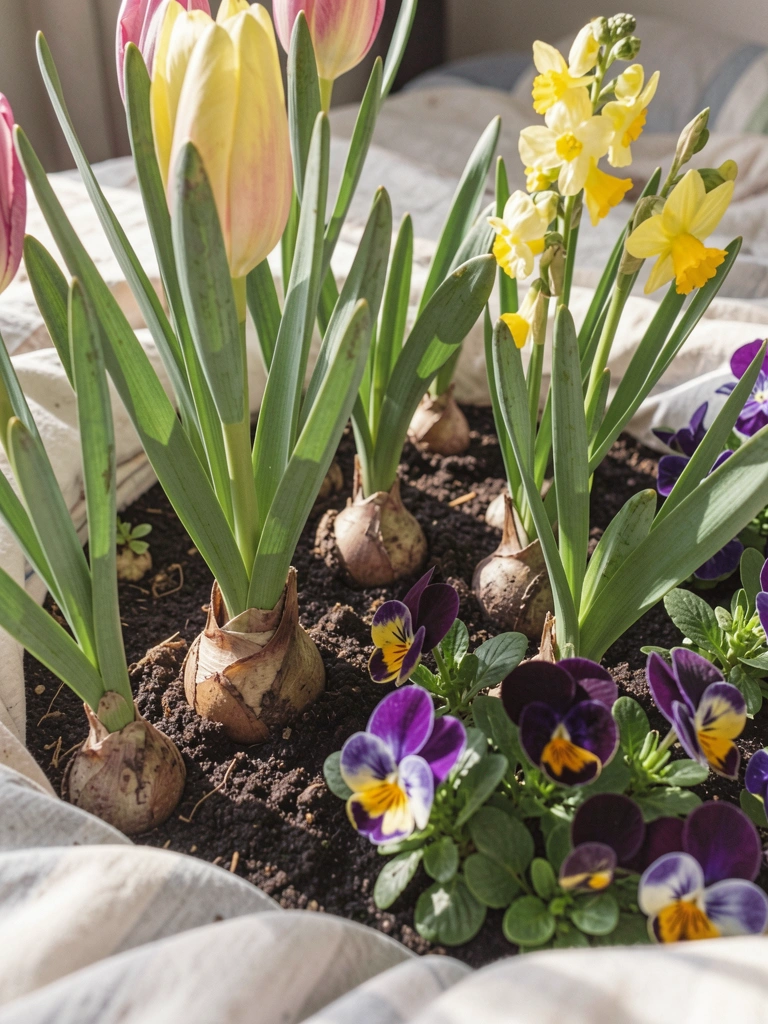
I plant bulbs for spring drama, then layer early annuals around them so the bed never looks bare. Tulips and daffodils, then pansies and snapdragons bridge into summer.
The bulbs die back and the annuals hide the foliage. Timing matters—plant the annuals a few weeks after bulbs emerge to avoid crowding roots.
This staggered rhythm keeps the bed interesting and lets me reuse soil without wholesale replanting each season.
What You’ll Need for This Look
- Tulip and daffodil bulbs
- Pansy and snapdragon seedlings
- Hand bulb planter
- Light compost top-dressing
7. Cut-Flower Bed for Fresh Vases
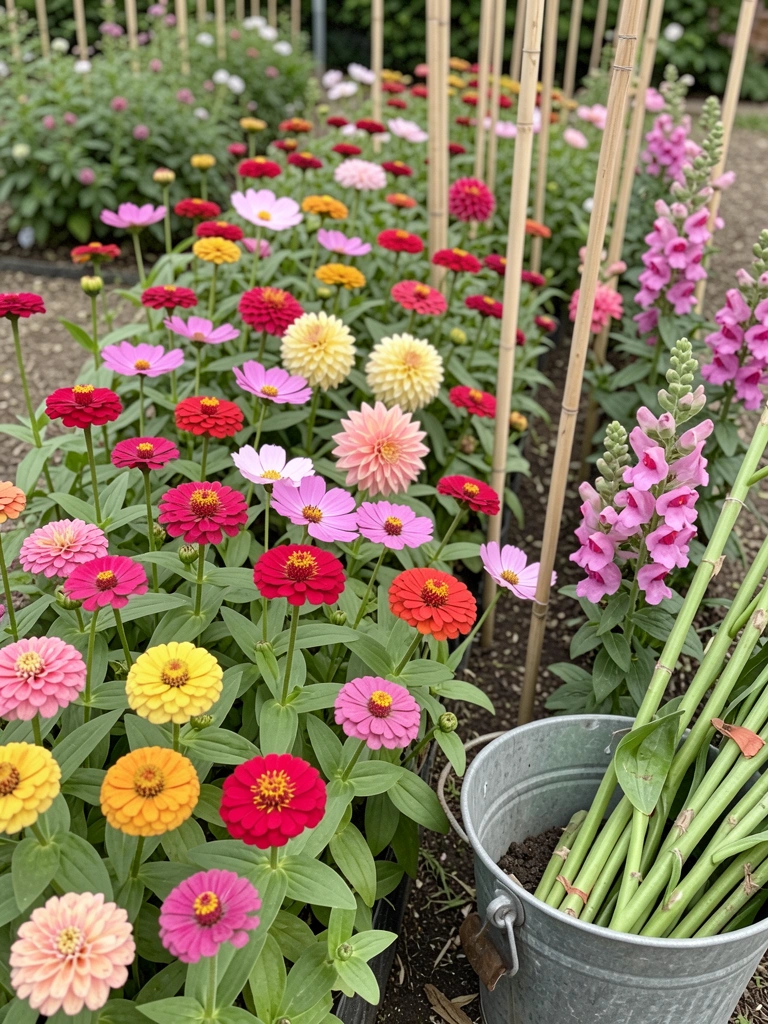
I budgeted a strip for cutting annuals and dahlias. Having fresh flowers from June through frost changed how I use my back door.
I learned to stake ambitious stems early. Dahlias need support or they flop in a rain. Cutting encourages more blooms, so I’m always bringing something inside.
Leave a small bucket and snips by the bed. It makes harvesting quick and keeps the rest of the garden looking tidy.
What You’ll Need for This Look
- Zinnia, cosmos, dahlia tubers, snapdragon starts
- Bamboo stakes and plant ties
- Sharp garden shears
- 5-gallon harvest bucket
8. Low-Maintenance Gravel Bed with Salvias and Succulents
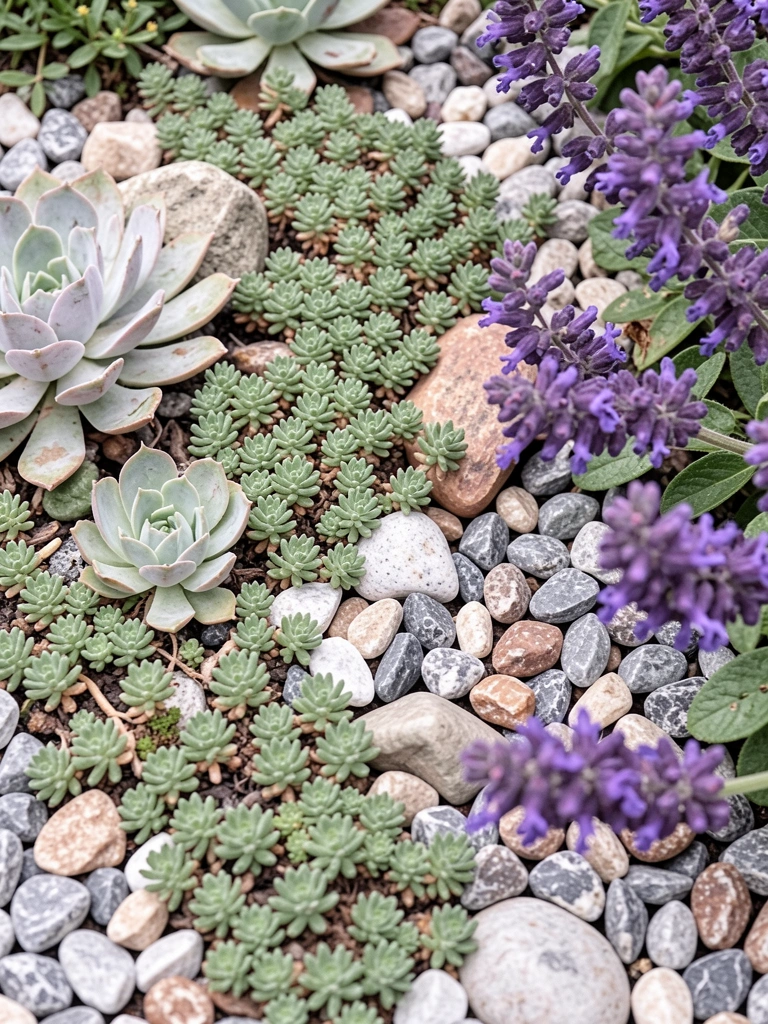
I converted a thirsty patch into gravel with drought-tolerant salvias and sedums. It cuts water use and needs almost no attention.
I learned not to crowd succulents; they need space and grit. Early on I jammed too many in and some rotted in wet weather—spacing fixed that.
Add drip irrigation for the first season and then forget it. The bed reads modern and clean and comes back year after year.
What You’ll Need for This Look
- Assorted sedum/sempervivum plugs
- Salvia drought-tolerant varieties
- Decorative gravel/top-dressing
- Dripline irrigation starter kit
9. Compact Shrub-Perennial Mix for Structure
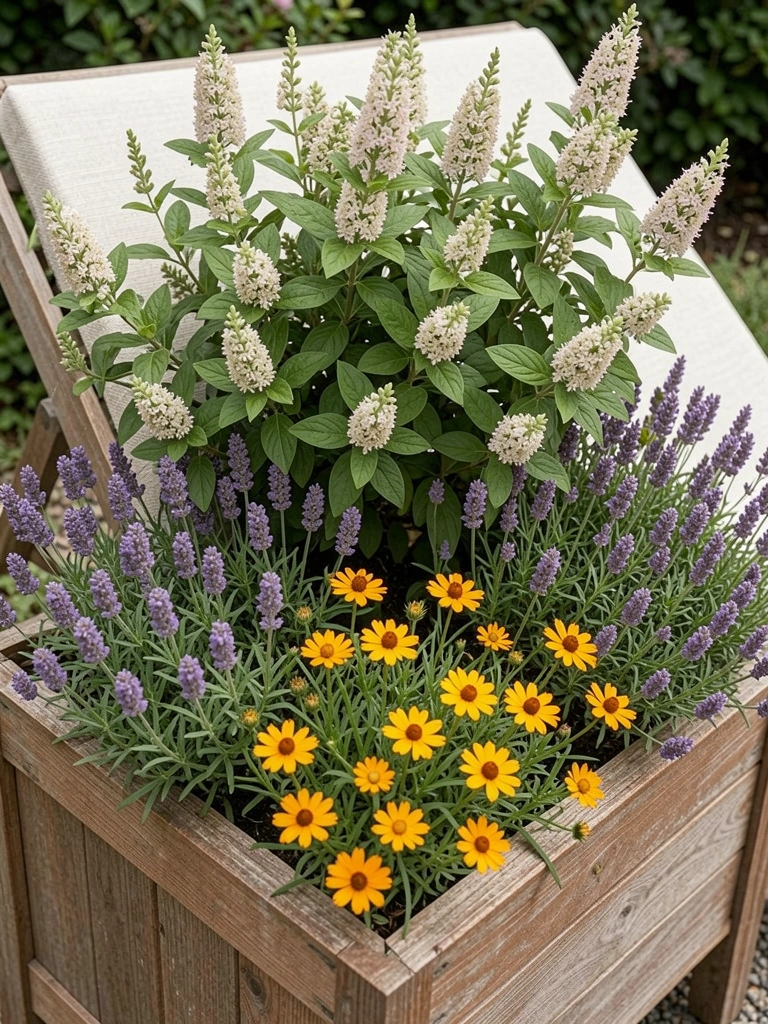
I planted a few compact shrubs—dwarf buddleia, rosemary—and filled around them with coreopsis and catmint. The shrubs give backbone and the perennials fill the gaps.
This feels intentional without fuss. Shrubs cut down late-season cleanup and keep winter interest. I prune sparingly and let perennials do the color work.
Pick compact varieties for small beds. The structure makes maintenance quicker and the summer look steadier.
What You’ll Need for This Look
- Dwarf butterfly bush (Buddleia)
- Compact rosemary or dwarf shrubs
- Coreopsis and nepeta (catmint)
- Small hedge shears
10. Bright Front-Border for Curb Appeal
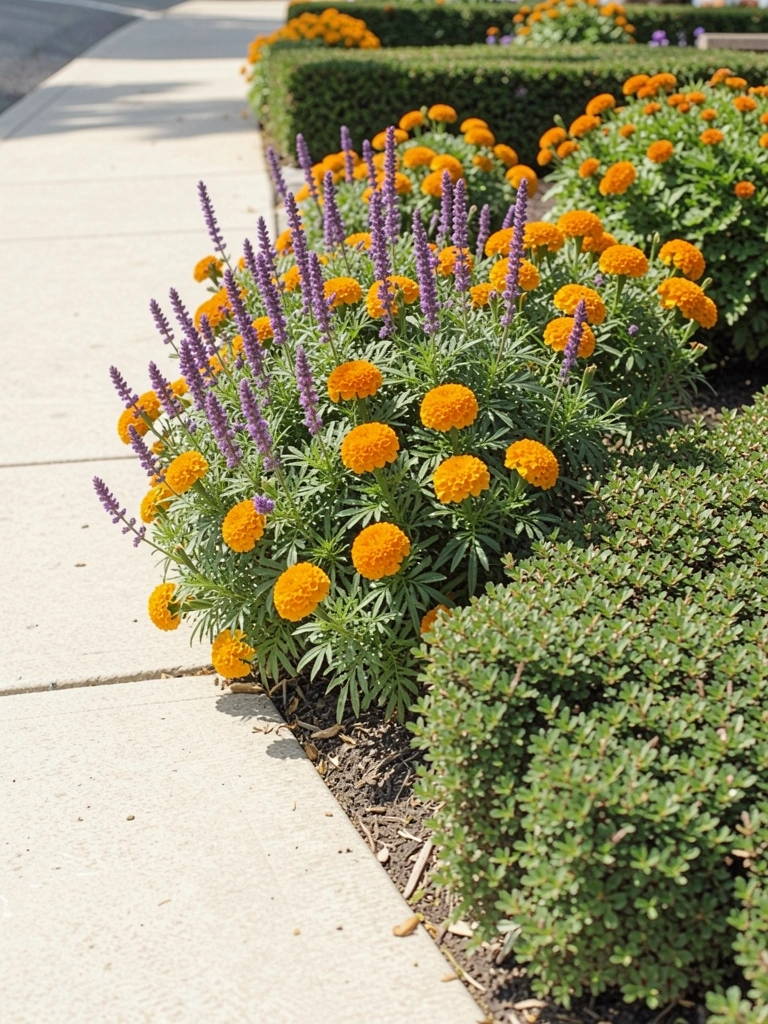
I revamped the front border with a bold, friendly palette: marigolds, salvia, and low compact roses. It reads clearly from the sidewalk and requires simple tidying.
I keep the shapes trimmed and the front edge crisp. It’s surprising how much cleaner the whole yard looks with one well-kept strip.
Use repeat colors and repeat plants for rhythm. The result is cheerful without needing constant fuss.
What You’ll Need for This Look
- Marigold and salvia bedding plants
- Compact shrub roses
- Low boxwood or edging plants
- Small hand shears
11. Sunny Balcony Bed: Containers That Act Like Flower Beds
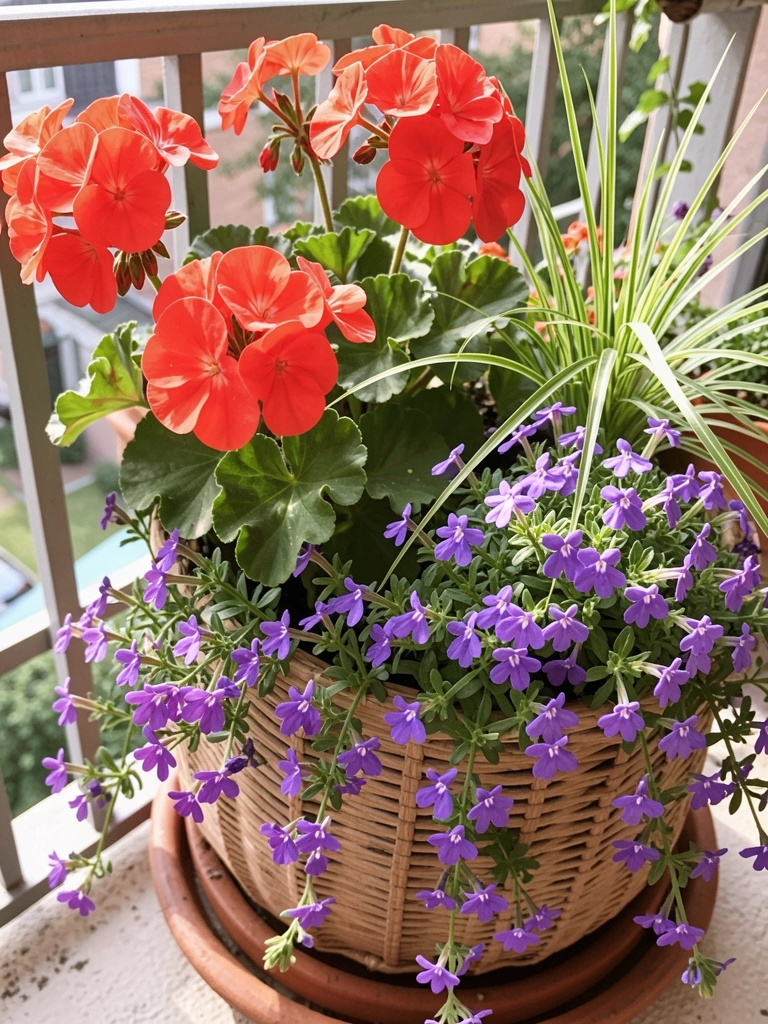
I treat large containers like a bed—one tall anchor, mid fillers, and trailing edges. On my sunny balcony I combine geraniums, verbena, and a fountain grass for height.
I started with pots too small and re-potted into 18–24 inch planters. Bigger containers give plants room and reduce watering frequency.
Group them for microclimate and put saucers or a tray underneath. It’s an easy way to get a full-sun flower bed when ground space is limited.
What You’ll Need for This Look
- 18–24 inch glazed planter(s)
- Geranium, verbena, trailing lobelia
- Lightweight potting mix with moisture crystals
- Drip saucer or planter tray
Final Thoughts
You don’t need every idea. Pick two that fit your space and repeat them.
I learned more from failures than tidy plans. Start small, watch, and adjust.
You’ll be surprised how much a few honest choices will do.