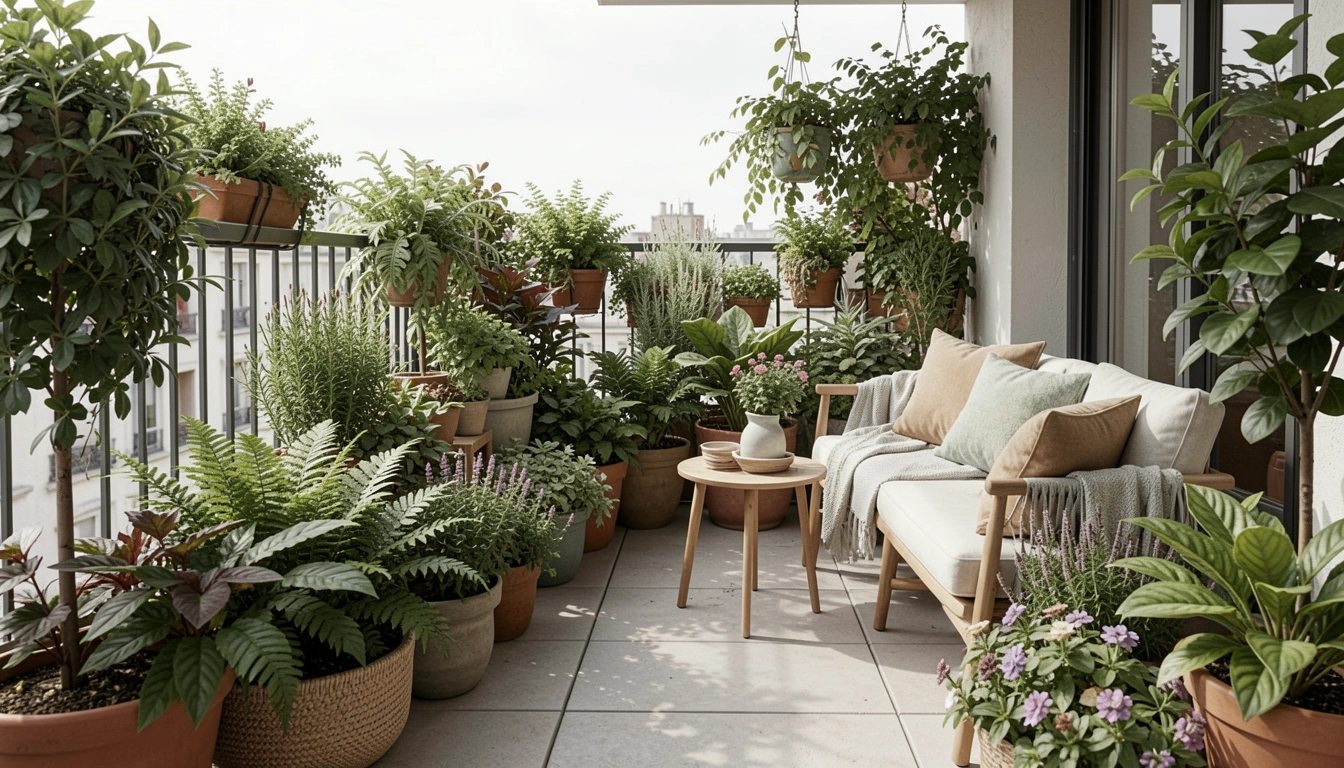
How To Design A Terrace Garden Balcony You Will Love
I used to stand on the balcony and not know where to look. Pots were scattered. Corners felt bare.
I wanted a small space that felt intentional and comfortable. I learned to place things for sightlines, touch, and use.
This method helped the balcony feel like an outdoor room. It’s simple. It’s manageable.
How To Design A Terrace Garden Balcony You Will Love
This is the method I use when a balcony feels empty. You’ll end with a balanced, cozy terrace that invites use and looks considered.
What You’ll Need
- Large rectangular black metal planter (90 cm)
- Tall narrow ceramic planter (cream, 30 cm)
- Pair of 12-inch terracotta pots (rust color)
- Woven rattan hanging basket (14-inch)
- Low wooden bench (80 cm, natural finish)
- Assortment of trailing plants: variegated ivy and string-of-pearls (small pots)
- Compact evergreen shrub in an 8-inch pot (deep green foliage)
- Warm white outdoor string lights (satin bulbs)
Step 1: Claim a focal corner and anchor the view

I start by picking one corner as the visual anchor. I place the large black planter and the bench so the eye has somewhere to rest. The space suddenly reads as intentional instead of random.
What changes visually is immediate: height, mass, and a clear foreground. People often miss that a focal point can be off-center; asymmetry feels natural on a balcony.
Mistake to avoid: clustering too many small pots around the focal spot. That dilutes the anchor and makes the corner look crowded instead of composed.
Step 2: Layer height and depth for a sense of room
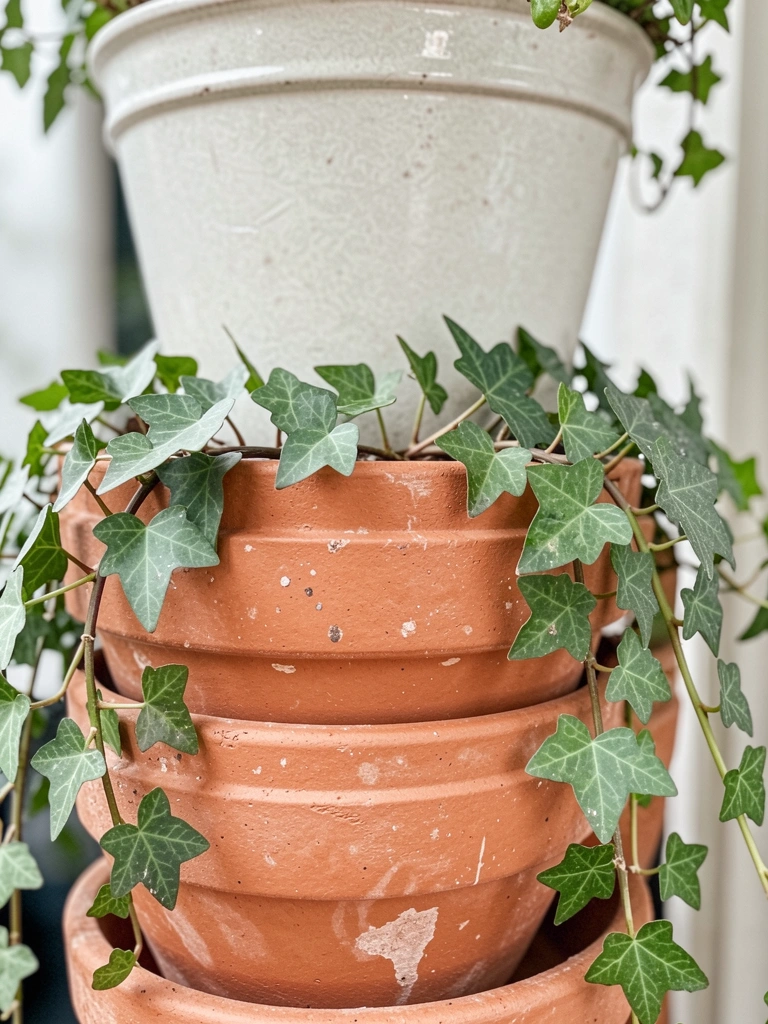
I build vertical layers—tall planter, medium pots, then trailing plants at the edge. I place elements so the nearest pot overlaps the one behind it. The arrangement gives depth without blocking the view.
Visually, the balcony reads like a series of planes from front to back. The insight most people miss is leaving small gaps so each layer is visible. That space makes the planting breathe.
Small mistake: lining pots in a straight row against the railing. It flattens the composition and kills the sense of depth.
Step 3: Choose textures and repeat elements for calm
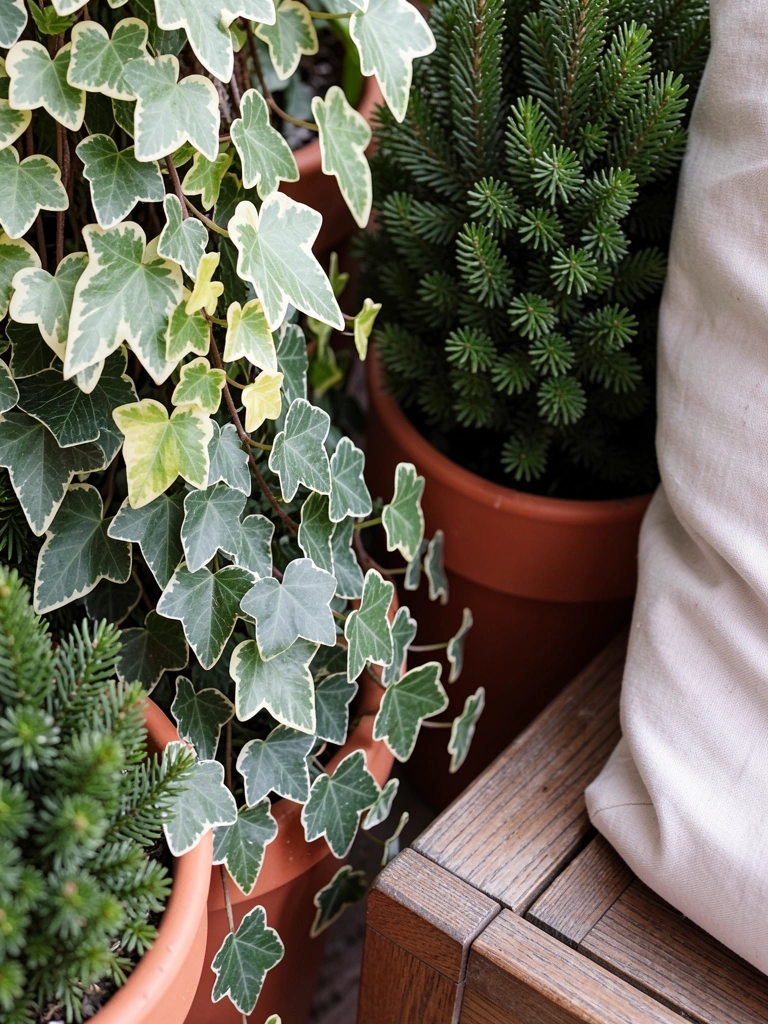
I focus on three or four textures: glossy foliage, soft leaves, and rough terracotta. I repeat a pot color or a plant form three times across the terrace. Repetition ties disparate pieces together.
The visual change is coherence. The space stops feeling like a collection and starts feeling like a room. People often overlook repeating something simple—same pot, color, or plant—to create rhythm.
Don’t make the mistake of adding too many different species at once. Too much variety reads as clutter, not richness.
Step 4: Add a seat and small touchpoints to invite use
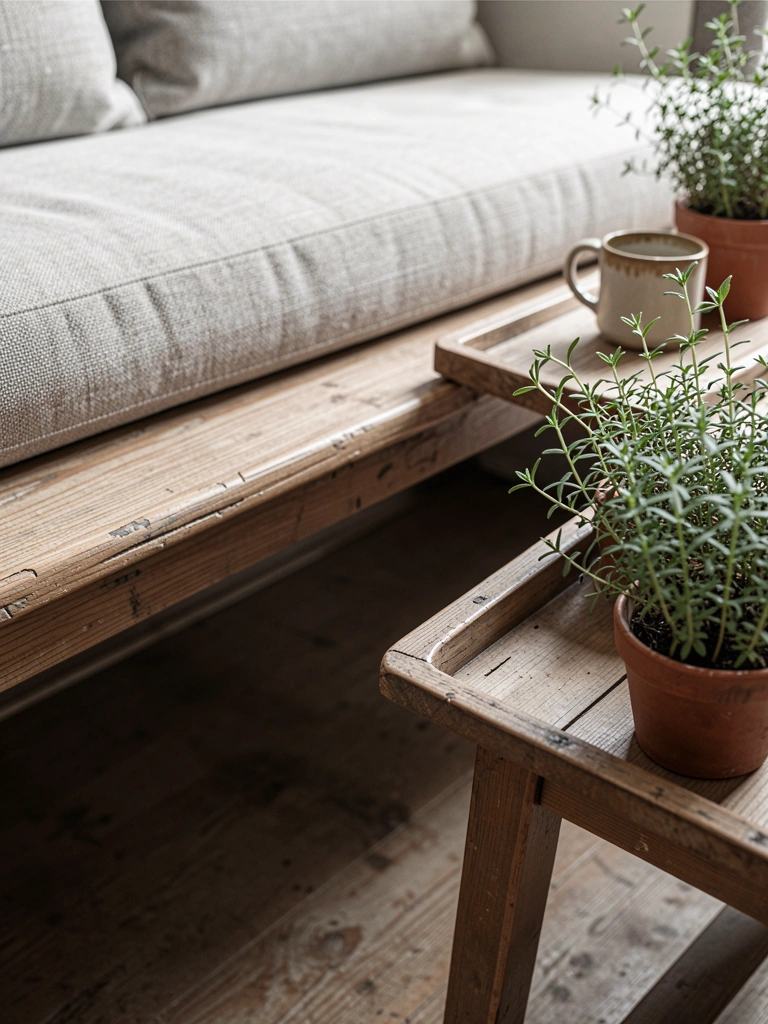
I make room for a seat and a ledge for a cup. I keep planting around but not in front of access points. The balcony becomes a place you go to, not just look at.
Visually, a bench grounds the layout and gives scale. A small tray or herb pot near the seat provides tactile moments. The insight most miss is that proportion matters—seat size should match planting scale.
Avoid overfilling the area with plants that block circulation. A tight path and clear access keep the space usable and relaxed.
Step 5: Layer light, scent, and seasonal swaps for mood
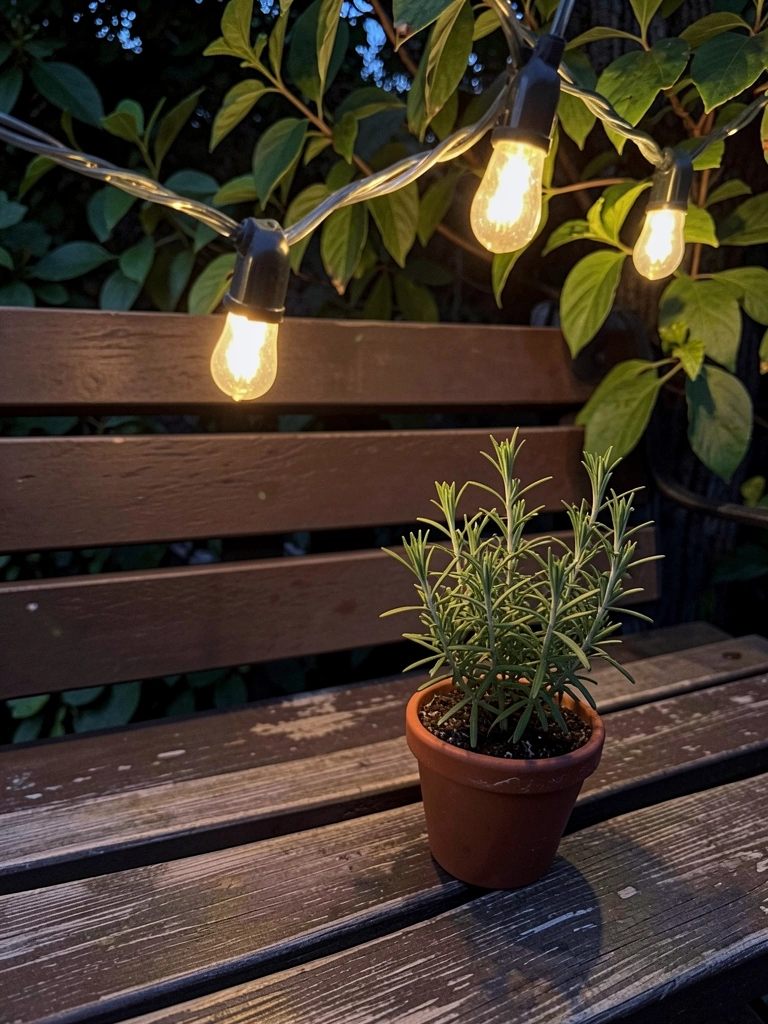
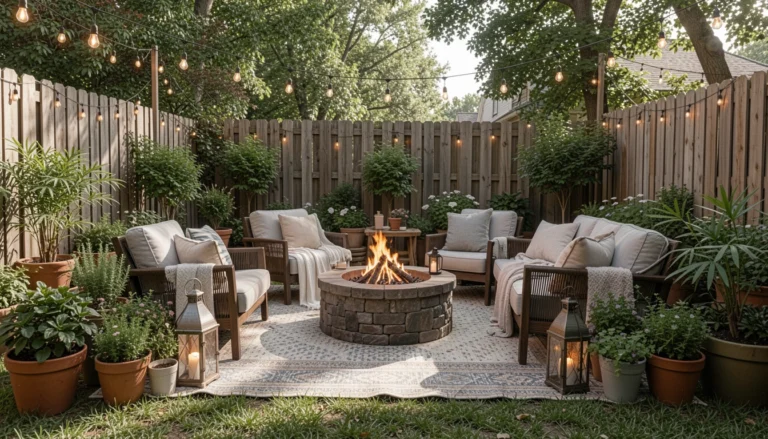
I add warm string lights and a few scented herbs by the seat. In the evening the space feels deeper and softer. Scent by the nose spot matters more than scattered pots.
The visual change is immediate: pockets of light create cozy vignettes. People often miss rotating a seasonal color or swapping a container plant for winter structure.
Small mistake: over-ornamenting with too many lights or decorations. Keep light sources small and intentional so the plants still read as the main element.
Choosing Plants for Mood
I pick plants by how they feel up close and from a step back. For a calm space I lean on green textures with one or two flower accents. For a brighter mood I add a few bold-leafed or flowering pots.
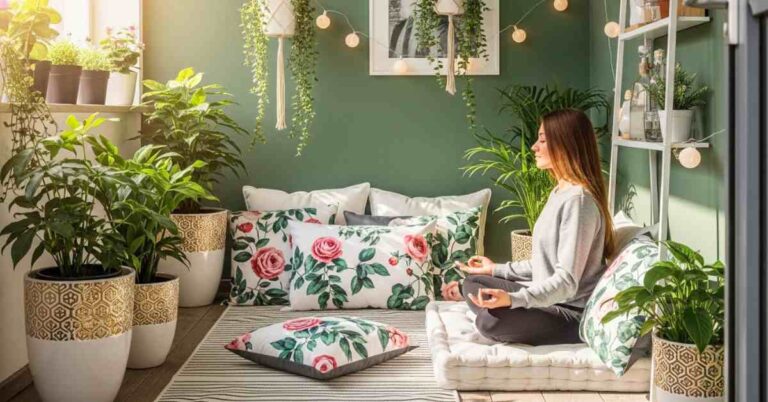
Think about scent and touch. A small pot of mint or rosemary near the seating changes how the space is used. Repeat a plant or pot color to keep things coherent.
Balancing Scale and Texture
Scale matters more than variety. A single tall plant and a few medium pots will read better than ten tiny mismatched ones. Use a mix of heights and leaf sizes.
Match pot scale to plant size. Keep heavier materials low and light, airy plants higher or hanging. This keeps balance without fuss.
Making It Seasonal and Low-Maintenance
Accept change across seasons. I swap one or two containers each season rather than overhaul the whole balcony. That keeps the space fresh without effort.
Plan for winter silhouettes and summer abundance. Use a couple of evergreens so the terrace still reads as a place even in colder months.
Final Thoughts
Start with one corner and one bench. Make that area feel intentional before filling the rest.
Small repeats and a clear focal point give calm quickly. Move pieces until they feel right.
You don’t need perfect plants. You need a plan you’ll enjoy living with. Start small and keep it simple.