How to Design Small Patio Garden Layout
I squinted at my tiny patio and didn’t know where to start.
Corners felt empty. Center felt crowded.
I moved pots and chairs until I was tired of moving things. Now I plan by balance and paths, not by filling space.
It’s calm and simple.
How to Design Small Patio Garden Layout
You’ll learn how to arrange furniture and plants so the patio reads as defined spaces. I’ll help you get a balanced, cozy layout that feels finished and usable.
What You’ll Need
- Small round bistro table (black metal, 60 cm)
- Pair of slatted folding chairs (acacia wood, natural)
- Tall narrow charcoal fiberglass planter (25 x 80 cm)
- Low cedar rectangular planter (90 x 30 cm)
- Compact boxwood (30 cm pot)
- Trailing golden ivy (5 L pot)
- Aromatic herb trio in terracotta pots (rosemary, thyme, basil — 20 cm)
- Neutral weatherproof seat cushion (linen-look, sand)
Step 1: Place a focal anchor to ground the patio
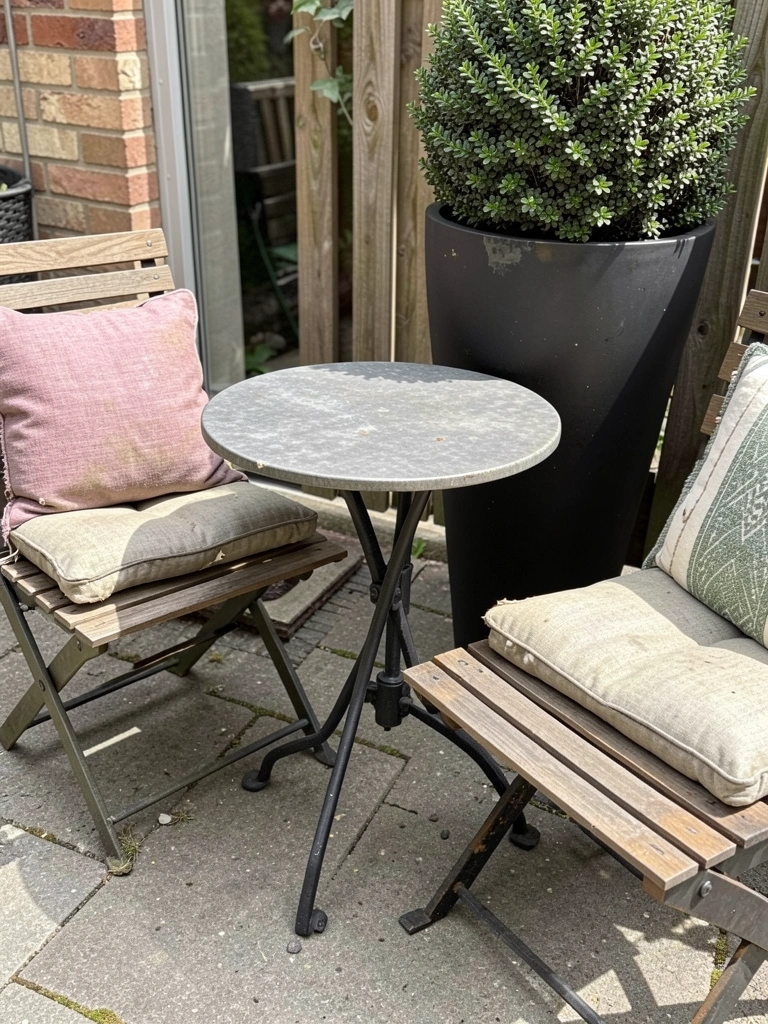
I start by choosing one anchor: a table, a bench, or a large planter. I place it where it feels natural to sit or pass by. That single object tells my eye where the “room” is.
Visually, the patio stops looking like scattered items and starts reading as a place. The anchor also gives other pieces something to relate to.
Insight people miss: the anchor can be a planter, not just furniture.
Mistake to avoid: don’t cram the anchor into the exact center—leave a small path so the space breathes.
Step 2: Build vertical interest to save floor space
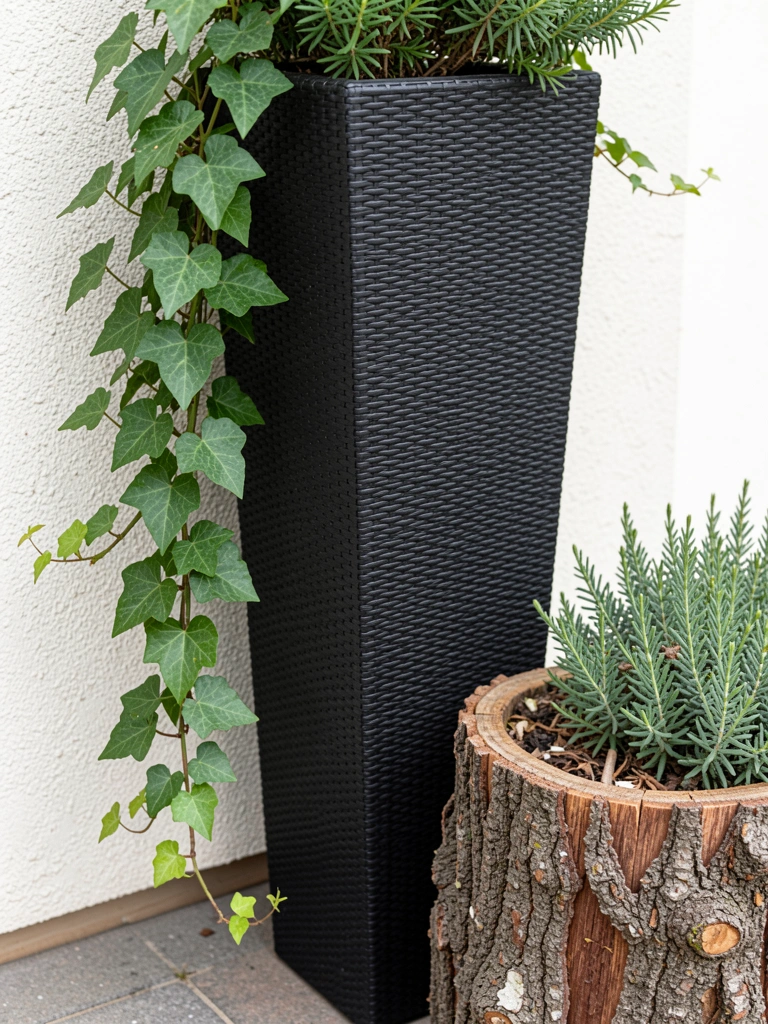
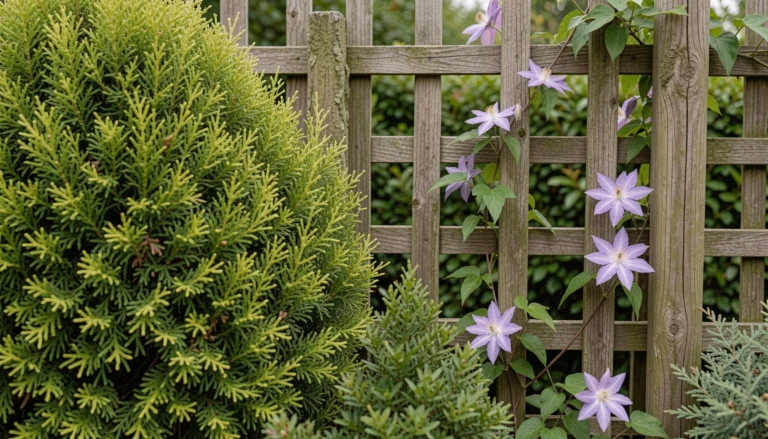
I bring in tall elements next—my narrow planter, a climbing vine, or a trellis. Height creates layers without stealing floor real estate. I tuck the tall piece toward a back corner or beside the anchor.
The space immediately feels deeper. Your eye travels up and back, so the patio seems larger and more intentional.
Insight people miss: verticals also hide ugly views and give a sense of enclosure.
Mistake to avoid: don’t block the main sightline or the door with a tall piece; keep a clear visual path.
Step 3: Group pots and repeat materials for harmony
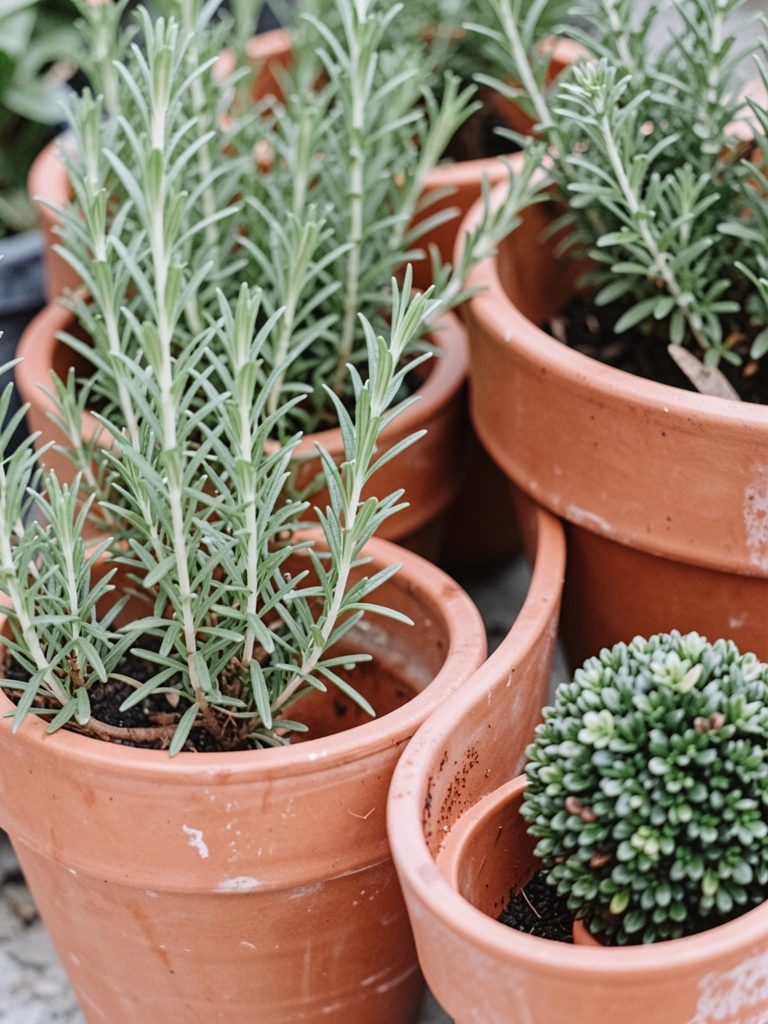
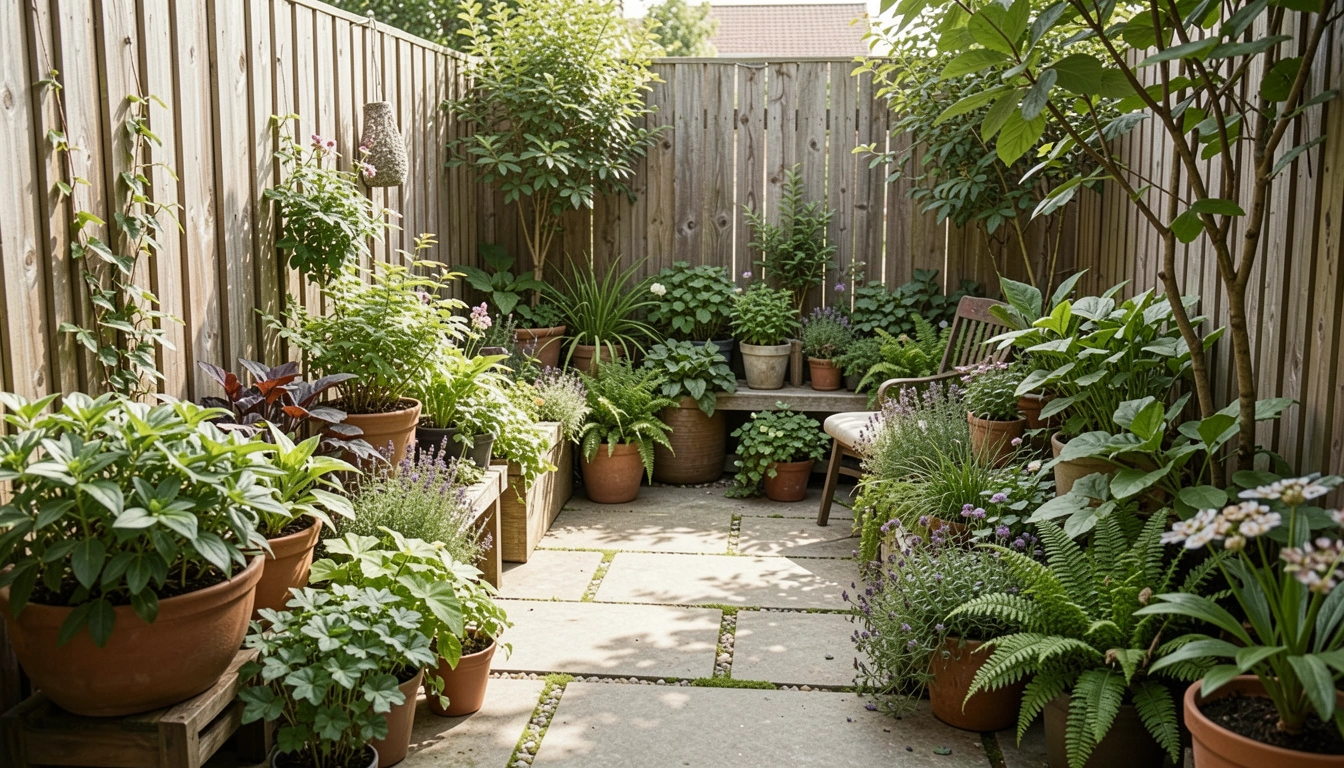
I gather pots into loose clusters rather than spreading them evenly. I repeat one pot color and a single plant form to create rhythm. Clusters look richer than identical single pots spaced apart.
Grouping makes small collections feel deliberate. The repeated material ties everything together and calms the visual noise.
Insight people miss: odd numbers (three pots) read better than pairs.
Mistake to avoid: avoid too many different pot styles; variety is good, but too much makes the space look cluttered.
Step 4: Soften edges and define walkways
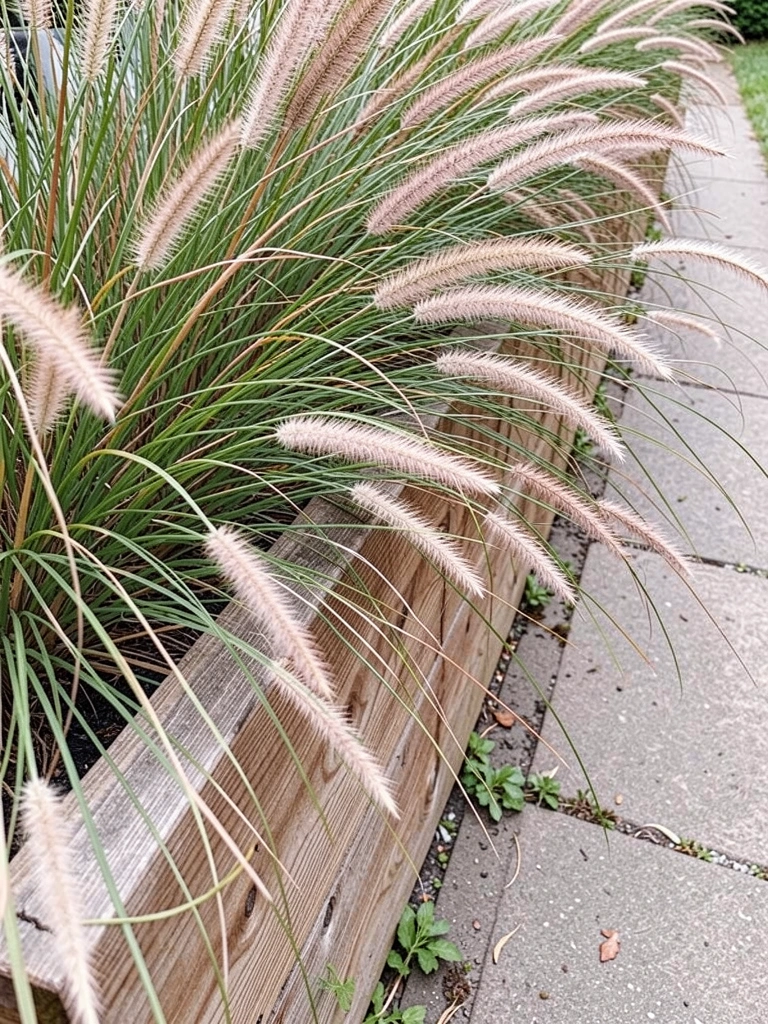
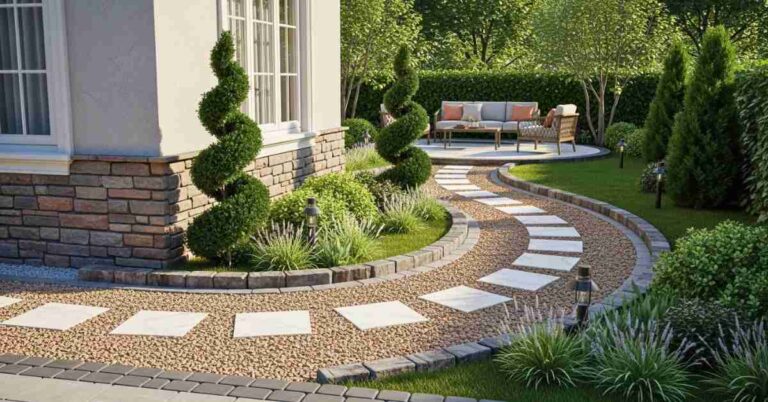
I soften hard lines with low grasses and trailing plants along the border. I leave a clear meandering line for walking. That path doesn’t need to be formal—just an implied route.
Soft edges make the patio feel cozy and approachable. They also hide gaps where slabs or decking meet walls.
Insight people miss: plants at eye level and knee level create a comfortable scale.
Mistake to avoid: don’t fill every gap with a plant; keep stepping space and a small clear zone around seats.
Step 5: Edit, live with it, and tweak seasonally
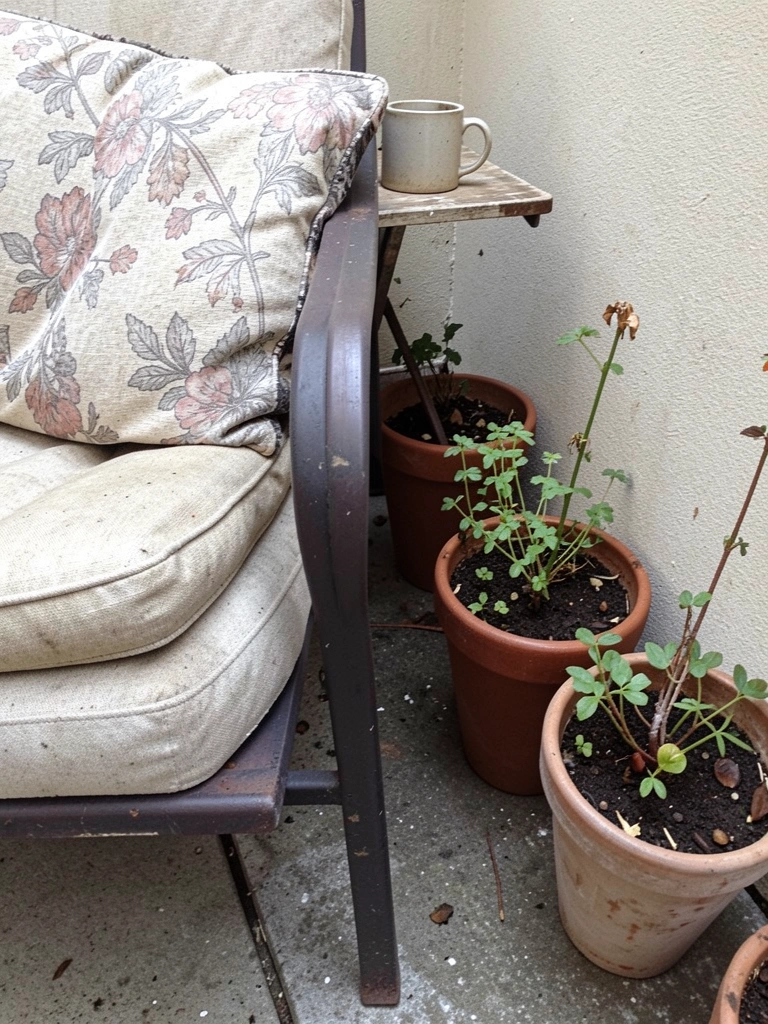
I live in the layout for a few weeks then edit. I remove one pot, nudge the chair, switch a plant. The patio changes with light and use, so I treat the first arrangement as a draft.
Over time small tweaks improve flow more than major reshuffles.
Insight people miss: function reveals what really belongs (a table that’s never used can go).
Mistake to avoid: don’t fear removing things; less often looks richer.
Choosing plants for tiny patios
I favor plants that offer structure and season-long interest. Evergreens or compact shrubs anchor winter, while herbs and trailing plants add scent and movement. Keep to a simple palette—one evergreen, one soft-leaved grass, and two seasonals.
Think about scale. Big-leaved tropicals can overpower, while many small pots can look busy. One bold shape plus small supporting plants usually reads best.
Working with scale and sightlines
Stand at your main doorway and walk the route. I imagine the view from each angle before placing large pieces. Sightlines should lead to a focal point or a soft green patch.
Use repetition of materials and colors to connect corners. If one side feels heavier, balance it with a low wide planter rather than another tall element.
Keeping it alive through seasons
Plan for winter shape and summer bloom. I leave room for a winter container and swap one or two pots when a season changes. That keeps the patio feeling intentional year-round.
Small care routines help: weekly watering checks, a quick deadhead, and shifting tender pots during cold snaps. These little habits keep the layout working without constant fuss.
Final Thoughts
Start with placement, not plants. I often move one piece and everything else falls into place.
Be willing to edit. Less becomes a calm, comfortable patio.
Take one afternoon and make one change. You’ll see the difference quickly.