17 Fresh Indoor Flower Pot Ideas To Brighten Every Room
I used to think indoor flowers needed fuss. I was wrong.
A few real mistakes taught me more than any blog. I killed a few before I learned light, pot size, and drainage matter.
These are simple, lived-in ideas I use in real rooms. No showpiece setups — just things that actually brighten a space.
17 Fresh Indoor Flower Pot Ideas To Brighten Every Room
These 17 ideas are ones I’ve tried in my home and other clients’ rooms.
They’re practical, low-fuss, and include plant and pot notes.
Expect real tips and shopping hints across 17 specific looks.
1. Sunny Sill Layered Pots with Geraniums and Succulents
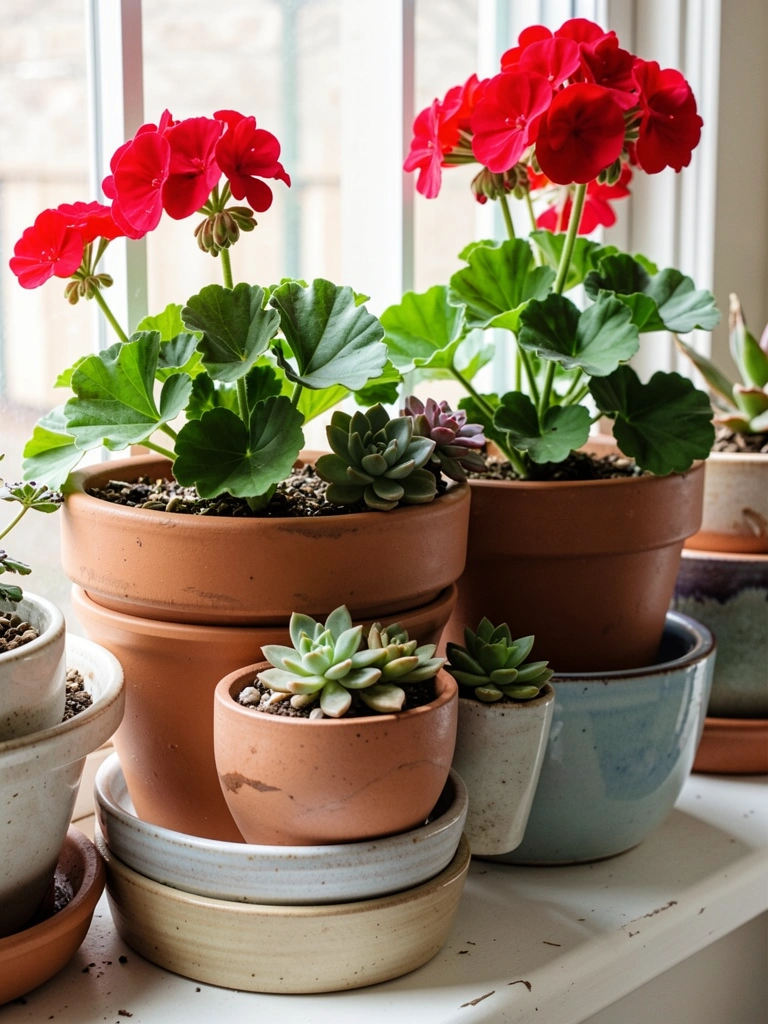
I plant geraniums in the back and tiny succulents in front. It fills a sill without crowding. I once shoved everything into one big pot and the succulents rotted — lesson learned: separate drainage needs.
Visually, the geraniums anchor the scene with bright color while succulents add texture. I rotate pots when a plant leans toward light.
Tip: pick pots with different heights. It reads intentional, not cluttered.
What You’ll Need for This Look
- Terracotta pots (6–8 inch)
- Glazed ceramic pots (3–4 inch)
- Well-draining potting mix
- Small saucers, hand trowel
2. Tall Floor Pots with Peace Lilies and Orchids
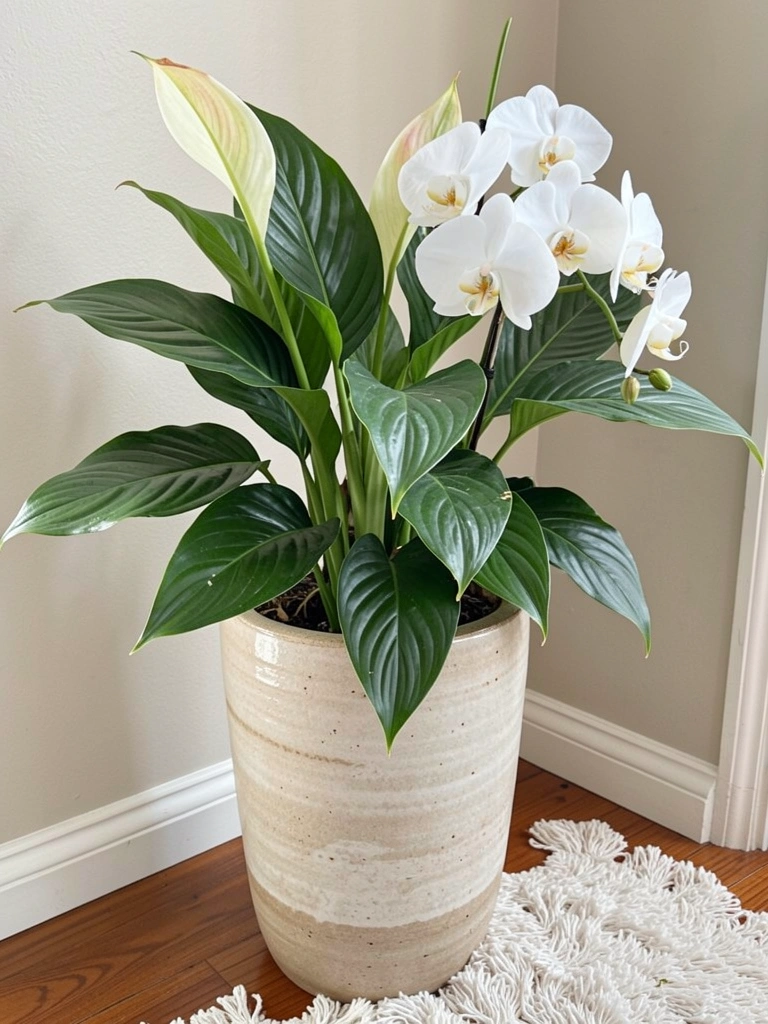
I moved a peace lily into a tall pot and it suddenly looked like it belonged in the living room. The orchid beside it gave a delicate counterpoint. I had trimmed too late one season and lost buds — now I wait until blooms fade naturally.
Tall planters lift plants into eye level. They make small rooms feel greener without cluttering shelves. Keep a watering routine; these two like different timings.
What You’ll Need for This Look
- Tall ceramic floor planter (12–16 inch)
- Orchid pot with bark mix
- Indoor potting mix for foliage plants
- Plant saucers
3. Hanging Macramé with Trailing Petunias
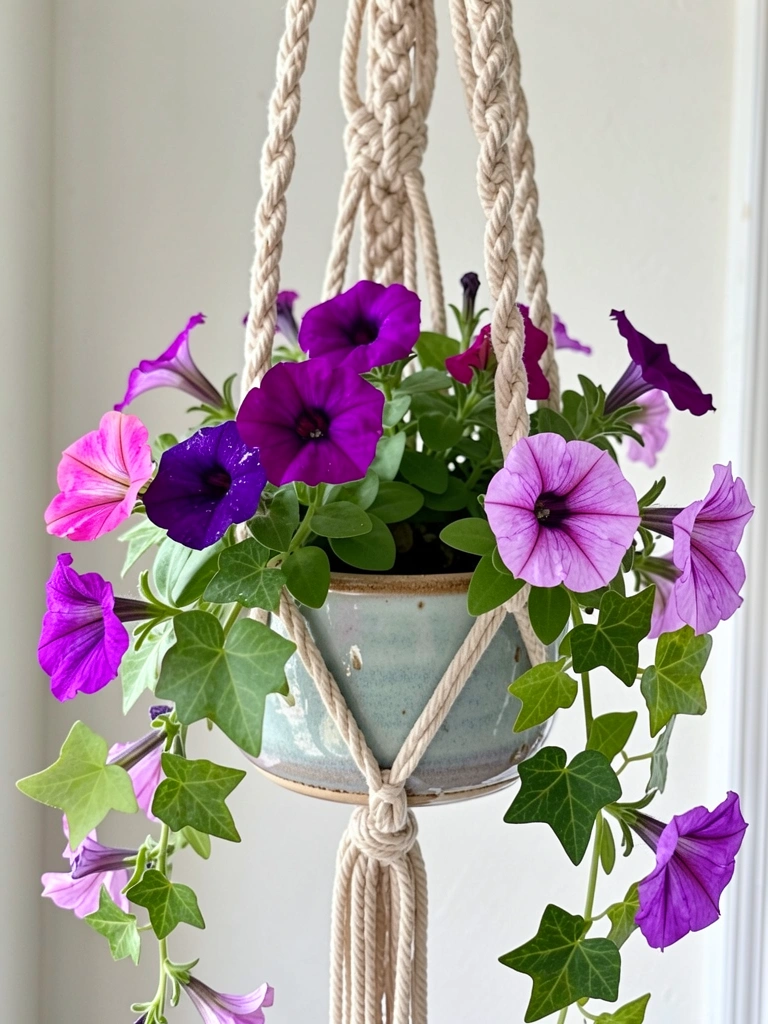
I hung macramé by a kitchen window and petunias spilled over it within weeks. I’d ignored wind draft once and lost flowers — keep hangers away from cold drafts. The movement makes a small room feel full.
Hanging plants soften corners and free up surfaces. Petunias are bold and forgiving when they get light. Pick a sturdy hanger and check the knots occasionally.
What You’ll Need for This Look
- Macramé hanger, cotton or jute
- Hanging glazed planter (8–10 inch)
- Trailing petunia plugs
- Lightweight potting mix
4. Mix-and-Match Terracotta Trio for Herbs and Edible Flowers
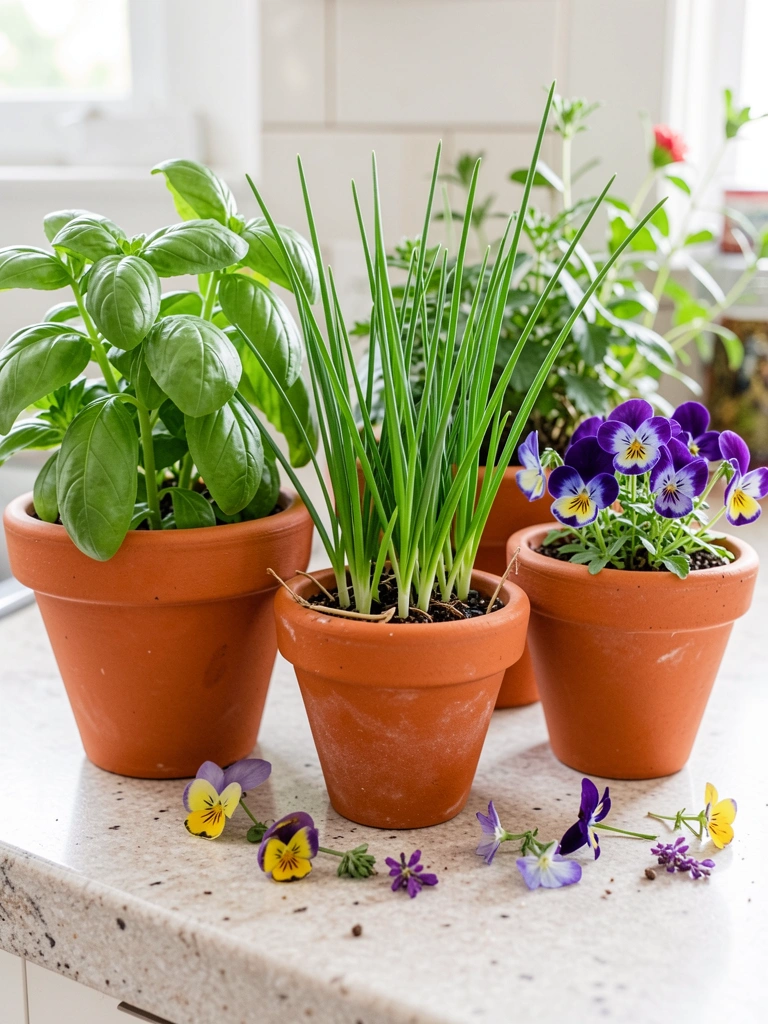
I use three terracotta pots together on the kitchen ledge. Basil, chives, and violas fit perfectly. I once used unglazed clay for every plant and it dried too fast — now I mix with a glazed pot for moisture balance.
This cluster is handy for grabbing fresh garnish. Terracotta reads lived-in and warm. Trim herbs regularly and deadhead the flowers to keep things tidy.
What You’ll Need for This Look
- Terracotta pots (4, 6, 8 inch)
- Glazed accent pot (optional)
- Herb soil mix
- Small watering can
5. Mini Greenhouse Shelf for African Violets and Cuttings
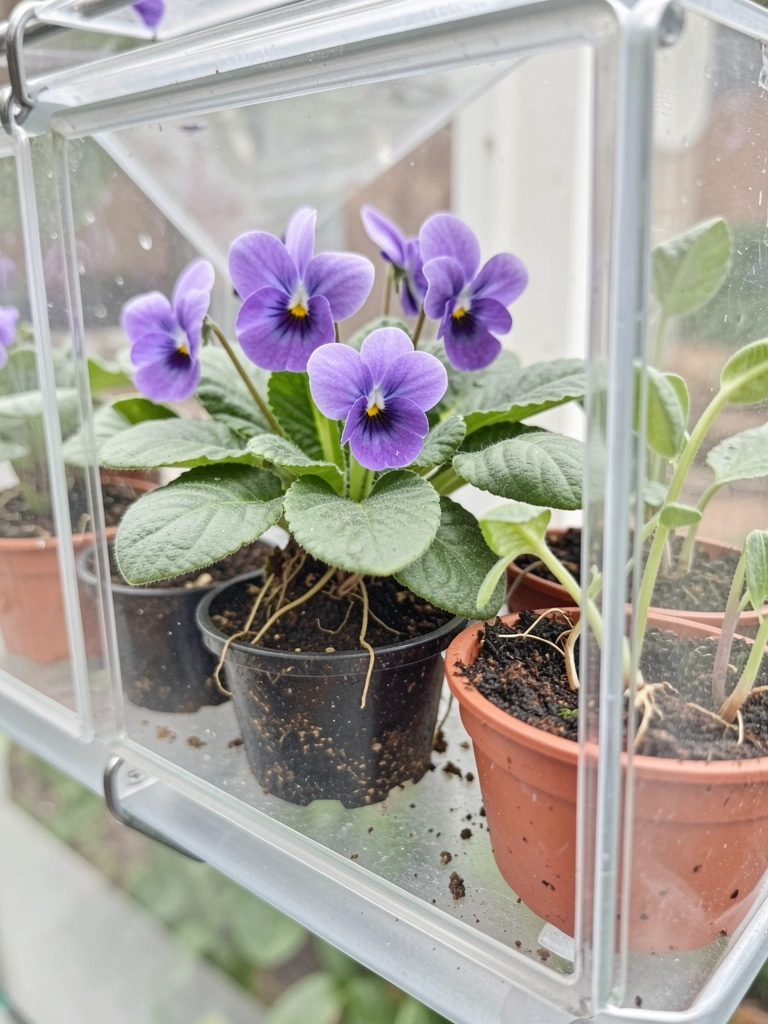
I set a small greenhouse shelf on a shady windowsill. African violets loved the consistent humidity. I once overwatered because the humidity felt high — now I check soil first.
This setup gives me lots of little blooms through winter. It’s steady and contained. Take cuttings and keep them nearby for easy swaps when something fades.
What You’ll Need for This Look
- Mini greenhouse shelf unit
- Small plastic pots (2–3 inch)
- African violet mix
- Spray bottle for misting
6. Color-Blocked Ceramic Pots with Bold Ranunculus
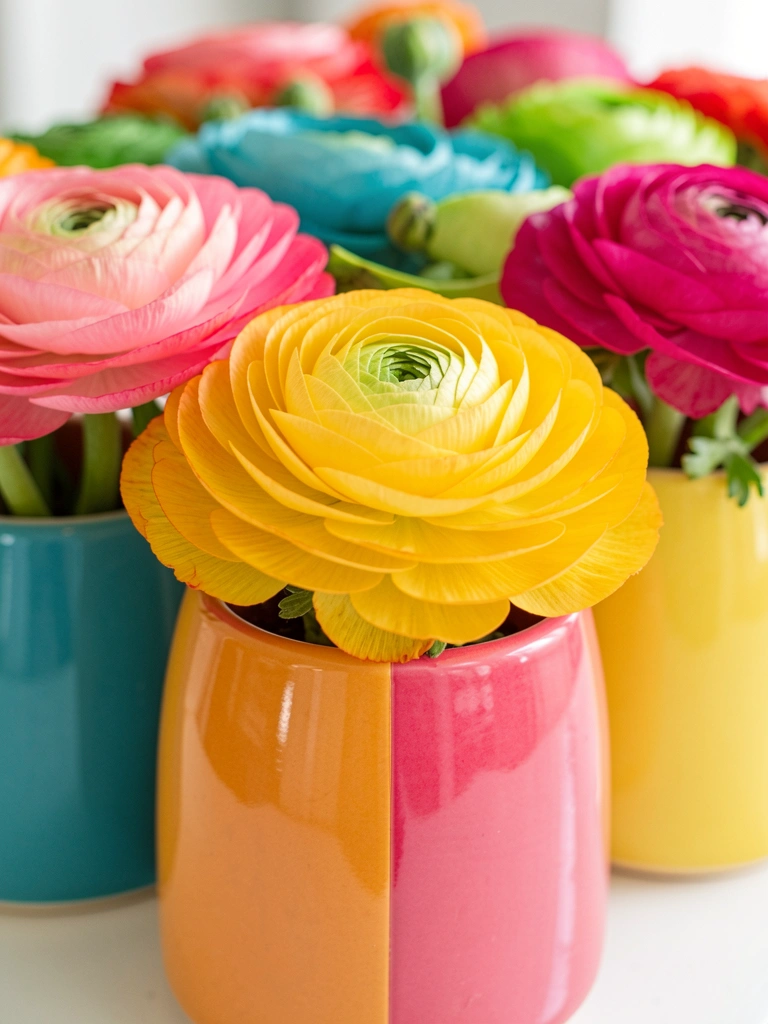
I used matching ceramic pots in a row and planted ranunculus bulbs. The color-block effect reads like art on a console. I once chose too-large pots and the bulbs spread thinly — choose snug containers for bulbs.
Ranunculus demand cool conditions to start, then warmth for bloom. Keep the pots grouped for impact. They brighten a hallway without needing much room.
What You’ll Need for This Look
- Ceramic pots (6–8 inch), matching color palette
- Ranunculus bulbs or tubers
- Bulb planting mix
- Shallow tray for display
7. Reclaimed Wood Planter Box with Seasonal Bulbs
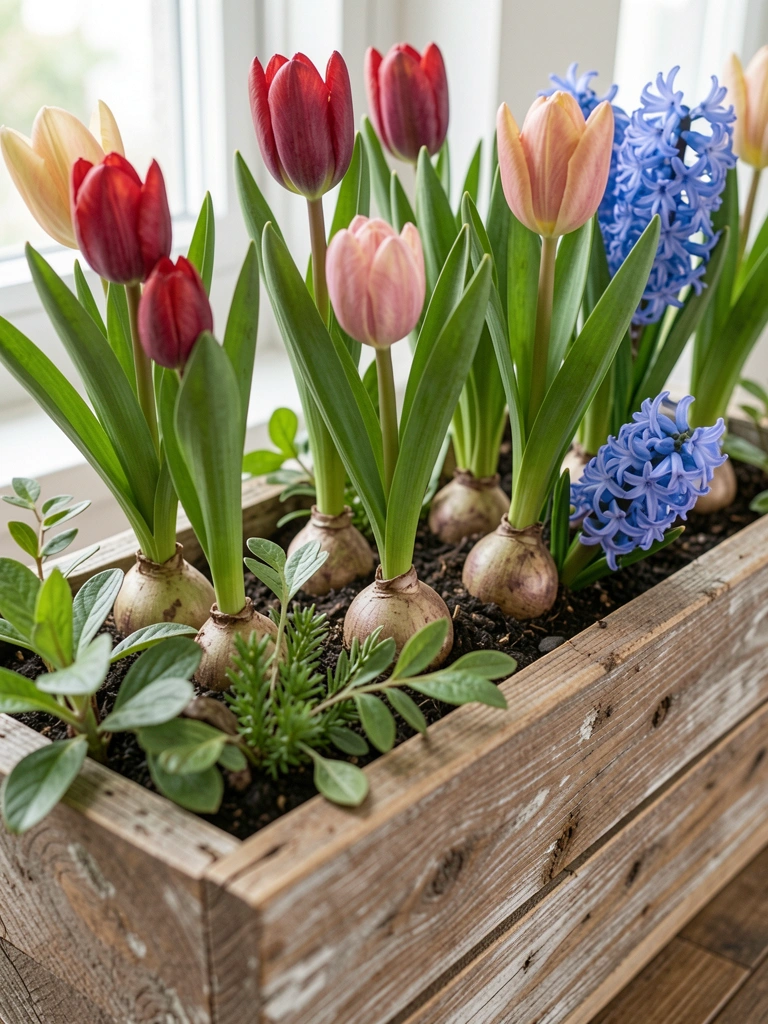
I built a shallow reclaimed wood box and switched bulbs by season. Tulips in spring, hyacinths after. I learned to line the box with plastic — without it the wood soaked up water and warped.
This feels low-cost and personal. The shallow depth keeps bulbs close and easy to rotate. It sits on a side table and changes the room each season.
What You’ll Need for This Look
- Reclaimed wood planter box (18–24 inch)
- Seasonal bulbs (tulips, hyacinths)
- Liner (plastic) and drainage pebbles
- Bulb compost
8. Tabletop Low Bowl with Mixed Bulbs and Moss
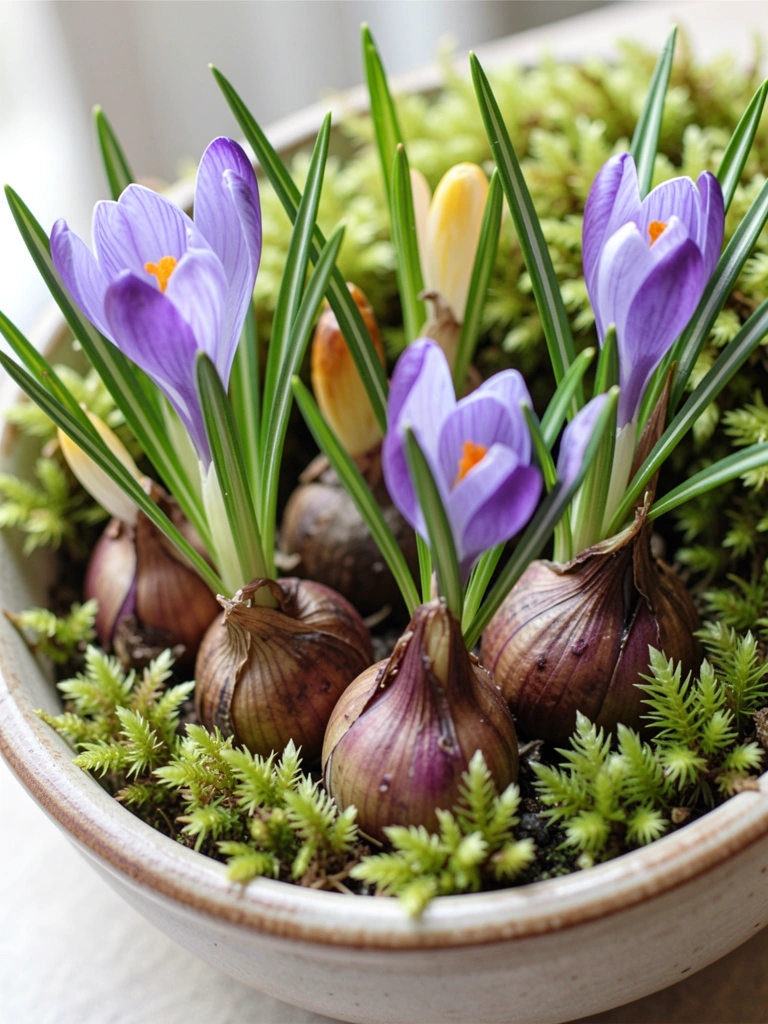
I like a low bowl at the center of my table filled with crocus and moss. It’s compact and cheerful. I once used too little soil and the bulbs didn’t root well — deeper is better even for shallow bowls.
The moss keeps the surface neat and hides bulb necks. It’s a simple swap when one bloom fades. This feels fresh without being fussy.
What You’ll Need for This Look
- Shallow ceramic bowl (10–14 inch)
- Mixed bulbs (crocus, small tulips)
- Sphagnum moss or decorative moss
- Bulb soil
9. Bathroom Humidity Duo: Ferns and Orchids
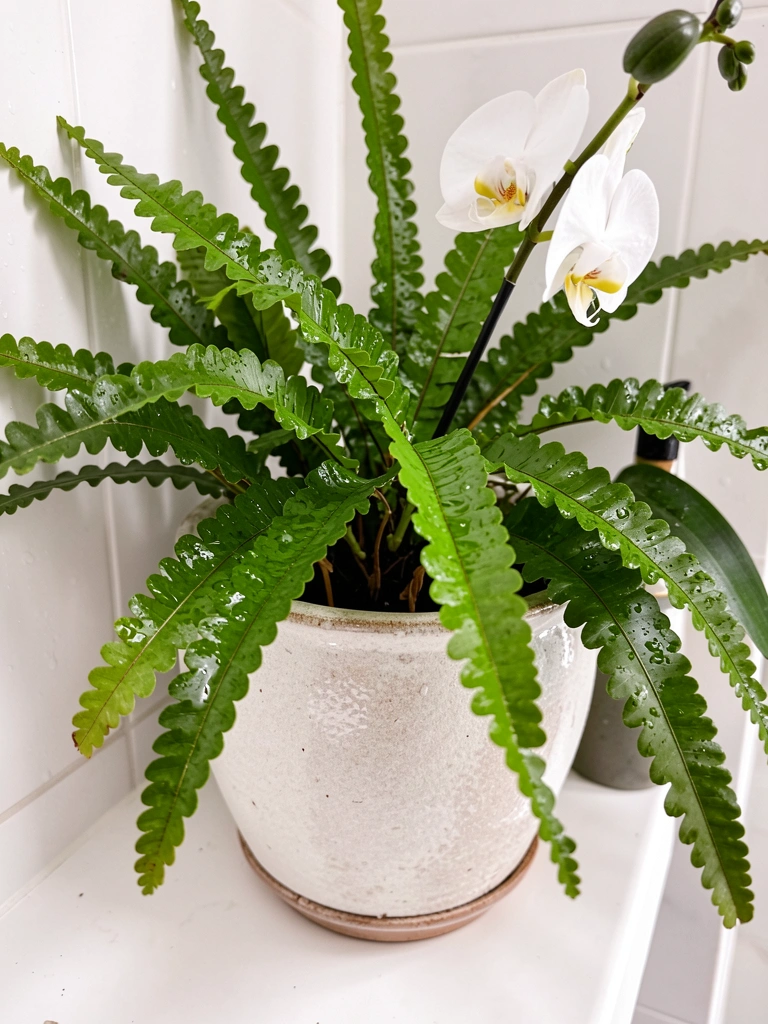
I put a fern and an orchid by the shower window and they thrive on humidity. I once placed them too close to soap and they got residue on leaves — rinse occasionally.
Plants in bathrooms feel surprising but cozy. The fern softens corners while the orchid offers refined blooms. Keep both in pots with proper drainage and check for scale.
What You’ll Need for This Look
- Ceramic pots with drainage (6–10 inch)
- Fern plant (Boston or similar)
- Phalaenopsis orchid in bark
- Humidity-loving potting mix
10. Kitchen Tiered Planter for Herbs and Edible Flowers
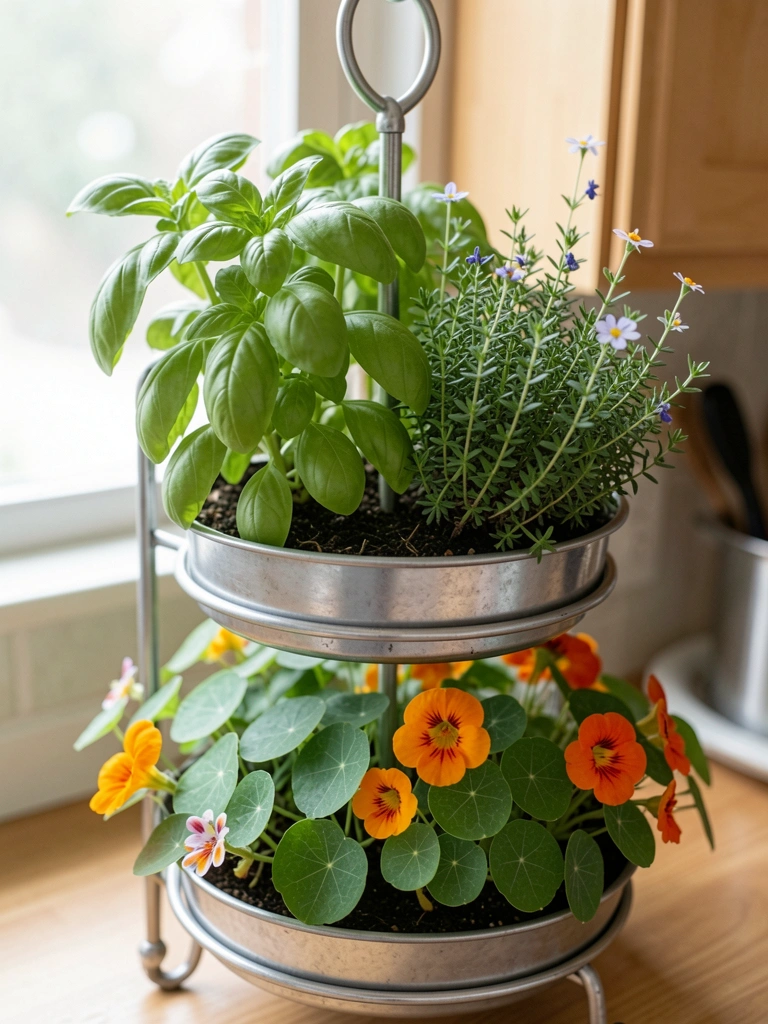
I use a three-tiered planter near the stove for herbs and nasturtiums. It took a season to get watering right — lower tiers stayed too wet. I now water from the top and let excess drain.
This saves counter space and keeps fresh garnishes handy. The tiers create depth and a small indoor herb garden that feels useful every day.
What You’ll Need for This Look
- Tiered planter stand (3 levels)
- Herb pots (4–6 inch)
- Herb potting mix
- Edible flower seedlings (nasturtium)
11. Single-Statement Concrete Pot with Anthurium
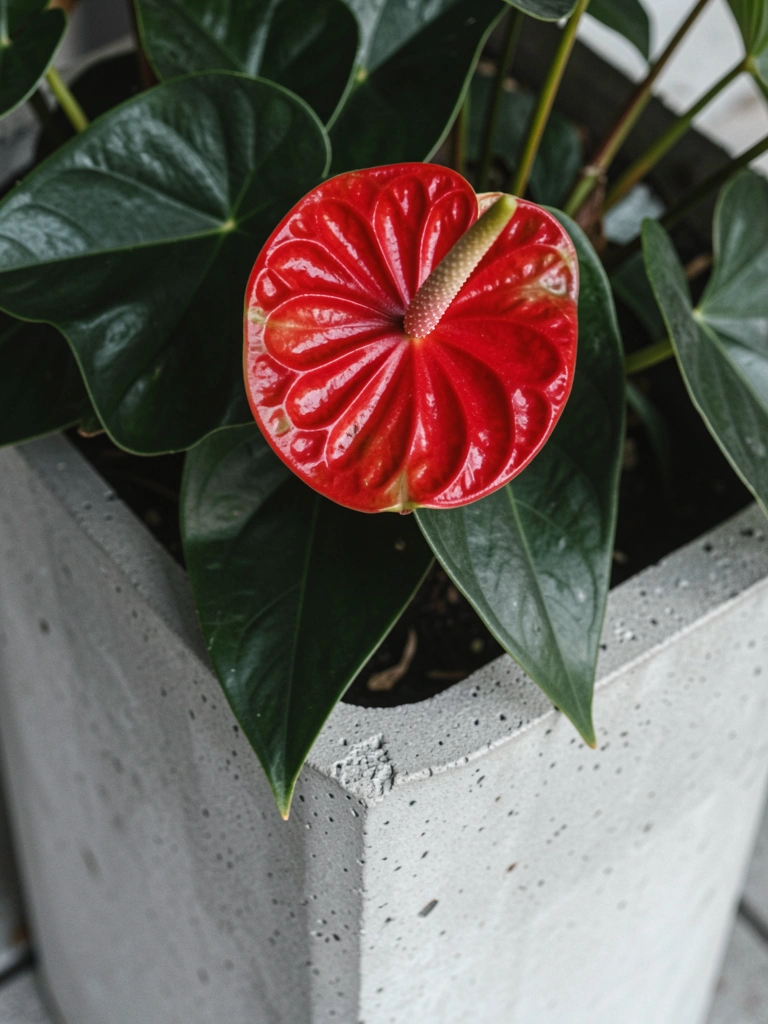
I like a single anthurium in a hefty concrete pot. It reads modern and calm. I once used a pot without drainage and lost a plant — always match pot to plant needs.
A single bold bloom feels intentional. The concrete keeps things grounded and the anthurium’s long bloom period rewards minimal care.
What You’ll Need for This Look
- Concrete planter (10–12 inch) with drainage
- Anthurium plant
- Aroid potting mix
- Pebble saucer
12. Vintage Teacup Planters for Primulas and Begonias
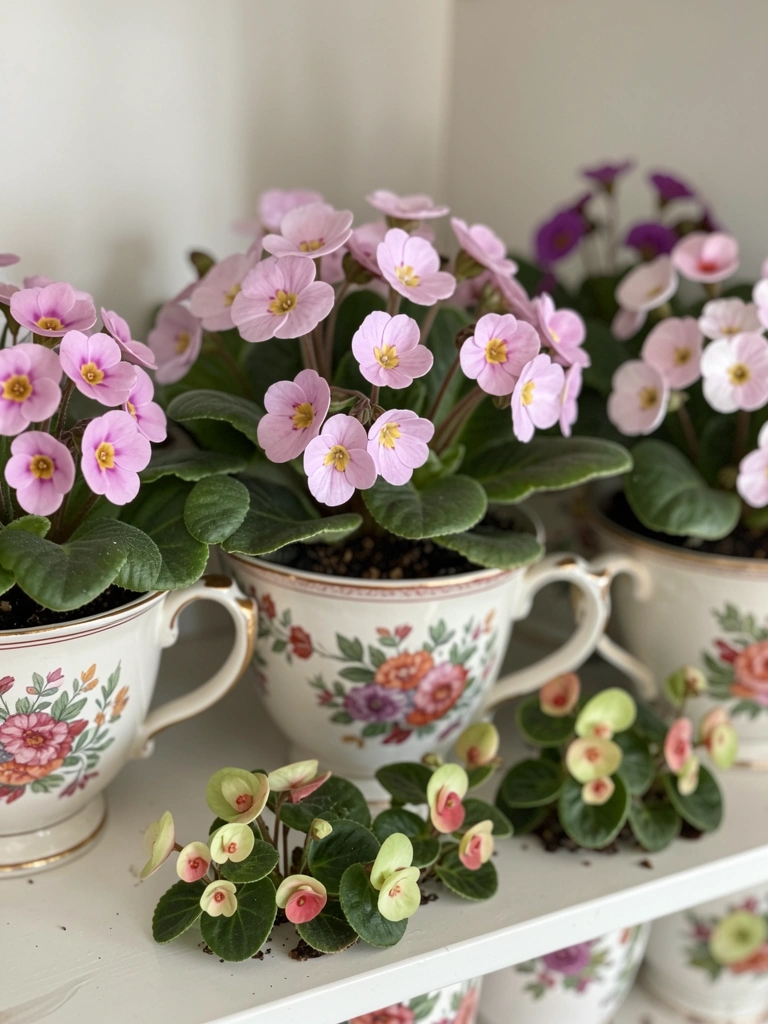
I rescued mismatched teacups at a flea market and planted primulas. They fit one season before needing repotting. I once forgot saucers and water stained a shelf — saucers save surfaces.
These are charming on a windowsill or shelf. They don’t hold much soil, so water lightly and treat them like temporary displays.
What You’ll Need for This Look
- Vintage teacups (3–6)
- Primulas or small begonias
- Small saucers
- Indoor potting mix
13. Succulent and Bloom Trough with Echeveria and Kalanchoe
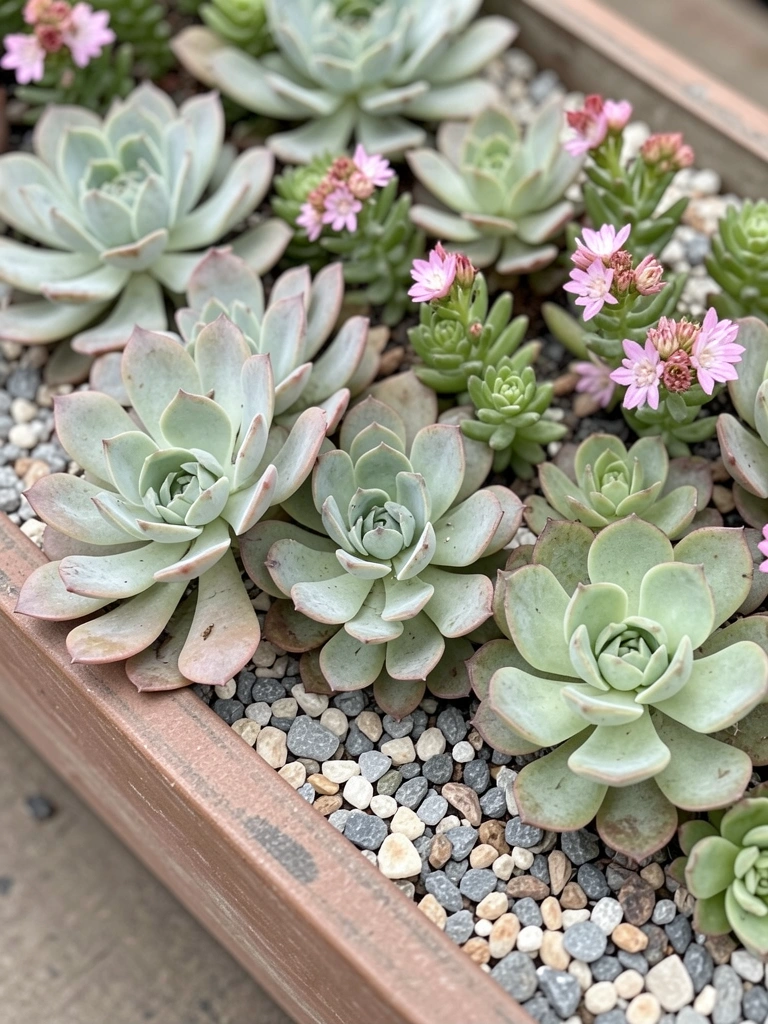
I made a shallow trough with echeveria and flowering kalanchoe. It’s low-maintenance and lasts through seasons. I once used regular soil and the succulents stretched — now I favor a gritty mix.
This arrangement is great on a coffee table or shelf. It asks for bright light but little water. Top with gravel for a finished look.
What You’ll Need for This Look
- Shallow trough planter (12–20 inch)
- Echeveria, Kalanchoe
- Gritty succulent mix
- Decorative gravel top dressing
14. Low-Light Blooming Floor Urn with Spathiphyllum
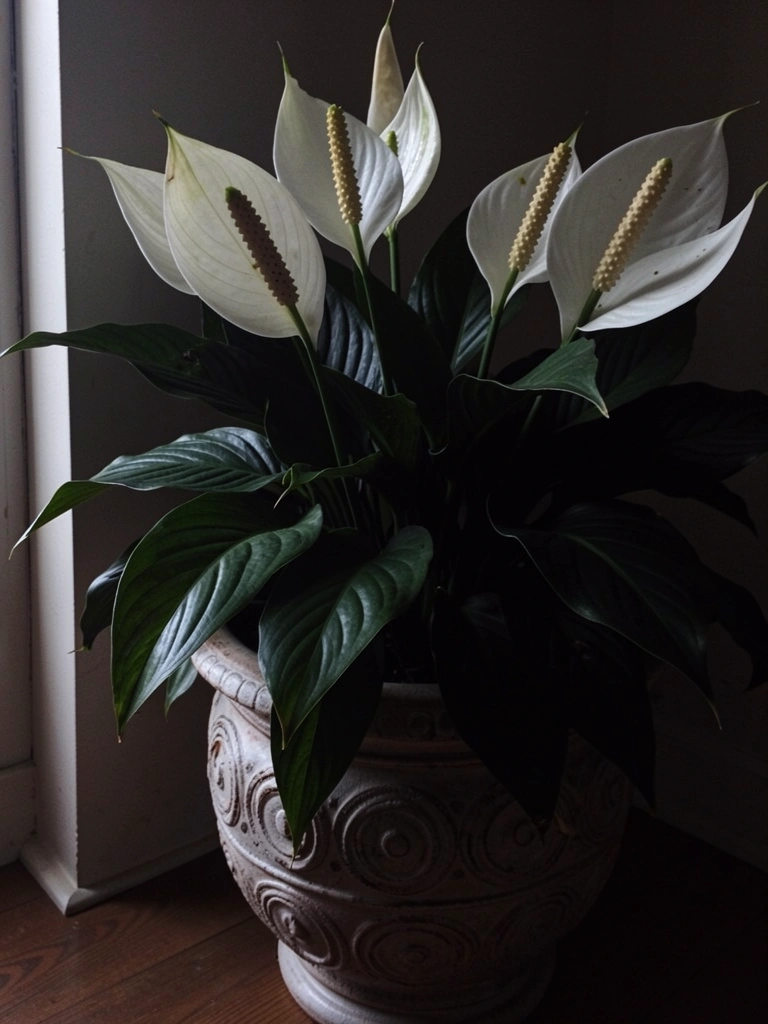
I put a spathiphyllum in a dark corner urn and it brightened the room without sun. I once expected big blooms immediately and was disappointed — patience matters with low-light bloomers.
Floor urns hide smaller nursery pots and make a soft statement. The peace lily tolerates shade and gives those white blooms when happy.
What You’ll Need for This Look
- Large floor urn (14–18 inch)
- Spathiphyllum (peace lily)
- Indoor foliage potting mix
- Pebble saucer or liner
15. Bright Balcony Railing Pots for Petunias and Calibrachoa
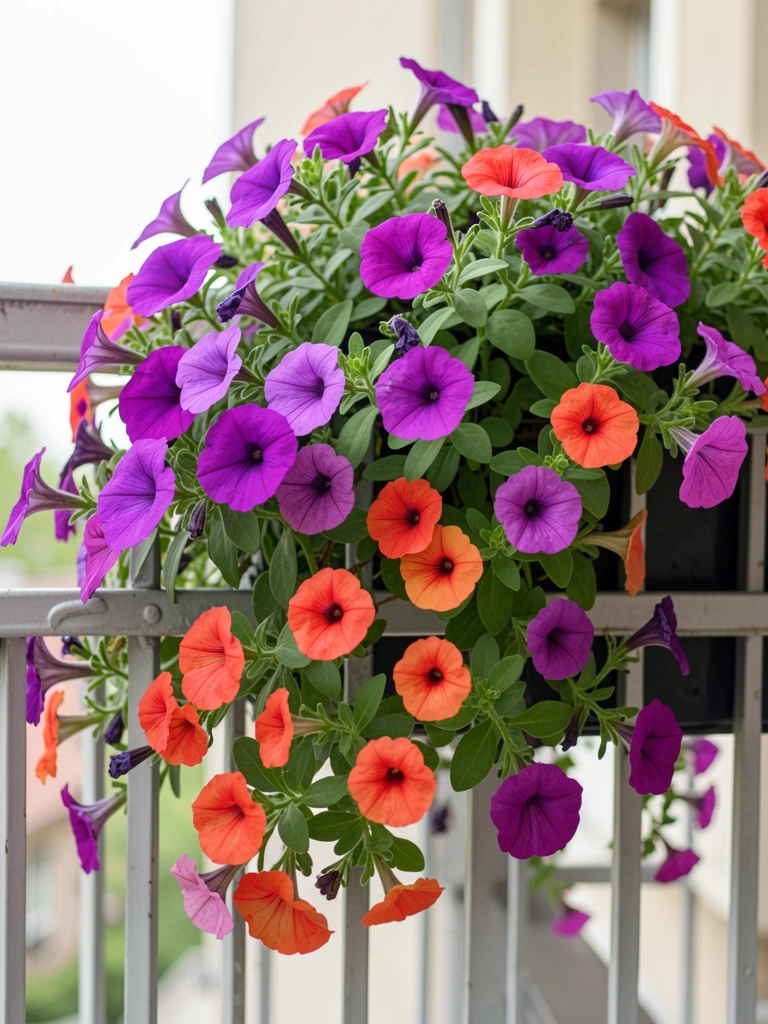
I clipped railing planters to my small balcony and planted petunias and calibrachoa. They spill over beautifully. I once used lightweight soil and pots blew in wind — heavier mix or secured pots fixed that.
These are bridge pieces between indoors and outdoors. They’re great for rooms that open to balcony doors and bring color toward eye level.
What You’ll Need for This Look
- Railing planter boxes (16–24 inch)
- Petunias, calibrachoa
- Potting mix with moisture retention
- Securing brackets if windy
16. Window Box with Layered Heights: Daisies and Lobelia
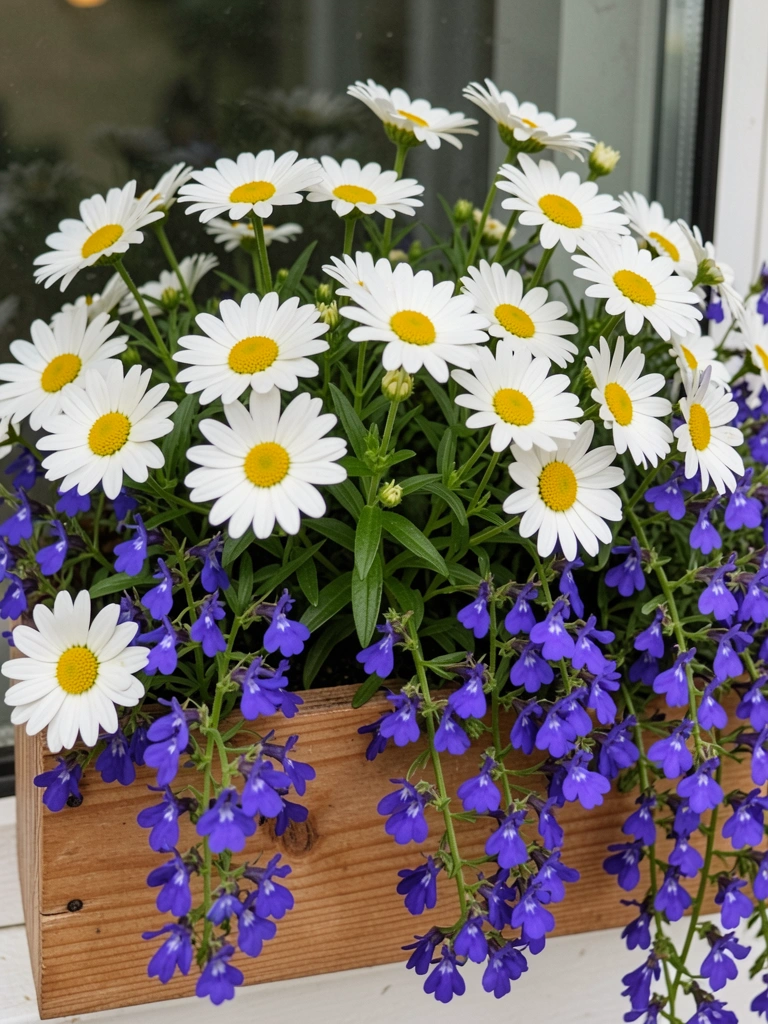
I planted daisies in the back and lobelia in the front of a window box. The height difference reads clean and intentional. I learned to space properly after a season of overcrowding.
This is a classic look that works indoors if you have a broad sill or shelf under a window. Deadhead daisies to keep them blooming longer.
What You’ll Need for This Look
- Window box planter (18–30 inch)
- Daisies (oxeye or similar)
- Lobelia trailing plugs
- All-purpose potting mix
17. Single Statement Pot with Seasonal Bulb Rotation
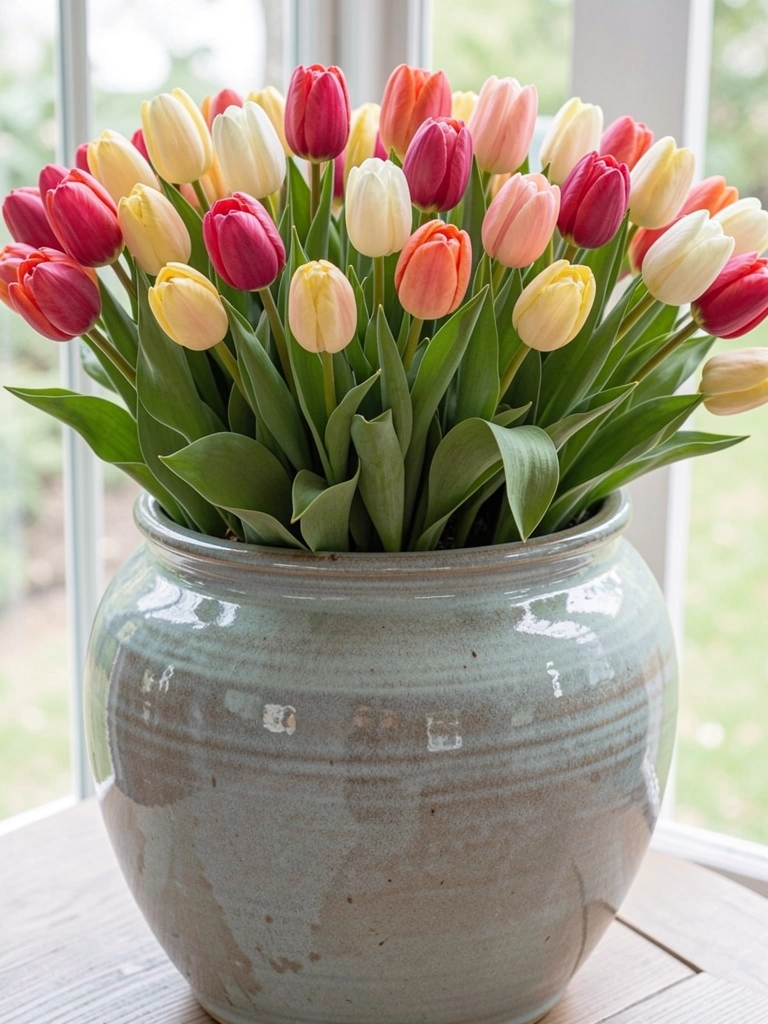
I keep one large pot on my entry table and rotate bulbs: tulips in spring, dahlias in summer. I made the mistake of leaving the same bulbs and they tired out — rotation keeps the look fresh.
A single statement pot is easy to update and anchors a room. You get impact without committing every corner to flowers.
What You’ll Need for This Look
- Large statement planter (12–18 inch)
- Seasonal bulbs (tulips, dahlias)
- Bulb compost and stakes if needed
- Decorative mulch or moss
Final Thoughts
You don’t need to try every idea. Pick one or two that fit your light and time.
I’ve found small, steady wins beat dramatic makeovers.
Start simple, learn from a few mistakes, and enjoy the blooms you really use.