14 Backyard Fire Pit Landscaping Ideas For A Stunning Yard
I planted my first fire pit in a small, scrappy patch and learned fast what worked and what didn’t.
A fire pit changes how you use the yard at dusk. It pulls people in and hides a lot of messy borders.
These ideas are practical, cheap when they need to be, and honest about the mistakes I made so you don’t repeat them.
14 Backyard Fire Pit Landscaping Ideas For A Stunning Yard
These 14 ideas show real ways I’ve framed a fire pit — from gravel rings to built-in benches.
They’re hands-on and easy to adapt.
You’ll find planting mixes, materials, and buying cues for each look.
1. Crushed Gravel Circle with Low Native Grasses

I used crushed gravel because my soil drains poorly. It stopped the mud and kept the pit level through wet months.
The low native grasses (blue fescue, little bluestem) hide the edge without blocking the view or catching sparks.
I learned to taper the gravel away from the fire pit to avoid water pooling — I originally packed it flat and had puddles.
Keep the planting narrow and use a compact spark screen if the grass gets too close.
What You’ll Need for This Look
- Crushed gravel (3/8 inch, gray)
- Steel edge restraint (4-inch)
- Blue fescue clumps (3–5 inch pots)
- Little bluestem plugs
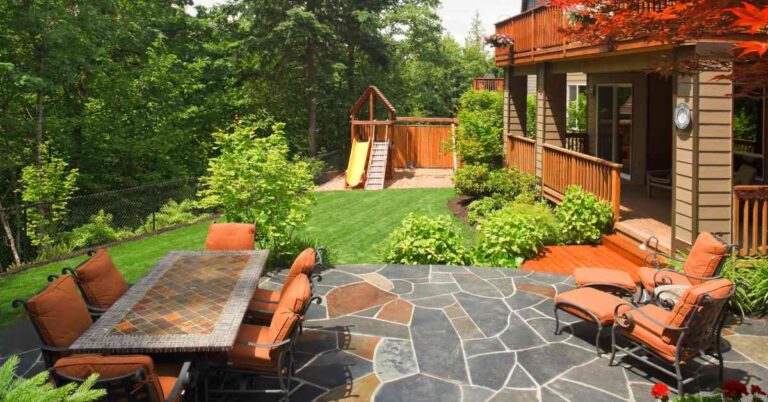
2. Flagstone Pad with Cottage Perennials

I laid irregular flagstones and planted cottage perennials in the gaps and margins. It softened the hardscape and smelled nice in summer.
Nightlight hits the stone differently than mulch — it reads warm and lived-in.
Watch spacing: my first layout crowded the stones and made weeds worse. Give plants room to settle.
I add a handful of decomposed granite between stones to anchor them and reduce weeds.
What You’ll Need for This Look
- Irregular flagstone pavers (natural beige)
- Decomposed granite (fine)
- Salvia and catmint (1-gallon)
- Climbing or drift roses (optional)
3. Built-In Bench with Tender Shrubs Behind
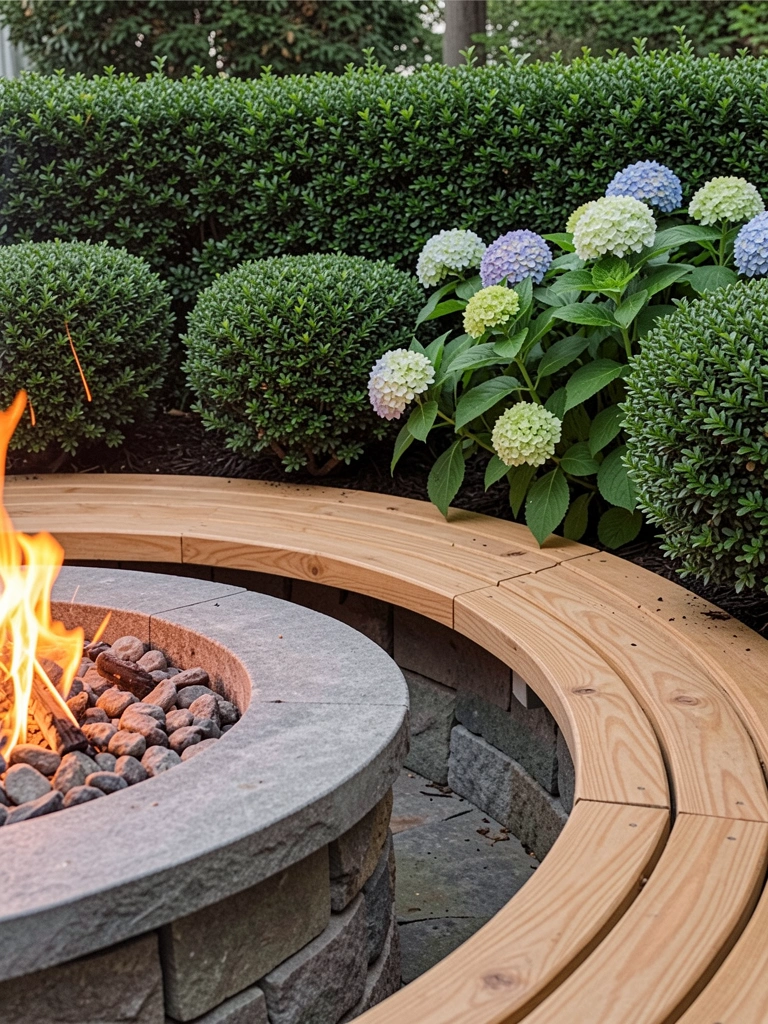
I built a curved bench from cedar and planted dwarf shrubs behind it for year-round structure. It makes the fire pit feel like a room.
The shrubs give a green backdrop that holds light and hides a tired fence.
I once planted shrubs too close; they outgrew the bench and needed heavy pruning. Leave at least 3 feet behind seating.
Choose slow-growing varieties and mulch well to keep roots cool.
What You’ll Need for This Look
- Cedar lumber bench kit (curved, 6–8 ft)
- Boxwood or dwarf hydrangea (3–5 gallon)
- Hardwood mulch (2–3 inch)
- Exterior wood oil (natural finish)
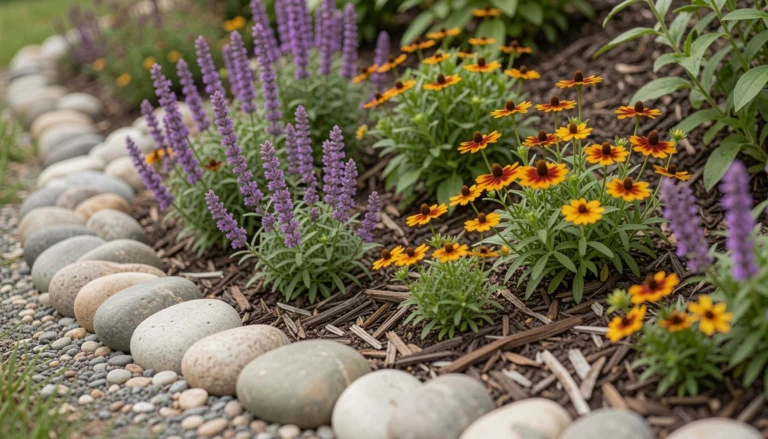
4. Pebble Beach with Coastal Plants

I switched to pea gravel and coastal plants on a hot, sunny slope. It reduced weeds and looks tidy without much care.
Silver foliage and small, drought-tolerant flowers read light against the pebbles and don’t compete with the fire’s glow.
Pea gravel shifts underfoot, so I compacted a base and edged it — I learned this after a few anxious pavers sliding out of place.
Use plants that handle reflected heat and minimal water.
What You’ll Need for This Look
- Pea gravel (3/8 inch, white)
- Landscape fabric (heavy-duty)
- Santolina or lavender (1–3 gallon)
- Steel edge (low profile)
5. Wildflower Meadow Edge for a Soft Border

I let a strip of wildflowers run up to the fire pit edge. It reads informal and keeps maintenance low.
By late summer the mix is full of color and pollinators — it’s noisy in the best way.
I did seed too heavily one year and had leggy plants; now I thin young seedlings for air and longevity.
Pick a local wildflower mix and mow a narrow path to keep it usable at night.
What You’ll Need for This Look
- Wildflower seed mix (local/native)
- Coneflower and poppy plugs (optional)
- Hand pruners for thinning
- Narrow mulch path material (wood chips)
6. Formal Stone Pavilion with Climbing Vines
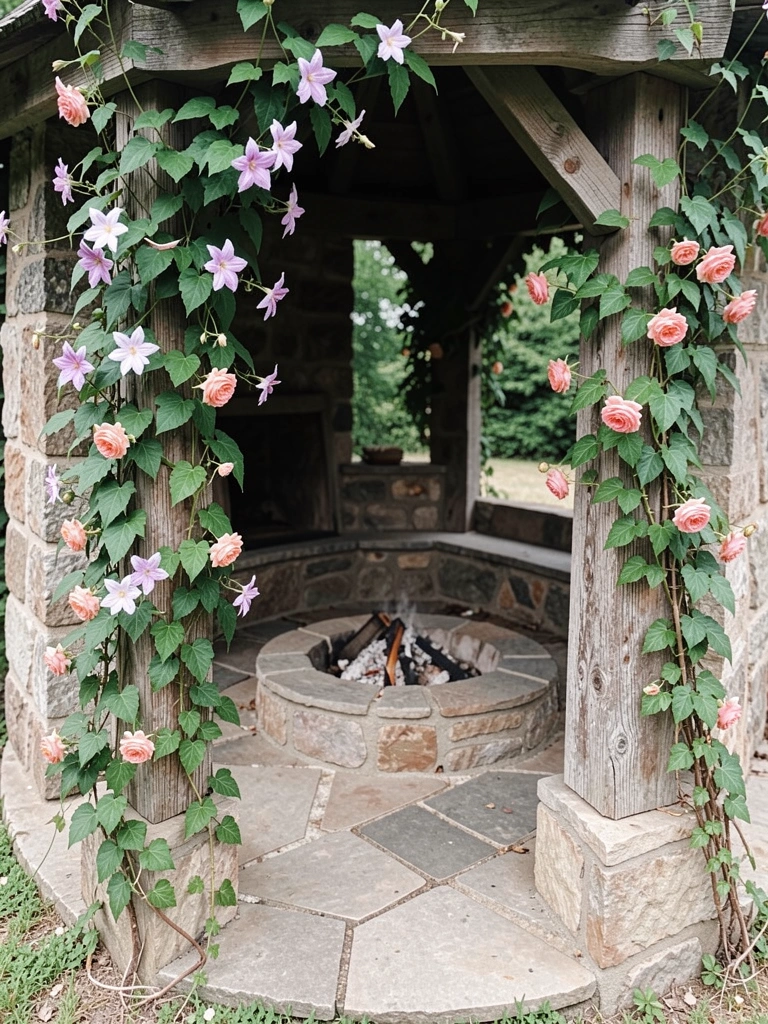
I built a simple stone pavilion over a slab and trained clematis and climbing roses up the posts. It gives height and an intimate canopy.
The shade in late afternoon turns the area into a cool, book-friendly nook.
The mistake I made was choosing too vigorous roses — they competed with the clematis. I now match growth rates.
Use breathable mortar and allow space for vines to mature away from the fire’s heat.
What You’ll Need for This Look
- Small flagstone slab or pavers
- Timber posts with vine supports
- Clematis and climbing rose (3–5 gallon)
- Stone or mortar for footings
7. Mixed Planter Ring That Hides the Base

I grouped terracotta and cement planters around the pit to hide the metal base and add vertical interest. It’s flexible and seasonal.
In winter I swap in evergreen pots for structure. It looks deliberate even when the garden is tired.
I once chose pots that were too light and they blew over; weight matters near flames and wind. Use larger, heavier pots or secure them.
Plant a mix of evergreen, seasonal, and edible herbs for scent and function.
What You’ll Need for This Look
- Terracotta and concrete planters (12–18 inch)
- Small evergreen shrubs (boxwood, dwarf spruce)
- Herbs (rosemary, thyme)
- Pot stabilizers or gravel for weight
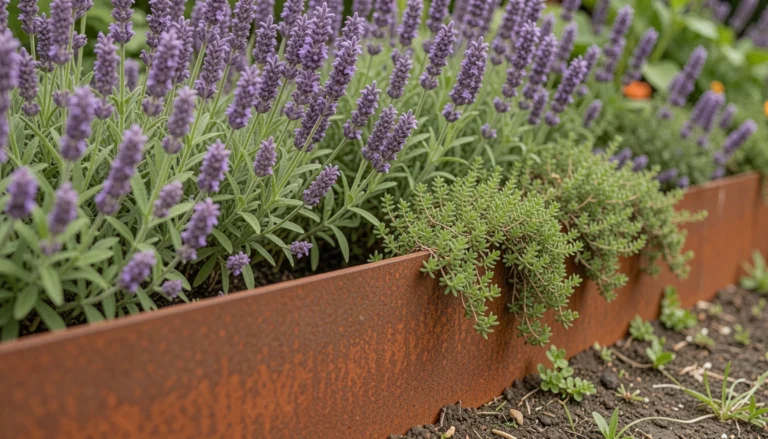
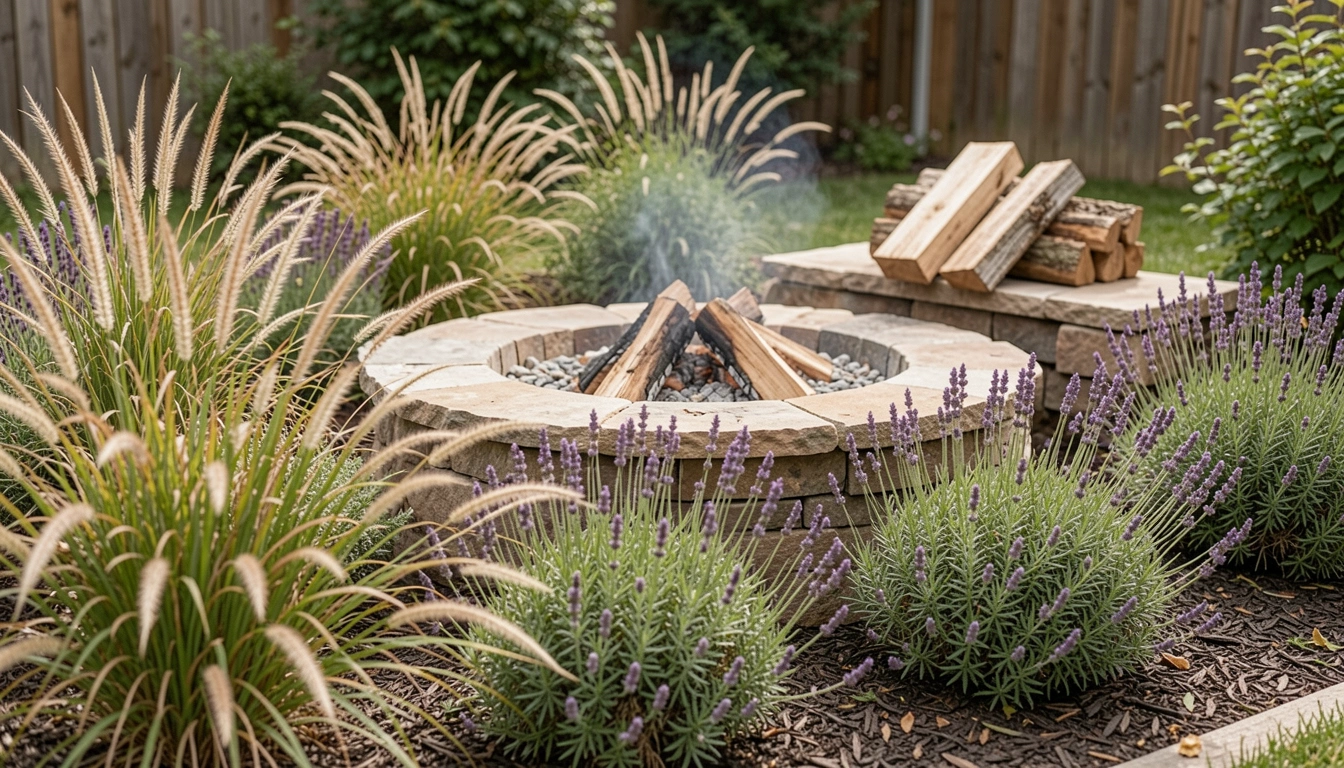
8. Minimalist Steel Ring with Architectural Grasses

My modern patch uses a corten steel ring with tall fountain grass as a backdrop. It’s simple but feels intentional.
The rusted color warms the palette and the grasses move in the evening breeze.
Keep the grasses trimmed; mine flopped into the seating area the first season and needed cutting back.
Position the grass at least 4 feet away for safety and to keep silhouettes clear.
What You’ll Need for This Look
- Corten steel fire ring (24–36 inch)
- Fountain grass or miscanthus (5–7 gallon)
- Dark mulch (black or brown)
- Long-handled spark screen
9. Reclaimed Brick Circle with Scented Borders
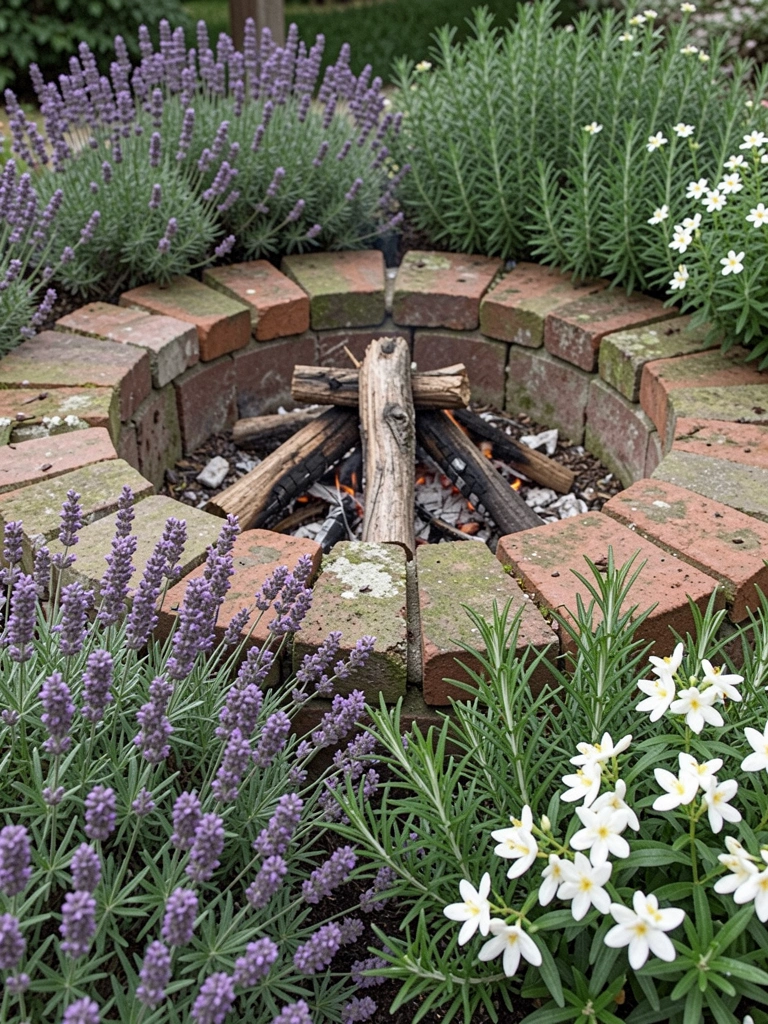
I used reclaimed bricks for a cozy, worn-in circle and planted scented herbs and jasmine at the edge. It smells like daytime evenings.
The bricks are forgiving to walk on and soak up heat nicely.
I underestimated how much jasmine spreads and ended up cutting runners back hard the first year. Now I keep it trained.
This layout is great when you want scent and texture close to where people sit.
What You’ll Need for This Look
- Reclaimed bricks (mixed sizes)
- Lavender, rosemary, jasmine (1–3 gallon)
- Sand for jointing
- Small hand rake
10. Tiered Seating with Evergreen Screens

I built two low timber tiers as seating and planted evergreen screens behind for privacy and wind protection. It makes the pit feel private without walls.
The tiers double as storage for firewood and are easier on knees than low chairs.
I made the benches too shallow on my first build; they weren’t comfortable. Deeper treads fixed that.
Choose true evergreen varieties and stagger planting for immediate coverage.
What You’ll Need for This Look
- Treated timber for bench treads (2×8)
- Evergreen screens (yew, holly, arborvitae)
- Gravel base for drainage
- Outdoor storage box (small) for kindling
11. Meadow Stepping Stones with Rock Mulch
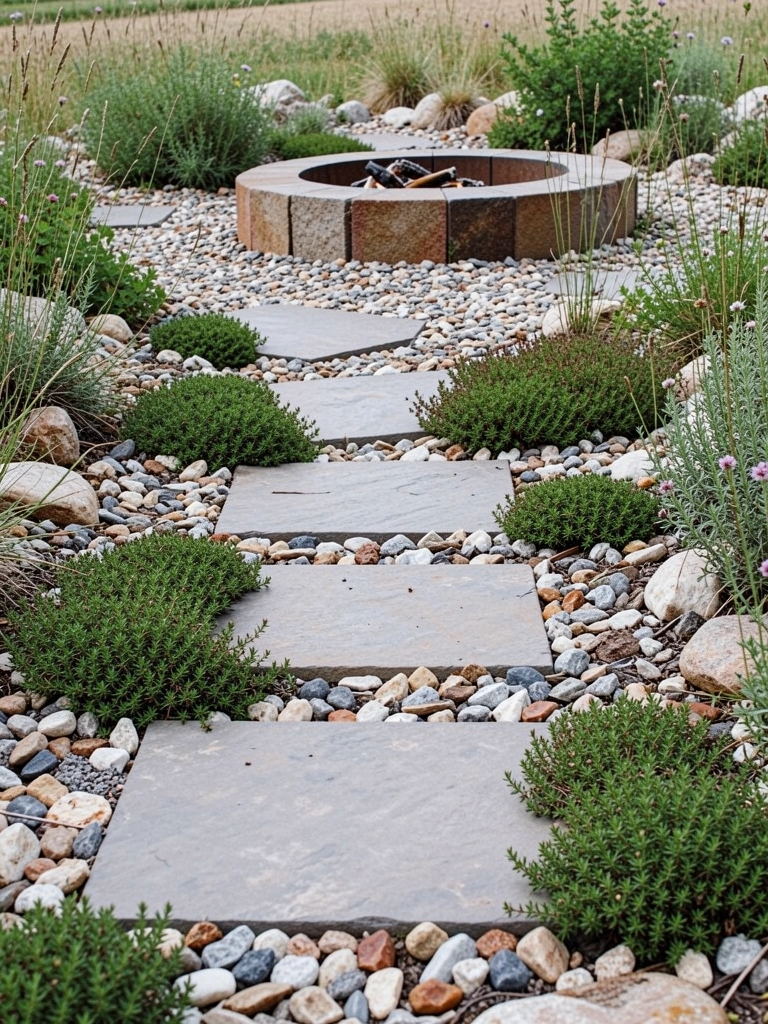
I laid stepping stones through a low meadow of thyme and chamomile toward the pit. It’s soft underfoot and smells like summer.
Rock mulch looks tidy and drops maintenance compared with bark in my full-sun spot.
I did over-plant the groundcover at first; it strangled the stones, so I space them with intention now.
This is great where you want a relaxed approach to paths and tactile planting underfoot.
What You’ll Need for This Look
- Flat stepping stones (12–18 inch)
- Rock mulch (small, mixed color)
- Creeping thyme or chamomile (plugs)
- Hand trowel for spacing
12. Fire Pit on a Sloped Terrace with Retaining Plantings
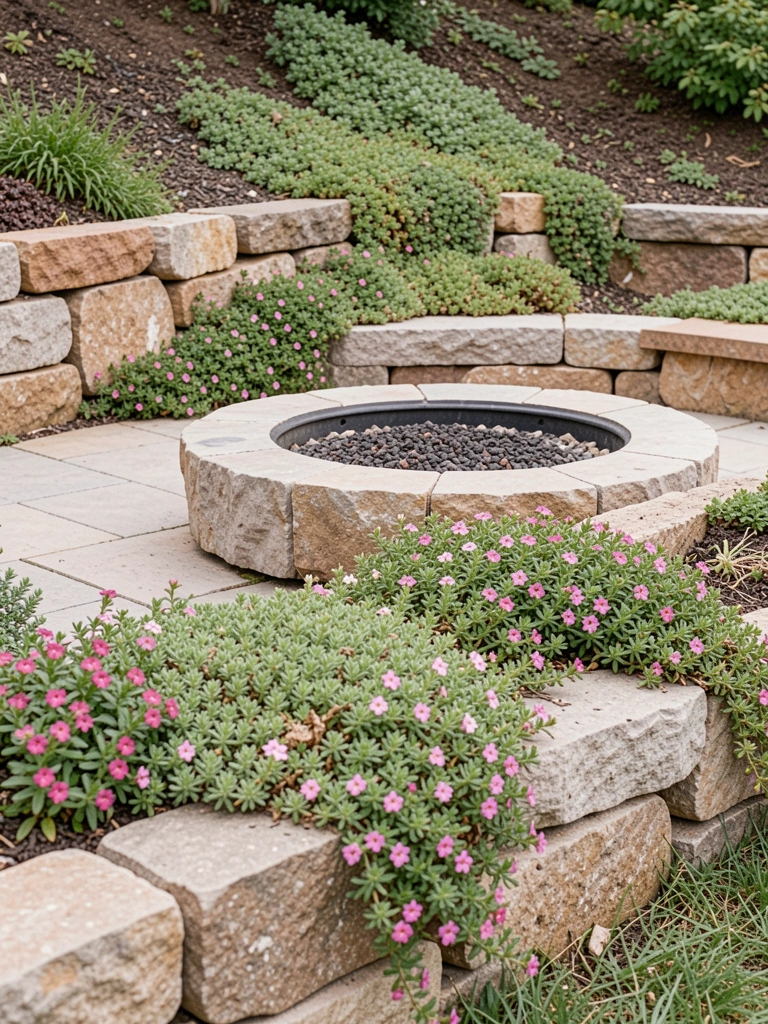
I carved a flat terrace on a slope and used low retaining walls and trailing plants to blend it into the hill. It made use of awkward grade.
Trailing sedums and phlox spill over the wall and soften edges in spring.
My first wall was too smooth and I lost soil; now I roughen the backfill and weave in roots to stabilize.
Terraced fire pits need good drainage — don’t skip weep holes or gravel backfill.
What You’ll Need for This Look
- Natural stone for low retaining wall
- Sedum and creeping phlox (1–3 inch plugs)
- Landscape fabric and gravel backfill
- Hand tamper for compacting
13. Small Urban Patio with Potted Trees
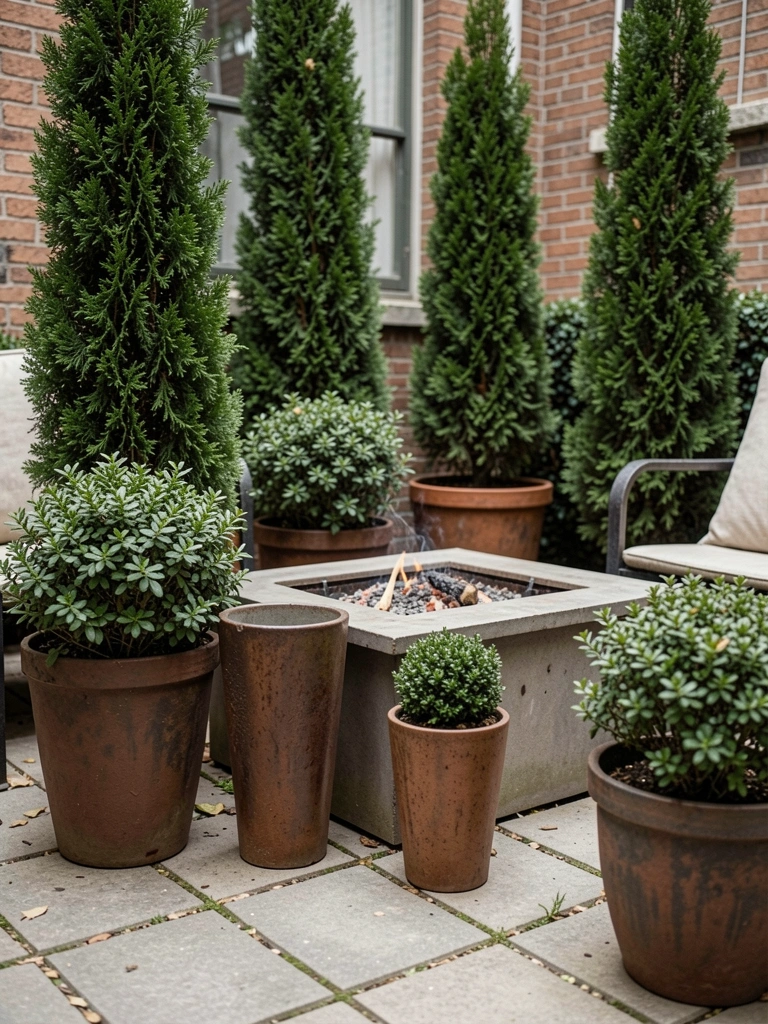
On a tiny patio I used tall pots with narrow trees to create height without roots. It reads like a small courtyard even in a townhouse.
The verticals frame the pit and make the space feel tucked and private.
I learned pot choice matters — cheap plastic cracked in winter. I now use frost-resistant planters.
Pick narrow, columnar trees and pair with low seat cushions that tuck away.
What You’ll Need for This Look
- Frost-proof planters (16–20 inch)
- Columnar trees (Italian cypress or columnar juniper)
- Compact patio fire pit (propane or small wood-burning)
- Outdoor cushions (weather-resistant)
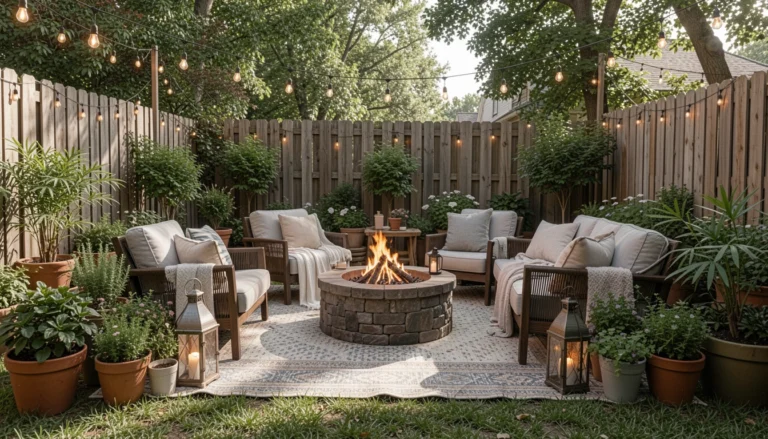
14. Fire Pit Under a String-Light Canopy with Mixed Groundcover
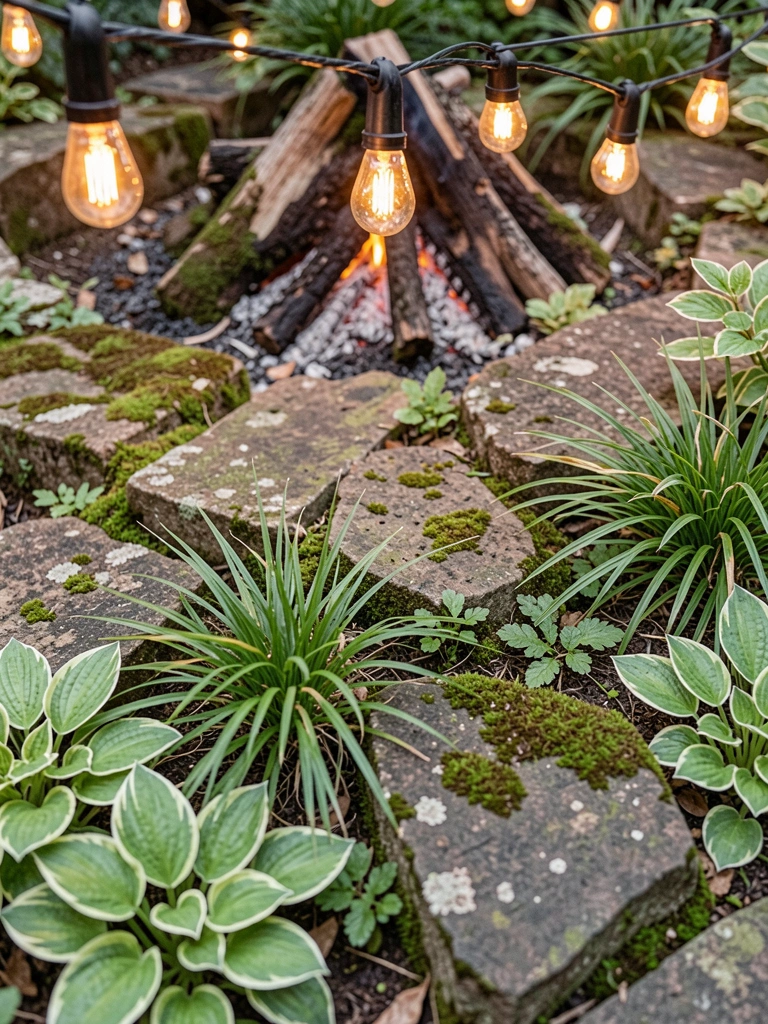
I hung string lights above a mixed groundcover patch to make the area usable after dark and cozy without loud fixtures. The lights bounce off leaves nicely.
Using mossy stone and sedge together creates a soft floor that reads natural, not designed.
I once hung lights too low and they caught on taller plants — I raise them and angle the cords now.
This is low-cost and very forgiving in mixed light conditions.
What You’ll Need for This Look
- Outdoor string lights (warm white, shatterproof)
- Mossy stone pavers or slabs
- Sedge and hosta plugs (shade tolerant)
- Weatherproof hooks and cable ties
Final Thoughts
You don’t need to do all of these. Pick one that fits your yard, budget, and the plants your local climate prefers.
I started small and added features as I learned what the space actually wanted.
Trust the site, lean on simple materials, and enjoy the slow fix of a good fire circle.