14 Rock Garden Ideas for Small Spaces That Feel Bigger and More Beautiful
I ruined a few plans before I learned what works in tight spaces.
I kept things small, honest, and practical. I liked texture more than fancy plants.
These ideas are ones I’ve lived with—some failed at first, most grew into steady corners.
14 Rock Garden Ideas for Small Spaces That Feel Bigger and More Beautiful
These 14 ideas are practical and budget-minded. Each one shows how to use rocks, pots, and plants to open a tiny spot. Expect clear, usable tips and a shopping note with each idea.
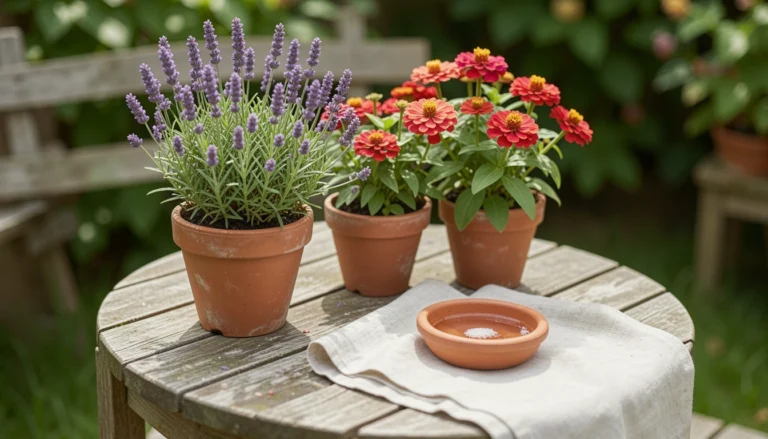
1. Layered Container Rock Garden That Makes a Patio Feel Full
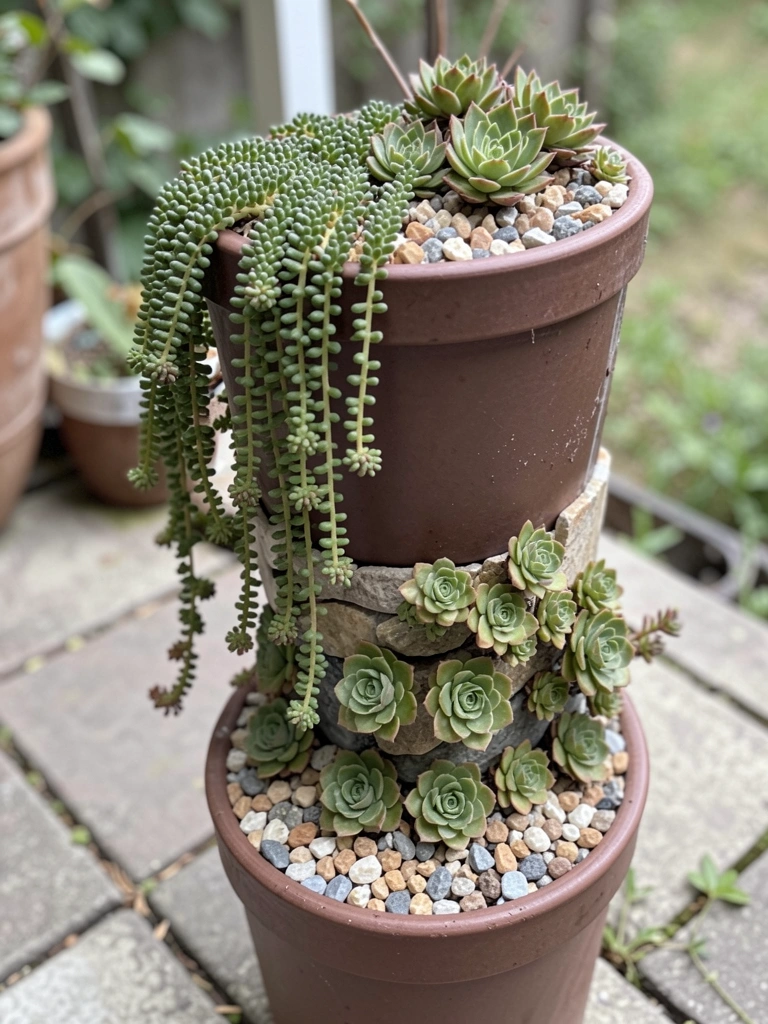
I planted a stack of three containers the wrong way once—too deep, too wet. After I fixed drainage and layered gravel, the containers looked like a tiny slope.
It reads as more depth than a single pot. The tall piece gives height, the middle shows texture, and the gravel ties them together.
I watch people lean into the grouping and stay. Don’t overplant the top; a few sculptural rosettes work better than crowded trays.
What You’ll Need for This Look
- Terracotta planter trio (6", 10", 14")
- Pack of coarse drainage gravel, light gray
- Succulent mix (sempervivum, sedum)
- Potting mix for cacti and succulents
2. Trough Crevice Garden with Alpine Pockets
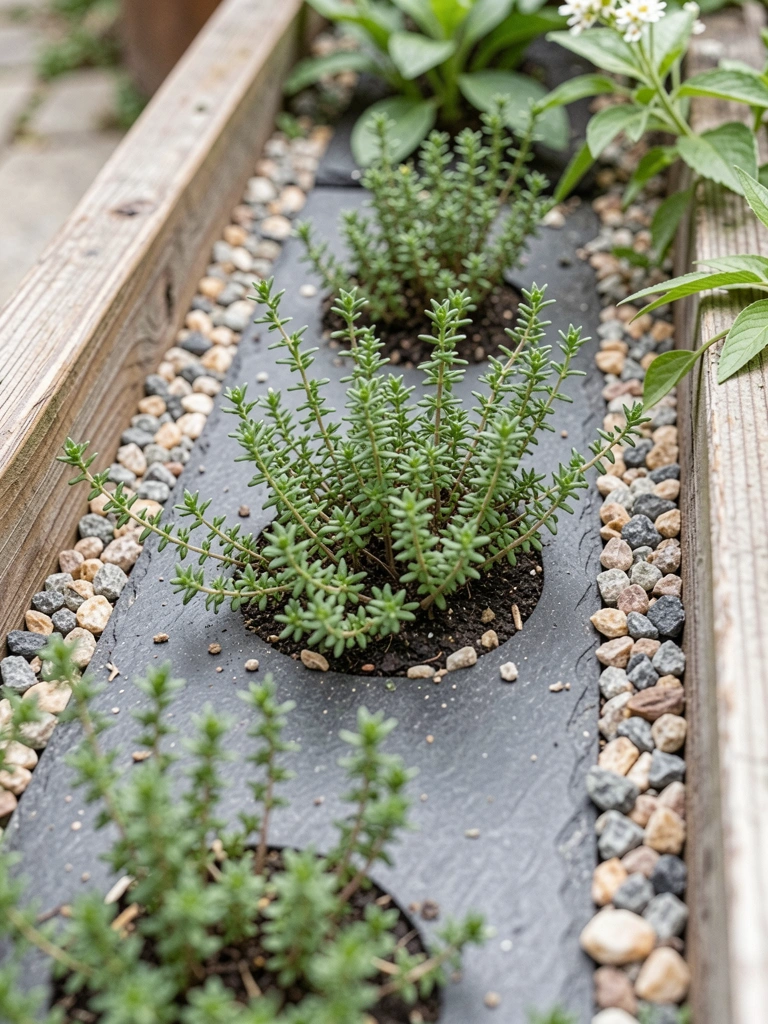
I made a crevice garden in an old trough and at first I used too-fine soil. Plants sat wet and sulked. After I opened the pockets and added grit, the alpine plants rooted like champs.
The thin gaps force plants to spread horizontally. It amplifies scale; a small trough looks like a cliff edge.
Pay attention to soil depth and drainage in each pocket. Shallow pockets favor tiny, slow growers.
What You’ll Need for This Look
- Galvanized trough planter (36" x 8")
- Slate slabs or flat flagstone for crevices
- Gritty alpine compost, 50/50
- Alpine plant mix (saxifrage, sedum, thyme)
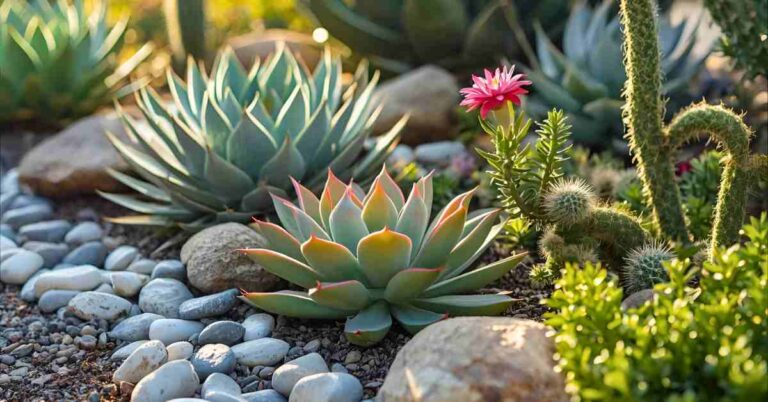
3. Gravel-Scree Bed for a Natural, Low-Maintenance Feel
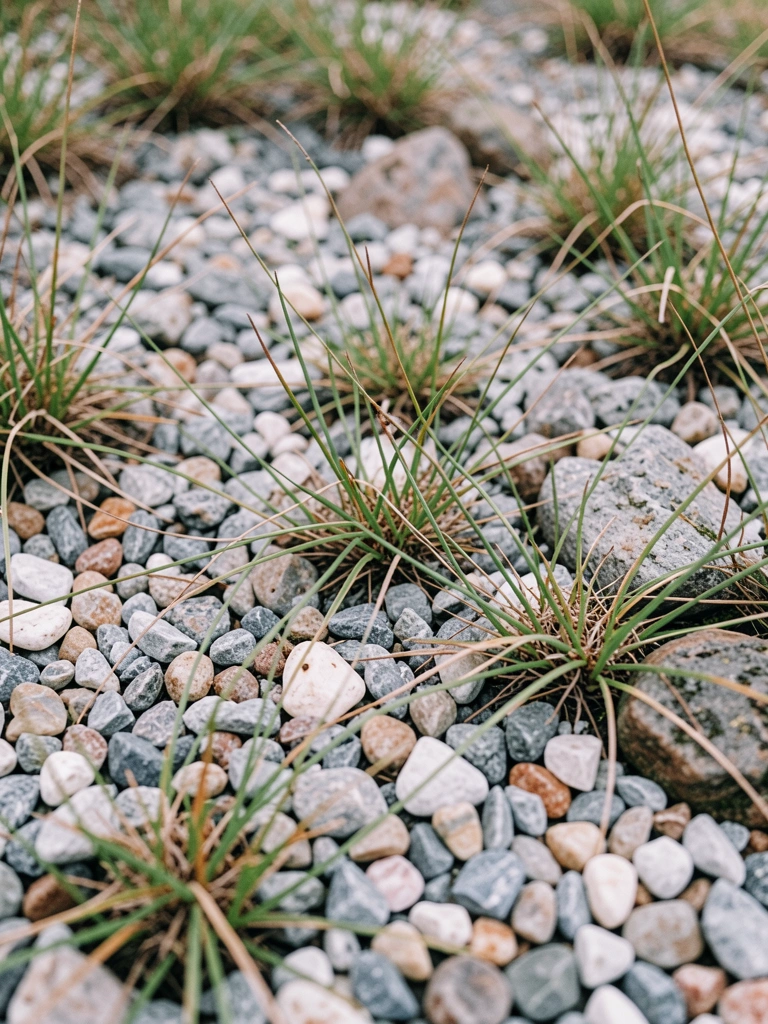
I swapped a thirsty border for a scree bed after losing too many plants to rot. The gravel holds warmth and keeps plants honest.
Visually it makes the plot read larger. The eye follows the grain of stones, and little boulders act like punctuation.
I learned to mix stone sizes; uniform pebbles look flat. Add small boulders and scattered plantings to mimic a real slope.
What You’ll Need for This Look
- Pea gravel, mixed sizes (1/4" to 1")
- Few small boulders (8–12" diameter)
- Drought-tolerant grasses and sedum
- Coarse sand for soil mixing
4. Vertical Succulent Wall on a Narrow Balcony
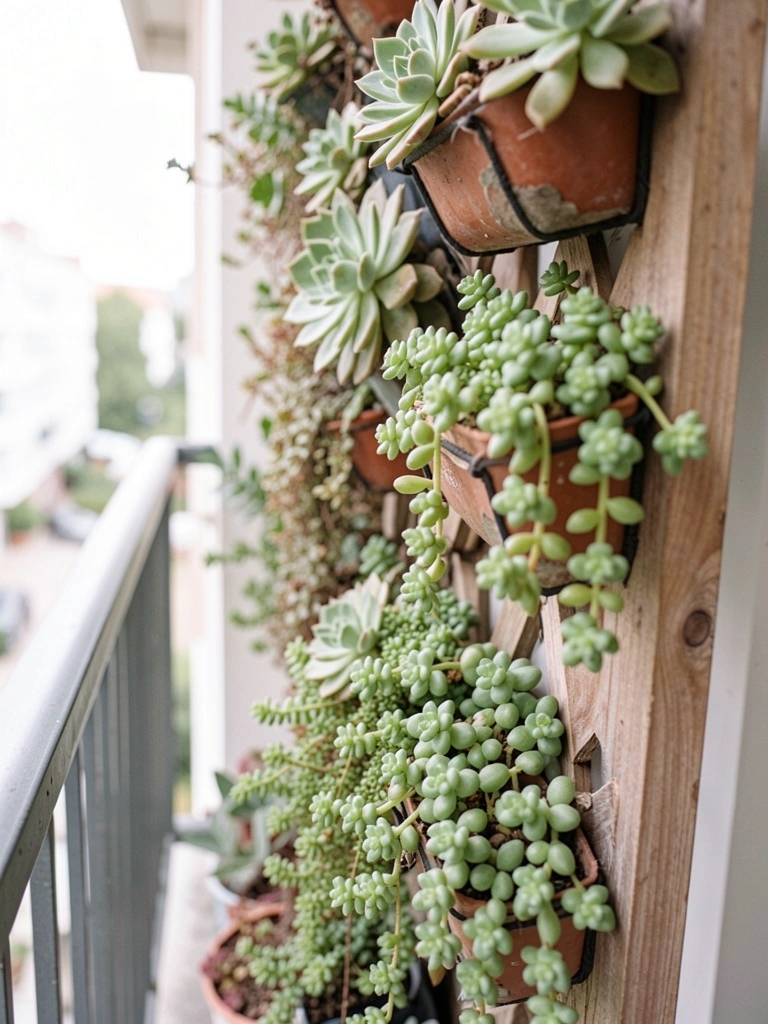
I started with too-deep pockets and lost soil faster than I could refill them. After switching to shallow, well-draining pockets, the wall settled and needed little water.
A vertical face gives height without taking floor space. Light plants against stone create layered texture that reads bigger.
Mount securely and choose sun-tolerant succulents if your balcony gets heat. Otherwise mix small ferns for shade.
What You’ll Need for This Look
- Wall-mounted pocket planters (shallow, 4" depth)
- Wooden or metal trellis (narrow)
- Succulent starter pack (echeveria, crassula)
- Cactus mix potting soil
5. Japanese-Inspired Mini Rock Garden with Moss and Stone Lantern
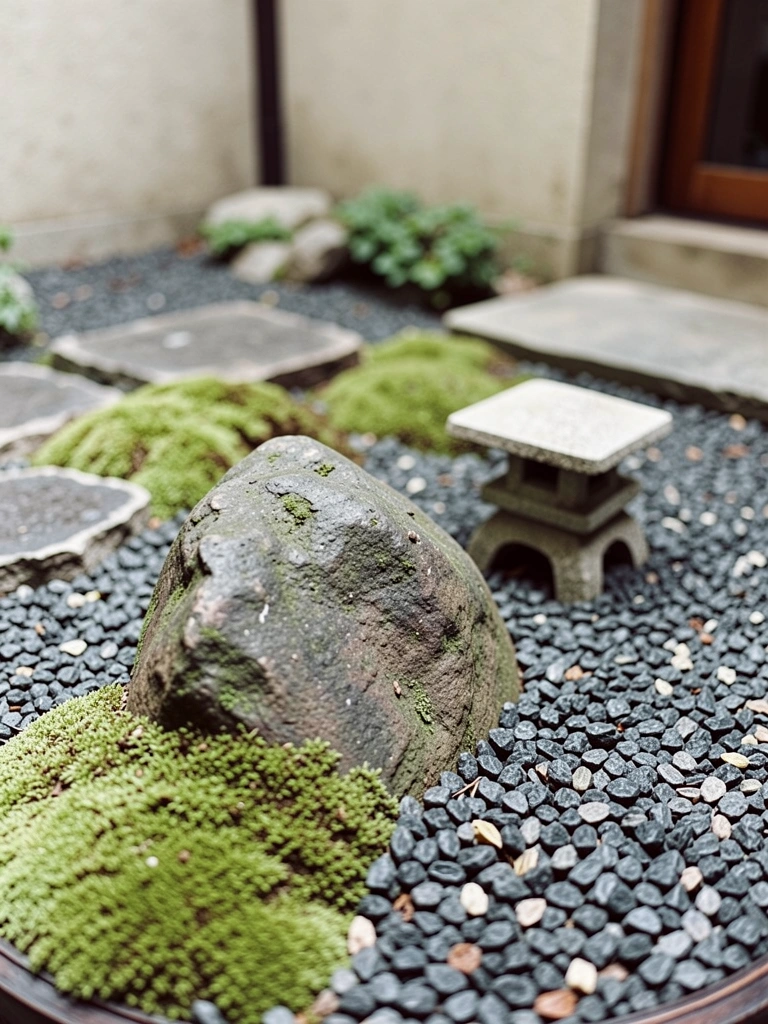
I tried a strict raked pattern once and it looked forced. I loosened the lines, added moss, and the corner relaxed into something calm.
The contrast of dark gravel, pale stones, and velvety moss pulls the eye and makes space feel intentional and calm.
Keep planting minimal. I misplaced a large shrub here once; it overwhelmed the stones. Stick to small-scale plants and a single lantern or focal boulder.
What You’ll Need for This Look
- Dark raked gravel (black or charcoal)
- Medium focal rock (12–18")
- Sheet moss or moss plugs
- Small stone lantern or ceramic accent
6. Pebble Mosaic Path to Lengthen a Tiny Yard
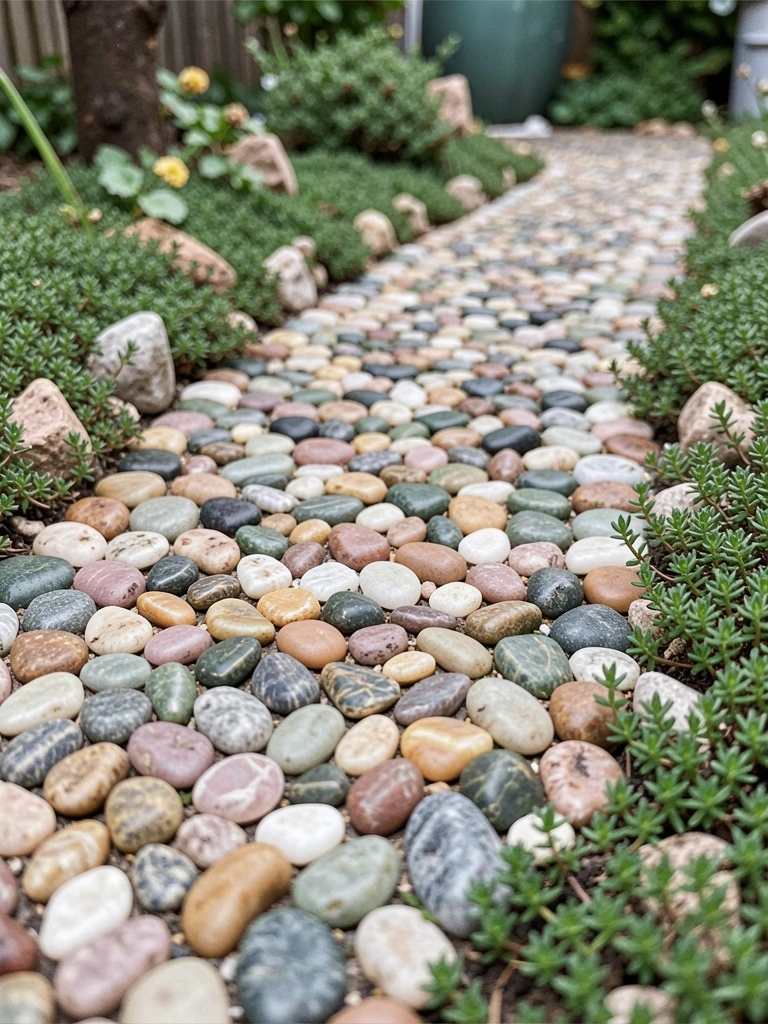
I laid a pebble path in front of a narrow bed and it immediately made the plot feel longer. The path’s pattern draws the eye forward.
It’s not fancy—simple curves and a central band do the job. Low groundcover planted along the edges softens the stones and ties the path to plantings.
Be prepared for a bit of weeding at first. Edge firmly so the pebbles don’t migrate.
What You’ll Need for This Look
- Assorted pebbles (1/2"–1")
- Landscape fabric and sand base
- Low-growing thyme or sedum for edges
- Metal or stone edging strips
7. Raised Cedar Rock Planter to Add Height and Texture
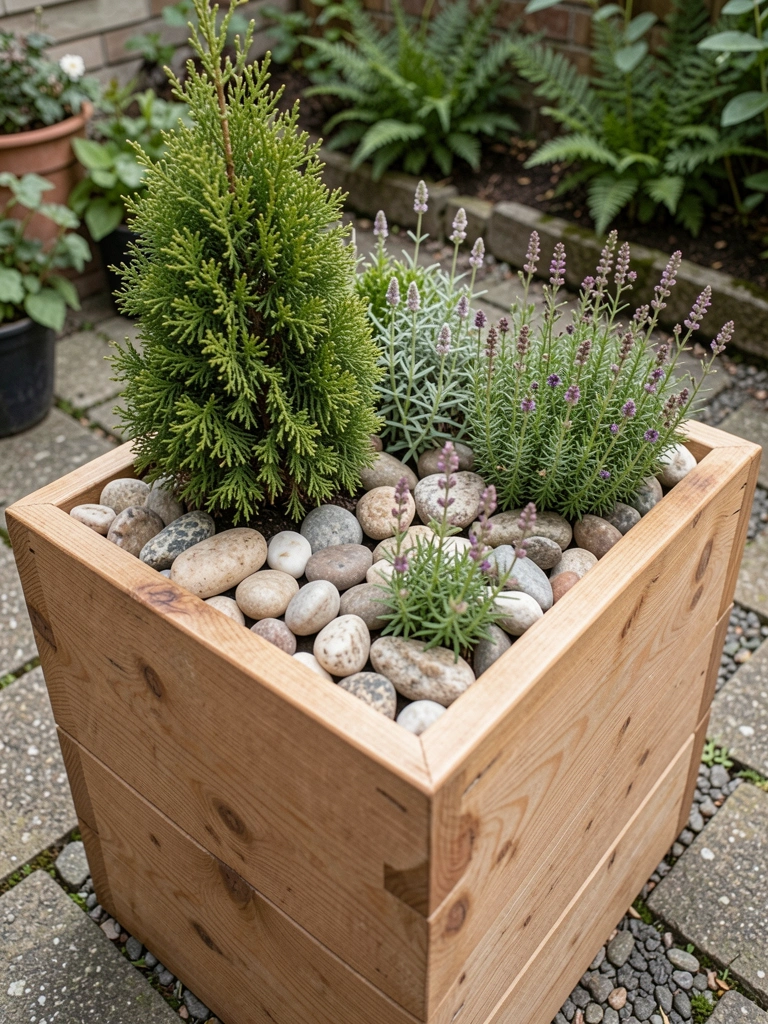
I built a cedar box for a sunny corner and planted a mix of small conifers and rock-loving perennials. The planter lifts everything to eye level, so even a tiny planting feels important.
Cedar weathers well and adds warm color against gray stones. Raised beds also improve drainage for alpine plants.
I made mine too shallow at first; redoing the base taught me to add at least 12–14" of soil.
What You’ll Need for This Look
- Cedar raised bed kit (2' x 3', 14" depth)
- River rocks for topdressing
- Dwarf conifers, rock perennials
- Well-draining potting mix
8. Mini Terraced Steps with Flat Stones for a Sloped Pocket
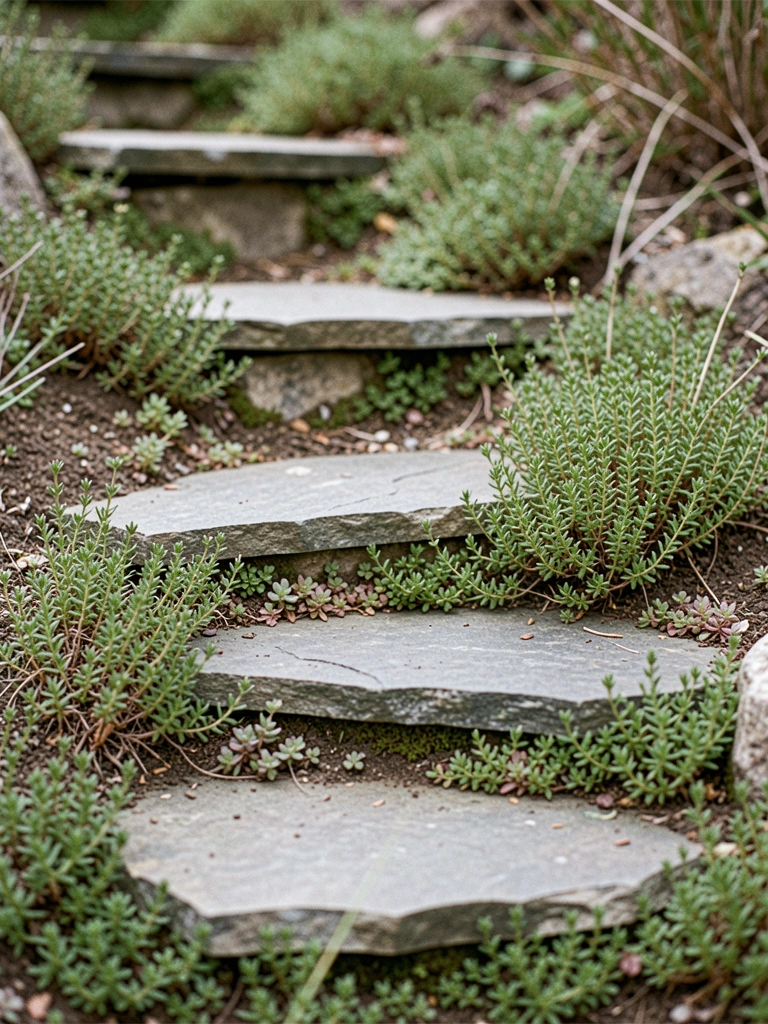
I had a tiny slope that slid every season. Building small terraces with flat stones stopped the erosion and added usable planting pockets.
Each step becomes its own stage. Planting low thyme between the stones softens edges and scents the air when stepped on.
Watch how water flows; terraces need slight setbacks and good backfill. I misjudged the first terrace and had to rebuild one side.
What You’ll Need for This Look
- Flat flagstone (12"–18")
- Trail mix soil and coarse sand for backfill
- Low thyme, sedum, creeping phlox
- Small hand tamper and landscape fabric
9. Recycled Sink or Trough Rock Garden for a Tiny Porch
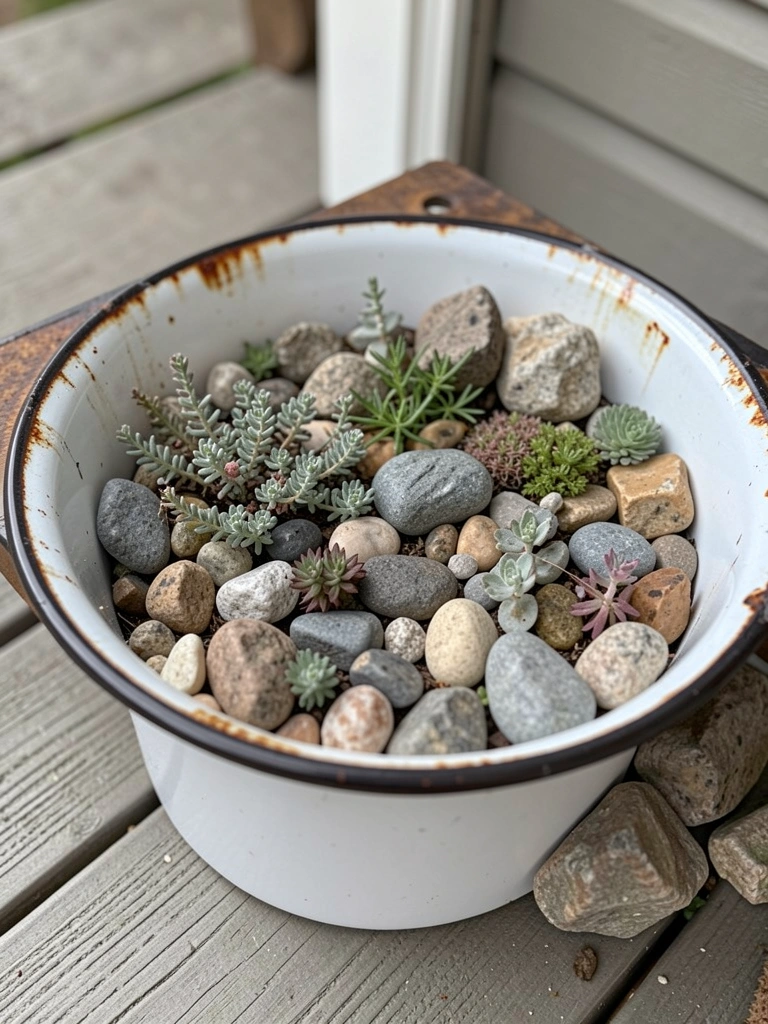
I salvaged an old sink and crammed it with plants. At first I overplanted and the trough looked messy. After thinning, it read like a miniature cliffside.
The enamel edge frames the planting and tells a story. It’s portable and fits on a step or bench, instantly adding character.
Choose plants that stay small and provide contrast—tiny grasses, alpines, and a few rosettes.
What You’ll Need for This Look
- Recycled enamel sink or metal trough (24" length)
- Coarse gravel for drainage
- Small alpines and dwarf grasses
- Cactus/succulent potting soil
10. Rock-Lined Path with Pocket Planting for Visual Flow
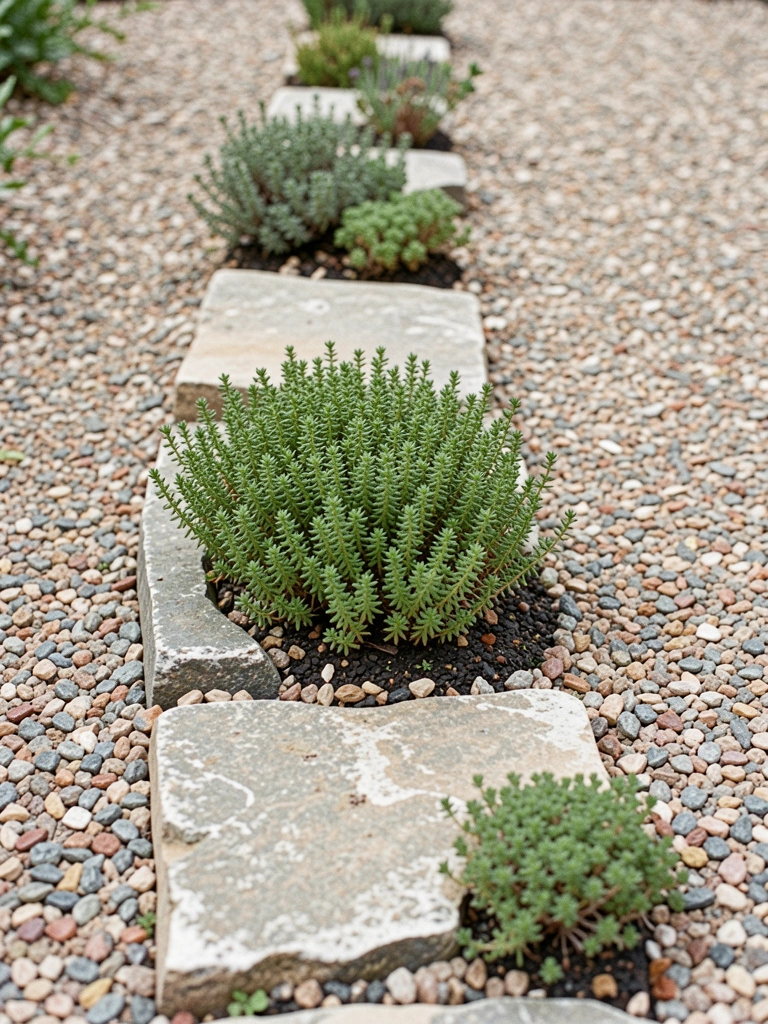
A narrow path bordered by stones changed how the whole yard felt. The edging gives definition and the tiny pockets with plants make it look deliberate.
I planted the pockets unevenly—some denser than others—and it felt more natural. The path leads the eye and makes the area seem longer.
Keep stones varied and plant pockets spaced. Too regular and it looks staged.
What You’ll Need for This Look
- Irregular river stones for edging
- Fine gravel for path surface
- Pocket plants (thyme, sedum, dwarf euphorbia)
- Hand trowel and quick-setting sand
11. South-Facing Sun Trap with Hot-Color Succulents
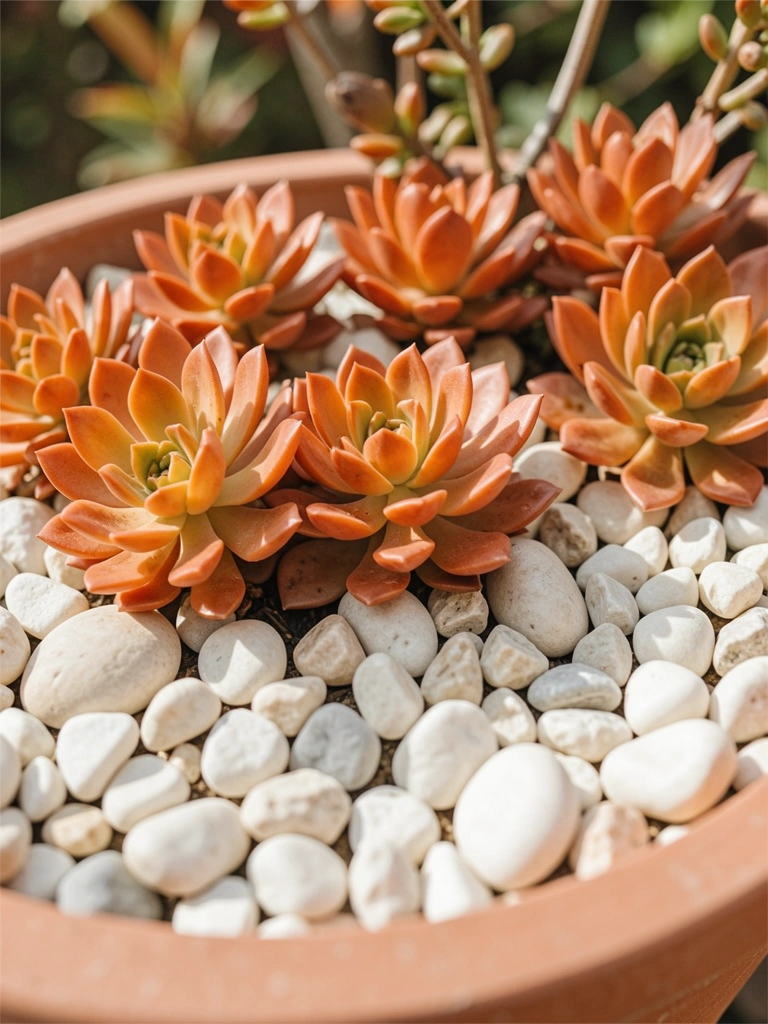
I once planted shade succulents in a hot sunny trough and watched them bleach and split. After swapping to heat-loving, colorful succulents, the container glowed all summer.
A south-facing rock garden becomes a jewel when you lean into warm tones—terracotta pots, red sedums, and pale stones to reflect light.
Use hardy, sun-loving varieties and expect to water more briefly in heat waves.
What You’ll Need for This Look
- Terracotta low planter (12"–18")
- Pale top-dressing gravel
- Sun-loving succulents (red sedum, echeveria)
- Cacti and succulent potting mix
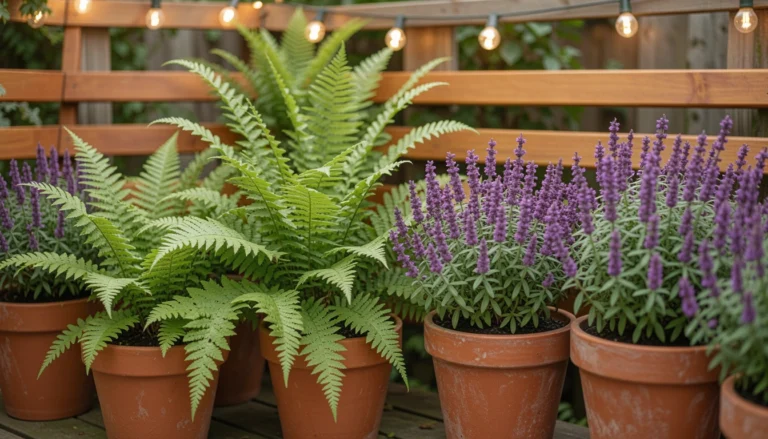
12. Shaded Rock Nook with Ferns, Heuchera, and Moss
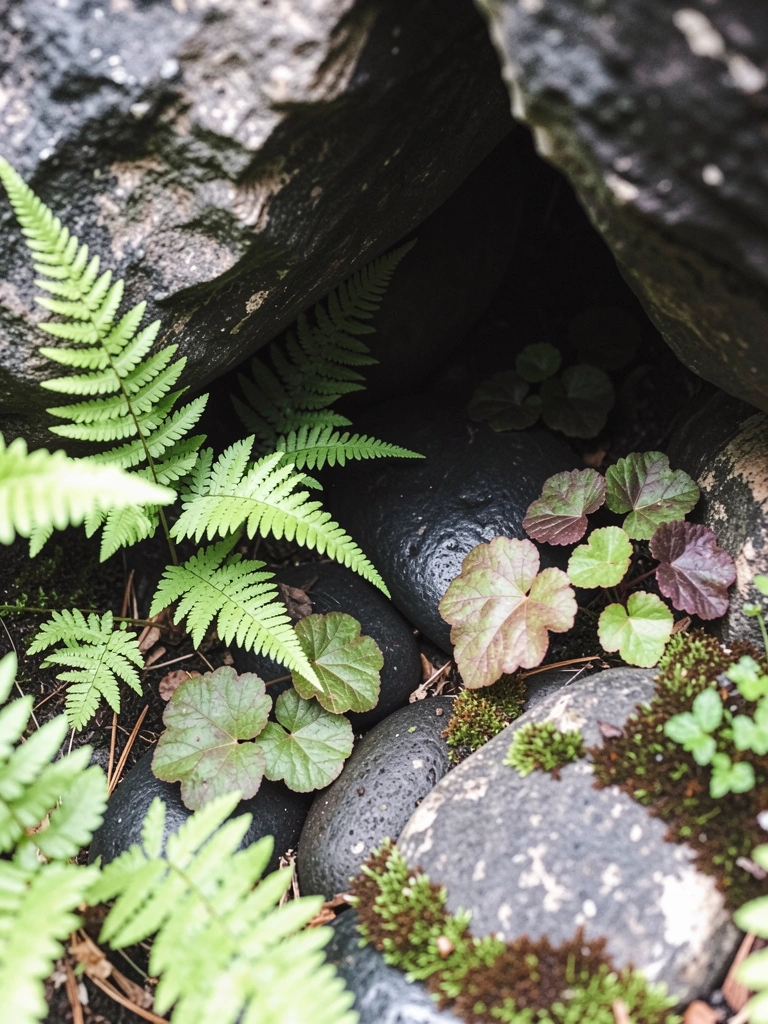
My north-side corner was lifeless until I embraced shade-loving rock plants. Ferns and heuchera against dark stones made a juicy, cool pocket.
Rocks hold humidity and create microclimates. In that corner, moss filled gaps I hadn’t planted, and the effect felt older than my years there.
Keep soil moist and avoid sun-loving species here. I learned that planting too many bloomers left gaps in winter—greens give year-round interest.
What You’ll Need for This Look
- Dark landscaping stones (bluestone or basalt)
- Shade mix soil and compost
- Ferns, heuchera, moss plugs
- Mulch for moisture retention
13. Bulb-and-Sedum Mix for Seasonal Color Without Crowding
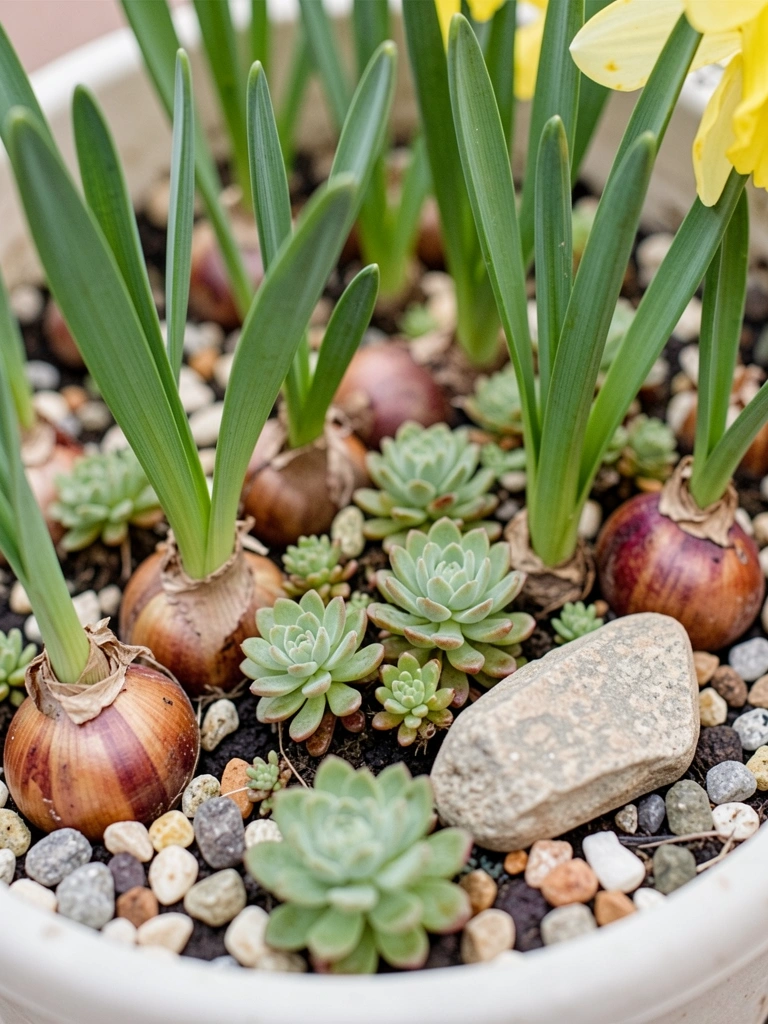
I planted bulbs too densely once and they rotted in soggy fall soil. After raising the bed and mixing sand, the bulbs came back strong with sedums filling the gaps later.
This staggered approach gives you early spring color and late-season structure. The rocks hold form through the seasons.
Plant bulbs deeper than sedum roots and mark where they are so you don’t accidentally remove them in summer.
What You’ll Need for This Look
- Spring bulbs (tulips, daffodils)
- Sedum groundcover (stonecrop)
- Coarse sand for mixing with soil
- Small decorative rocks for structure
14. Single Focal Boulder with Minimal Seating for a Quiet Corner
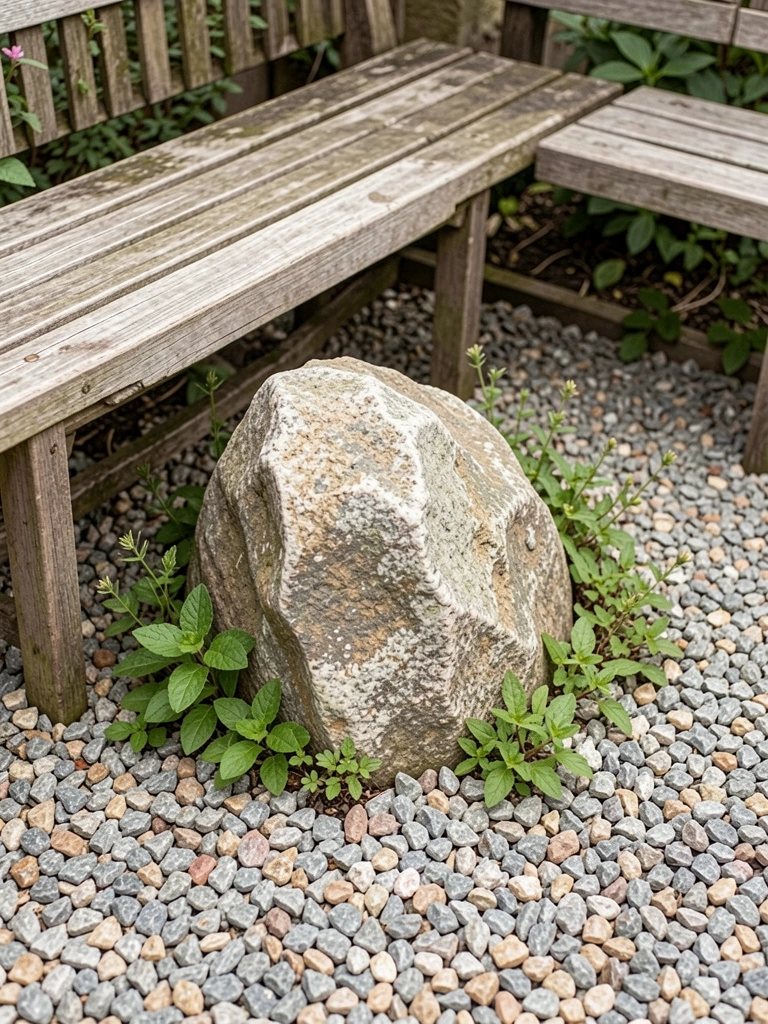
I used to cram features into every inch. When I put in one boulder and a little bench, the spot finally breathed. The boulder anchors the space and the seat invites staying.
This minimal approach makes a small area feel deliberate and larger. Low plantings around the base soften edges, and a single light can make it usable at dusk.
Choose a boulder with character and scale it to your space. Don’t overfill the area; restraint is the point.
What You’ll Need for This Look
- Single focal boulder (24"–36")
- Small wooden bench (2' length)
- Low groundcovers and gravel mulch
- Solar pathway light, warm white
Final Thoughts
Start small and keep one corner to test. A single rock, a trough, or a raised planter will teach you more than a big plan.
You don’t need every idea. Pick one that fits your light and time, and let it grow into the rest.