16 Gorgeous Terrace Flowers Garden Ideas For Year Round Color
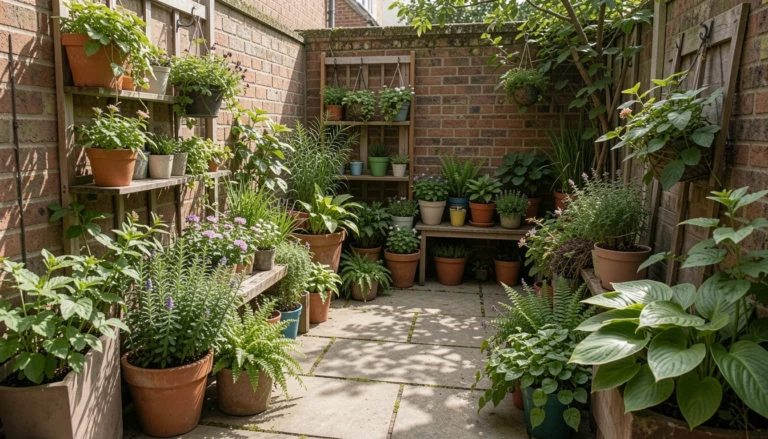
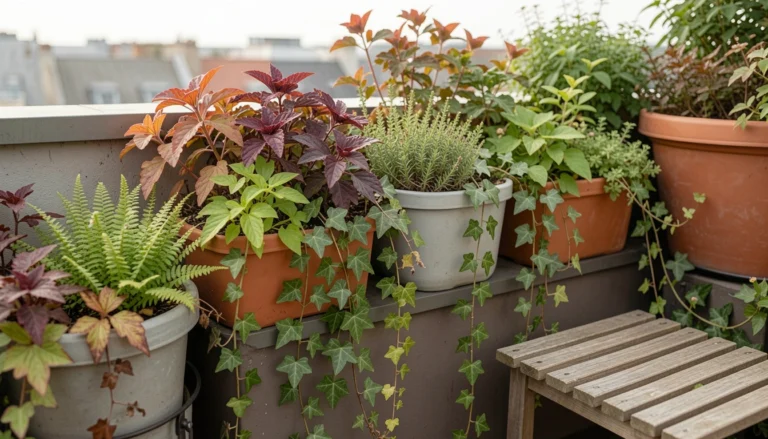
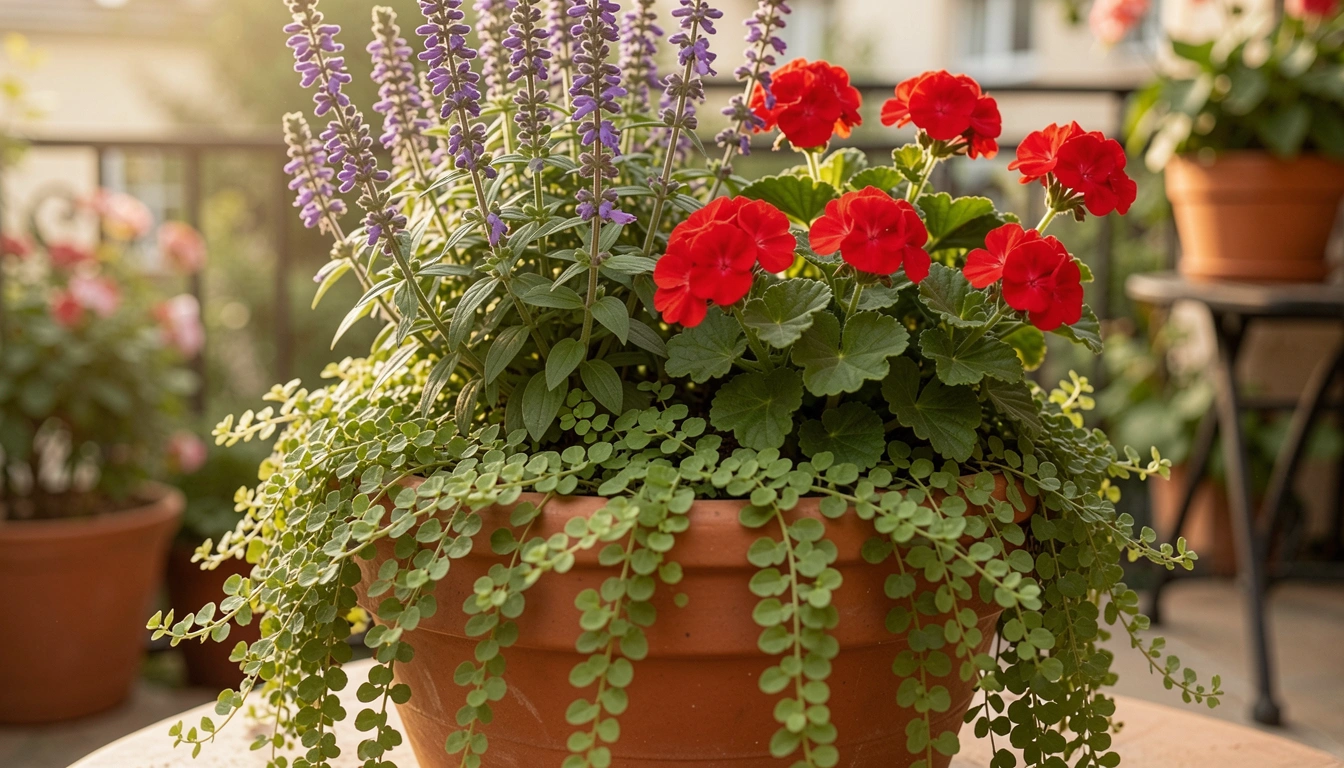
I used to cram single pots everywhere. Then I started layering heights and textures and the terrace finally felt full without looking cluttered.
I plant one tall anchor, a couple midsize bloomers, and a trail plant to soften edges.
This collection gives color from spring through frost on my small terrace.
16 Gorgeous Terrace Flowers Garden Ideas For Year Round Color
These 16 ideas are hands-on, practical, and possible on any terrace.
I include what I planted, what went wrong, and what worked.
You’ll get clear, usable setups—exactly 16 ways to keep color all year.
1. Layered Container Planting That Makes a Patio Feel Full
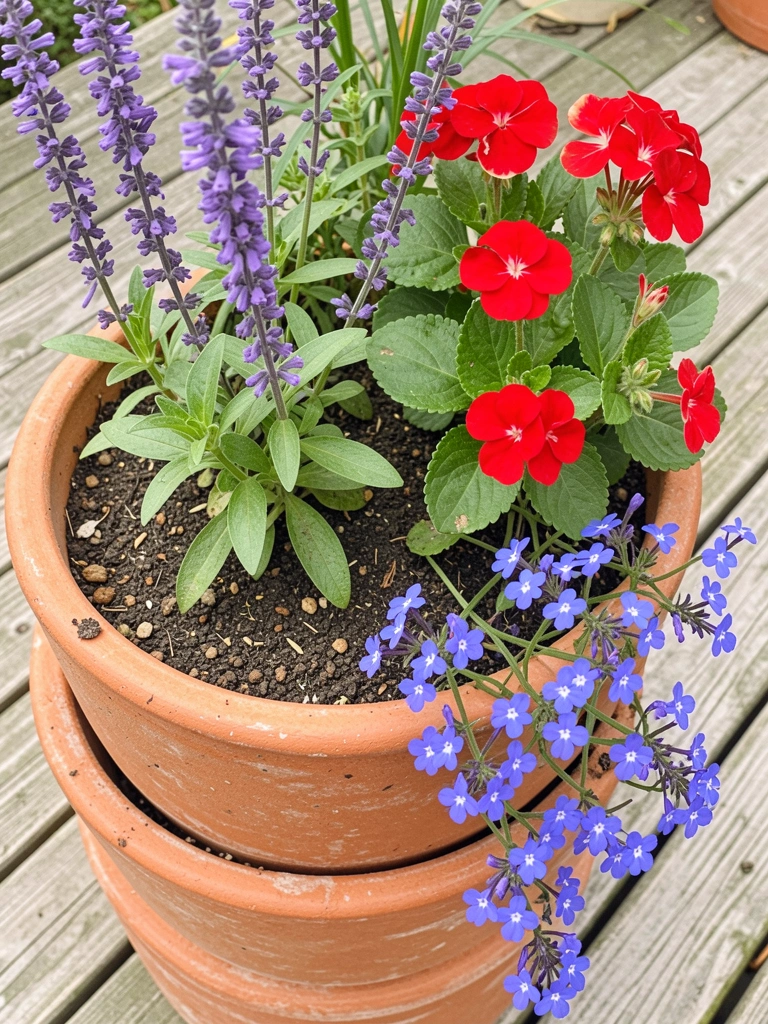
I planted a dozen of these on my narrow terrace and it stopped looking sparse.
I used a tall spike (salvia), a mid-size bloomer (geraniums), and a spiller (bacopa).
The mix kept blooms most of the season and hid ugly plastic pots.
Watch drainage and don’t overpot—my first attempt sat wet and roots rotted.
What You’ll Need for This Look
- Terracotta planter (12–16 inch)
- Salvia 'May Night' (tall)
- Zonal geraniums, mixed colors
- Bacopa or trailing lobelia
- Good-quality potting mix, slow-release fertilizer
2. Evergreen Structure with Spring Bulb Pops
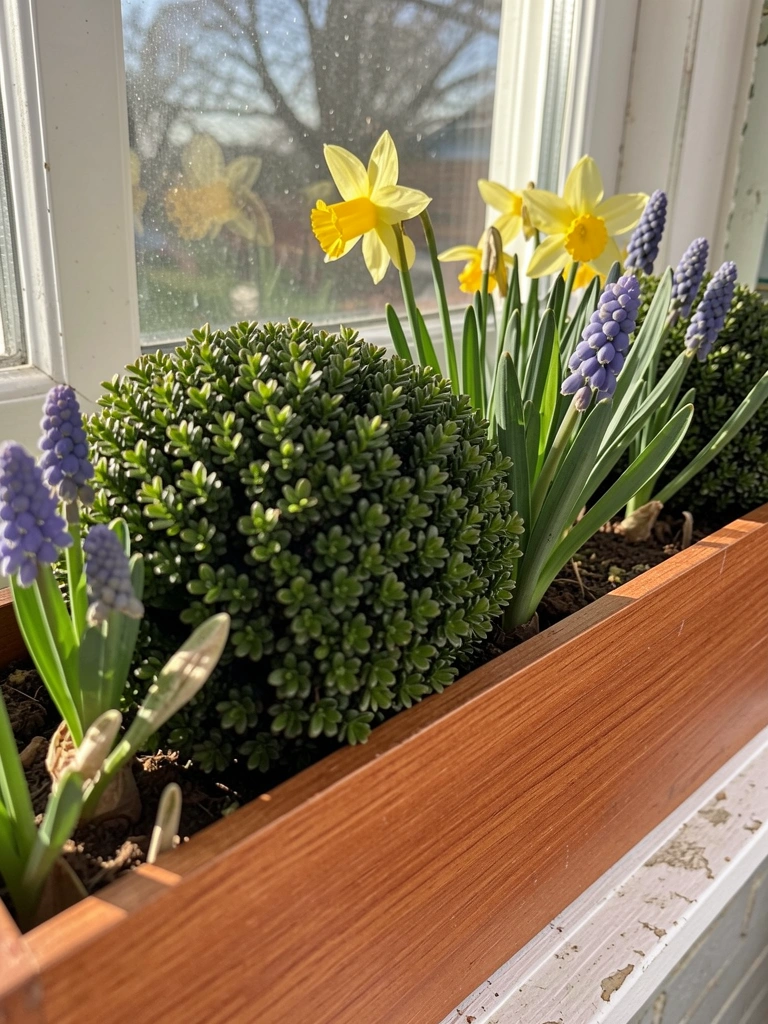
I like a terrace that reads the same in winter and then brightens in spring.
I plant evergreen low hedging (dwarf boxwood) for shape, then tuck bulbs—daffodils and grape hyacinths—around the base.
By March the terrace looks intentional, not frantic.
I learned to plant bulbs deeper than I thought; they survive squirrels better.
What You’ll Need for This Look
- Cedar window box (48 inch)
- Dwarf boxwood (Buxus, 3–4 inch pots)
- Daffodil bulbs (large, mixed varieties)
- Grape hyacinth (Muscari)
- Bulb trowel, bulb fertilizer
3. Long-Flowering Perennial Containers for Low Fuss Color
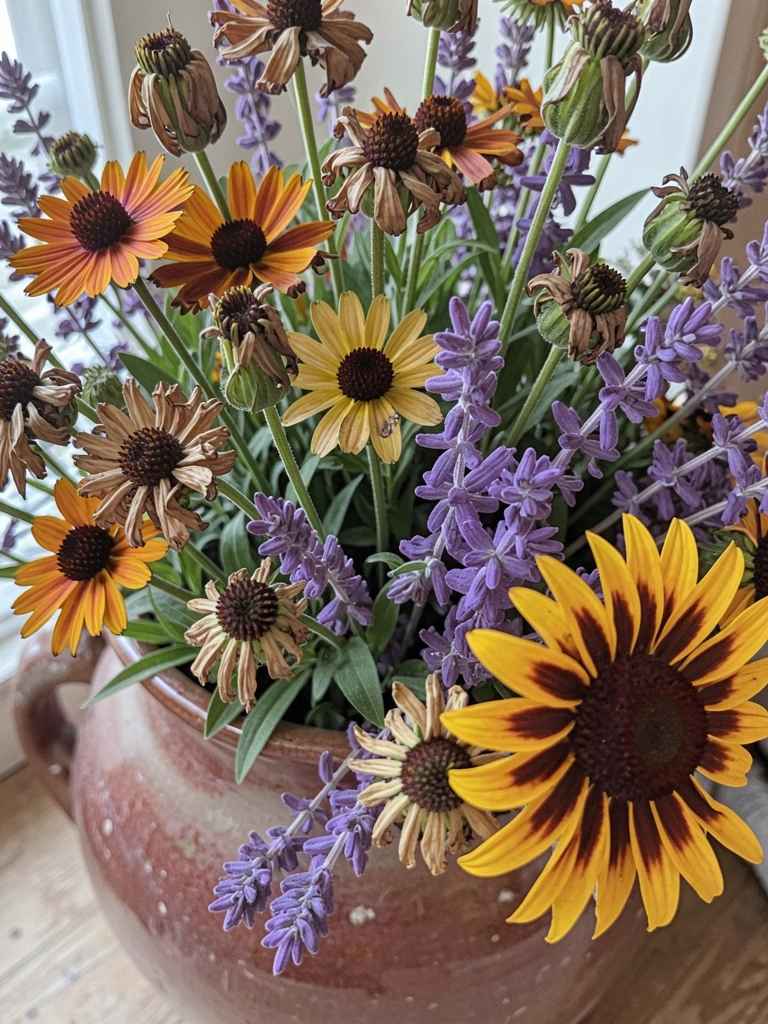
I started relying on short-lived annuals and burned out watering. Perennials changed that.
I use coreopsis, salvia, and rudbeckia—each repeats and fills gaps.
They bloom across months and handle dry spells better than I do.
I did overbuy one season and had heavy, leggy pots; lesson learned—thin stems and deadhead once.
What You’ll Need for This Look
- Glazed ceramic pot (14–18 inch)
- Coreopsis (yellow)
- Salvia (purple or blue)
- Rudbeckia (Black-eyed Susan)
- Pruning shears, slow-release granular feed
4. Vertical Pocket Garden with Herbs and Petunias

I hung a pocket planter to steal vertical space on a tiny terrace.
Petunias cascade, and I plant herbs like thyme and oregano in pockets that dry between waterings.
It’s fragrant and useful—snip a sprig for dinner.
Make sure pockets face morning sun; mine on the west scorched in late afternoon heat.
What You’ll Need for This Look
- Felt pocket wall planter (8–12 pockets)
- Trailing petunia (mixed)
- Thyme, oregano (small herb plugs)
- Lightweight potting mix, drip-in irrigation tape
5. Mini Cottage Border in a Long Trough
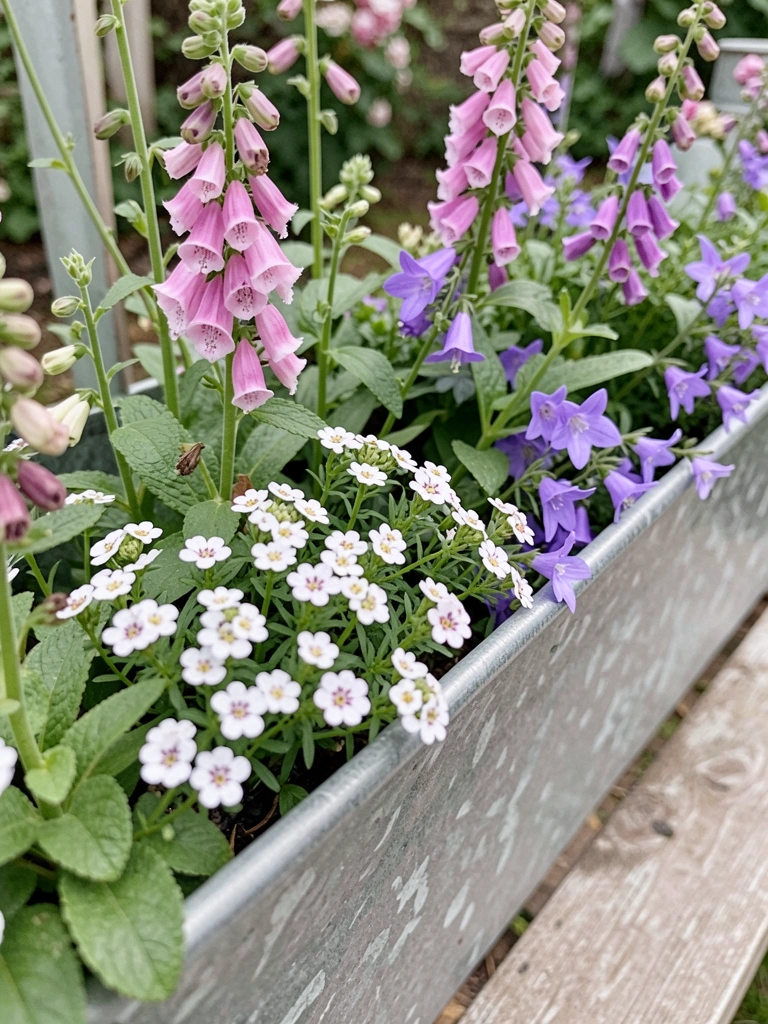
I wanted a cottage feel without a whole yard. A long trough does that.
I plant a taller back row (foxglove or penstemon), midsize flowers (campanula), and alyssum at the edge.
It reads like a little garden bed and invites you to sit near it.
I once planted foxglove too crowded; next year I gave more space and got stronger stalks.
What You’ll Need for This Look
- Galvanized trough planter (36–48 inch)
- Foxglove (digitalis) or penstemon
- Campanula (bellflower)
- Sweet alyssum (edge)
- Coarse compost, slow-release feed
6. Sunny Succulent and Drought-Tolerant Mix

I killed more succulents by overwatering than by drought. Once I learned the rhythm, they thrived.
A mix of echeveria, sedum, and trailing senecio looks tidy and stays colorful in heat.
Gravel mulch keeps soil airy, and pots warm in late afternoon.
My first tray had too-deep drainage holes and dried out excessively—use saucers or a shallow tray to buffer.
What You’ll Need for This Look
- Shallow terracotta tray (12–18 inch)
- Echeveria varieties, Sedum mix
- Trailing senecio (string of dolphins)
- Cactus/succulent potting mix, gravel top-dress
7. Bulb Sequence Planting for a Long Spring
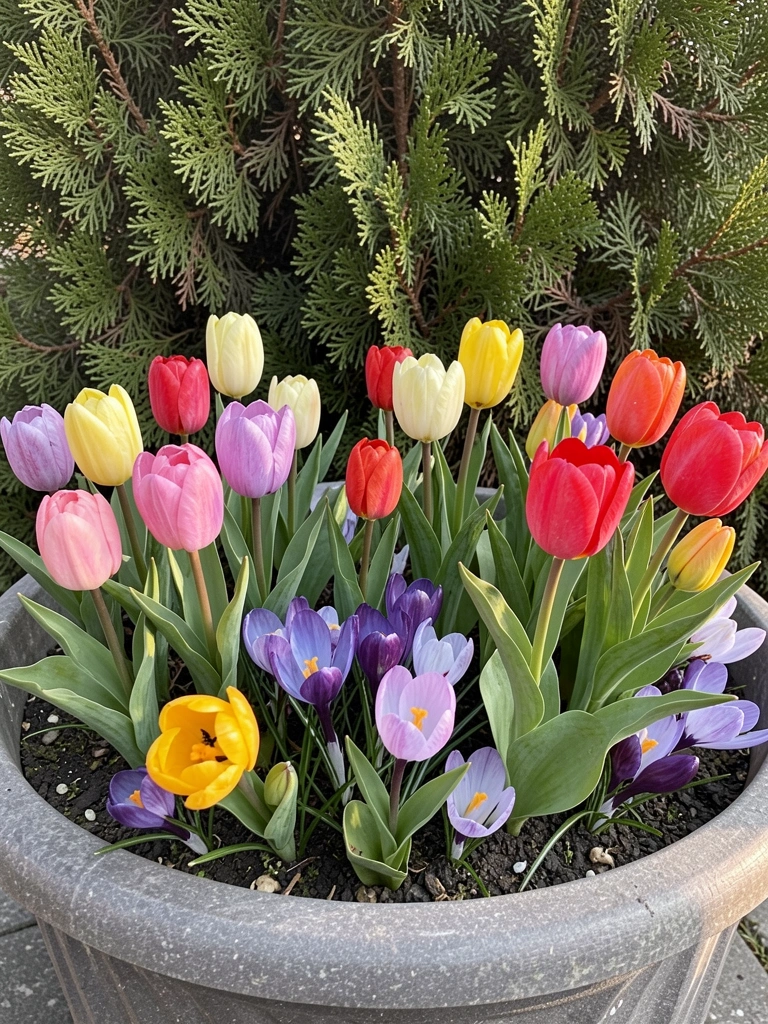
I stagger tulips, crocus, and alliums in the same containers for a longer spring show.
Plant earlier-flowering crocus toward the edges, tulips in the middle, and alliums behind.
They leapfrog visually so the terrace never goes blank.
I used cheap bulbs once and had limp blooms; buy firm, large bulbs for better results.
What You’ll Need for This Look
- Large plastic or ceramic planter (18–24 inch)
- Crocus bulbs (mixed)
- Tulip bulbs (varied heights)
- Allium bulbs (round blooms)
- Bulb fertilizer, bulb planter
8. Bright Monochrome White Planters for Evening Glow

I planted white-only containers for calmer evenings. They reflect light and look tidy at dusk.
Nicotiana gives night scent, petunias spill, and white geraniums hold shape.
The palette reads soft and restful after a busy day.
I once mixed whites with cream and it looked muddy—pick consistent white tones.
What You’ll Need for This Look
- Black or dark modern planter (16–20 inch)
- White petunia, nicotiana, white zonal geranium
- Night-scented plant labels, granular feed
- Soft-warm LED string lights (optional)
9. Shade Nook with Ferns and Begonias

My north-facing terrace felt hopeless until I embraced shade plants.
Boston ferns add lush texture, rex begonias bring leaf color, and impatiens provide steady blooms.
They make the corner feel cozy and cool.
I used heavy soil once and noticed crown rot; now I use airy mix and water from below.
What You’ll Need for This Look
- Glazed ceramic pots (12–14 inch)
- Boston fern (Nephrolepis), Rex begonia, Impatiens
- Moisture-retentive but airy potting mix
- Watering tray, liquid feed for shade plants
10. Night-Scented Containers for Evenings on the Terrace

I wanted evenings to smell like something. I paired jasmine, nicotiana, and moonflower.
They open or give scent at dusk, and one breath of that night perfume stops a hard day.
Plant near seating; the scent carries well.
I overpruned jasmine first season and lost blooms—trim lightly to encourage more flowers.
What You’ll Need for This Look
- Railing planter or medium pots (12–16 inch)
- Star jasmine, nicotiana, moonflower or four o'clock (Mirabilis)
- Trellis or support for jasmine
- Potting mix, liquid fertilizer for bloom
11. Edible Flower Terrace: Salad to Sip
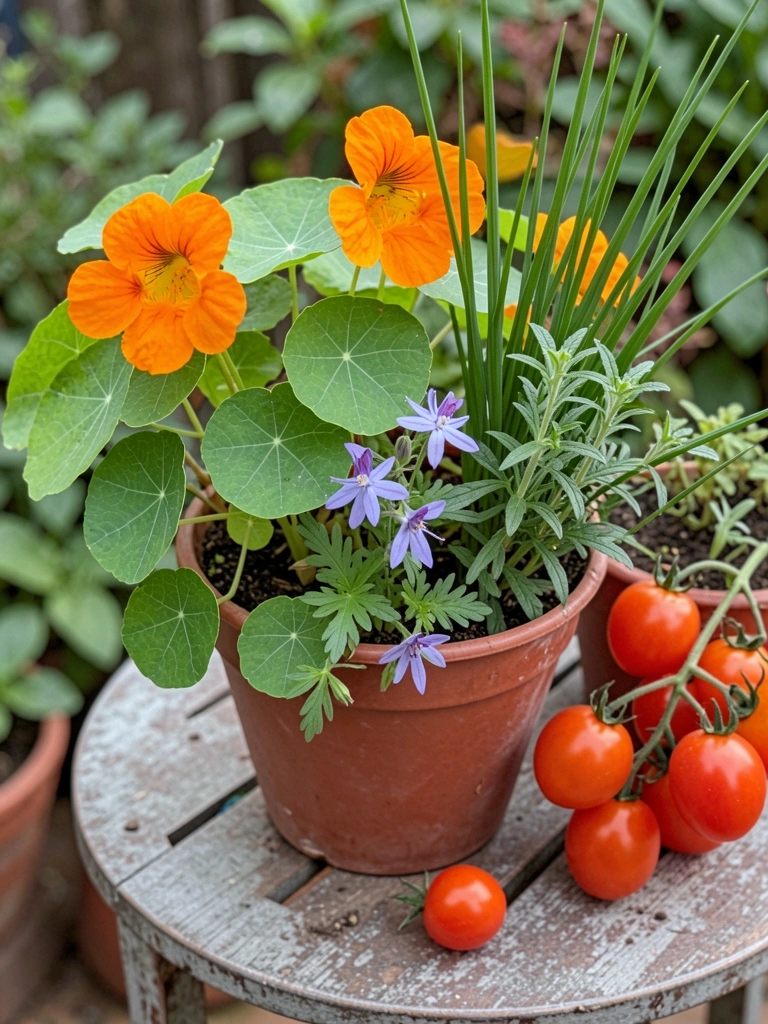
I mix edible flowers and herbs so my terrace feeds us and entertains.
Nasturtiums spill edible leaves and blooms, borage adds blue stars, and chives flower pink.
A few dwarf cherry tomatoes fit in and give summer fruit.
I once planted basil in full sun without daily water; it got sulky—keep edibles watered in heat.
What You’ll Need for This Look
- Medium planter (16 inch) or mixed pots
- Nasturtium, borage, chive, dwarf cherry tomato
- Organic potting mix, slow-release organic feed
- Small trellis for tomato, harvesting scissors
12. Compact Climbers and Trellis for Vertical Color

I stopped buying big climbing plants and used compact clematis and morning glory on narrow trellises.
They add height without heavy root systems.
Morning glory gives quick color; clematis returns later for a second push.
I trained one incorrectly and it flopped into neighbors—tie stems early and guide gently.
What You’ll Need for This Look
- Slim metal trellis (48–72 inch)
- Clematis (compact variety), morning glory (fast climber)
- 12–16 inch deep planter, quality potting mix
- Soft plant ties, plant feed for climbers
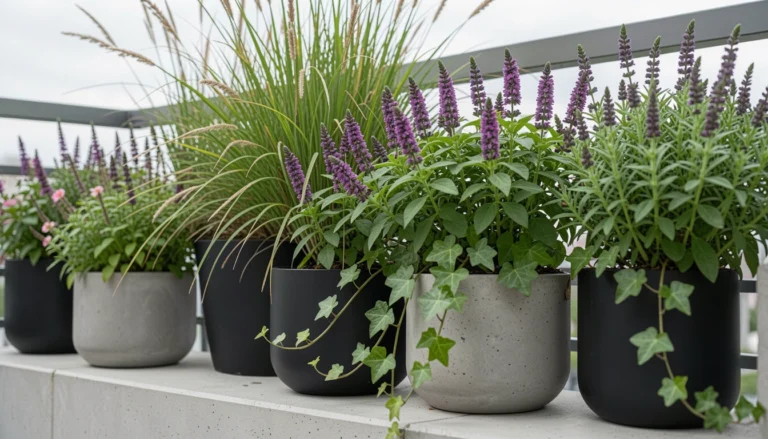
13. Mediterranean Pots for Heat and Simplicity
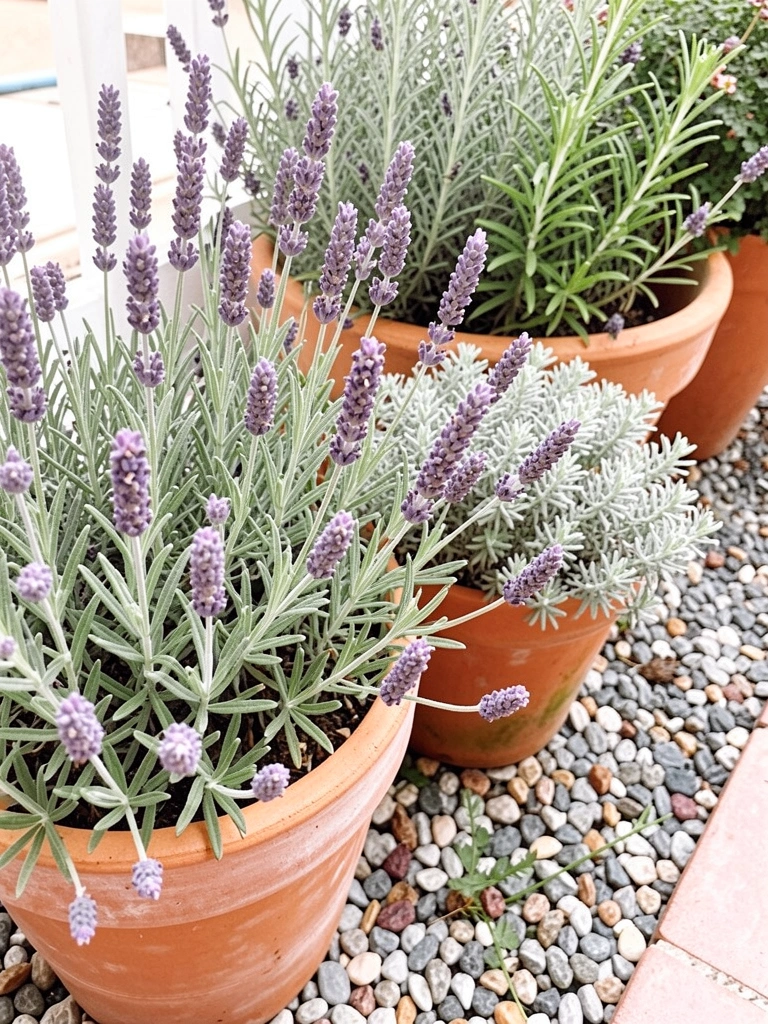
When I needed low-maintenance color, I went Mediterranean.
Lavender brings purple blooms, rosemary adds vertical form, and santolina gives silver texture.
They handle heat, need less water, and smell like summer.
Avoid heavy clay soil; these plants want free-draining mix or they sulk.
What You’ll Need for This Look
- Terracotta pot group (10–18 inch)
- Lavender (English), rosemary (upright), santolina
- Sharp, free-draining potting mix, gravel top layer
- Pruning shears, slow-release feed for herbs
14. Painter’s Palette: Block-Color Planters
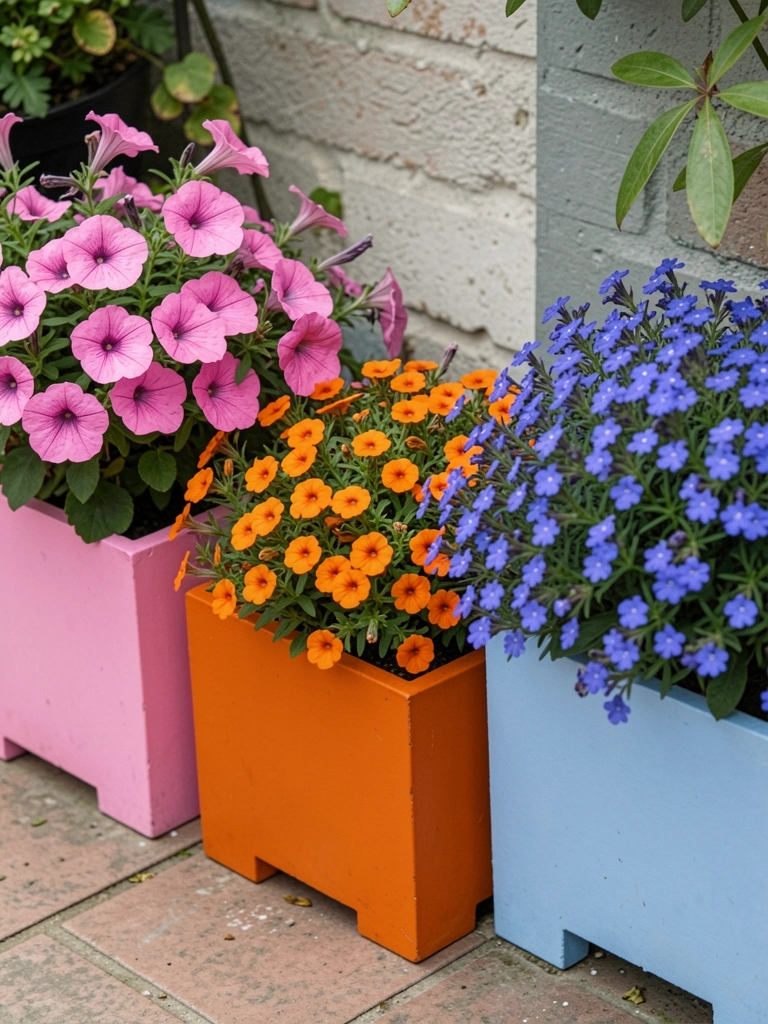
I grouped single-color pots like swatches and it made a small terrace read bigger.
One pot all-pinks, one all-oranges, one all-blues—bold but calm.
This is great if you want coordinated color without fuss.
I mixed too many colors once and it looked chaotic; restraint wins.
What You’ll Need for This Look
- Square modern planters (12–16 inch)
- Petunia (pink), Calibrachoa (orange), Lobelia (blue)
- Uniform potting mix, color-coordinated plant labels
- Watering can with rose, balanced fertilizer
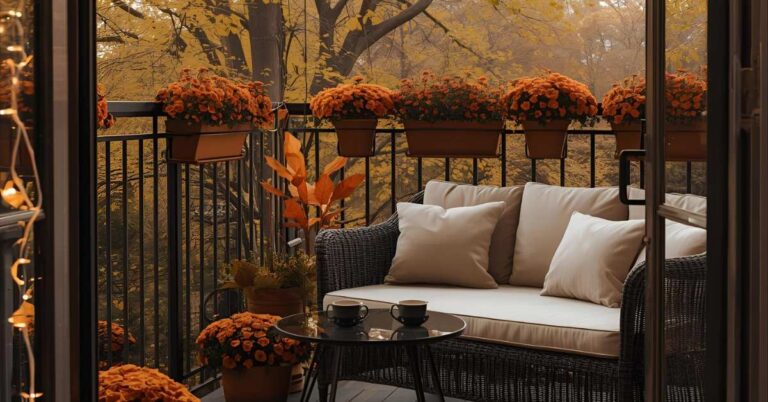
15. Seasonal Swap System: Replace, Don’t Replant
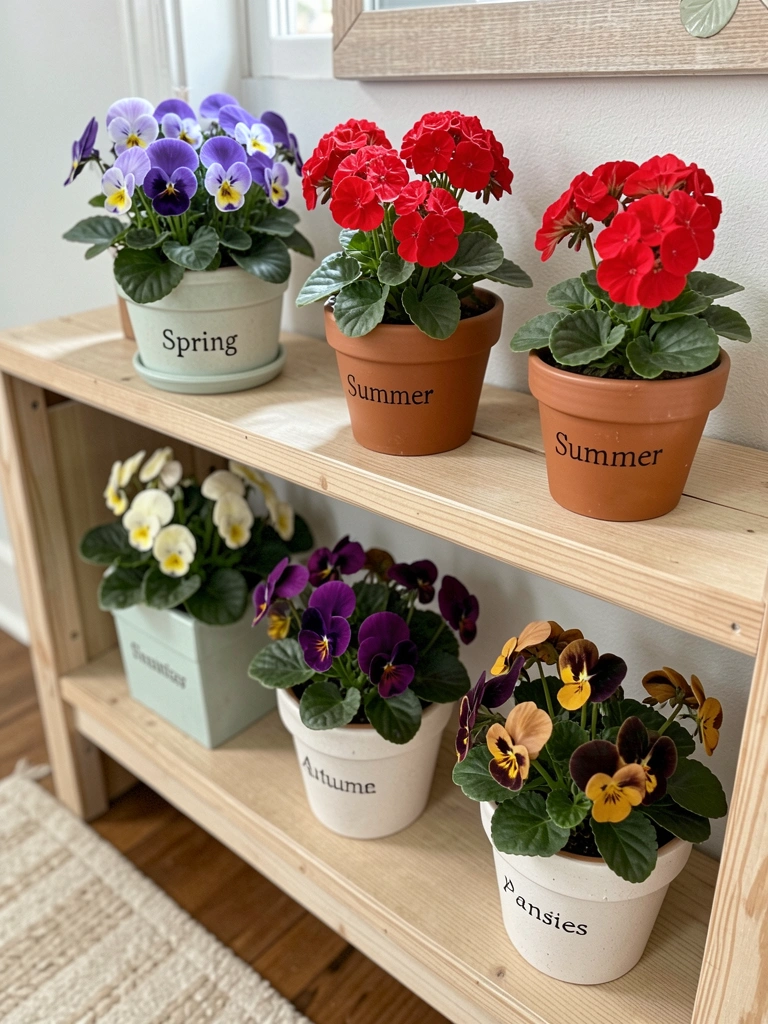
I stopped replanting pots and started swapping seasonal-ready containers from storage.
I prep 4–6 quick-change pots for spring, summer, autumn, and winter.
On change day I swap in fresh color and minimal work.
I once left summer pots too long and the winter swap looked tired—set a calendar and stick to it.
What You’ll Need for This Look
- Stackable nursery pots (various sizes)
- Pre-planted seasonal pots (pansies, geraniums, chrysanthemums)
- Storage bench or covered shelf, plant labels
- Composted potting mix, seasonal feed
16. Small Water Feature Framed by Moisture-Loving Flowers
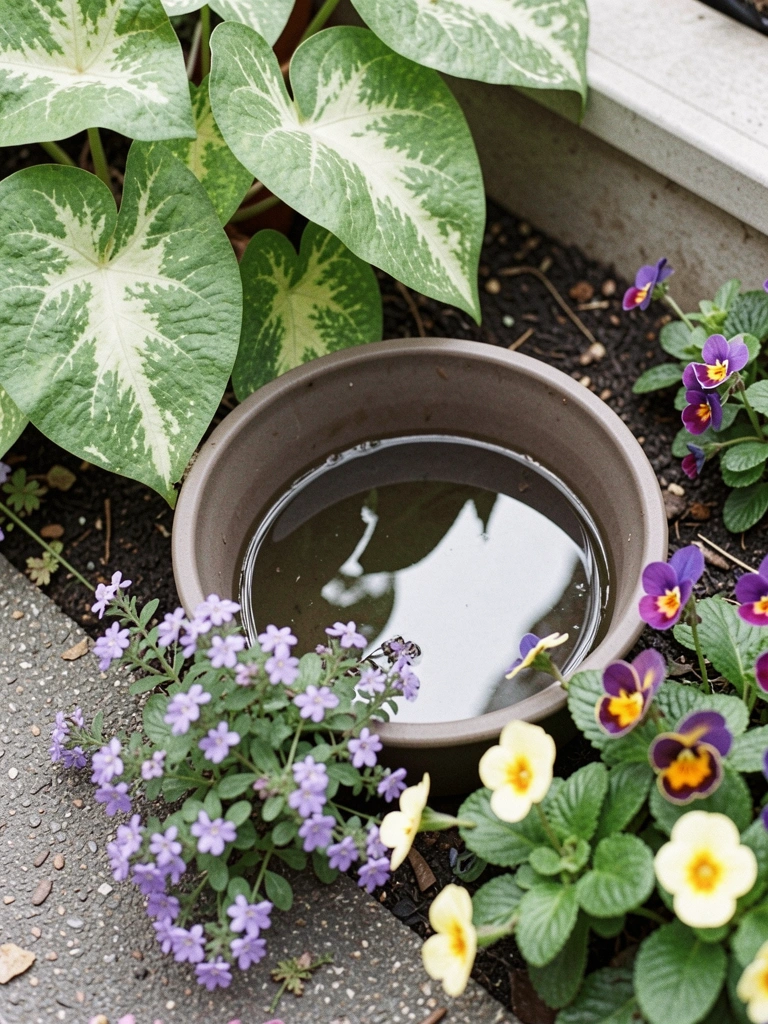
I added a small water bowl to my terrace and surrounded it with moisture-loving flowers.
Primula, caladium, and lobelia enjoy the splash and reflect in the bowl for extra interest.
The sound and a few blooms make the corner feel paused and cool.
I initially positioned it in full sun and had mosquito issues—move to partial shade or add a fountain pump.
What You’ll Need for This Look
- Compact water bowl or small pump fountain
- Primula, caladium, lobelia in nearby pots
- Water-safe planter tray, fountain pump (small)
- Mosquito dunk or water aerator, terracotta or stone finish
Final Thoughts
You don’t need all 16 ideas. Pick one or two that fit your terrace and lifestyle.
Start small, keep a list of what worked, and swap seasonally.
Gardening is gradual—little choices add up to a terrace you’ll actually use and enjoy.