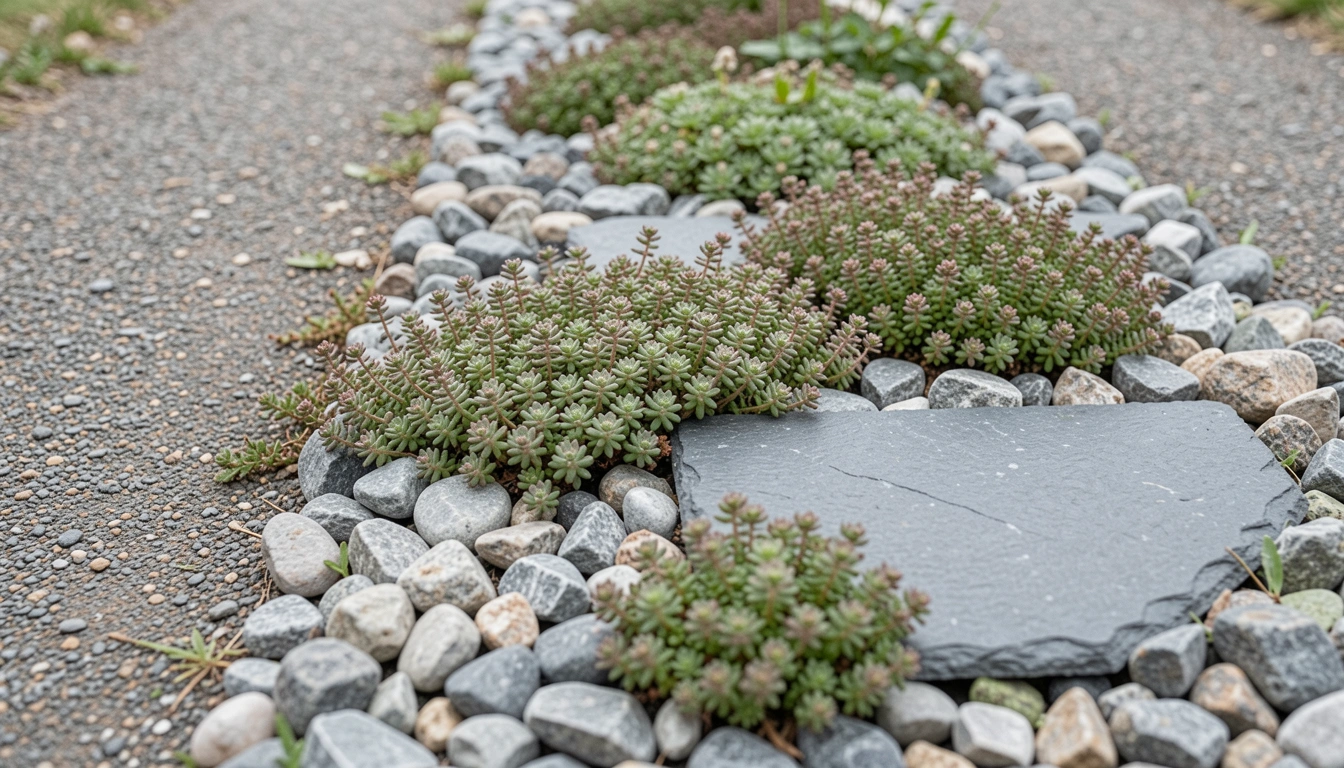
8 Narrow Rock Garden Ideas for Long, Tight Spaces
I kept a thin strip of soil for years and wasted it on random cheap plants. Then I started thinking in lines and stones.
I learned that scale matters more than variety. Long, tight spaces want rhythm.
These ideas are from hands-in-dirt fixes. They work when space is narrow and life is real.
8 Narrow Rock Garden Ideas for Long, Tight Spaces
These 8 ideas are all practical and tested in small real gardens.
I show what I did, what went wrong, and what finally looked good.
You’ll get eight specific looks and clear shopping hints.
1. Alpine Troughs Lined Like a Necklace
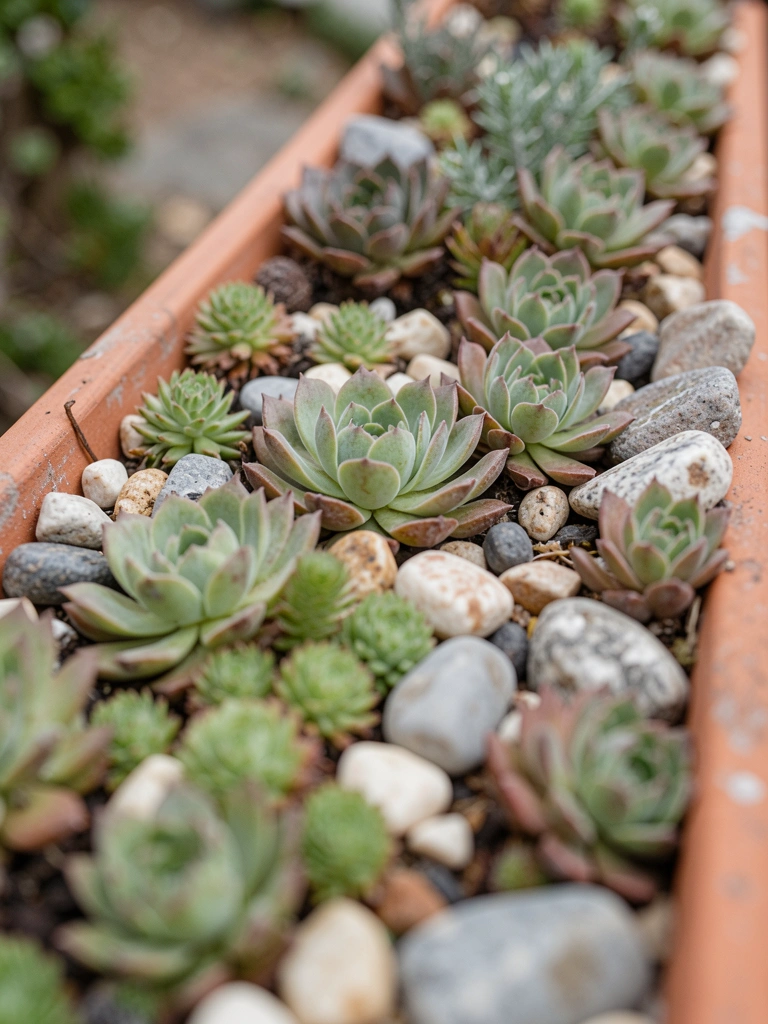
I planted a row of terracotta troughs along a skinny bed.
They read as one continuous rock garden. Small sempervivums, blue sedum, and crushed gravel tied the troughs together.
The first year I overwatered. The rosettes split. I learned to let the mix dry and use fast-draining soil.
Visually it made the narrow space feel deliberate instead of cluttered.
What You’ll Need for This Look
- Terracotta trough planters (36–48 inch)
- Alpine/succulent potting mix, gritty
- Sempervivum, sedum (dwarf varieties)
- Pea gravel, 1/8 inch
2. Stepped Slate Ledges with Creeping Thyme
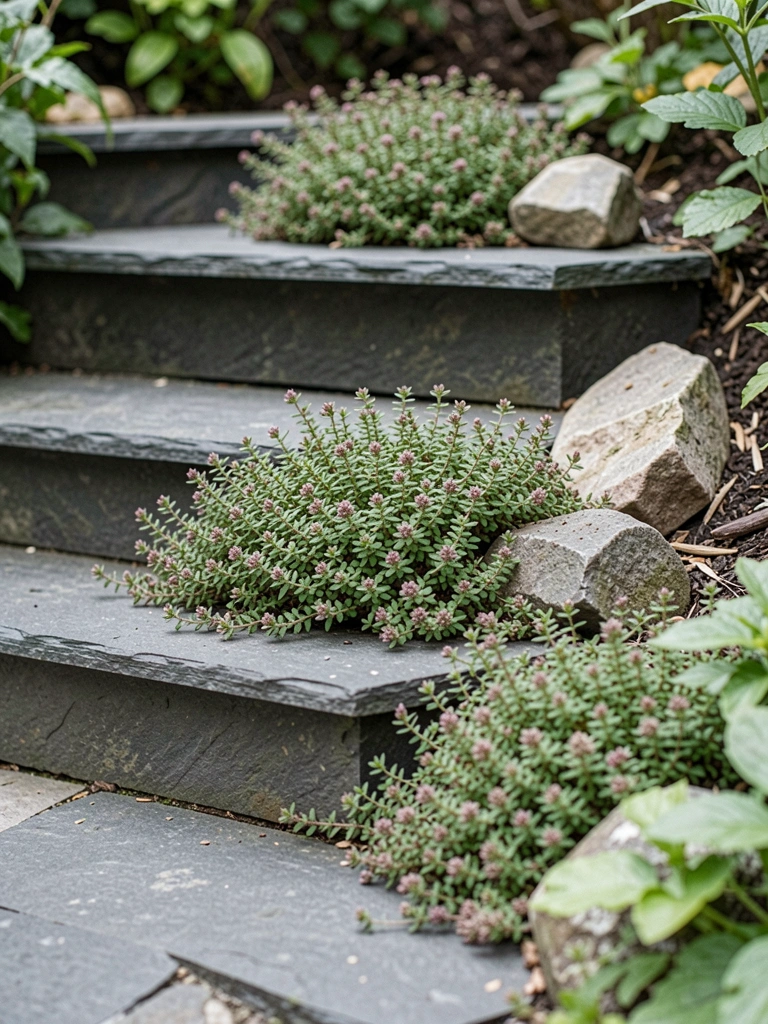
I cut slate into thin ledges and stacked them like tiny terraces.
I planted creeping thyme and small sedges between the cracks. It softened the stone.
I once packed the ledges too tight. Water pooled and roots rotted. Now I space gaps and add grit.
From the path, the ledges give a layered, orderly look that still feels natural.
What You’ll Need for This Look
- Slate slabs, thin (12–18 inch)
- Creeping thyme plugs
- Small fountain gravel, 2–4 mm
- Landscape adhesive or stainless pins
3. Linear Dry Stream with Bold River Stones
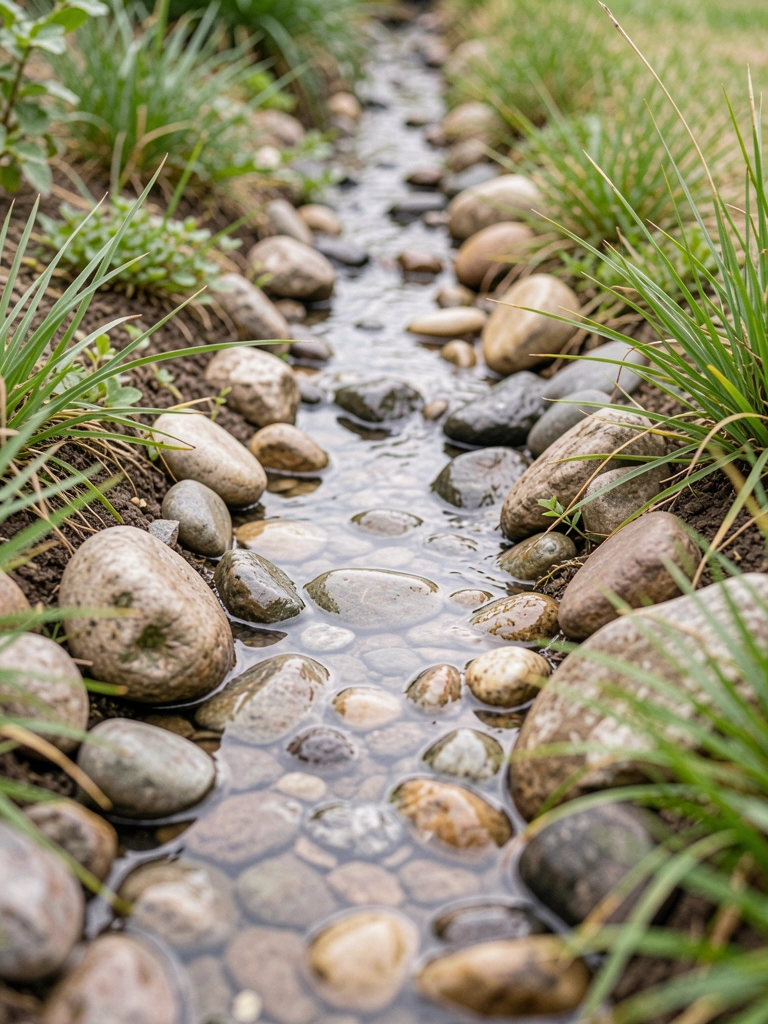
I dug a shallow channel and lined it with weed membrane.
Then I banked river stones and a few rounded boulders. Low sedges and Carex soften the edges.
At first I used all the same-sized stones. It looked fake. Mixing sizes made it read natural.
The dry stream gives movement and hides a narrow drain I had to run along the space.
What You’ll Need for This Look
- River stones (mixed sizes, 1–8 inches)
- Flat stepping boulders, small
- Low grasses/sedges (Carex)
- Landscape fabric, heavy-duty
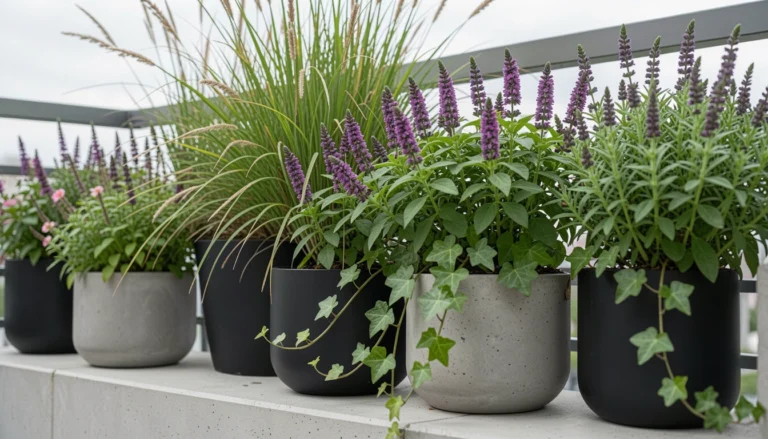
4. Narrow Raised Cedar Bed with Ornamental Grasses
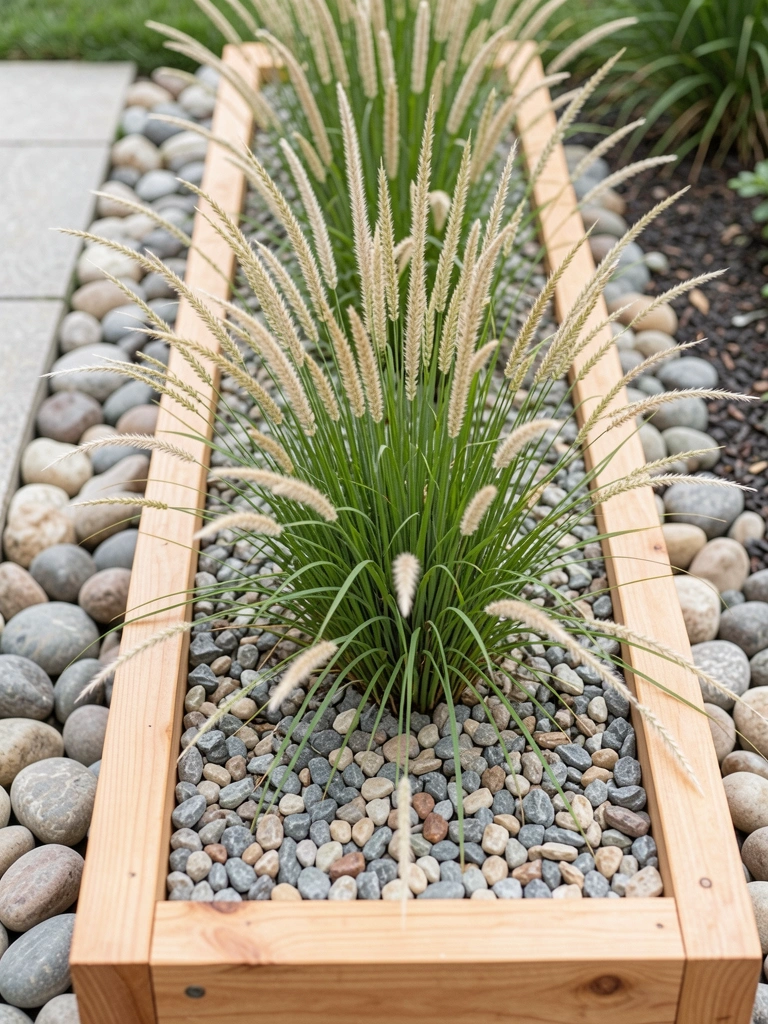
I built a 10-inch-high cedar trough along a fence.
I planted small fountain grasses in repeating groups. The movement filled the thin sightline.
I used non-treated lumber first and it warped by year two. Switching to rot-resistant cedar helped.
The bed frames the space and the grasses soften the fence without taking much ground.
What You’ll Need for This Look
- Cedar raised bed kit (8–12 inch height)
- Pennisetum alopecuroides (compact varieties)
- Coarse mulch gravel, 3/8 inch
- Galvanized edging strips
5. Pocketed Rock Wall for Vertical Interest
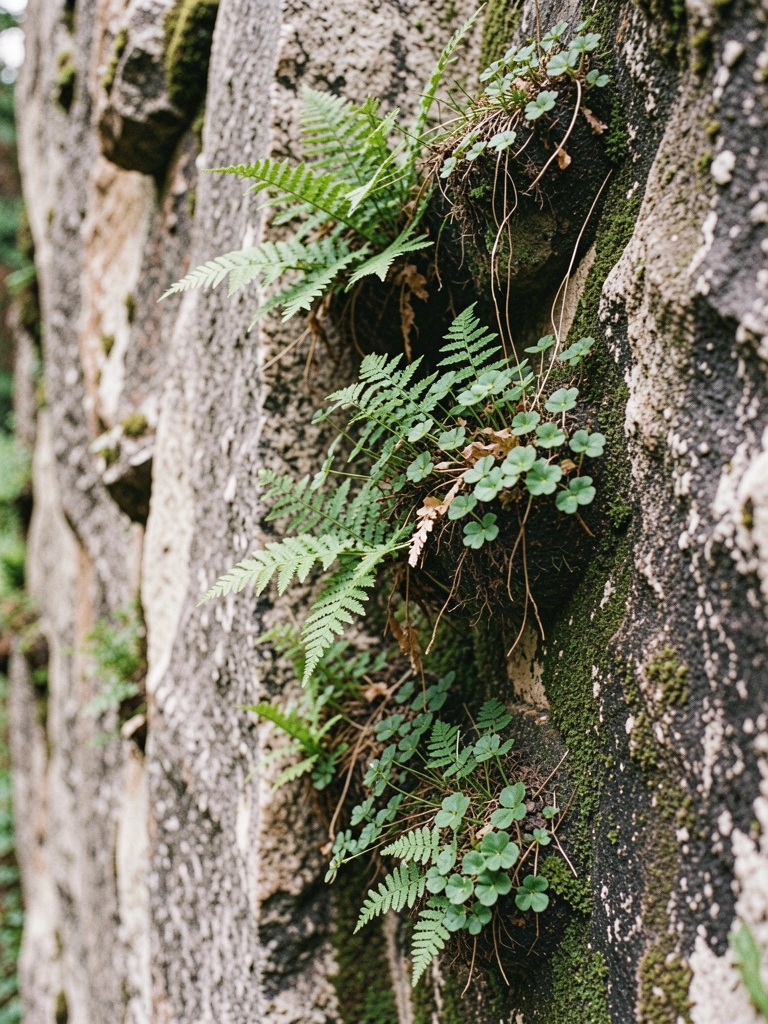
I built a short dry-stacked wall with planting pockets.
Saxifraga, small ferns, and moss tucked into cracks. The wall pulls the eye up in a tight space.
I once mortared the joints too much. The wall lost its planting pockets. Leaving small gaps saved the look.
It’s low effort and gives a strong rock-garden character on a tight footprint.
What You’ll Need for This Look
- Natural flagstone pieces (varied sizes)
- Saxifraga, tiny ferns, moss plugs
- Small hand trowel and masonry pins
- Coarse grit soil mix
6. Shadow Rock Bed with Shade-Loving Succulents
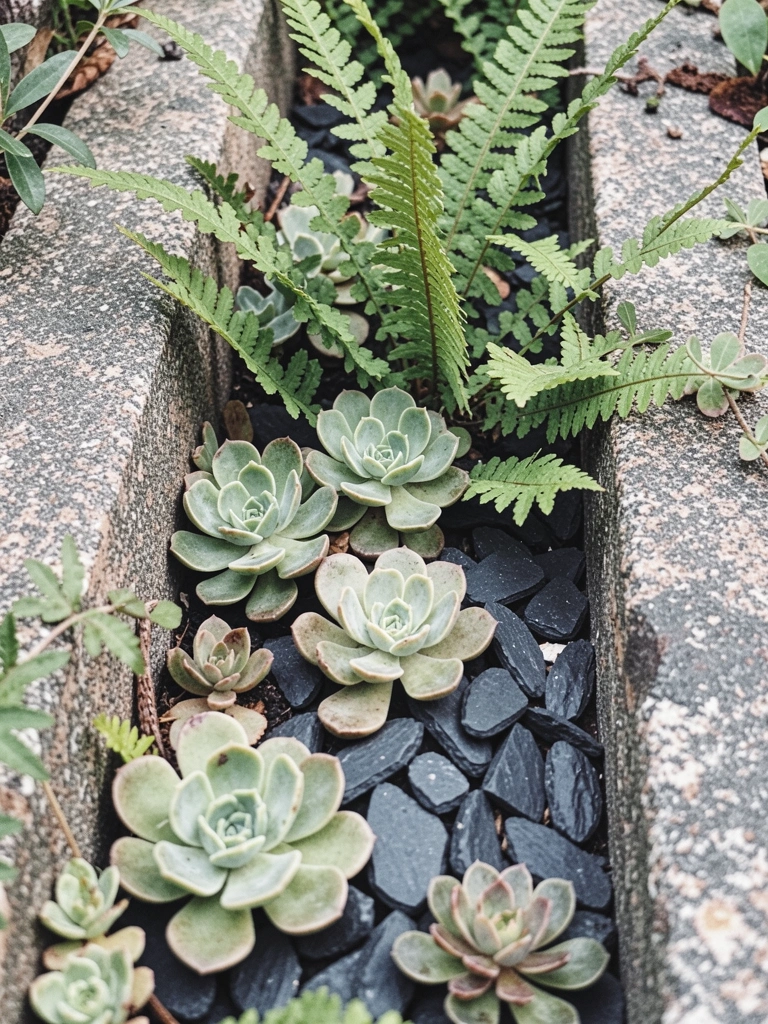
My east-facing side was always in shade. I assumed succulents wouldn’t work.
Then I found shade-tolerant succulents and scilla. Dark slate chips brightened the look.
I planted too deep the first time. Roots stayed cold and rot set in. Now I mound soil and raise crowns slightly.
It reads like a rock garden but thrives where sun is limited.
What You’ll Need for This Look
- Shade-tolerant succulents (e.g., Orostachys, some sedums)
- Dark slate chips, 1/4–1/2 inch
- Lightweight composted soil
- Small ferns or scilla bulbs
7. Native Rock Border with Pollinator Pockets
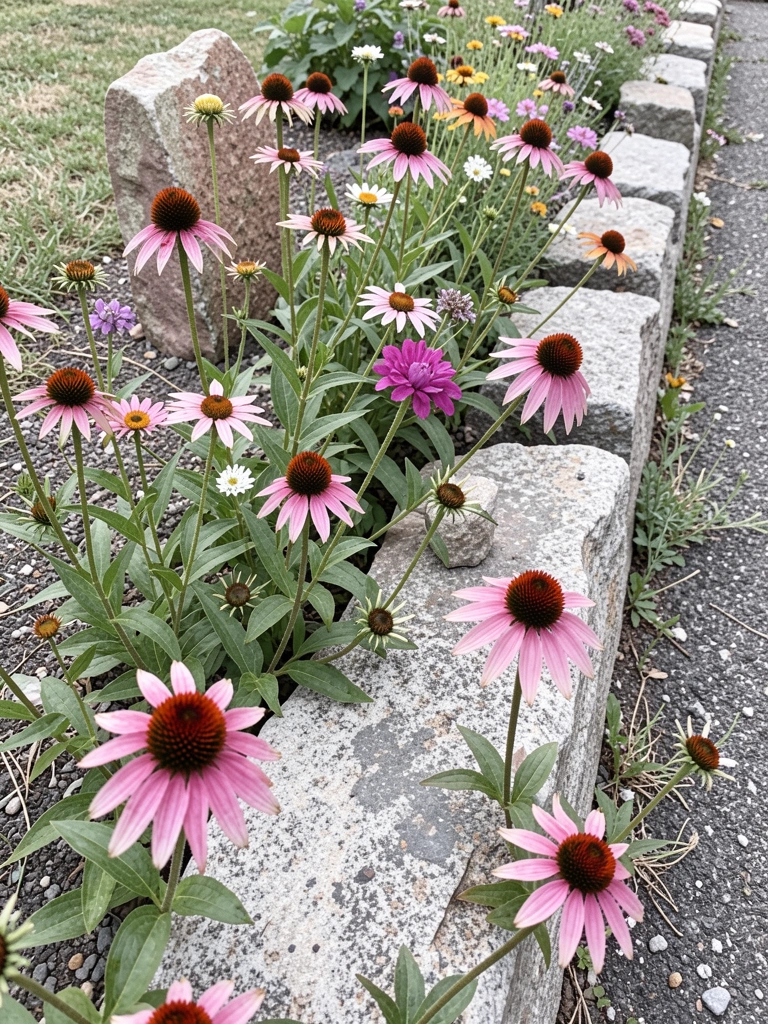
I swapped imported ornamentals for local natives in a skinny border.
Little lomatium, echinacea seedlings, and blanketflower popped between stones. Bees arrived fast.
I didn’t expect the natives to be so tidy. Some self-seeded, so I now pull extras early.
This look feels honest. It’s low fuss once established and still very much a rock garden.
What You’ll Need for This Look
- Local native perennial plugs (echinacea, lomatium, gaillardia)
- Small fieldstones, 3–6 inches
- Well-draining native soil mix
- Pollinator-friendly seed packet
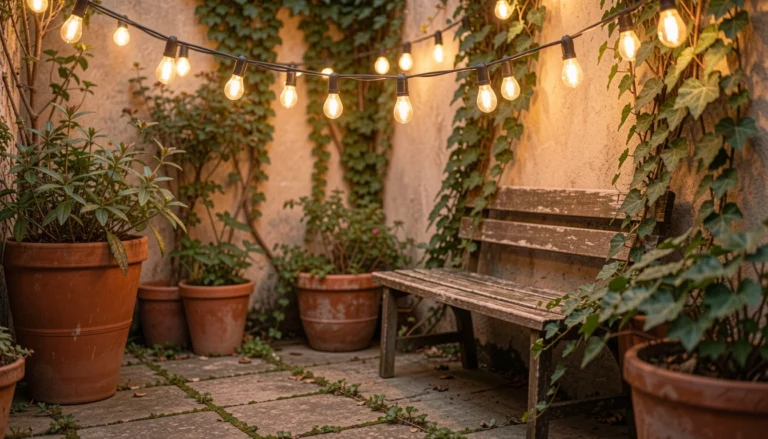
8. Night Ribbon: Solar Path Lights and Pale Gravel
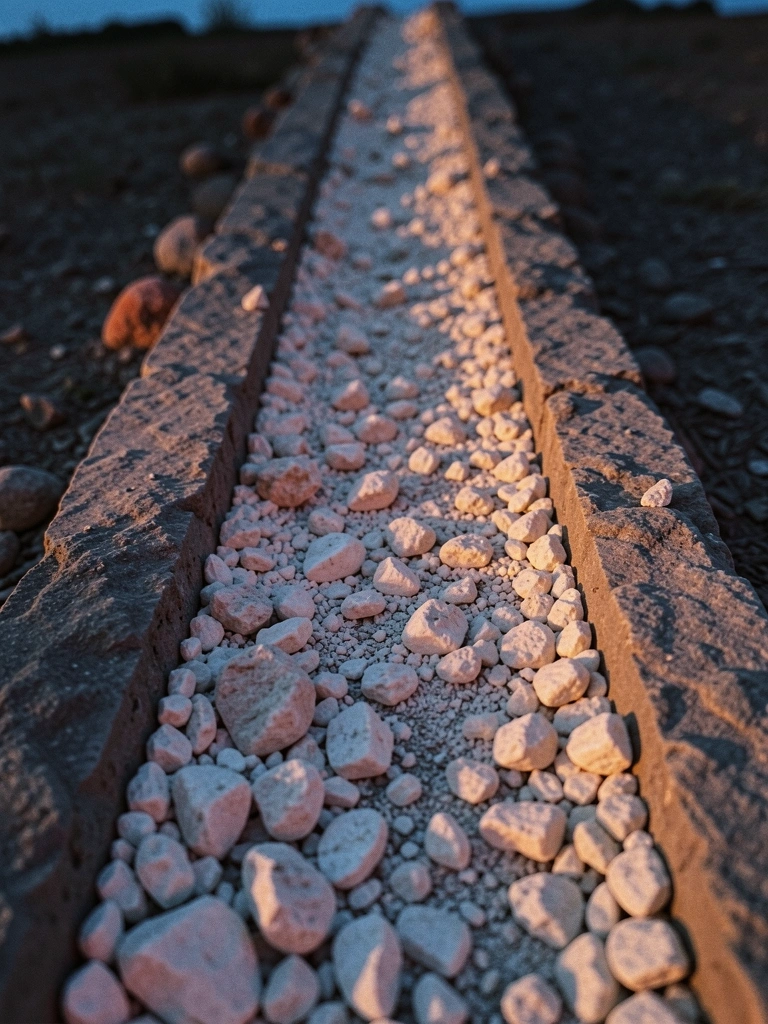
I laid pale crushed gravel in a thin channel and added small solar lights.
At dusk the space reads as a soft ribbon. It makes evening walks better.
I once bought cheap solar lights that died after one season. Investing in a few quality warm-white lights solved that.
The effect is simple. It gives the narrow rock strip a purpose after dark.
What You’ll Need for This Look
- Crushed limestone gravel, 1/8 inch, pale
- Solar pathway lights, warm white, durable
- Small anchor boulders
- Rechargeable solar units or quality batteries
Final Thoughts
You don’t need to try every idea. Pick one that fits your light and budget.
Small changes make tight spaces feel intentional. I’ve made mistakes and learned which fixes last.
Start simple. Work in repeats and you’ll get a narrow rock garden that feels like it belonged there all along.